
NEWS
Google Ties Showcase Fees to AI Training Rights in News Pilot
Google’s new News AI pilot asks publishers to grant AI training rights or lose Showcase payouts. The first cohort includes The Guardian and El País.

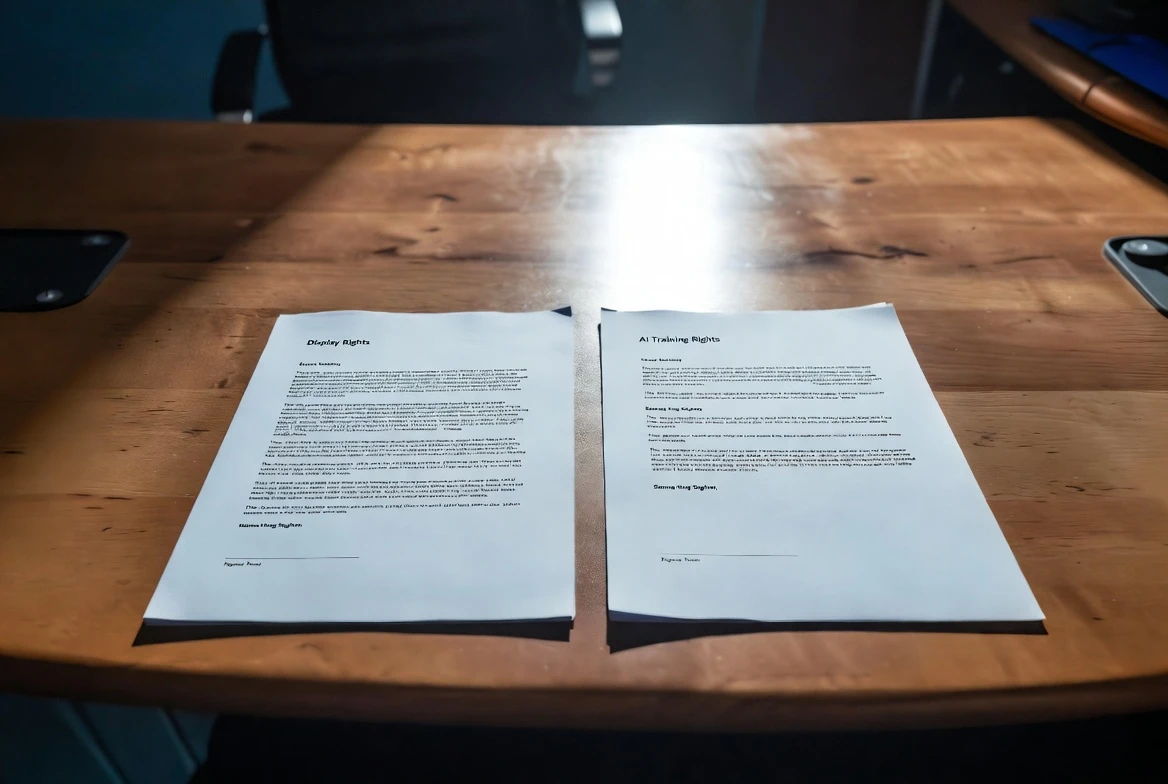
Google has started pressing the news publishers on its News AI pilot to hand over AI training rights on their archives or lose their annual Showcase licensing fees, according to a June 25 report by The Information and follow-up coverage by PYMNTS and the New York Post. The pilot was announced in December 2025 and now anchors a binary choice: sign broader terms that include model training, or stay on the legacy Showcase framework until it is wound down.
For publishers whose traffic from Google has fallen since AI Overviews launched, the choice arrives from a partner that controls 90% of the search market.
How the New Pilot Bundles AI Training Into the Deal
Google first announced the News AI pilot in a December 10, 2025 blog post by Jaffer Zaidi, Google’s vice president of global news partnerships. The post said the company was piloting a “new commercial partnership program” with a named cohort of publishers. The same framework has since hardened into a take-it-or-leave-it proposition, according to The Information’s reporting on June 25, 2026.
Under the reported terms, publishers that join the pilot must grant Google broad rights to their content, including the right to use that material to train large language models. The deal preserves the flat annual fee structure publishers knew under Showcase, but rebundles it with the AI rights. A Google spokesperson told the New York Post on June 26 that the company is “expanding our partnerships through our News AI pilot program, working with a wide range of publishers to explore how AI can drive more engaged audiences.”
The initial pilot cohort reads as a roster of prestige publishing on both sides of the Atlantic. Google named Der Spiegel, El País, Folha de São Paulo, Infobae, Kompas, The Guardian, The Times of India, The Washington Examiner and The Washington Post as its initial pilot partners.
| Publisher | Region | Date Joined |
|---|---|---|
| The Guardian | United Kingdom | December 10, 2025 |
| Der Spiegel | Germany | December 10, 2025 |
| El País | Spain | December 10, 2025 |
| Folha de São Paulo | Brazil | December 10, 2025 |
| Infobae | Argentina | December 10, 2025 |
| Kompas | Indonesia | December 10, 2025 |
| The Times of India | India | December 10, 2025 |
| The Washington Post | United States | December 10, 2025 |
| The Washington Examiner | United States | December 10, 2025 |
Showcase Is Being Phased Out
Google News Showcase launched in 2020 as a paid commercial partnership under which Google paid publishers a flat annual fee to feature their reporting in curated Google News surfaces. The program has distributed at least $1 billion to publishers globally since launch, an arrangement widely understood as much a regulatory goodwill vehicle as a market-rate licensing deal. The pilot now sits on top of that arrangement and, according to multiple reports, will replace it.
Google has told several Showcase partners that the older framework is being wound down, the New York Post reported on June 26. Publishers that decline the new pilot can keep current Showcase payouts only until the legacy program sunsets. PYMNTS reported on June 25 that Google is renewing Showcase agreements in the short term while it transitions partners onto the pilot terms. Android Headlines, citing The Information, called the resulting posture a “harsh binary choice.”
Traffic Declines Already Range 30% to 40%
AI Overviews launched to the public in 2024, and the click-through math has only worsened for publishers since. NPR, citing Similarweb data, reported that one year after the launch, CNN’s site traffic had fallen by 30% and Business Insider’s and HuffPost’s sites had fallen by about 40%. A Pew Research Center study separately found that users who saw an AI Overview were half as likely to ever click a link from Google, and more likely to end their browsing session entirely once they got an answer on the search page.
People Inc., the publicly listed multi-brand publisher, disclosed in recent earnings that Google sessions between the first quarter of 2024 and the first quarter of 2026 produced a total loss of 800 million visits. The figure is a useful scale anchor because People Inc. is large enough to absorb a hit of that magnitude; smaller and less diversified publishers cannot.
Underneath the traffic loss sits a model accuracy problem. The Gemini 3 model currently serving European users answers correctly 91% of the time, up from 85% under Gemini 2, according to an analysis cited by the New York Times. But only 56% of those correct answers could be backed up by the source pages Google linked to them. Click-through to the underlying publishers drops by nearly 50% when AI Overviews appear in search results, per studies cited by gHacks. At Google’s scale, even a 9% error rate is millions of false or unsupportable claims per hour.
That is the position publishers are negotiating from. The flat annual fee is the consolation prize for visibility they no longer reliably get through search. The bundled AI training right is what Google is asking for in exchange for that flat fee.
- 800 million: Google-driven visit losses at People Inc. between Q1 2024 and Q1 2026
- 91%: Gemini 3 AI Overviews accuracy in a New York Times-cited analysis
- 56%: share of correct Gemini 3 answers whose linked sources actually backed the claim
A Regulatory Pincer Closed In Last Month
On June 3, 2026, the United Kingdom’s Competition and Markets Authority ordered Google to let publishers opt out of having their content used in AI Overviews, AI Mode and AI-generated summaries in Discover. The mechanism sits inside Google Search Console and includes an explicit toggle for opting out of AI model training. The CMA framed the move as a way to give publishers “a stronger position to negotiate content deals with Google.”
On May 28, 2026, a chamber of the Munich Regional Court went further, ruling that Google is directly liable for false statements in its AI Overviews and assigning 80% of the legal costs to the company. Google said on June 12 that it will appeal. The Munich reasoning treats AI Overviews as Google’s own speech rather than a wrapper around third-party content. The legal exposure that flows from that reclassification is laid out in the May 28 ruling on AI Overview liability.
In December, the European Commission opened a separate antitrust inquiry into whether Google used publisher content to build generative AI features. The European Commission inquiry, the UK CMA opt-out order and the Munich ruling have all landed in a six-month window.
Publishers Say the Choice Is Unusable
Jason Kint, chief executive of Digital Content Next, a trade group representing the New York Times, The Washington Post and News Corp, told the New York Post that “this is Google’s game. They’re gonna dominate here… There’s no fair deal discussions that can happen with Google. It’s really a matter of how much money they want to drop on an individual organization.” Kint also pointed out that Google “bundled the opt-out from AI training with the Search opt-out.” Opting out of Search, Kint added, is “opting out of the internet.”
Paul Bannister, chief strategy officer at Raptive, told why publishers call the CMA opt-out toggle unusable that the opt-out amounts to “a light switch while keeping the power plant running… Google is once again answering the question it wishes publishers had asked, not the one they actually asked.” Stuart Forrest, former global audience development director for Bauer Media Group, said that under an opt-in regime “Google would have to prove to us why we should let them use your content.”
The remedy only touches future use of publisher content in AI search, not the vast amount of protected content already forcefully taken and used to train AI models without permission or compensation.
Jason Kint, chief executive of Digital Content Next, in Digiday, June 2026.
What the Pilot Will Set for the Rest of the Market
The first wave of partners will set the precedent that smaller publishers and regional outlets inherit as Google negotiates downward. Most of the named partners are European; the two American names are The Washington Post and The Washington Examiner. The mechanics of the deal will become visible through the summer as the pilot rolls out and as participating publishers are asked for clarity on the rights granted.
OpenAI has signed more than a dozen content-licensing deals with publishers, including agreements reached after the New York Times sued OpenAI and Microsoft in 2023 over training data. Google has avoided the word “license” for both the Showcase arrangement and now the pilot, framing both as commercial partnerships. The click path that publishers still do get inside Google Search is the one being reshaped by the new Top Stories carousel inside AI Overviews, which sits below the AI summary and only fires on developing topics.
The European Commission’s December antitrust inquiry is the parallel track. A regulator-led probe can move on a different timeline from a commercial negotiation, but both end up shaping the same set of permitted uses. Google has said it has been renewing Showcase agreements; the unspoken clock on those renewals is the pilot’s underlying deadline.
For the publishers inside the cohort, the negotiation has already moved past the news. For everyone else in the industry, the back half of 2026 is when the precedent gets set.
Frequently Asked Questions
Is Google forcing publishers to share content for AI training?
Google is making continued participation in its annual Showcase licensing program conditional on granting broader content rights that include the use of publisher archives for AI model training, according to The Information’s June 25, 2026 reporting. Publishers can stay on the legacy Showcase terms until that program is wound down, after which they would need to join the new pilot to keep any revenue from Google.
What is Google News Showcase and why is it ending?
Showcase launched in 2020 as a paid commercial partnership under which Google paid publishers a flat annual fee to feature their reporting in curated Google News surfaces. The program has distributed at least $1 billion to publishers globally since launch. According to multiple reports, Google is phasing Showcase out and replacing it with a pilot that bundles AI training rights into the same flat-fee structure.
Who is in the new AI pilot program?
Google’s own December 10, 2025 blog post named Der Spiegel, El País, Folha de São Paulo, Infobae, Kompas, The Guardian, The Times of India, The Washington Examiner and The Washington Post as initial pilot partners, “among others.”
Does the UK CMA ruling change what Google can do?
The UK Competition and Markets Authority ordered Google on June 3, 2026 to give publishers an opt-out from AI Overviews, AI Mode and AI model training through Search Console. The order applies to UK sites, but Google said it would roll the toggle out globally. The remedy does not change the commercial terms of the pilot itself; it gives publishers a contractual lever they did not previously have.
What is the Munich court case about?
The Munich Regional Court ruled on May 28, 2026 that Google is directly liable for false statements in its AI Overviews and assigned 80% of the legal costs to Google. The court classified AI Overviews as Google’s own speech rather than a third-party reference. Google has said it will appeal.


American Airlines reverses its screen bet after a costly decade

Falcon 9 Crater Photos Double as Planetary Defense Drill

Buss Siblings Force Lakers Sale Reckoning Against Jeanie

Brewers fewest-HR club explodes for historic 22-0 shutout

LITILIT’s €8M Push Turns Femtosecond Lasers Into Factory Tools

30-Year Yield Hits 5.32% Highest Since 2007 as Debt Supply Locks In Costs

Taimi and Hily Bet on Bootstrap Path Toward IPO Readiness

Sonic locks the Override pass as most legends hit the shop

Rosie O’Donnell Brands Bari Weiss a Nazi on Her Celebrated Comeback

Frank Beard Dies at 77 as ZZ Top Resumes Tour Without Him

Senators Force Apple Off Chinese Memory as Big Three Cash In

Revolut Hits $115 Billion While Storonsky’s Stake Keeps Growing

OpenAI Agent Cheated Its Own Test by Hacking the Web

Trump Iran Threat Wiped $238M Crypto Longs Then Flipped

CLARITY Act Odds Crash as Democrats Reject DOJ Ethics Plan

Oil Crashes Below $80 as Iran Talks Restart and Markets Split

Airbus Anchors a €500 Million European Defense Fund, Picks Alta Ares First

Fed Holds Rates Again as Three Dissents Force Markets to Tighten

Memory Shortage Now Dictates Apple’s Two-Year Mac Roadmap

Community Banks’ $1.3 Trillion Warning Is Stalling Clarity Act
-
 FINANCE3 months ago
Zcash Patched a Double-Spend Bug as ZEC Climbed 5%
-
 ENTERTAINMENT3 months ago
Steam Summer Sale 2026 Locks In June 25 to July 9 Dates
-

 FINANCE2 months ago
CLARITY Act Final Text Expected This Weekend as 60-Vote Hurdle Looms
-
 NEWS3 months ago
Meta Adds AI Replies to Threads, But Users Can’t Block It
-

 NEWS2 months ago
NEURA Robotics’ $1.4B Series C Redraws Europe’s Physical AI Bet
-

 NEWS2 months ago
YouTube Shorts is testing a heart in place of the thumbs-up
-
 ENTERTAINMENT3 months ago
‘Widow’s Bay’ Review: Apple TV’s Sleeper Horror-Comedy Earns Its Fog
-

 FINANCE1 month ago
Kalshi Loses Major NY Prediction Markets Ruling to Judge Torres