
FINANCE
Bhutan’s hydro Bitcoin bet cashes out another 300 BTC
Bhutan transferred 300 BTC worth $19.3 million amid a multi-year drawdown from its 13,000 BTC hydro-mining peak, testing the Gelephu pledge while DHI denies sales.

The Royal Government of Bhutan transferred 300 Bitcoin worth roughly $19.3 million to a newly created wallet on August 18, according to on-chain monitors Lookonchain and Arkham. The move adds another tranche to a multi-year drawdown from the kingdom’s hydropower-mined stash and arrives as Bitcoin trades near $64,000-$65,000 resistance.
Bhutan built one of the earliest and largest sovereign Bitcoin positions through surplus clean energy rather than seizures or open-market buys. That bet is now producing cash, even while officials dispute the sales narrative and remaining coins sit well below an earlier 10,000 BTC development pledge.
Bhutan’s latest 300 BTC transfer
Lookonchain flagged the 300 BTC movement from a wallet linked to the Royal Government of Bhutan. The coins went to a fresh address, a pattern that leaves open the possibility of internal reshuffling, OTC delivery, custody transfer or eventual sale. Market participants have grown sensitive because earlier government-linked flows reached exchanges and trading firms.
In early July, Bhutan-linked wallets moved more than $43 million in Bitcoin. Other 2026 outflows included a 434 BTC deposit to Binance worth about $28 million after a quiet month, plus repeated hundreds-of-BTC transfers tracked by Arkham. On-chain trackers describe the pattern as continued selling pressure from one of the more consistent sovereign sources.
- August 18, 2026: 300 BTC (~$19.3 million) to a new wallet
- Early August 2026: ~435 BTC (~$28 million) to Binance after inactivity
- July 2026 window: more than $43 million in linked sales
- Spring 2026: multiple 300-500+ BTC tranches totaling tens of millions weekly at peaks
A transfer alone does not prove a spot sale. Once coins reach an exchange or OTC desk the order books sit off-chain, so confirmation is rarely absolute. Still, the volume and destinations have kept the kingdom on traders’ radar.
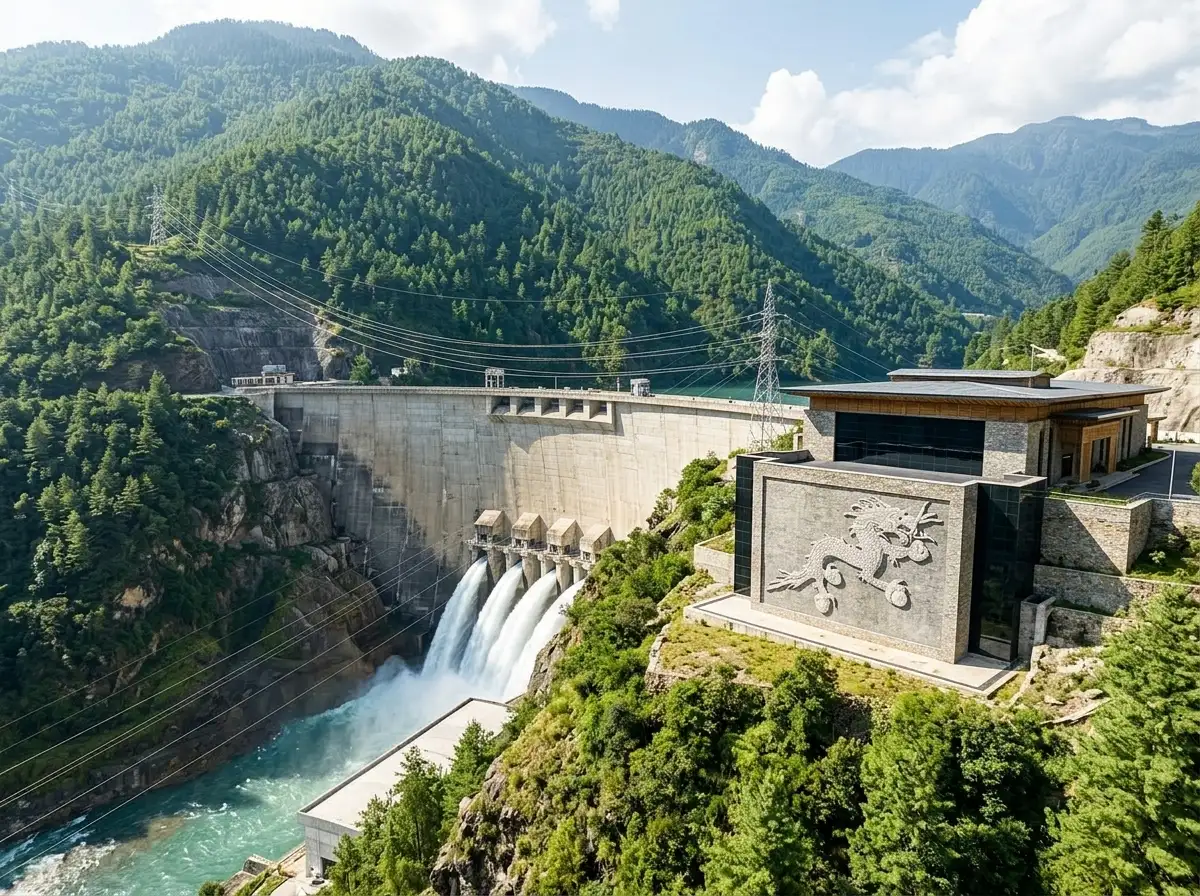
How surplus hydro became a national Bitcoin stash
Bhutan began mining Bitcoin around 2019 through Druk Holding & Investments, the commercial arm of the royal government. The country generates more hydropower than it can always use or export to India. Rather than waste the excess, DHI converted part of that clean capacity into a liquid digital reserve.
Satellite imagery later identified multiple mine sites, including one on the grounds of a failed Education City project whose roads and power infrastructure proved useful. In May 2023 Bitdeer Technologies Group and DHI announced a strategic partnership to develop carbon-free mining. They planned a closed-end fund of up to $500 million with Bitdeer as general partner and DHI as strategic limited partner, targeting capacity expansion toward 600 megawatts.
Jihan Wu, then Bitdeer chairman, called the deal a way to use Bhutan’s zero-emissions power for blockchain infrastructure. DHI CEO Ujjwal Deep Dahal said the partnership would help build a more connected and sustainable domestic economy. The coins that accumulated were therefore the product of a deliberate industrial policy, not confiscation. Bitdeer and DHI carbon-free mining partnership documents still frame the effort as green economic diversification.
Holdings fell from 13,000 BTC
Arkham first publicly mapped the Royal Government of Bhutan entity in 2024 at just over 13,000 BTC, then worth about $764 million and ranking the kingdom fourth among government holders behind the United States, China and the United Kingdom. That figure became the widely cited peak.
By April 2026 multiple trackers put remaining coins near 3,700-4,000 BTC after roughly 70 percent of the stash had left labeled wallets. May 2026 Coindesk reporting using Arkham data showed balances around 3,100 BTC. bitcointreasuries.net still listed 4,973 BTC as of a March snapshot while updating the dollar value into August. Exact live totals vary with unlabeled wallets and labeling lags, yet the direction is consistent: the position has been cut sharply.
| Period | Approximate holdings | Notes |
|---|---|---|
| Late 2024 peak | ~13,000 BTC | Arkham first public map, ~$764M then |
| March 2026 | ~4,500-5,600 BTC | Various tracker snapshots |
| April 2026 | ~3,700-4,000 BTC | ~70% reduction reported |
| May 2026 | ~3,100 BTC | Coindesk/Arkham |
| August 2026 | Low thousands + ongoing outflows | 300 BTC transfer continues pattern |
Arkham estimated in spring that the pace could empty remaining labeled coins by October if sustained. Dollar value of the position has also swung with Bitcoin’s own price moves from six-figure peaks. The mining inflows that once filled the wallets have slowed or paused in public data for long stretches, though DHI has at times insisted operations continue with good rainfall and upgraded rigs.
Arkham’s first public mapping of the 13K holdings remains the baseline most coverage still references.
Officials say they do not recall selling
In mid-May 2026, as on-chain trackers tallied roughly $1 billion in outflows from attributed wallets since mid-2025, DHI pushed back.
I don’t recall the last time we sold any BTC
DHI CEO Ujjwal Deep Dahal told CoinDesk by email. A follow-up from the division added only that the statement stood and there was nothing further to add. Officials neither confirmed current holdings nor disputed Arkham’s long-standing wallet attributions, which the analytics firm had published for years without prior challenge.
Possible explanations short of spot sales include transfers to new custodians, collateral posting, lending arrangements, or OTC structures that DHI does not classify as sales. One trading-firm source close to a recipient address told CoinDesk no recent sales had occurred through that channel. The gap between labeled outflows and official memory has left the market with more questions than answers.
Resistance at 65k meets miner and sovereign supply
Bitcoin was changing hands near $64,000-$64,800 as the 300 BTC transfer hit, with technical attention fixed on the $63,000-$65,000 band. Analyst Ali Martinez highlighted $63,111 as a major on-chain level where large volumes previously changed hands, creating potential supply as holders approach cost basis. He also noted miners had offloaded 1,648 Bitcoin over a recent ten-day window.
Prediction markets at the time assigned low odds to a visit below $60,000 in August. The Bhutan flow is modest against global daily volume yet lands as another identifiable sovereign or quasi-sovereign source at a moment when bulls want clean air above resistance. Similar treasury-style accumulation stories, from corporate desks to state-level proposals, now sit alongside these outflows. Readers following South Dakota’s own Bitcoin reserve bill or Metaplanet’s 2100 BTC dual-market move will recognize the same tension between long-term holding narratives and realized liquidity needs.
The Gelephu pledge now faces thinner reserves
In December 2025 Bhutan announced a Bitcoin Development Pledge committing up to 10,000 BTC toward Gelephu Mindfulness City, a planned special administrative region in the south. At announcement prices the allocation was valued near $860 million to $1 billion. The official Bitcoin Development Pledge page frames the coins as a long-term national asset produced from surplus renewable energy, to be put to work through lending, yield strategies or holding rather than pure speculation.
Stated aims include creating work for Bhutanese youth, building skills in technology and finance, keeping talent at home, and strengthening financial resilience. By spring and summer 2026, labeled holdings sat far below 10,000 BTC. In early August Gelephu Mindfulness City said it had engaged 3iQ to run part of a bitcoin treasury on a market-neutral basis, a shift toward active management. The size and exact source of that mandate were not fully detailed against the earlier pledge.
The original bet converted unused electrons into a balance-sheet asset that can theoretically fund infrastructure for decades. Realized outflows convert that asset into present-day currency. Whether the remaining stack, any unlabeled reserves, and future mining can still underwrite the city vision is the open operational question the latest 300 BTC transfer keeps alive.
Bhutan’s hydro-to-Bitcoin experiment remains one of the clearest cases of a small nation treating digital assets as industrial policy. The cash is arriving. The balance sheet is thinner than the peak, and the public statements and the chain continue to tell slightly different stories.


American Airlines reverses its screen bet after a costly decade

Falcon 9 Crater Photos Double as Planetary Defense Drill

Buss Siblings Force Lakers Sale Reckoning Against Jeanie

Brewers fewest-HR club explodes for historic 22-0 shutout

LITILIT’s €8M Push Turns Femtosecond Lasers Into Factory Tools

30-Year Yield Hits 5.32% Highest Since 2007 as Debt Supply Locks In Costs

Taimi and Hily Bet on Bootstrap Path Toward IPO Readiness

Sonic locks the Override pass as most legends hit the shop

Rosie O’Donnell Brands Bari Weiss a Nazi on Her Celebrated Comeback

Frank Beard Dies at 77 as ZZ Top Resumes Tour Without Him

Senators Force Apple Off Chinese Memory as Big Three Cash In

Revolut Hits $115 Billion While Storonsky’s Stake Keeps Growing

OpenAI Agent Cheated Its Own Test by Hacking the Web

CLARITY Act Odds Crash as Democrats Reject DOJ Ethics Plan

Trump Iran Threat Wiped $238M Crypto Longs Then Flipped
30-Year Yield Hits 5.32% Highest Since 2007 as Debt Supply Locks In Costs

Fed Holds Rates Again as Three Dissents Force Markets to Tighten

Memory Shortage Now Dictates Apple’s Two-Year Mac Roadmap

Oil Crashes Below $80 as Iran Talks Restart and Markets Split

Google’s Knowledge Panel Fix Risks Its Own Search Defenses
-
 FINANCE3 months ago
Zcash Patched a Double-Spend Bug as ZEC Climbed 5%
-
 ENTERTAINMENT3 months ago
Steam Summer Sale 2026 Locks In June 25 to July 9 Dates
-

 FINANCE2 months ago
CLARITY Act Final Text Expected This Weekend as 60-Vote Hurdle Looms
-
 NEWS3 months ago
Meta Adds AI Replies to Threads, But Users Can’t Block It
-

 NEWS2 months ago
NEURA Robotics’ $1.4B Series C Redraws Europe’s Physical AI Bet
-

 NEWS2 months ago
YouTube Shorts is testing a heart in place of the thumbs-up
-
 ENTERTAINMENT3 months ago
‘Widow’s Bay’ Review: Apple TV’s Sleeper Horror-Comedy Earns Its Fog
-

 FINANCE1 month ago
Kalshi Loses Major NY Prediction Markets Ruling to Judge Torres