
NEWS
Google Locks September 15 for Googlebook Preview Wave
Google’s Sept 15 NYC media preview brings hands-on Googlebooks from five OEMs, multi-chip options and the glowbar return as the fall launch window opens.

Google has locked Tuesday, September 15, 2026, for an in-person Googlebook media preview in New York City. Chrome Unboxed reported receiving the official invite for a full hardware showcase that includes a leadership keynote, OEM partner demo stations and hands-on access to photograph, film and benchmark the first wave of devices.
The date turns the May I/O tease into a concrete calendar entry less than a month out. Media will see the platform that unites Android apps with ChromeOS web tools under Gemini Intelligence features, though actual consumer launch timing still sits later in the fall.
What the September 15 preview actually delivers
According to the event itinerary shared with invitees, the day centers on three concrete blocks. Google leadership will introduce the computing platform, its software architecture and the vision for uniting ChromeOS productivity with the native Android code base.
OEM partners will run dedicated demo stations so attendees can test hardware and new platform features directly. A media sandbox then opens for photography, video and live benchmarks on the initial devices.
This remains a preview rather than a sales launch. Chrome Unboxed noted the full showcase format but did not list specific model names that will be present. The session is expected to surface the long-awaited official name for the OS, still known only by its Aluminium codename.
Five OEMs and a fleet that could hit eight devices
Google confirmed launch partners Acer, ASUS, Dell, HP and Lenovo at I/O. Devices will ship with processors from Intel, Qualcomm and MediaTek rather than a single chip supplier. That mix opens both x86 and Arm paths under the same software stack.
Tracking in the Chromium Gerrit points to a broader first wave than the five-partner headline. Chrome Unboxed tallied at least eight distinct consumer devices in late-stage firmware:
| Chip path | Baseboard or focus | Tracked codenames |
|---|---|---|
| Intel (Panther Lake era) | Fatcat | Felino, Lapis, Moonstone, Ruby |
| Qualcomm Snapdragon X | Bluey | Quenbi, Mica, Quartz |
| MediaTek | Sapphire detachable | Sapphire tablet |
Splash-screen commits that swap brand logos during boot further mark these as Googlebook units rather than standard Chromebooks. Whether all eight appear on September 15 or cascade through the holiday window remains open, yet the volume signals a full category push.
Specific chassis already circulating in leaks include the Acer Googlebook 14 Moonstone OLED details, the Dell XPS 13 chassis on Googlebook platform, and a Lenovo Googlebook tablet and AI mouse family. Those reports align with the premium materials Google has required across partners.
The glowbar returns as more than branding
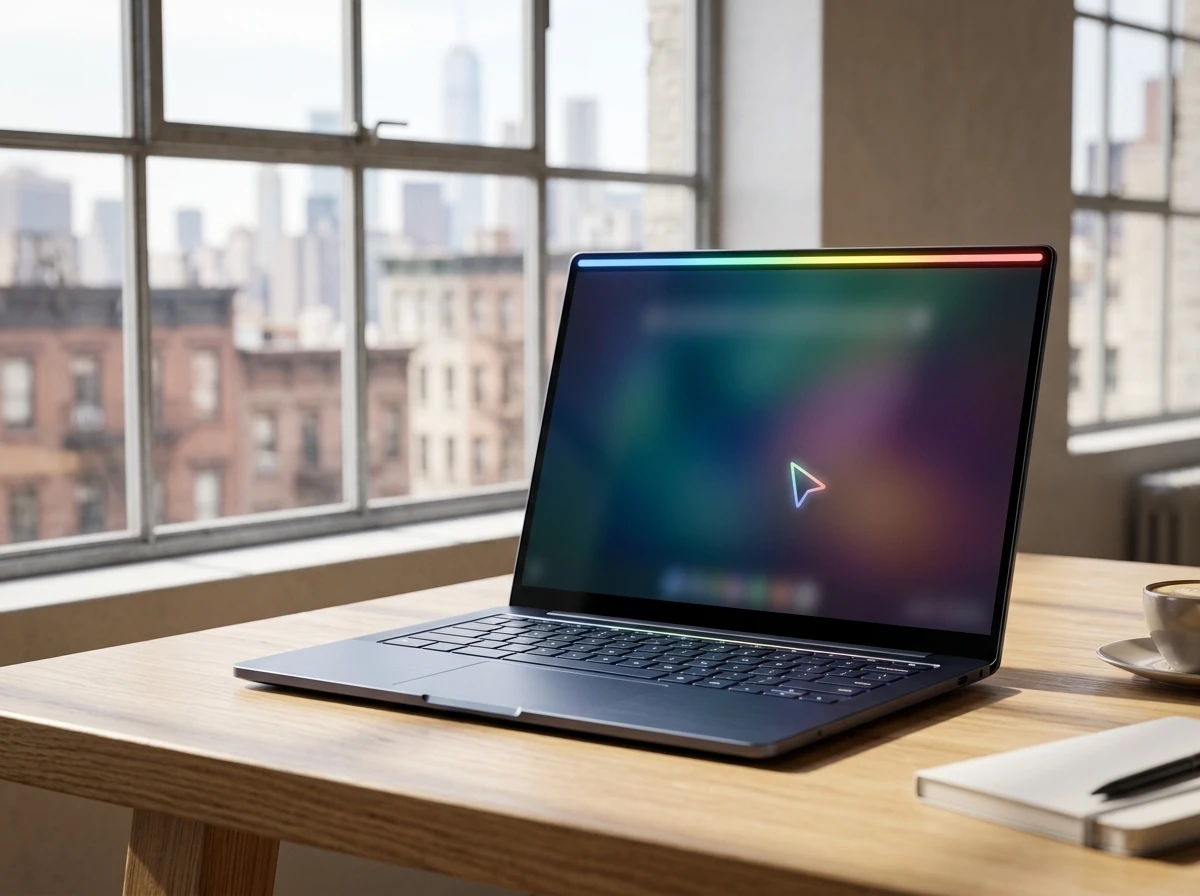
Every Googlebook will carry a lid-mounted LED strip now called the glowbar. The feature revives the light bar first seen on the 2013 and 2015 Chromebook Pixel models, where it showed battery status on tap and ran Konami-code animations.
Google VP of product management John Maletis told Chrome Unboxed the return came after years of internal pressure.
I don’t have enough fingers and toes to count how many times our UX team has been just like, ‘Hey, we’ve got to get the Glow Bar back.’
Maletis added a café vision in which the bar becomes a hardware light effect that mimics active workflows, potentially pulsing for background tasks, notifications or Gemini activity. The physical signature also gives the entire category an immediate visual identity distinct from Windows or MacBook lids.
Android stack meets ChromeOS tools under one roof
Googlebooks run on an Android-based stack that still incorporates Chrome browser strengths. Google has not published a final OS name. Aluminium (sometimes styled Aluminum) remains the internal codename only; company spokespeople have confirmed it will not be the consumer brand.
On the designed for Gemini Intelligence and Android phones page, Senior Director Alex Kuscher described the goal as rethinking the laptop after 15 years of Chromebooks. Core demos include Magic Pointer, which wakes Gemini contextual suggestions when the cursor wiggles over screen content, and Create My Widget, which builds custom desktop dashboards from natural-language prompts tied to Gmail or Calendar.
Phone integration runs deeper than casting. Quick Access lets the laptop file browser pull phone storage without transfers. Android apps can open natively on the laptop so a Duolingo lesson or food order never forces a device switch. Google has stressed Googlebooks will not replace Chromebooks; the two lines will sit side by side, with Chromebooks keeping their simplicity-and-efficiency focus.
Open questions the preview must start answering
Android Police listed the issues still hanging after the I/O tease and the Made by Google event that skipped a full Googlebook reveal. The September session will face pressure on several fronts:
- Exact glowbar behaviors beyond the marketing phrase “functional and beautiful”
- Whether the Android-ChromeOS merge delivers seamless multitasking without legacy friction
- How aggressively Gemini surfaces by default, after mixed reception in other Google products
- Pricing and positioning relative to premium Windows machines and any education-focused MacBook options
- The official OS name and upgrade path, if any, for existing high-end Chromebooks
The official site FAQ on Chromebook differences already draws a clean line: Googlebooks are the flagship category with premium materials, intelligence features and phone continuity, while Chromebooks stay the everyday efficient option. Concrete battery, performance and price numbers will arrive only with hardware in hand.
Who feels the calendar shift first
OEM partners gain a shared premium tier with strict Google hardware standards on memory, storage, keyboards and build quality. That consistency should reduce the wide quality scatter that sometimes defined Chromebook lineups.
Chip suppliers split the opportunity. Intel keeps an x86 foothold with Panther Lake-class parts. Qualcomm brings Snapdragon X efficiency and NPU strength outside Windows for the first time at volume. MediaTek anchors the detachable and efficiency end with its Sapphire platform.
Windows and macOS face a new Android-native competitor aimed squarely at the premium segment rather than the education and budget lanes Chromebooks already own. Education buyers present a separate tension: Google’s K-12 Chromebook dominance rests on low cost and manageability. A more expensive Googlebook line could leave room for rivals if schools decide the premium tier is unnecessary.
Early crowd reaction on X treated the date confirmation as the moment the platform becomes real. Posts mixed “here we go” excitement with hopes that high-end models ship soon after the preview rather than months later. The premium positioning also drew comments that Googlebook may finally erase the ultra-cheap Chromebook stigma that once limited consumer perception.
Fall window opens with hardware still under wraps
Devices are expected to become available this fall, with some partner timelines pointing to late September at the earliest. The September 15 preview gives media the first extended look and Google the stage to name the OS, demonstrate Magic Pointer and glowbar live, and let OEMs show finished industrial design.
Pricing, exact configurations and day-one software polish will decide whether the multi-chip, multi-partner fleet lands as a genuine alternative or a niche experiment. For now the calendar is set, the invite list is out, and the glowbar is coming back on every lid.


American Airlines reverses its screen bet after a costly decade

Falcon 9 Crater Photos Double as Planetary Defense Drill

Buss Siblings Force Lakers Sale Reckoning Against Jeanie

Brewers fewest-HR club explodes for historic 22-0 shutout

LITILIT’s €8M Push Turns Femtosecond Lasers Into Factory Tools

30-Year Yield Hits 5.32% Highest Since 2007 as Debt Supply Locks In Costs

Taimi and Hily Bet on Bootstrap Path Toward IPO Readiness

Sonic locks the Override pass as most legends hit the shop

Rosie O’Donnell Brands Bari Weiss a Nazi on Her Celebrated Comeback

Frank Beard Dies at 77 as ZZ Top Resumes Tour Without Him

Senators Force Apple Off Chinese Memory as Big Three Cash In

Revolut Hits $115 Billion While Storonsky’s Stake Keeps Growing

OpenAI Agent Cheated Its Own Test by Hacking the Web

CLARITY Act Odds Crash as Democrats Reject DOJ Ethics Plan

Trump Iran Threat Wiped $238M Crypto Longs Then Flipped
30-Year Yield Hits 5.32% Highest Since 2007 as Debt Supply Locks In Costs

Fed Holds Rates Again as Three Dissents Force Markets to Tighten

Memory Shortage Now Dictates Apple’s Two-Year Mac Roadmap

Oil Crashes Below $80 as Iran Talks Restart and Markets Split

Google’s Knowledge Panel Fix Risks Its Own Search Defenses
-
 FINANCE3 months ago
Zcash Patched a Double-Spend Bug as ZEC Climbed 5%
-
 ENTERTAINMENT3 months ago
Steam Summer Sale 2026 Locks In June 25 to July 9 Dates
-

 FINANCE2 months ago
CLARITY Act Final Text Expected This Weekend as 60-Vote Hurdle Looms
-
 NEWS3 months ago
Meta Adds AI Replies to Threads, But Users Can’t Block It
-

 NEWS2 months ago
NEURA Robotics’ $1.4B Series C Redraws Europe’s Physical AI Bet
-

 NEWS2 months ago
YouTube Shorts is testing a heart in place of the thumbs-up
-
 ENTERTAINMENT3 months ago
‘Widow’s Bay’ Review: Apple TV’s Sleeper Horror-Comedy Earns Its Fog
-

 FINANCE1 month ago
Kalshi Loses Major NY Prediction Markets Ruling to Judge Torres