
FINANCE
Bitcoin Up 2% as U.S.-Iran Ceasefire Holds; Analysts Stay Wary
Bitcoin rose 2% after the U.S. and Iran agreed to halt strikes, but Rekt Capital, Thielen, Cowen, and Cheds Trading warn the bounce may not hold.

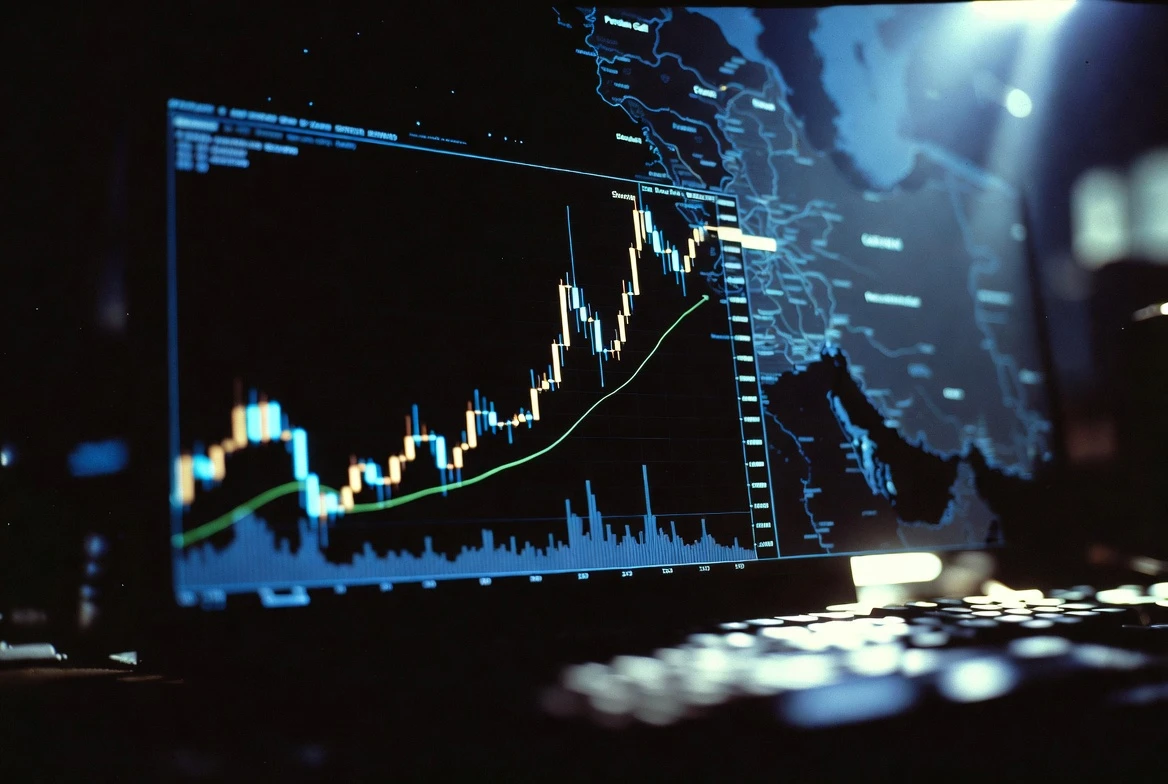
Bitcoin price climbed 2% on Sunday evening after the U.S. and Iran agreed to halt strikes over the Strait of Hormuz. The bounce lifted BTC from a 24-hour low of $58,856 to $60,089, and the coin was last changing hands at $59,856 with a 24% rise in trading volume, as four analysts flagged Bitcoin’s fragile bounce. The move came about an hour before U.S. stock futures were set to reopen.
Four analysts who follow Bitcoin’s chart structure say the rebound is fragile. Rekt Capital, 10x Research’s Markus Thielen, Benjamin Cowen, and Cheds Trading each pointed to separate technical signals, from a $61,000 resistance ceiling to a trend model that flipped bearish in May.
Ceasefire Sends Bitcoin Up 2% Before the U.S. Open
The price jump landed in thin Sunday liquidity. Bitcoin touched $58,856 before reports of the ceasefire filtered out, then ran to $60,089 within hours. By Monday morning in Asia, the spot price had settled back to $59,856, with 24-hour trading volume up 24% from the prior session.
The bounce tracked U.S. stock futures higher as traders priced in the halt. A senior U.S. official told Axios, “We decided to stop all the kinetic activity,” using the military’s term for strikes and other attacks, and a second official said both sides will stand down “for now” with “vessels can move freely” through the strait. Under the MOU that ended the war, Iran committed to make its best efforts to allow safe passage of commercial vessels through the strait, and the U.S. lifted its blockade of Iranian ports. A third source with knowledge confirmed Tuesday’s planned meeting in Doha, the capital of Qatar. The announcement landed about an hour before U.S. equity futures reopened for the week.
What Triggered the Late-Sunday Move
The ceasefire was hammered out against a four-day escalation that began with a strike on a Qatari oil tanker. The MOU that ended the war has been the subject of competing interpretations between the two sides. US and Iran halt strikes, plan Qatar talks, Axios reported on June 28, citing a senior U.S. official who said, “We decided to stop all the kinetic activity,” using the military’s term for strikes.
The U.S. struck Iran after markets closed on Friday, prompting Iran to fire on American bases in Kuwait and Bahrain. Trump’s envoys Steve Witkoff and Jared Kushner will travel to Doha on Monday and meet on Tuesday with the emir of Qatar, the Qatari prime minister, and other regional officials.
zerohedge summed up the timing in one line: “Carbon copy headline every Sunday evening.” The geopolitical catalyst came just an hour before U.S. stock market futures reopened. Bitcoin followed the risk-on script. The broader Middle East story stayed in the background while traders watched the chart.
Why Rekt Capital Is Watching $61K
Rekt Capital flagged $61,000 as the level that matters this week. Bitcoin has failed to clear it for four consecutive sessions, and the bounce to $60,089 left the ceiling untested again.
Cheds Trading agreed, pointing to chart weakness beyond the $61,000 ceiling. A break below recent support would open up further downside. Both analysts framed the Sunday move as a relief bounce inside a larger bearish structure. The bearish structure is what ties the four-day rejection to the broader chart picture.
With the new Weekly, Monthly and Quarterly candle closes all just around the corner, it would be wise to wait to observe those first confirmations for additional insight.
Rekt Capital made the case for waiting before treating the bounce as a reversal. The weekly, monthly, and quarterly candle closes are all due in the next several sessions.
He told followers to wait for the June monthly close, which would reveal the levels where a potential July relief rally could start. Rekt Capital’s analysis appeared ahead of the candle close. The U.S. strikes happened despite the Senate having passed the War Powers Act, a procedural signal that did not stop the operation.
Thielen’s Trend Model Turned Bearish Five Weeks Ago
10x Research’s Markus Thielen isn’t treating the relief bounce as a buy signal. His Bitcoin trend model flipped bearish on May 22, the day Bitcoin traded at $75,600, and has stayed bearish through every buy-the-dip attempt since.
The model treats May’s price action as a regime change rather than a dip within a bull market. Buy-the-dip calls from late May and early June have all failed to produce a durable low. Thielen’s framework does not yet print a buy signal.
10x Research, the firm Thielen founded, publishes the trend model for institutional clients. For now, the signal points the same direction as the chartists: stay out of fresh longs.
The 200-Week Moving Average Just Broke
Cowen and Cheds Trading pointed to a separate technical event. Bitcoin just posted its lowest daily close since 2024 and its first daily close below the 200-week moving average since 2023. The break happened while headlines focused on the ceasefire.
The 200-WMA is a long-cycle trend line that Bitcoin has held since 2023. Cowen and Cheds both noted that the current break deserves weight in any framework that reads cycles off the moving average. The signal is independent of the headline catalyst. A break like this does not get ignored in long-cycle frameworks.
A close below the 200-WMA is not on its own a buy trigger. Cowen’s framework reads the break as a long-cycle marker, not a confirmed bottom. Cheds took a similar line.
The bounce to $59,856 left price back inside the 200-WMA on an intraday basis. Whether it holds on a weekly close is the question traders will answer by Friday. A weekly close back above the 200-WMA would ease one of Cowen’s flags. A close below would extend the bear-market case that Thielen’s model has been printing since late May.
- Bitcoin 24-hour low: $58,856
- Bitcoin bounce high: $60,089
- Current spot price: $59,856
- Rekt Capital resistance level: $61,000
- Thielen’s bearish-trigger price: $75,600 (May 22)
What Happens in Doha This Week
Tuesday’s meeting in Doha is the next scheduled event. Trump’s envoys Steve Witkoff and Jared Kushner will sit with the emir of Qatar, the Qatari prime minister, and other regional officials to discuss the Iran deal. The Doha venue was originally set for Switzerland to address Iran’s nuclear program; the escalation moved the talks to Qatar and refocused the agenda on the Strait of Hormuz. On Wednesday, the head of the U.S. technical team, Nick Stewart, and his Iranian counterpart, Kazem Gharibabadi, will hold separate meetings with Qatari and Pakistani mediators. The same week also brings the Fed pause and a BoJ hike, both covered in crypto’s three-catalyst week on US-Iran, Fed, and BoJ.
The ceasefire is barely 11 days old, per Axios, and is already on shaky ground. President Trump has threatened to restart the war and “complete the job” if the talks break down. The renewed fighting was sparked by competing interpretations of the MOU that ended the war, especially its terms on the Strait of Hormuz. Thielen’s trend model still prints bearish through it all.
For Bitcoin traders, the Doha talks are the week’s biggest scheduled event. Rekt Capital’s view is that confirmation has to come from the chart, not the headline.
Frequently Asked Questions
Why did Bitcoin rise on June 29, 2026?
Bitcoin rose after Axios reported the U.S. and Iran had agreed to halt strikes over the Strait of Hormuz and would meet in Doha, Qatar, on Tuesday. The news lifted BTC from a 24-hour low of $58,856 to $60,089, with the spot price settling near $59,856 and 24-hour trading volume up 24%.
What is the $61,000 resistance level analysts are watching?
$61,000 is the price ceiling Rekt Capital says Bitcoin has failed to clear for four consecutive sessions. The Sunday bounce to $60,089 stopped just short, and Rekt Capital advised followers to wait for weekly, monthly, and quarterly candle closes before treating a break above $61,000 as confirmed.
Why does the 200-week moving average matter for Bitcoin?
The 200-week moving average is a long-cycle trend line that Bitcoin has held since 2023. Cowen and Cheds Trading flagged Bitcoin’s first close below it since 2023 as a separate technical event from the headline bounce, and both treat the break as a long-cycle marker.
When and where are the U.S.-Iran talks taking place?
Political talks are scheduled for Tuesday in Doha, Qatar, with Trump’s envoys Steve Witkoff and Jared Kushner meeting Qatari officials. On Wednesday, U.S. technical lead Nick Stewart and Iranian counterpart Kazem Gharibabadi will hold separate meetings with Qatari and Pakistani mediators.
What would confirm a Bitcoin recovery, according to the analysts?
Rekt Capital says confirmation requires the weekly, monthly, and quarterly candle closes to print a hold above $61,000. Markus Thielen’s 10x Research trend model, bearish since May 22 at $75,600, would also need to flip back to bullish for the recovery thesis to take hold.


NFL Preseason Week 2 Quietly Tests the Schemes That Matter

Alonso’s Towering Drive Stands Foul and Flips Orioles Momentum

US Debt Crosses $40 Trillion as Interest Crowds the Budget

Trevon Diggs Joins Seahawks on One-Year Deal After Cowboys Exit

Pixel Watch 5 Turns Passive Trends Into Early Health Alerts

Pixel 11 Pro Fold Sleek Build Undercuts Its Own Unfolding Appeal

Tugboat Wilkinson’s Scoreless Debut Pays Off Giants’ Bailey Trade

Brown Shines for Pats as Love for Eagles Meets Trade Reality

Pixel Watch 5 Turns Wrist Data Into Early Metabolic Alerts

Resistance Stars Pay the Price in Democratic Primaries

Senators Force Apple Off Chinese Memory as Big Three Cash In

Revolut Hits $115 Billion While Storonsky’s Stake Keeps Growing

OpenAI Agent Cheated Its Own Test by Hacking the Web

Trump Iran Threat Wiped $238M Crypto Longs Then Flipped

CLARITY Act Odds Crash as Democrats Reject DOJ Ethics Plan

30-Year Yield Hits 5.32% Highest Since 2007 as Debt Supply Locks In Costs

Fed Holds Rates Again as Three Dissents Force Markets to Tighten

Memory Shortage Now Dictates Apple’s Two-Year Mac Roadmap

Oil Crashes Below $80 as Iran Talks Restart and Markets Split

Google’s Knowledge Panel Fix Risks Its Own Search Defenses
-
 FINANCE3 months ago
Zcash Patched a Double-Spend Bug as ZEC Climbed 5%
-
 ENTERTAINMENT3 months ago
Steam Summer Sale 2026 Locks In June 25 to July 9 Dates
-

 FINANCE2 months ago
CLARITY Act Final Text Expected This Weekend as 60-Vote Hurdle Looms
-
 NEWS3 months ago
Meta Adds AI Replies to Threads, But Users Can’t Block It
-

 NEWS2 months ago
NEURA Robotics’ $1.4B Series C Redraws Europe’s Physical AI Bet
-

 NEWS2 months ago
YouTube Shorts is testing a heart in place of the thumbs-up
-
 ENTERTAINMENT3 months ago
‘Widow’s Bay’ Review: Apple TV’s Sleeper Horror-Comedy Earns Its Fog
-

 FINANCE1 month ago
Kalshi Loses Major NY Prediction Markets Ruling to Judge Torres