
FINANCE
Fed Rate Hike Odds Climb as Washington Faces the Biggest Bill
Fed rate hike odds near 34% ahead of the July 29 vote, but Treasury debt, not small business loans, faces the largest repricing cost of all.

The Federal Reserve heads into its July 29 meeting with the odds of a quarter-point rate hike sitting near 34%, according to the freshest reading from CME Group’s FedWatch tool, down from a peak above 46% two weeks earlier but far above the near-zero chance traders priced in this spring. Fed Chair Kevin Warsh has spent six weeks talking like a man who wants that number higher, not lower.
Founders with variable-rate loans are watching Wednesday’s vote closely. The U.S. Treasury has far more riding on it. Washington carries $31.68 trillion in debt held by the public, and a slice of that pile reprices at auction every single week, long before a hike ever reaches a small business credit line.
Odds Swing From 10% to 46% in a Volatile Two Weeks
Rate-hike odds have moved in wide swings all month. On July 13, CME’s FedWatch tool showed a 46.5% chance of a quarter-point increase, up sharply as oil prices jumped on the conflict between the United States and Iran. Prediction market Kalshi priced the same outcome lower, at 36%, showing traders were not fully aligned even at the peak.
That conflict was doing damage elsewhere too. The same volatility had already pushed borrowing costs past 6% for some consumer loans, even as a shaky truce briefly sent crypto markets rallying on ceasefire hopes.
- July 13: CME’s FedWatch tool shows a 46.5% chance of a hike as oil prices jump on the Iran conflict, while Kalshi prices it lower at 36%.
- July 15: The odds fall back to just 10.7% as the geopolitical shock fades.
- Late July: Odds nearly triple within a week, climbing back toward the low 30s as inflation data keeps running hot.
- July 27 to 28: The freshest FedWatch reading puts hike probability at 34.3%, with a 65.7% chance the Fed holds steady.
“The Fed will find holding steady a harder case to make than it looked even a few weeks ago,” Nigel Green, chief executive of the financial advisory firm deVere Group, wrote in a July 23 note cited by CBS News.
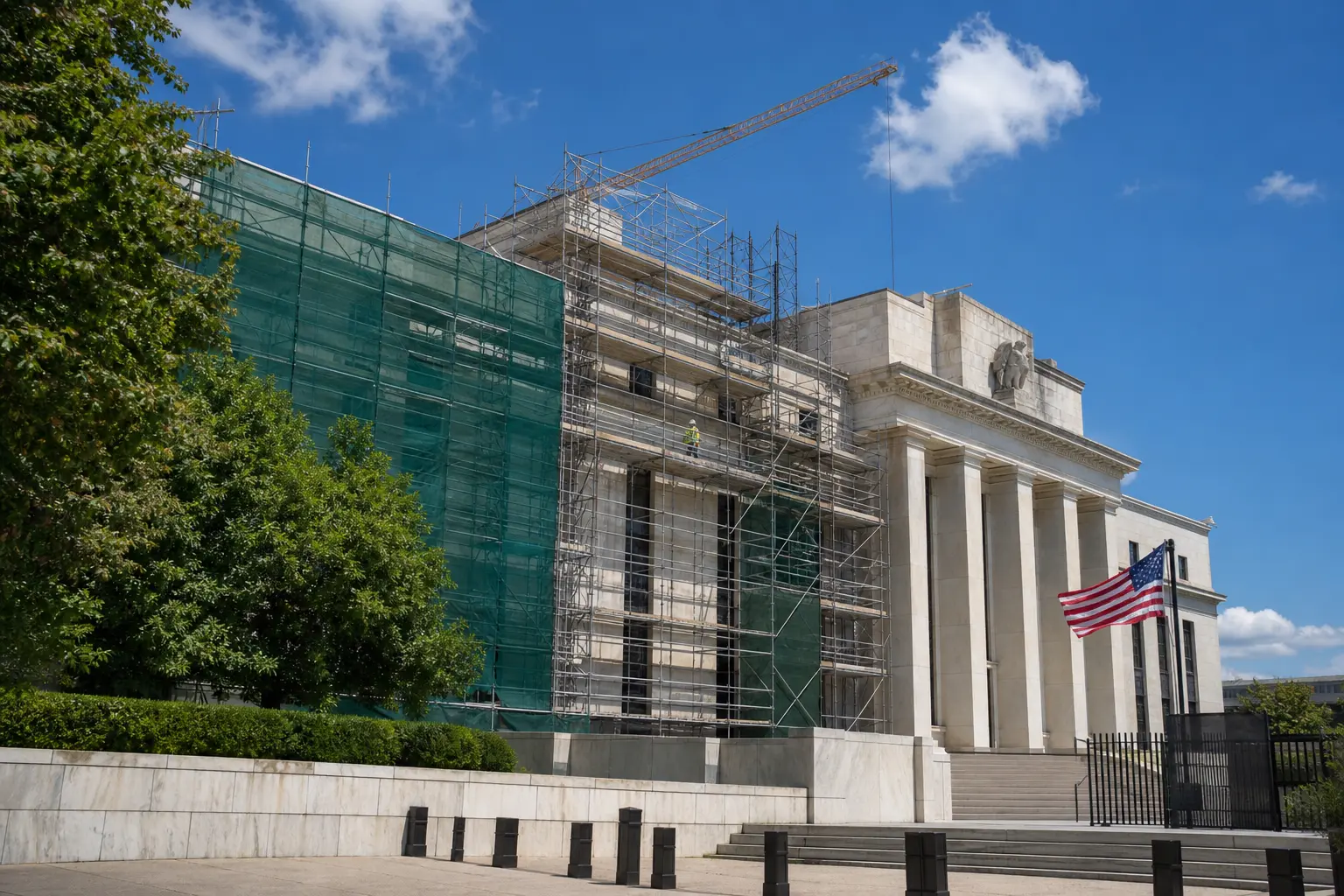
Warsh Abandons the Old Playbook on Inflation
Kevin Warsh, the Federal Reserve chair since mid-May 2026, has made his priorities plain since replacing Jerome Powell. Inflation is running at 4.2% year over year, more than double the Fed’s 2% target and the highest reading in three years.
At his debut meeting as chair on June 17, 2026, Warsh held the federal funds rate steady at 3.50% to 3.75%, but the committee’s own projections told a different story than three months earlier. In March, no policymaker had penciled in a single hike for the year, and the committee as a whole forecast one cut. By June, nine of eighteen participants projected at least one increase, and the median policymaker now expects one too.
I guess they’d be disappointed. We’re going to deliver price stability.
Warsh made that point at the European Central Bank’s forum in Sintra, Portugal, in late June, responding to a question about whether households should expect the Fed to tolerate inflation running above target.
The Treasury Is the Room’s Biggest Variable-Rate Borrower
Every founder worried about a credit line should look at a bigger number first. The Treasury Department owed $39.39 trillion in gross national debt as of July 6, 2026, up $2.81 trillion from a year earlier. Debt held by the public, the slice that actually pays market interest, stood at $31.68 trillion.
Demand for that debt has not disappeared despite the size of the pile. The bid-to-cover ratio on 4-week bills, a gauge of auction demand, was 2.72 in June, comfortably above the 2.0 level that signals healthy investor appetite. Three-month bills averaged 3.87% in the first quarter of fiscal 2026, when total debt stood near $38.5 trillion.
That is the mechanical reason a hike matters more in Washington than on Main Street. Short-term paper reprices within weeks. The table below breaks down who feels it first, and by how much.
| Borrower or Holder | Type of Debt | Approximate Scale | What a Hike Does |
|---|---|---|---|
| U.S. Treasury | Short-term bills and floating-rate notes | $31.68 trillion held by the public | Reprices within weeks as bills roll over at auction |
| Regional banks | Floating-rate commercial and consumer loans | Loan books in the hundreds of billions per major lender | Loan yields adjust faster than deposit costs, widening margins |
| Small business borrowers | Prime-linked credit lines, SBA loans, equipment financing | Varies by company | Monthly payments rise within weeks; underwriting tightens |
| Existing bondholders | Fixed-rate notes and 30-year bonds | Recently priced near 4.93% on the long end | Insulated until maturity; new purchases lock in the higher yield |
Regional bank exposure and the Treasury’s own bill schedule move on the same lever. Everything else in that table waits its turn.
Every Basis Point Lands on a Trillion-Dollar Tab
The Congressional Budget Office already expects interest costs to be one of the fastest-growing lines in the federal budget, hike or no hike. Net interest is projected to climb from $1.0 trillion in fiscal 2026 to $2.1 trillion by fiscal 2036, or from 3.3% to 4.6% of GDP. Over the next decade, cumulative interest payments could reach $16.2 trillion, according to tracking of CBO figures by the Peter G. Peterson Foundation.
That bill is already climbing before Wednesday’s vote. Fortune reported the Treasury has paid close to $3 billion a day in interest since October, citing CBO data, as more of the debt pile matures and gets reissued at today’s higher rates.
Not all of that debt moves at the same speed. Here is how the clock runs on each type.
- 4-week bills – reprice almost immediately at each reauction, the fastest channel for a Fed move to hit the Treasury’s own books
- 13-week and 26-week bills – reset within one or two quarters, covering a large share of the debt held by the public
- Floating-rate notes – pay a rate tied directly to short-term Treasury yields, so they move with the Fed almost automatically
- 10-year and 30-year debt – locked in for decades, so a hike shows up only when that debt is refinanced, not before
A 30-year bond issued this year locks in near 4.93% for three decades, according to rate tracker PrimeRates, regardless of what the Fed does next week. A 4-week bill has no such shelter.
Banks Gain on the Margin Founders Are Losing
Regional banks stand on the other side of this trade. Analysts at NAI 500 called the banking sector one of the clearest winners of the Fed’s hawkish pivot after June’s meeting scrapped long-held expectations for cuts. Fifth Third Bancorp and Prosperity Bancshares are among the regional lenders that analysts at Simply Wall St flagged as positioned to benefit, since floating-rate loan books reprice faster than the deposits that fund them.
Small businesses sit on the other side of that same mechanism. Prime-linked credit lines, SBA (Small Business Administration) loans, and equipment financing reset with the federal funds rate, so a quarter-point hike shows up in a monthly statement within weeks. Fixed-rate borrowers keep their current payment, but tighter lending standards that typically follow a hike can make the next loan harder to close.
Why Warsh’s Press Conference Could Outweigh the Vote
Because the rate decision itself is close to a coin flip, what Warsh says at 2:30 p.m. Eastern on July 29 may move markets more than whichever way the vote goes. His language on inflation, the labor market, and future meetings will shape whether traders treat July as a one-time move or the start of a longer cycle.
Warsh has already shown he reads from a different script than his predecessor. He downplayed the employment side of the Fed’s dual mandate this spring, saying price stability comes first even if the labor market softens. That framing matters heading into a meeting where nine of eighteen committee members already see room for one more increase this year.
Wednesday’s vote might come down close to a coin flip. Washington’s next interest payment does not wait on the outcome.
Frequently Asked Questions
When Does the Fed Announce Its July Decision?
The Federal Open Market Committee (FOMC) votes on July 29, 2026, with the announcement scheduled for 2 p.m. Eastern time. Warsh holds a press conference at 2:30 p.m. Eastern, according to CBS News, and his wording on future meetings typically moves markets as much as the rate decision itself.
Does a Rate Hike Change the Treasury Bonds I Already Own?
Not if you hold them to maturity. A 10-year note or 30-year bond locks in its yield the day it is issued, so existing holders see no change. New buyers face different math, since fresh issuance prices at whatever rate the market demands and short-term bills reprice at every auction, sometimes within four weeks.
Why Is Warsh Downplaying the Fed’s Employment Mandate?
Warsh has said unambiguously that price stability comes first while inflation sits at 4.2% year over year, more than double the Fed’s target. That marks a shift from the Fed’s recent approach of weighing labor market softness alongside inflation, and it is a big reason hike odds are elevated at all.
Disclaimer: This article is for informational purposes only and is not investment, financial, or legal advice; bank stock performance and Treasury market movements are inherently uncertain, so speak with a licensed financial professional before acting, and note that figures here reflect data available as of July 28, 2026.


A Chinese Open Model Just Saved Hugging Face From OpenAI

Samsung’s Galaxy Glasses Run on Meta’s Own Chip Too

Letitia James Warns the Clarity Act Would Gut State Fraud Fights

Tether Gold Wins Shariah Approval as Scholars Split on Crypto

Tether Gold Earns Shariah Certification to Chase Institutional Billions

Judge Blocks Minnesota’s Prediction Market Ban, Tribes Brace

Google’s Phone to Watch Unlock Fix Cuts Both Ways

Ondo Network Goes Live and Sidelines Its Blue-Chip Chain

Tom Lee’s BitMine Doubles Down on Its Ethereum Bet

Fed Rate Hike Odds Climb as Washington Faces the Biggest Bill

CLARITY Act Final Text Expected This Weekend as 60-Vote Hurdle Looms

Kalshi Loses Major NY Prediction Markets Ruling to Judge Torres

Fed Minutes Cite AI Demand as Inflation Risk, Put a 2026 Hike Back on the Map

Marker AI Writing Startup Lands $13M Seed Led by Index Ventures

Dota 2 Esports World Cup 2026: Spirit Defends $2M Title In Paris

Meta’s Muse Spark 1.1 Beats Rivals on Price, Trails on Coding

ARC Intelligence Closes €4M Seed Round in Roughly a Week

CS2 Premier Season 5 Lands With Cache and a C4 Damage Rework

Trump Calls Iran ‘Islamic Republic of Japan’ as Ceasefire Ends

Finto Picks Munich Over Silicon Valley After YC, Raises $3.4M
-
 FINANCE2 months ago
Zcash Patched a Double-Spend Bug as ZEC Climbed 5%
-
 ENTERTAINMENT2 months ago
Steam Summer Sale 2026 Locks In June 25 to July 9 Dates
-
 NEWS3 months ago
Meta Adds AI Replies to Threads, But Users Can’t Block It
-
 FINANCE3 weeks ago
CLARITY Act Final Text Expected This Weekend as 60-Vote Hurdle Looms
-
 ENTERTAINMENT2 months ago
‘Widow’s Bay’ Review: Apple TV’s Sleeper Horror-Comedy Earns Its Fog
-
 NEWS7 months ago
FolderFresh Review: This Free Tool Automates Windows File Organizing
-
 NEWS4 months ago
U.S. Navy Deploys Solar-Powered Lightfish Drone to Patrol Oceans
-
 FINANCE3 weeks ago
Kalshi Loses Major NY Prediction Markets Ruling to Judge Torres