
NEWS
Facebook Verified Brings Back the Facial Recognition Meta Deleted
Meta’s free Facebook Verified badge asks users for selfie video years after deleting a billion face templates and paying billions in privacy settlements.

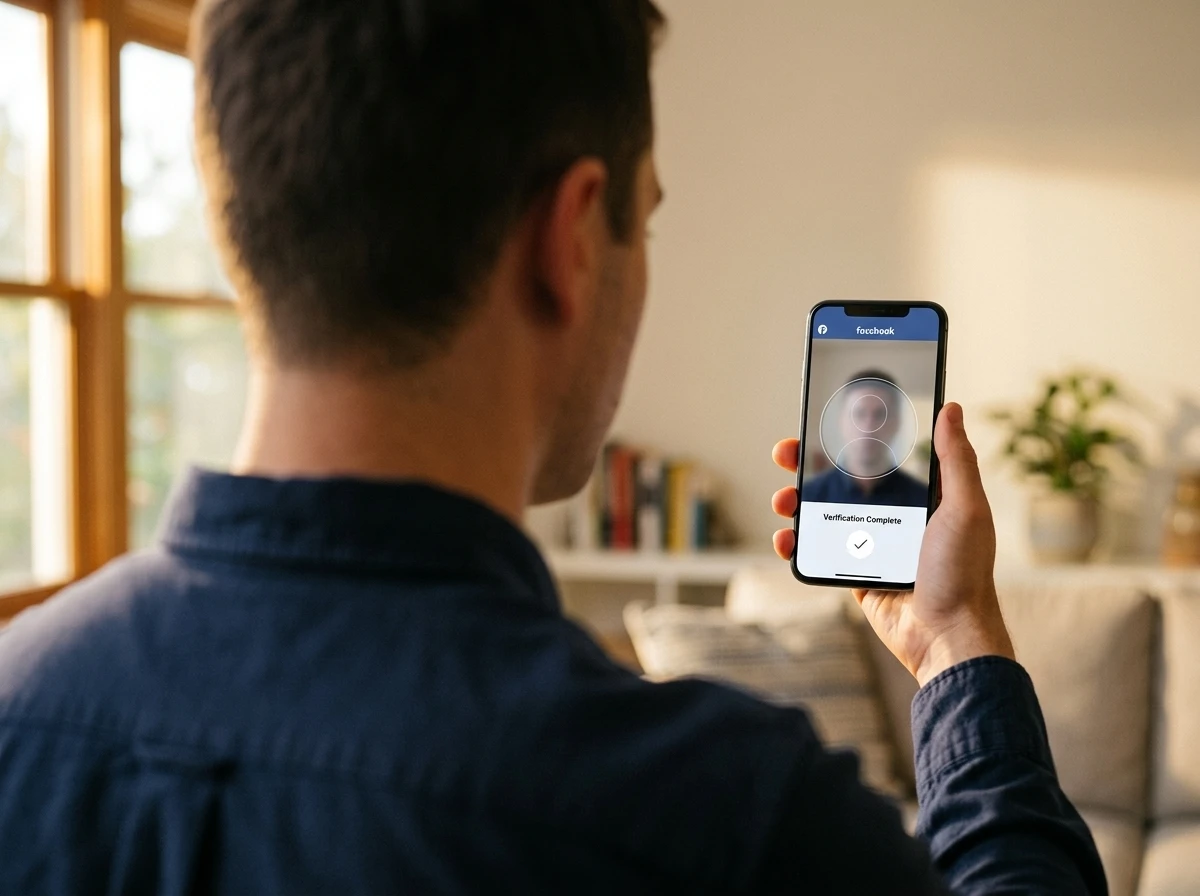
Meta is rolling out a free verification badge that requires the same facial recognition scan it deleted for a billion users in 2021. The feature, called Facebook Verified, adds a white check mark to profiles across Marketplace, Dating, and Groups after users record a short selfie video. It is separate from Meta Verified, the paid subscription that carries a blue check mark.
Google introduced its own selfie video tool one day earlier, built for account recovery rather than a trust badge. Both companies are now asking people to hand over fresh video of their faces, years after facial recognition turned into one of the most expensive legal categories in tech.
How the White Check Mark Works
Meta announced Facebook Verified on July 24, 2026, describing it as a simple selfie based verification process that costs nothing. Users who want the badge record a short video selfie. Facebook’s facial recognition system then compares that footage against photos already on the account.
If the faces match and the account is in good standing, the white check mark gets added. It shows up on the profile itself, plus Marketplace, Dating, and Groups. Meta says Feed post placement is coming later, though it was not part of the initial launch.
The badge is limited to people 18 and older. Pages and ProMode accounts cannot get verified at all right now, and Meta has not said when, or if, that will change.
| Feature | Facebook Verified | Meta Verified |
|---|---|---|
| Cost | Free | Paid subscription |
| How it verifies | Selfie video matched to existing profile photos | Government ID review, sometimes paired with a selfie video |
| Badge color | White check mark | Blue check mark |
| Where it appears | Profile, Marketplace, Dating, Groups | Facebook and Instagram profiles, plus perks like impersonation protection |
| What it tells other users | A real person runs this account | The account belongs to a specific, confirmed identity |
The two badges can sit on the same profile at once, since they measure different things. One says a human runs the account. The other says which human, backed by a document check Meta charges for.
The Billion Faces Meta Once Deleted
Facebook has been here before, and it did not end quietly. In November 2021, Meta shut down DeepFace, its long running facial recognition system, and deleted templates for more than a billion users, citing “growing societal concerns” and unsettled regulation, according to Tech Times.
That shutdown followed a string of costly legal fights over exactly this kind of technology.
- 1 billion plus facial recognition templates deleted when Meta shut down DeepFace in November 2021.
- $650 million paid to settle the Illinois class action over Facebook’s facial scans, approved in 2021.
- $68.5 million paid separately by Instagram to close its own biometric privacy case in 2023.
- $1.4 billion paid to the state of Texas in 2024 to resolve a facial recognition lawsuit.
The Illinois case, resolved in a landmark $650 million biometric privacy settlement, was approved by U.S. District Judge James Donato on behalf of Illinois Facebook users whose faces had been scanned and stored without consent, according to Robbins Geller Rudman & Dowd, the law firm that represented the class. Instagram had its own reckoning two years later, agreeing to Instagram’s own $68.5 million biometric settlement, according to law firm Proskauer Rose.
Tech Times tallies Meta’s combined privacy and biometric settlements at more than $7 billion since it deleted those templates. Now the company wants a fresh video of every face that signs up for the white check mark.
Facebook Verified is a free badge that uses facial recognition to confirm there’s a real person behind your profile.
Tech Times made that assessment in its analysis of the launch, adding that the badge stops short of vouching for whether that real person can actually be trusted.
Blame the Bots
Meta frames the badge as a response to a specific, current problem: a wave of AI generated fake accounts. AlternativeTo, the software directory site, reported that Facebook Verified is meant to separate real people from AI bots amid rising fraud concerns on the platform.
Marketplace sellers and Dating users have the clearest use for it. Both features involve strangers agreeing to meet up or exchange money, and both have long drawn scam accounts. A visible check mark gives a buyer or a match a quick signal before they commit to anything.
Meta rolled out the badge alongside a related move for commerce: a standalone Seller app built for Marketplace business owners, according to Phandroid. Between the app and the badge, Meta is stacking more identity infrastructure around the corners of Facebook where money and strangers meet.
Google’s Tool Grants Full Account Access
Google shipped a selfie video feature of its own on July 23, 2026, one day before Meta’s announcement. It solves a different problem entirely.
Google’s tool, described in coverage of the rollout as a selfie video sign in option, helps people recover a locked Google account when their usual sign in method fails. Users complete a guided setup that includes head movements, and a successful match restores full access to the account, including Gmail, Photos, and everything else tied to it.
Facebook’s badge carries far lower stakes by comparison. Getting verified does not unlock anything beyond a mark other users can see. Losing it costs a user nothing beyond the badge itself, while a problem with Google’s process touches an entire digital identity at once.
Meta’s badge is a sign next to the door. Google’s tool is the lock on it.
What Happens to Your Selfie Video Next?
Meta stores the selfie video for up to 30 days after the one time verification, then the process ends and the badge stays on the profile. Meta has not said what happens to the footage once those 30 days pass, or whether any biometric data drawn from it is deleted along with the raw video.
Facial recognition data counts as biometric data, the same category of information behind Meta’s billions in settlements. The company has also used other Facebook and Instagram content to train its AI systems before. Meta gave European users a deadline of May 27, 2025 to opt out of that AI training use; that window has closed, and users in the United States were never offered an opt out option at all.
Meta has not said the Facebook Verified selfie video feeds any AI training pipeline, and its stated purpose stays limited to the one time facial match. Given the company’s record on both fronts, the harder question is where that video goes once its one job is finished.
- Confirm eligibility before recording anything. The account needs to be in good standing, the user 18 or older, and the feature live in that market.
- Read the retention terms first. Meta keeps the footage for up to 30 days after the one time check.
- Check existing AI data permissions on the account, since Meta has used Facebook and Instagram content for AI training before.
- Weigh the badge’s actual reach. It currently shows on Marketplace, Dating, and Groups, not yet on Feed posts.
Each step takes only a minute, but skipping them means handing over biometric data without knowing the terms attached to it.
What Meta Still Has Not Said
Facebook Verified launched with real gaps in the public record.
- Confirmed: Facebook Verified is free, requires a selfie video, and began rolling out in select markets on July 24, 2026.
- Confirmed: The badge appears on Profile, Marketplace, Dating, and Groups, with Feed placement planned for later.
- Unconfirmed: Which markets received the feature first, and when the global rollout will be complete.
- Unconfirmed: What happens to the selfie video once the 30 day retention window ends.
- Unconfirmed: When, or if, Pages, ProMode accounts, or Instagram will gain access to the badge.
Meta detailed the mechanics of the rollout closely. It has stayed far quieter about the data lifecycle questions that its own settlement history put on the table.
Frequently Asked Questions
Can Instagram Users Get Facebook Verified?
No. Facebook Verified is a Facebook only feature at launch, according to Meta’s announcement and outlets covering the rollout, including MacRumors. Instagram users who want a check mark still need the paid Meta Verified subscription for its blue badge; Meta has not said whether the free, selfie based badge will ever expand to Instagram.
Do Pages or Business Accounts Qualify for the White Check Mark?
No. Verification is not available for Pages or ProMode accounts at launch. That leaves business Pages, including many Marketplace sellers, without access to the free badge even as Meta promotes commerce features like its new standalone Seller app.
What Happens if Facebook’s Facial Match Fails?
Meta has not published details on what happens when a selfie video fails to match a user’s existing profile photos closely enough to pass. The company has described only the successful path: a match against existing photos, followed by the badge appearing on an account in good standing. What happens after a failed attempt, including whether users can retry immediately, remains unstated.
Does the Verification Video Feed Meta’s AI Training Systems?
Meta has not said that the Facebook Verified selfie video is used for AI training. The company states the video is stored for up to 30 days for the one time verification process. Meta has separately used other Facebook and Instagram user content to train its AI systems, with an opt out deadline for European users that closed on May 27, 2025, and no opt out option ever offered to users in the United States.


Beelzebub’s €3 Million Raise Rides a Wave of EU Cyber Deadlines

Multiverse Computing’s $570 Million Bet on Smaller AI

GTA 6 Japan Code Expiration Traces to a Six-Month Payment Law

Windows 11 Finally Reverses the Taskbar Cut It Made in 2021

Elon Musk’s X Money Bet Echoes the Fight That Fired Him

Claude Chats That Leaked to Google Still Live On GitHub

DFINITY Bets Its Crashed Crypto Project on Sovereign Cloud

Facebook Verified Brings Back the Facial Recognition Meta Deleted

A Chinese Open Model Just Saved Hugging Face From OpenAI

Samsung’s Galaxy Glasses Run on Meta’s Own Chip Too

CLARITY Act Final Text Expected This Weekend as 60-Vote Hurdle Looms

Kalshi Loses Major NY Prediction Markets Ruling to Judge Torres

Fed Minutes Cite AI Demand as Inflation Risk, Put a 2026 Hike Back on the Map

Marker AI Writing Startup Lands $13M Seed Led by Index Ventures

Dota 2 Esports World Cup 2026: Spirit Defends $2M Title In Paris

Meta’s Muse Spark 1.1 Beats Rivals on Price, Trails on Coding

ARC Intelligence Closes €4M Seed Round in Roughly a Week

CS2 Premier Season 5 Lands With Cache and a C4 Damage Rework

Trump Calls Iran ‘Islamic Republic of Japan’ as Ceasefire Ends

Finto Picks Munich Over Silicon Valley After YC, Raises $3.4M
-
 FINANCE2 months ago
Zcash Patched a Double-Spend Bug as ZEC Climbed 5%
-
 ENTERTAINMENT2 months ago
Steam Summer Sale 2026 Locks In June 25 to July 9 Dates
-
 NEWS3 months ago
Meta Adds AI Replies to Threads, But Users Can’t Block It
-
 FINANCE3 weeks ago
CLARITY Act Final Text Expected This Weekend as 60-Vote Hurdle Looms
-
 ENTERTAINMENT2 months ago
‘Widow’s Bay’ Review: Apple TV’s Sleeper Horror-Comedy Earns Its Fog
-
 NEWS7 months ago
FolderFresh Review: This Free Tool Automates Windows File Organizing
-
 NEWS4 months ago
U.S. Navy Deploys Solar-Powered Lightfish Drone to Patrol Oceans
-
 FINANCE3 weeks ago
Kalshi Loses Major NY Prediction Markets Ruling to Judge Torres