
NEWS
Chevy’s 721-hp Grand Sport X Sprints Like a Hypercar Yet Feels Almost Too Nice
The hybrid Grand Sport X packs 721 hp and AWD traction at a price that squeezes the Z06, but first drives reveal a livable catch and one seat to skip.

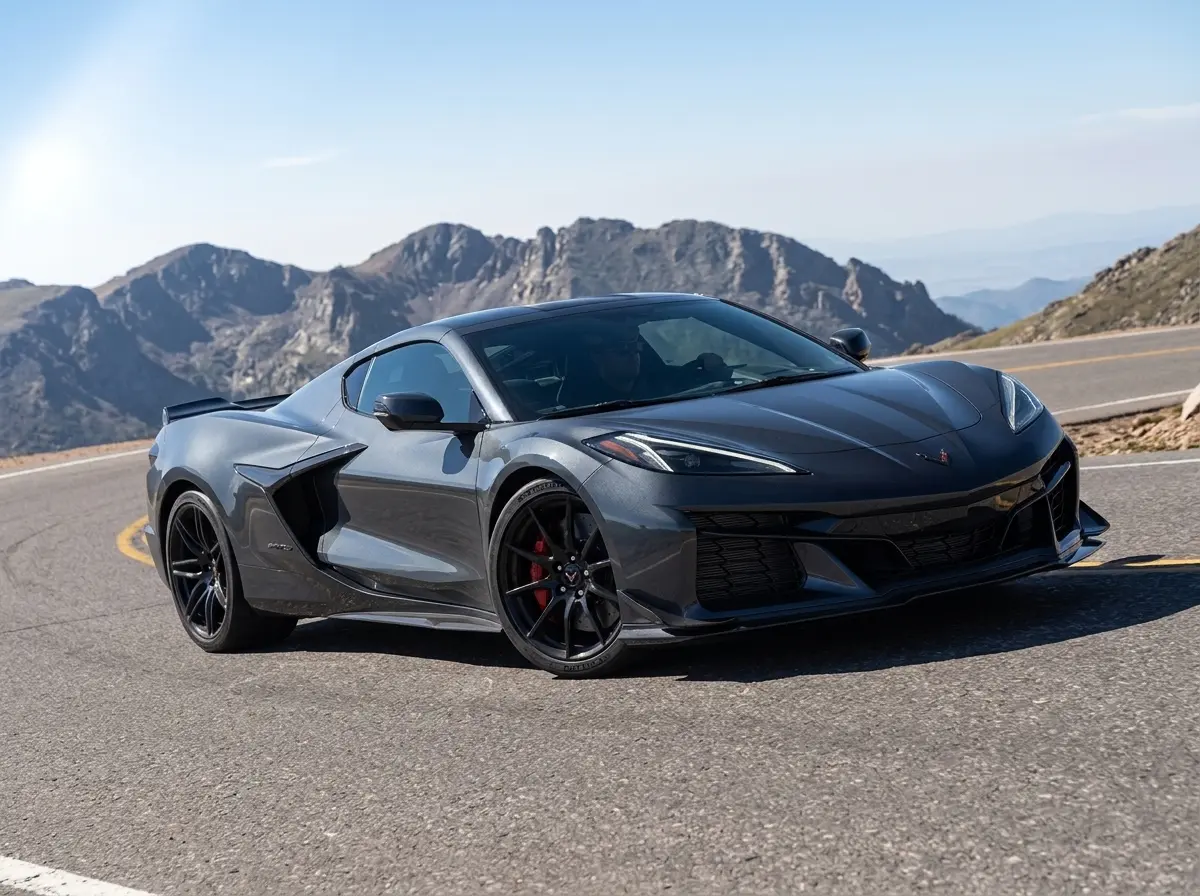
The 2027 Chevrolet Corvette Grand Sport X pairs a new 6.7-liter V8 with a front electric motor for 721 horsepower and all-wheel drive, claiming 0-60 mph in 2.4 seconds. First drives put a loaded example at $140,080 and flag one cabin option worth skipping.
That combination undercuts many true supercars while keeping the mid-engine C8 livable enough for daily miles. The irony is built in.
The LS6 Finally Feeds the Middle of the Range
Every 2027 Stingray, Grand Sport and Grand Sport X now starts with the next-generation LS6. Displacement jumps to 6.7 liters (409 cubic inches) from the prior 6.2. Stroke grows to 100 mm. Compression hits 13.0:1, the highest ever for a Corvette V8.
Output lands at 535 horsepower and 520 lb-ft of torque. That is up from 490 hp and 465 lb-ft on the old base engine (or 495/470 with the optional exhaust). An eight-speed dual-clutch sends power rearward. Flint Engine Operations builds the new small-block where the first Corvette V8s were made in 1955.
- 535 hp / 520 lb-ft from the naturally aspirated LS6
- 13.0:1 compression and tunnel-ram intake
- 6,600 rpm redline with forged internals
- Available quad center-exit exhaust on Grand Sport
Chevrolet published the official 535-hp LS6 and 721-hp GSX specs in March 2026. The engine becomes the volume heart of the lineup.
The jump in displacement and stroke gives the middle of the range a stronger foundation than the old base engine ever offered. Higher compression and the tunnel-ram intake work together to feed that output without forced induction. Forged internals support the 6,600 rpm redline so the engine can live at the top of its range on a track day and still settle down for a commute.
Flint’s role ties the new small-block to the plant that started Corvette V8 production decades earlier. Continuity of place matters less than continuity of character. Buyers stepping from a prior Stingray into any 2027 model get a clear step up in torque before they even look at the hybrid.
Hybrid X Adds Traction Without Killing the Noise
The Grand Sport X drops the E-Ray name and borrows the X badge from the ZR1X. The same single front electric motor (186 hp and 145 lb-ft) and 1.9-kWh battery sit low in the tunnel. Combined system output is 721 horsepower. There is no mechanical link between the e-motor and the V8; software handles the blend.
Three years after the E-Ray, that software feels cleaner. Light throttle still produces the occasional lurch on the GSX, but hard acceleration syncs the axles. Chevy claims 0-60 mph in 2.4 seconds, a 10.4-second quarter-mile at 131 mph, and a 186-mph top speed. The rear-drive Grand Sport is rated 2.75 seconds to 60 and 10.95 seconds at 124 mph in the quarter.
| Model | 0-60 mph | Quarter-Mile | Trap / Top Speed |
|---|---|---|---|
| Grand Sport X | 2.4 sec | 10.4 sec | 131 mph / 186 mph |
| Grand Sport | 2.75 sec | 10.95 sec | 124 mph trap |
Drive modes expand the toolkit:
- Stealth mode for electric-only running up to 50 mph
- Shuttle mode for quiet garage or driveway moves up to 23 mph
- Endurance, Qualifying and Push-to-Pass strategies for track energy use
Carbon-ceramic brakes and Magnetic Ride Control come standard on the X. The car keeps a frunk, unlike the big turbo twins.
Keeping the battery and motor low in the tunnel protects the mid-engine balance that defines the C8. The front axle gains drive without a driveshaft tunnel or extra mechanical bulk. Software does the work that gears would once have done, which is why the calibration improvements since the E-Ray matter so much in daily use.
Stealth and Shuttle modes turn the same hardware into a quiet errand tool. Endurance, Qualifying and Push-to-Pass then flip the system toward circuit energy management. The dual personality is deliberate. Owners who want drama can find it; owners who want a calm start on a cold morning can have that too.
Mountain Roads Prefer Mid-Engine Balance
SlashGear drove one of the first GSX cars, badged VIN 001 though later clarified as pre-production, around Pikes Peak and the roads between Colorado Springs and Denver in June. Straight-line punch is immediate. The mid-engine layout still lets the widebody feel nimble despite a claimed curb weight near 3,800 pounds.
MagneRide stays supple yet controlled. Electric steering and brake-by-wire gain feel in Sport mode. Regenerative braking no longer fights the wheel the way it did on early E-Rays. On the descent, regen even helped keep rotor temps down under the rangers’ laser guns.
Highway manners are almost too easy. The car wants triple digits if you stop paying attention. The “Gap Adjust” button only tweaks a brake warning, not adaptive cruise. Launch control and four-wheel burnouts work as advertised once stability systems are off.
Weight near 3,800 pounds would blunt a front-engine car of this power. The mid-engine layout keeps the mass inside the wheelbase, so the widebody still changes direction with less drama than the numbers suggest. That is the practical payoff of the C8 architecture when hybrid hardware joins the party.
Sport mode sharpens the by-wire controls enough for mountain pace without turning the car nervous on broken pavement. Regen that once fought the driver now works with the carbon-ceramics on long descents. The net effect is a hybrid that feels sorted rather than experimental three years after the E-Ray’s debut.
What the Window Sticker Buys
Base Grand Sport coupe pricing sits near $88,495 including destination in recent figures (Chevrolet’s site has listed $86,000 before fees). The GSX opens around $112,195. That is only a small step above the old E-Ray and leaves the car almost $30,000 under a Z06 while offering more total power and standard all-wheel drive.
| Model | Power | Drive | Approx. Start |
|---|---|---|---|
| Grand Sport | 535 hp | RWD | $88,495 |
| Grand Sport X | 721 hp | eAWD | $112,195 |
| Z06 | 670 hp | RWD | ~$121,000+ |
| Outgoing E-Ray | 655 hp | eAWD | $111,095 |
A fully optioned GSX can climb to $140,080. That money also buys a well-equipped Z06. The Grand Sport starting price and packages still leave room for Z52 Sport or Track hardware, carbon aero, and carbon-ceramic brakes on the non-hybrid car.
Production of the Stingray and Grand Sport family began this summer at Bowling Green. Dealers should see cars in the second half of the year. On paper the GSX sits in supercar territory yet remains a usable daily with weather confidence the pure rear-drive cars cannot match.
The pricing ladder is tight on purpose. A buyer can step from Grand Sport to GSX for a modest premium over the outgoing E-Ray and still stay well clear of Z06 money while gaining total output and eAWD. Optioning a GSX to $140,080 simply proves the same budget can land in either camp depending on whether all-weather traction or circuit focus matters more.
Those Competition Seats Are a $595 Mistake
The biggest complaint from the Colorado loaner was not dynamics. It was the optional Competition Sport Bucket Seats. At $595 they use cheap cloth bolsters against carbon seatbacks. Multiple drivers of different sizes found the bolsters both too tight in the wrong places and still insufficient for support.
The same nameplate seat on ZR1 and ZR1X models feels different and far more comfortable in side-by-side checks. Other seat choices solve the problem. Interior materials overall trail the higher turbo cars, and the 2026 console redesign helps ergonomics more than perceived quality.
Color and aero choices matter too. Dark gray with black stripes and blue haunches does the widebody fewer favors than classic Admiral Blue. The low-drag wing keeps rear trunk access open; the big carbon wing does not.
Spending $595 to lose comfort is a poor trade on a car otherwise built for daily miles. The mismatch between cloth bolsters and carbon seatbacks shows up the moment drivers of different sizes climb in. Choosing a different seat option avoids the issue entirely and keeps the cabin usable on longer trips.
Exterior choices shape first impressions just as clearly. Admiral Blue with the heritage stripe package suits the widebody better than darker combinations that hide the haunches. The low-drag wing preserves trunk access that the big carbon wing blocks, a practical detail owners notice every time they load the car.
Five Originals and Sixty Years Later
Grand Sport began as five lightweight C2 race cars built under Zora Arkus-Duntov in 1963 to take on the world’s best at places like Sebring. Only five existed. One unrestored example still carries original history at museums.
- 1963, Five C2 Grand Sport racers built in secret
- Later C4-C7, Road-going Grand Sports pull aero and chassis pieces from the top models of each generation
- 2027, Mid-engine GS and GSX revive the name with Z06-width body, rear-mounted hash marks, and the new LS6
The rear hash marks now nod to the engine sitting behind the cockpit. Admiral Blue Metallic returns with white stripe and red accents as the heritage look. A Launch Edition dips the interior in Santorini Blue with red stitching and embossed headrests. Owners can still build hundreds of stripe and hash combinations.
The name has always meant the sweet spot: race-car spirit without the full exotic bill. That role continues even as the X version adds hybrid grip. You can see the same volume-performance thinking in other high-performance cars arriving around 2026.
Collectors still chase one of the five original 1963 Grand Sports for seven-figure sums. The new cars aim at far broader ownership.
Moving the hash marks rearward simply updates the visual cue for a mid-engine car. The Launch Edition’s Santorini Blue interior with red stitching gives buyers a factory heritage package without forcing every car into the same look. Hundreds of stripe and hash combinations keep personalization open for owners who want something less formal.
The Frunk and Modes Keep Daily Life Intact
Unlike the big turbo twins, the GSX keeps a frunk. That single choice preserves the errand and weekend-bag utility that mid-engine Corvettes already offer. Hybrid hardware did not erase the practical packaging that makes the C8 livable.
Stealth mode covers electric-only running up to 50 mph. Shuttle mode handles quiet garage or driveway moves up to 23 mph. Together they let the car slip out of a neighborhood or parking structure without waking the block, then hand work back to the LS6 once the road opens.
- Frunk space remains available for daily cargo
- Stealth mode covers low-speed electric running
- Shuttle mode covers the quietest short moves
- Carbon-ceramics and MagneRide arrive standard on the X
Standard carbon-ceramic brakes and Magnetic Ride Control mean the X does not ask owners to option their way to serious hardware. The car leaves the factory ready for mixed use. That is the point of the middle of the range: performance that does not demand a second, more practical vehicle in the driveway.
Who Gains and Who Feels the Squeeze
The GSX gives all-weather confidence, extra low-end shove, quieter starts, and a smoother hybrid calibration than the E-Ray it replaces. Fuel economy stays unremarkable. Track duty still belongs more to the Z06 and ZR1 family; the GSX is not the purest circuit tool.
The non-hybrid Grand Sport may prove the Goldilocks car. It keeps the same new engine, widebody presence, MagneRide and available carbon ceramics without the hybrid weight or cost. No manual transmission arrived despite Tremec confirming a suitable six-speed exists. That choice still stings some buyers.
At these prices the entire middle of the Corvette range presses the Z06. A 721-hp AWD car that can out-sprint an original Bugatti Veyron for roughly one-twentieth the money changes the value conversation. It also risks feeling almost too benign for buyers who want drama with their six-figure outlay.
The jorts-and-New-Balance crowd still moves volume. The GSX serves them well. Enthusiasts who want more edge may simply spend the same money on a Z06 or keep the order form simpler and skip the X entirely. Either way the new LS6 and the revived Grand Sport badge raise the floor for everyone else in the garage.
Buyers who face weather, traffic, and mixed roads gain the most from the X’s eAWD and quieter calibration. Buyers who live for apexes and want the lightest, loudest package still have clearer answers higher in the range. The non-hybrid Grand Sport splits the difference for anyone who wants the new LS6 and widebody without hybrid mass.
The missing manual remains a sore point for a slice of the audience even though a suitable Tremec six-speed exists. Everyone else gets a higher performance floor across the Stingray and Grand Sport family. That floor is what forces the value conversation onto the Z06 and beyond.
Skip the Competition Sport seats. Everything else is fair game.


UK AI Mega-Rounds Capture Europe’s H1 2026 Funding Rebound

Highland Europe’s €1.1B Fund VI Draws Public Backing for Scaleups

TÖNNJES Backs Bikekey to Scale Digital Bike IDs Beyond Theft

Intropy’s $11M Seed Cracks Manual Spare Parts Moat

Inforcer’s $50M Series C Turns MSP Control Planes Into SMB AI Shields

Meta AI Lifts Instagram Scroll Time as Lawsuits Mount

Redmi Note 17 Leak Puts Giant Si-C Batteries in Midrange

Police Chiefs Back CLARITY Act as Passage Odds Sink Below 30%

Perceptron $6.5M Round Cracks AI Data Gatekeeping

HONOR MagicOS 11 Sets August 6 Date and Forces the Glass Race

CLARITY Act Final Text Expected This Weekend as 60-Vote Hurdle Looms

Kalshi Loses Major NY Prediction Markets Ruling to Judge Torres

Fed Minutes Cite AI Demand as Inflation Risk, Put a 2026 Hike Back on the Map

Marker AI Writing Startup Lands $13M Seed Led by Index Ventures

Dota 2 Esports World Cup 2026: Spirit Defends $2M Title In Paris

Meta’s Muse Spark 1.1 Beats Rivals on Price, Trails on Coding

CS2 Premier Season 5 Lands With Cache and a C4 Damage Rework

ARC Intelligence Closes €4M Seed Round in Roughly a Week

Finto Picks Munich Over Silicon Valley After YC, Raises $3.4M

Backrooms Returns to Theaters as the Everything Must Go Edition
-
 FINANCE2 months ago
Zcash Patched a Double-Spend Bug as ZEC Climbed 5%
-
 ENTERTAINMENT2 months ago
Steam Summer Sale 2026 Locks In June 25 to July 9 Dates
-
 FINANCE4 weeks ago
CLARITY Act Final Text Expected This Weekend as 60-Vote Hurdle Looms
-
 NEWS3 months ago
Meta Adds AI Replies to Threads, But Users Can’t Block It
-
 ENTERTAINMENT2 months ago
‘Widow’s Bay’ Review: Apple TV’s Sleeper Horror-Comedy Earns Its Fog
-
 NEWS8 months ago
FolderFresh Review: This Free Tool Automates Windows File Organizing
-
 NEWS5 months ago
U.S. Navy Deploys Solar-Powered Lightfish Drone to Patrol Oceans
-
 FINANCE3 weeks ago
Kalshi Loses Major NY Prediction Markets Ruling to Judge Torres