
BUSINESS
Clean Cells Buys Anaquant and Locks Clients Into One Testing Path
Clean Cells takes Anaquant’s mass spectrometry platform and ReadyBeads to deliver end-to-end biopharma protein characterization from early development to GMP.

Clean Cells has acquired Anaquant, the Lyon mass-spectrometry CRO, giving the French quality-control group full ownership of Anaquant’s brand and IP, platform, equipment and client base. Terms stay undisclosed. The move folds early-stage protein characterization into Clean Cells’ existing GMP testing network and creates one continuous analytical path for biopharma programs.
Laurent Claisse, CEO of Clean Cells, called protein characterization “a critical but often underestimated layer of biopharmaceutical quality control.” The deal hands clients standardized mass-spec methods from the first development samples through release testing.
That continuum matters because early characterization choices shape later regulatory packages. Programs that begin with ad-hoc methods often rebuild them under GMP pressure. Owning both ends of the path lets Clean Cells keep the same standards and data formats in place from the first sample onward.
What Moved Across in the Deal
Clean Cells, headquartered near Nantes and part of the Clean Biologics group, takes Anaquant’s entire operation. Founder Tanguy Fortin stays on to lead the protein analytics work. Anaquant had built standardized LC-MS methods for protein identification, quantification and host-cell protein profiling that smaller developers could actually use.
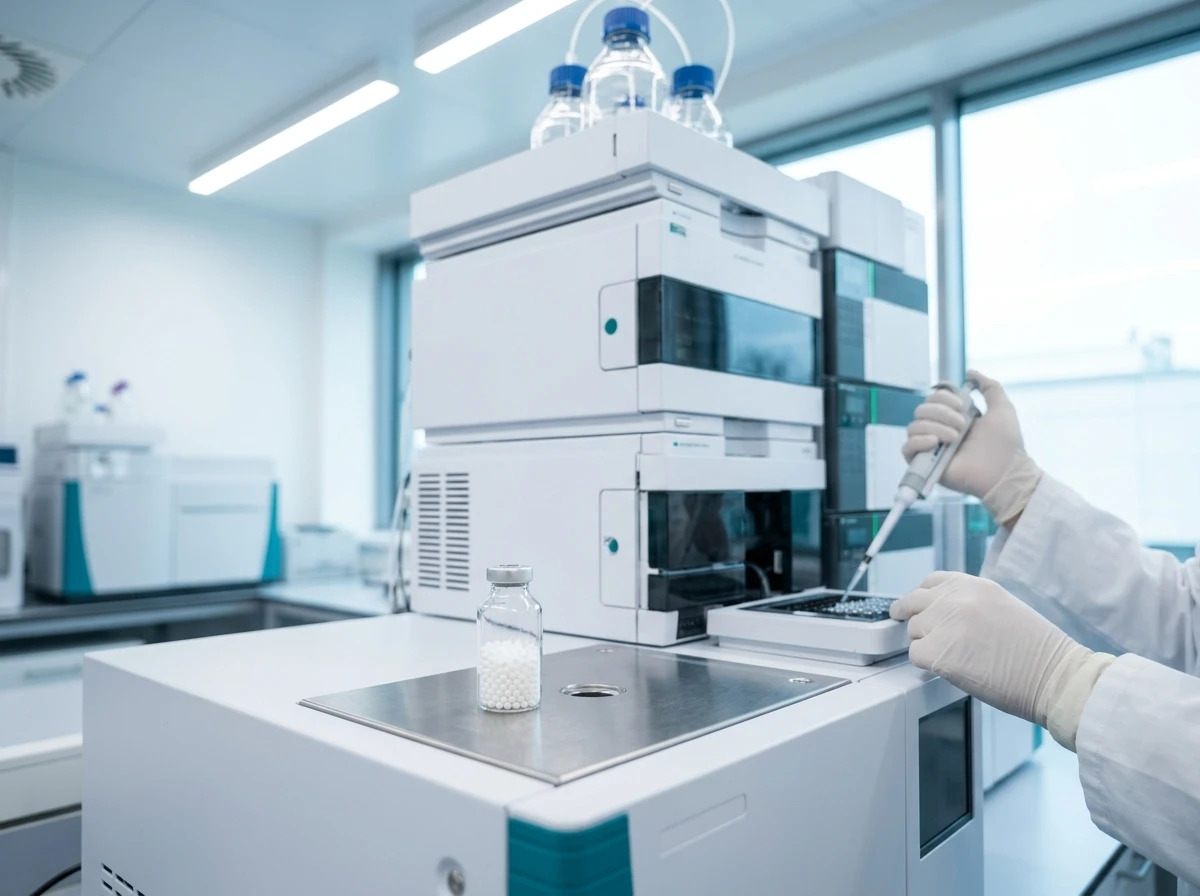
The package includes the patented ReadyBeads technology from 2017. These reference standards support HCP profiling and targeted quantification across monoclonal antibodies, recombinant proteins, phages and viral vectors such as AAV, lentivirus and baculovirus.
Anaquant has developed standardized mass spectrometry methods that are accessible to early-phase developers and generate valuable data from the earliest stages, laying the foundation for future regulatory submissions.
Claisse said the transfer gives clients a level of characterization that was previously out of reach for many of them.
Fortin framed the logic from the other side: Anaquant proved the technology works at research stage. Clean Cells supplies the GMP infrastructure and commercial reach needed for the full lifecycle.
Brand, IP, platform, equipment and client relationships all transfer intact. Continuity of methods and people reduces the usual friction of a CRO handoff. Fortin’s continued leadership keeps institutional knowledge inside the protein analytics unit rather than scattering it across a transition team.
- Standardized LC-MS methods for identification, quantification and HCP profiling
- ReadyBeads reference standards patented in 2017
- Coverage across mAbs, recombinant proteins, phages and viral vectors
- Existing Anaquant client base folded into the Clean Cells network
Why Host Cell Proteins Suddenly Demand More Than ELISA
HCPs are residual impurities left from the manufacturing host. Even low levels can trigger immune responses. Regulators have long accepted ELISA as the workhorse total-HCP assay. That is no longer enough on its own.
The United States Pharmacopeia published General Chapter <1132.1> on residual HCP measurement by mass spectrometry in December 2024. It became official in May 2025. FDA and EMA reviewers now routinely ask for orthogonal MS data that identifies and quantifies individual HCPs rather than a single total number. Approval delays have already hit programs that relied only on ELISA coverage.
- Market scale: Host-cell protein testing sat near $1.8 billion in 2025 in one widely cited estimate and is projected to approach $3.9 billion by 2034 at roughly 9% CAGR.
- Driver mix: Rising biologics volume, cell and gene therapy expansion, and CDMO outsourcing all push demand for deeper impurity data.
- Method shift: Orthogonal strategies that pair ELISA with LC-MS are becoming the expected baseline for robust submissions.
Ludovic Alonzi, partner at ARCHIMED, Clean Cells’ majority shareholder, said Anaquant fits the firm’s criteria: differentiated technology, recurring clients, and a market enlarged by the regulatory push toward rigorous HCP methods.
The chapter’s path from publication to official status left sponsors little room to wait. Teams that treated MS as optional now face reviewer questions they cannot answer with a total ppm figure alone. Orthogonal data has moved from nice-to-have to expected baseline in a short window.
| Milestone | Timing | Effect on sponsors |
|---|---|---|
| USP <1132.1> published | December 2024 | Best-practice MS guidance enters the public record |
| Chapter becomes official | May 2025 | Reviewers treat MS orthogonal data as routine expectation |
| Market projection window | 2025 to 2034 | HCP testing demand tracks toward roughly double at ~9% CAGR |
ReadyBeads Turns Internal Standards Into a Simple Step
Traditional peptide internal-standard mixes are unstable at low concentration and hard to reproduce between kits. ReadyBeads coats the standards onto a water-soluble biopolymer that dissolves directly in the sample and releases a controlled concentration. The polymer itself does not interfere with mass spectrometry.
| Feature | Traditional peptide mixes | ReadyBeads approach |
|---|---|---|
| Preparation | Multiple dilutions, risk of error | Drop bead into sample |
| Reproducibility | Batch-to-batch variability common | Controlled manufacturing, certificate of analysis |
| Stability | Low-concentration solutions degrade | Dry coated form holds until use |
| Use case focus | Instrument QC or full proteome | HCP profiling and targeted drug-product HCPs |
The product line is already used worldwide. Clean Cells can now pair it with its own GMP release testing so the same reference system travels with a program from early characterization into regulated batches. Clients get ReadyBeads peptide mixture standards without jumping vendors mid-stream.
That single-vendor path matters when a later GMP lab must reproduce early quantification. Matching the internal standard system removes one common source of method drift between development and release. Certificates of analysis travel with the beads, giving both research and QC teams the same documented concentration control.
A Quiet Roll-Up Inside ARCHIMED’s Clean Biologics
Clean Cells itself dates to 2000, when its founders won grants from the Aventis-Institut de France Foundation to offer innocuity testing. ARCHIMED formed Clean Biologics around it in 2018 and has steadily added pieces.
- 2018, ARCHIMED backs Clean Cells; Clean Biologics group launches and soon integrates CDMO Naobios.
- March 2025, Clean Cells closes acquisition of Durham, North Carolina cytogenetics specialist Karyologic, opening a US beachhead.
- June 2026, Clean Cells acquires Stem Genomics to deepen cell-therapy QC and expand the North Carolina footprint.
- July 2026, Anaquant joins, adding mass-spec protein characterization and ReadyBeads.
The group now lists more than 230 customers worldwide and runs over 7,000 analyses a year. Its catalog covers vaccines, proteins, gene therapies, cell therapies, veterinary products and even cell-based food. The US arm operates through Karyologic and the Stem Genomics unit in Durham. Clean Cells sits inside the ARCHIMED Life Science Tools portfolio.
Each add-on filled a gap rather than duplicating an existing line. Karyologic brought cytogenetics and a US site. Stem Genomics deepened cell-therapy QC on the same North Carolina base. Anaquant supplies the mass-spec protein layer that links early characterization to GMP release. The pattern is bolt-on capability, not pure scale.
Clients Gain One Partner From First Sample to Release
Most biotechs still split work. A research-grade CRO develops the early protein methods. Later a GMP lab takes over for lot release. Method transfer, revalidation and data continuity become pain points, especially when regulators start asking for MS-backed HCP profiles that must match earlier work.
The combined platform removes that seam. Anaquant anchors method development and validation. Clean Cells runs the GMP testing as the program advances. Data stays consistent. The client keeps one relationship. Fortin noted that the GMP infrastructure and commercial reach are exactly what Anaquant needed to serve the full lifecycle rather than research alone.
For early-phase teams that previously treated advanced mass-spec characterization as too expensive or too complex, the standardized methods and ReadyBeads lower the barrier. They can generate regulatory-ready datasets from the first samples instead of scrambling later.
| Stage | Split-vendor model | Combined Clean Cells path |
|---|---|---|
| Early development | Research CRO builds methods | Anaquant standardized LC-MS and ReadyBeads |
| Handoff | Method transfer and revalidation | Same methods and standards continue |
| GMP release | Separate lab, new data formats | Clean Cells regulated testing |
| Regulatory review | Risk of mismatched HCP profiles | Continuous MS-backed package |
How the Regulatory Bar Is Rising Around Impurities
ELISA still measures total HCP load quickly. Its coverage depends on the antibody reagents used to raise the assay. Individual problematic HCPs can hide. Mass spectrometry identifies those proteins by peptide sequence and quantifies them with internal standards. That is the orthogonal layer reviewers now expect.
Programs in monoclonal antibodies, recombinant proteins and viral vectors all face the same pressure. Clean Cells’ existing strengths in biosafety testing, cell and virus banking, and secure storage already serve those modalities. Adding protein characterization completes the analytical stack.
- Regulators request individual HCP identification and risk assessment, not only a total ppm number.
- Orthogonal MS data shortens the risk of questions that delay IND or clinical trial applications.
- Consistent methods from development into GMP reduce the chance that later data contradict early packages.
The acquisition timing matches that shift. Clean Cells can now sell a full continuum of cGMP quality control and cell banking services that includes the mass-spec layer many sponsors still scramble to source.
When ELISA coverage leaves gaps, sponsors discover the missing proteins only after a reviewer asks. Building MS into the early package turns that discovery into planned risk assessment rather than a late surprise. The same pressure now reaches viral-vector and recombinant-protein programs that once treated deep HCP work as optional.
The Group Catalog Spans Vaccines to Cell Therapies
Clean Biologics already touched a wide modality list before Anaquant arrived. Vaccines, proteins, gene therapies, cell therapies, veterinary products and cell-based food all appear in the group catalog. Mass-spec protein characterization slots into that list wherever host-cell impurities and identity data matter.
Monoclonal antibodies and recombinant proteins remain core users of HCP profiling. Viral vectors such as AAV, lentivirus and baculovirus need the same orthogonal layer as volumes rise. Phages sit in the ReadyBeads use cases as well. The analytics unit can serve those lines without forcing sponsors to leave the group for a specialist CRO.
Biosafety testing, cell and virus banking, and secure storage already sat on the Clean Cells side. Protein characterization was the missing analytical piece for programs that must show both safety and impurity control. Closing that gap keeps more of the QC stack under one commercial relationship.
- Vaccines and recombinant proteins draw on identity and HCP methods early
- Gene and cell therapies add vector and cellular impurity questions
- Veterinary and cell-based food lines extend the same QC logic beyond human drugs
Early-Phase Teams Build Submission Foundations Sooner
Anaquant’s original pitch targeted developers who needed standardized mass-spec methods without building an internal proteomics lab. Those teams could generate identification and quantification data from the first samples. The acquisition extends that early work into a GMP home rather than leaving it stranded at research grade.
Claisse described characterization as critical yet often underestimated. Underestimation shows up when IND packages lack orthogonal HCP detail and reviewers push back. Starting with methods designed to support later submissions reduces that scramble. ReadyBeads supplies the reproducible internal standards that make early numbers defensible later.
Fortin’s point about lifecycle reach cuts both ways. Anaquant gains commercial and GMP scale. Early-phase clients gain a path that does not force a vendor change when the program crosses into regulated batches. One relationship carries the protein analytics story from first sample through release.
Market growth around HCP testing, the USP chapter timeline, and the group’s steady add-on pattern all point the same direction. Sponsors face a higher impurity bar. Clean Cells now owns the tools and the regulated network to meet it without stitching multiple CROs together mid-program.
Frequently Asked Questions
What is ReadyBeads technology and how does it work?
ReadyBeads are patented (2017) water-soluble polymer beads coated with peptide internal standards. The bead dissolves in the sample and releases a controlled concentration of standards without interfering with LC-MS analysis, solving reproducibility and stability problems of liquid peptide mixes used for HCP quantification and instrument QC.
Who owns Clean Cells and what is Clean Biologics?
Clean Cells is a subsidiary of Clean Biologics, the group formed in 2018 when healthcare private-equity firm ARCHIMED partnered with the original Clean Cells business (founded 2000). ARCHIMED remains the majority shareholder and has backed successive acquisitions including Naobios, Karyologic, Stem Genomics and now Anaquant.
Why do regulators want mass spectrometry for host cell proteins?
ELISA gives a total HCP figure but can miss individual impurities depending on antibody coverage. USP General Chapter <1132.1> (published 2024, official 2025) sets best practices for MS-based HCP measurement. FDA and EMA increasingly require orthogonal MS data that identifies and quantifies specific HCPs to support product quality and patient safety claims.
What prior acquisitions has Clean Cells made?
In March 2025 Clean Cells acquired Karyologic, a Durham, North Carolina cytogenetics testing firm, to enter the US market. In June 2026 it acquired Stem Genomics to strengthen cell-therapy quality control and expand the same North Carolina presence. Anaquant is the latest addition focused on mass-spec protein analytics.
How does the deal change the service continuum for clients?
Clients can now keep method development, validation and GMP release testing inside one organization. Early Anaquant mass-spec data and ReadyBeads standards transfer directly into Clean Cells’ regulated testing environment, reducing revalidation work and data-gap risk at the research-to-clinic handoff.


UK AI Mega-Rounds Capture Europe’s H1 2026 Funding Rebound

Highland Europe’s €1.1B Fund VI Draws Public Backing for Scaleups

TÖNNJES Backs Bikekey to Scale Digital Bike IDs Beyond Theft

Intropy’s $11M Seed Cracks Manual Spare Parts Moat

Inforcer’s $50M Series C Turns MSP Control Planes Into SMB AI Shields

Meta AI Lifts Instagram Scroll Time as Lawsuits Mount

Redmi Note 17 Leak Puts Giant Si-C Batteries in Midrange

Police Chiefs Back CLARITY Act as Passage Odds Sink Below 30%

Perceptron $6.5M Round Cracks AI Data Gatekeeping

HONOR MagicOS 11 Sets August 6 Date and Forces the Glass Race

CLARITY Act Final Text Expected This Weekend as 60-Vote Hurdle Looms

Kalshi Loses Major NY Prediction Markets Ruling to Judge Torres

Fed Minutes Cite AI Demand as Inflation Risk, Put a 2026 Hike Back on the Map

Marker AI Writing Startup Lands $13M Seed Led by Index Ventures

Dota 2 Esports World Cup 2026: Spirit Defends $2M Title In Paris

Meta’s Muse Spark 1.1 Beats Rivals on Price, Trails on Coding

CS2 Premier Season 5 Lands With Cache and a C4 Damage Rework

ARC Intelligence Closes €4M Seed Round in Roughly a Week

Finto Picks Munich Over Silicon Valley After YC, Raises $3.4M

Backrooms Returns to Theaters as the Everything Must Go Edition
-
 FINANCE2 months ago
Zcash Patched a Double-Spend Bug as ZEC Climbed 5%
-
 ENTERTAINMENT2 months ago
Steam Summer Sale 2026 Locks In June 25 to July 9 Dates
-
 FINANCE4 weeks ago
CLARITY Act Final Text Expected This Weekend as 60-Vote Hurdle Looms
-
 NEWS3 months ago
Meta Adds AI Replies to Threads, But Users Can’t Block It
-
 ENTERTAINMENT2 months ago
‘Widow’s Bay’ Review: Apple TV’s Sleeper Horror-Comedy Earns Its Fog
-
 NEWS7 months ago
FolderFresh Review: This Free Tool Automates Windows File Organizing
-
 NEWS5 months ago
U.S. Navy Deploys Solar-Powered Lightfish Drone to Patrol Oceans
-
 FINANCE3 weeks ago
Kalshi Loses Major NY Prediction Markets Ruling to Judge Torres