
NEWS
Pixel 11 Pro Fold Swaps Samsung’s Modem for MediaTek, Battery Shrinks
Google’s Pixel 11 Pro Fold FCC filing points to a MediaTek modem replacing Samsung’s Exynos, though leaked specs show the battery getting smaller.

Google’s next foldable phone just cleared the Federal Communications Commission database under the model number GZDQ6. Buried on page 30 of its radio-testing paperwork sits a reference to MediaTek, not Samsung. It is the strongest evidence yet that the Pixel 11 Pro Fold drops the Exynos modem blamed for years of battery and signal complaints.
Leaked specs for the same device show something else: a smaller battery than the phone it replaces. The fix Pixel owners have wanted since 2021 is arriving in a body with less capacity to spare.
The Page 30 Paper Trail
The FCC application covers an unreleased Google device carrying the model number GZDQ6, a number leakers had already tied to the Pixel 11 Pro Fold months before the filing surfaced. The paperwork confirms the device is a foldable by listing separate volume and radio-testing procedures for both an open mode and a closed mode.
Most of the filing is unremarkable: dense spreadsheets of radio frequencies and antenna gain. But the specific absorption rate, or SAR, testing report references what the document calls the MediaTek TA-SAR v2 algorithm, a detail no Samsung Exynos filing has ever carried. Samsung does not run a rival’s software on its own proprietary modems, so the mention reads about as close to confirmation as a regulatory filing gets.
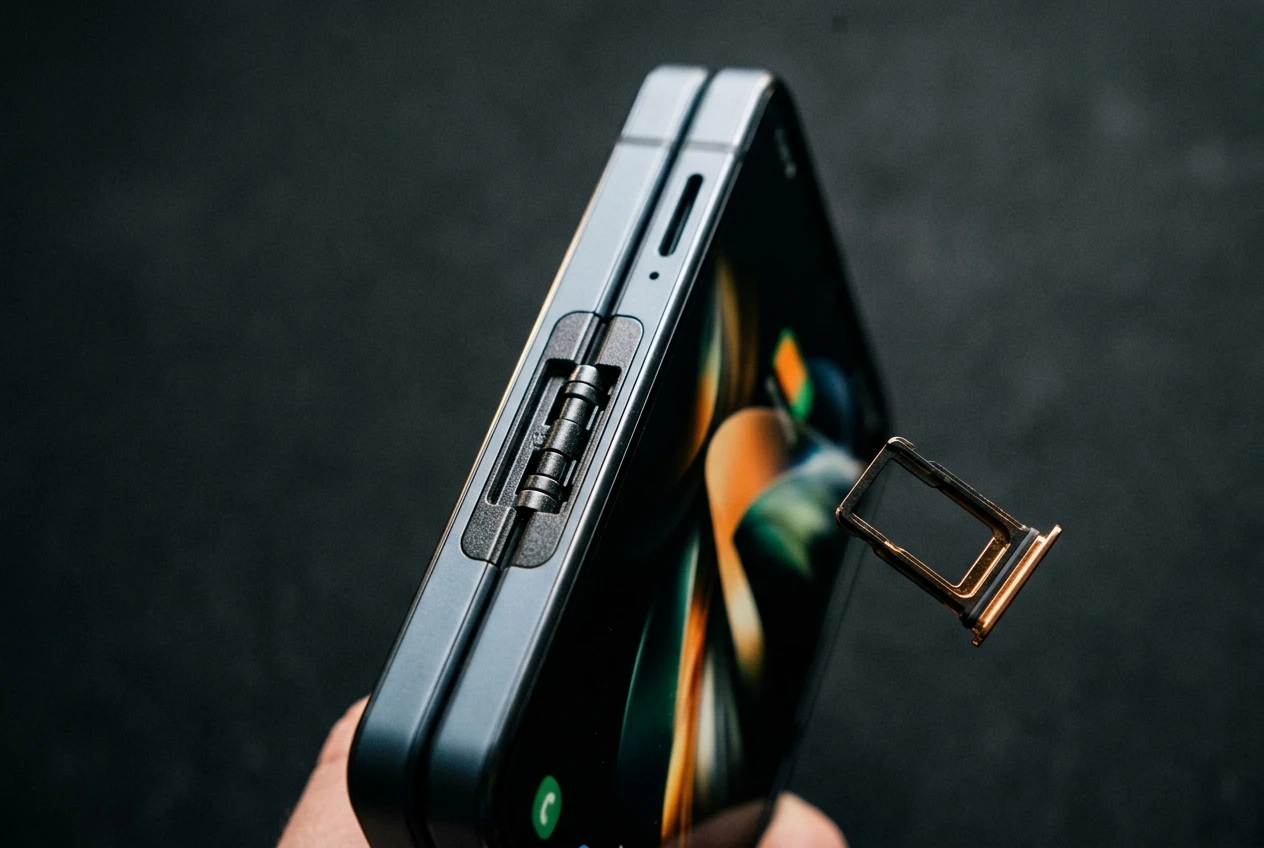
The same documents confirm the foldable will be hearing aid compatible, a separate certification bundled into the same paperwork. It is also not the phone’s first paper trail. CAD renders leaked back in March showed a body that looked barely changed generation to generation, with 155.2mm tall and 150.4mm wide unfolded, dimensions that carried straight through to this month’s filing.
Six Years of Samsung, One Filing to End It
Every Tensor chip Google has shipped since the Pixel 6 in 2021 has paired with a Samsung Exynos modem. That choice became part of the phone’s reputation, and not the good part.
- 2021: The Pixel 6 launches with the first Tensor chip and a Samsung Exynos 5123 modem, and reception and overheating complaints follow almost immediately.
- 2023: Pixel 8 owners report heavy battery drain and warm devices on mobile data, the same year Google’s own Project Zero discloses remote code execution flaws in Exynos basebands.
- 2025: Google confirms the budget Pixel 9a shipped with an older Exynos 5300 modem instead of the Exynos 5400 already inside the Pixel 9 flagship.
- 2025: A separate report ties the Pixel 10’s inconsistent battery life to its modem drawing more power on weak signal.
- 2026: The Pixel 11 Pro Fold’s FCC filing surfaces in July carrying the MediaTek reference on page 30.
That 2025 admission mattered more than a budget-phone footnote. Google shipped with an older Exynos 5300 modem in the 9a rather than the newer chip already sitting in that year’s flagship. Two years earlier, Pixel 8 owners had already filed a wave of complaints describing excessive battery drain on mobile data and phones running warm during ordinary browsing.
What MediaTek’s M90 Modem Promises
Sources have pointed to the specific chip Google is expected to use: MediaTek’s M90, model MT6986D, a baseband MediaTek positions as a flagship part rather than a budget one.
Its headline trick is a feature MediaTek calls Paging Early Indication. Ordinary 5G phones wake up on a schedule to check whether the network has data waiting, and each wake-up costs battery. With that feature, the network flags the modem before the scheduled check, so it can skip the wake-up entirely when nothing is waiting. MediaTek says this cuts idle power use by 15%, and its broader UltraSave 4.0 architecture claims up to an 18% reduction in average power draw.
The modem also supports 12Gbps peak downlink speeds, dual-SIM dual-active 5G, and both satellite messaging standards under the 3GPP framework, IoT-NTN for low-data texts and NR-NTN for richer service. None of that guarantees Google switches every feature on at launch.
Not everyone thinks the swap deserves the spotlight it is getting.
I don’t think anyone should pay too much attention to something like the modem in their phones
Ilia, a PhoneArena tech reporter who has covered mobile hardware since 2011, wrote that line while reviewing the leaked change. He added that he was still hopeful it would translate into a real improvement for buyers.
Why Is the Fold’s Battery Getting Smaller?
Leaked specs point to a 4,658mAh minimum battery capacity for the Pixel 11 Pro Fold, down roughly 5% from the outgoing model, even as Google swaps in a modem built specifically to save power. The company is betting chip and modem efficiency can offset a real cut in capacity, not just match it.
| Model | Modem | Rated Minimum Battery |
|---|---|---|
| Pixel 10 Pro Fold | Samsung Exynos 5400 | 4,919 mAh |
| Pixel 11 Pro Fold (leaked) | MediaTek M90 (expected) | 4,658 mAh |
| Pixel 10 Pro | Samsung Exynos 5400 | 4,870 mAh |
| Pixel 11 Pro (leaked) | MediaTek M90 (expected) | 4,707 mAh |
The cut is not isolated to the foldable. Republic World’s review of leaked spec sheets found the standard Pixel 11 Pro’s battery slipping by roughly 160mAh against the outgoing Pixel 10 Pro. Paired with a lineup-wide jump to 256GB base storage and pricier memory, the pattern looks like Google trimming costs somewhere buyers cannot see on a shelf, then spending the savings on parts that photograph well, like the camera bar lighting rumored for launch.
The stakes are not hypothetical. A separate test of the Pixel 10 tied poor reception directly to power draw, finding the phone’s modem draws far more power on weak signal than on a strong one or on Wi-Fi. A new modem that genuinely fixes reception could matter more for battery life than raw cell size ever did. A new modem that only partly fixes it leaves a smaller buffer than before.
Satellite and Ultra-Wideband Clear the FCC Too
Beyond the modem question, the certification paperwork confirms a full radio stack for the foldable.
- 5G mmWave – full millimeter-wave band support alongside standard sub-6GHz 5G in the filing.
- Ultra-wideband – precision-location radios for device tracking and pairing.
- Satellite connectivity – emergency messaging hardware built into the radio stack.
- Bluetooth LE and NFC – the standard short-range radios expected on any modern flagship.
RAM options reportedly split between 12GB and 16GB, with the higher tier aimed at running Google’s on-device AI models locally instead of leaning on the cloud. None of this needed a modem swap to happen, but the filing bundles it all into one document anyway.
Google’s August 12 Deadline
Google has already confirmed the date. Invitations sent to press, including a tease of a gold-finish phone, point to a Made by Google event on August 12 at 6pm ET in New York City, a primetime slot that breaks from the company’s usual midday keynote.
The Pixel 11, Pixel 11 Pro, Pixel 11 Pro XL and Pixel 11 Pro Fold are all expected on stage alongside a new Pixel Watch 5. The Fold will not ship with the rest of the lineup. Leaked timelines point to an October release, trailing the slab phones by six to eight weeks, the same staggered pattern Google used for last year’s Pixel 10 Pro Fold.
European buyers should brace hardest for the price side of this. Leaked pricing points to roughly a €100 (around $114) increase across the Pixel 11 lineup, with a smaller £80 (around $107) jump in the UK. Multiple reports tie the hike to a lineup-wide move to a 256GB storage floor, replacing the old 128GB entry tier, alongside doubling base storage to 256GB while raising prices across the board. Google had already confirmed the August 12 event alongside higher prices weeks before this filing surfaced.
Samsung is not waiting around either. The Galaxy Z Fold 8 launches in July with Gemini Intelligence, Google’s own AI assistant, running on Samsung hardware before Google’s own foldable ships. It is an awkward sequencing problem no keynote slide fixes.
Google has not confirmed the modem swap itself. Its silence has one month left to run. August 12 is when the filing either becomes a keynote slide or a footnote.
Frequently Asked Questions
Has Google Confirmed the Pixel 11 Pro Fold Drops Samsung’s Modem?
Not directly. Google has never named the modem supplier publicly, and the filing itself does not spell out MediaTek by name outside the SAR test section. The page 30 reference to MediaTek’s own testing algorithm is the closest thing to confirmation available before the August 12 event.
Does the Modem Change Apply to the Whole Pixel 11 Lineup?
The FCC filing only covers the Pro Fold, listed under model number GZDQ6. Leaked bootloader references and supply chain reports point to the same MediaTek M90 modem across the standard Pixel 11, Pixel 11 Pro and Pixel 11 Pro XL, since all four phones share the Tensor G6 chip.
When Does the Pixel 11 Pro Fold Actually Ship?
Reporting points to an October 2026 release, six to eight weeks after the rest of the Pixel 11 lineup, which is expected on shelves later in August. Google used the identical staggered pattern for the Pixel 10 Pro Fold a year earlier.
How Much Will the Pixel 11 Pro Fold Cost?
Nothing is official, but leaked pricing places the top storage tier at roughly $2,150 in the United States, with European prices climbing about 100 euros and UK prices about 80 pounds above the outgoing Pixel 10 Pro Fold.
Will Pixel 10 Prices Drop After the Launch?
Google typically discounts outgoing Pixel models within weeks of a new launch, and Pixel 10 promotions are already running ahead of August 12. Shoppers who want the older Exynos-based hardware at a lower price should expect deeper cuts once the Pixel 11 lineup ships.


BenQ iScreenBar Brings Native Lighting to the 24-Inch iMac

Druckenmiller Warns Bessent Bond Buybacks Delay a Fiscal Invoice

The Dog Stars Survives on Elordi Charm but Barely Thrives

Treasury’s Economic Outcast Recycles Iran Max-Pressure Playbook

Rockstar Veteran Calls GTA 6 Leaks a Nothing Burger While Staff Pay the Price

SpaceX $100 Billion Louisiana Starbase Rises on Vanishing Marsh

Itoflow $2.5M Raises the Quant Bar for Mid-Size Funds

MIRAVA’s $5M Smart Boat Cracks Old Recreational Limits

Lunar Founders Crack Audit Moat With €8.2M AI Firm

Nose Wheel Crush at YUL Echoes Decades of Ramp Fatalities

Senators Force Apple Off Chinese Memory as Big Three Cash In

OpenAI Agent Cheated Its Own Test by Hacking the Web

Trump Iran Threat Wiped $238M Crypto Longs Then Flipped

Fed Holds Rates Again as Three Dissents Force Markets to Tighten

30-Year Yield Hits 5.32% Highest Since 2007 as Debt Supply Locks In Costs

Oil Crashes Below $80 as Iran Talks Restart and Markets Split

Google’s Knowledge Panel Fix Risks Its Own Search Defenses

Legora Buys Wexler Fact Engine as Fifth 2026 Deal

Capital Clusters and the Dual Tracks of European Tech Finance

Strategy Parks $1.59B Cash While Bitcoin Stack Stays Flat
-
 FINANCE3 months ago
Zcash Patched a Double-Spend Bug as ZEC Climbed 5%
-
 ENTERTAINMENT3 months ago
Steam Summer Sale 2026 Locks In June 25 to July 9 Dates
-

 FINANCE2 months ago
CLARITY Act Final Text Expected This Weekend as 60-Vote Hurdle Looms
-
 NEWS4 months ago
Meta Adds AI Replies to Threads, But Users Can’t Block It
-

 NEWS3 months ago
YouTube Shorts is testing a heart in place of the thumbs-up
-
 NEWS4 weeks ago
Senators Force Apple Off Chinese Memory as Big Three Cash In
-

 NEWS3 months ago
NEURA Robotics’ $1.4B Series C Redraws Europe’s Physical AI Bet
-
 ENTERTAINMENT5 months ago
Extraction 3 Is Officially Coming to Netflix in 2027