
NEWS
Android 17 QPR1 Beta 7 Fixes Battery Share, Restores Pixel 6 Testing
Android 17 QPR1 Beta 7 fixes the Battery Share charging loop and quietly restores the Pixel 6 and Pixel 6 Pro to Google’s beta program.

Google pushed Android 17 QPR1 Beta 7 to Pixel phones on July 15, closing out a Battery Share bug that trapped reverse wireless charging in an endless loop of its own charging animation. The build also patches a Quick Settings font size crash and a Wi-Fi status bar gap that had lingered since Beta 6 locked the platform two weeks earlier.
Buried lower in the changelog is the more interesting move. Google put the Pixel 6 and Pixel 6 Pro back into the QPR1 beta pool after cutting the pair from three straight builds, a decision that hints at how their final run of major updates will play out before support winds down.
The Battery Share Loop Is Over
Battery Share, Google’s term for reverse wireless charging that lets a Pixel top off earbuds or another phone, had a specific failure mode when triggered from the Quick Settings tile. Tapping it either did nothing or left the charging animation spinning without ever actually starting a charge.
That bug is gone in Beta 7, alongside two smaller but persistent annoyances. Google’s release notes tie the fixes to a cluster of issue tracker reports, and Android Authority flagged a fourth repair that wasn’t in the official notes at all.
| Bug | Symptom | Tracker Reference |
|---|---|---|
| Battery Share tile | Failed to start charging or looped the charging animation | Issue #476443126 and six related reports |
| Wi-Fi status icon | Left an empty gap between the battery and mobile data icons when Wi-Fi was off | Issue #517178332 |
| Quick Settings font size controller | Crashed when adjusting text size from the panel | Issues #531915405 and #530312544 |
| Taskbar icon alignment | Icons shifted left instead of staying centered on an external display | Flagged by Mishaal Rahman on X |
On the taskbar issue, Android reporter Mishaal Rahman confirmed the centering shift was a bug rather than an intentional layout change, according to Android Authority’s writeup of the release. None of these fixes add a new feature. They just make the panel behave the way it did before earlier betas broke it.
Why Did the Pixel 6 Rejoin the Beta Program?
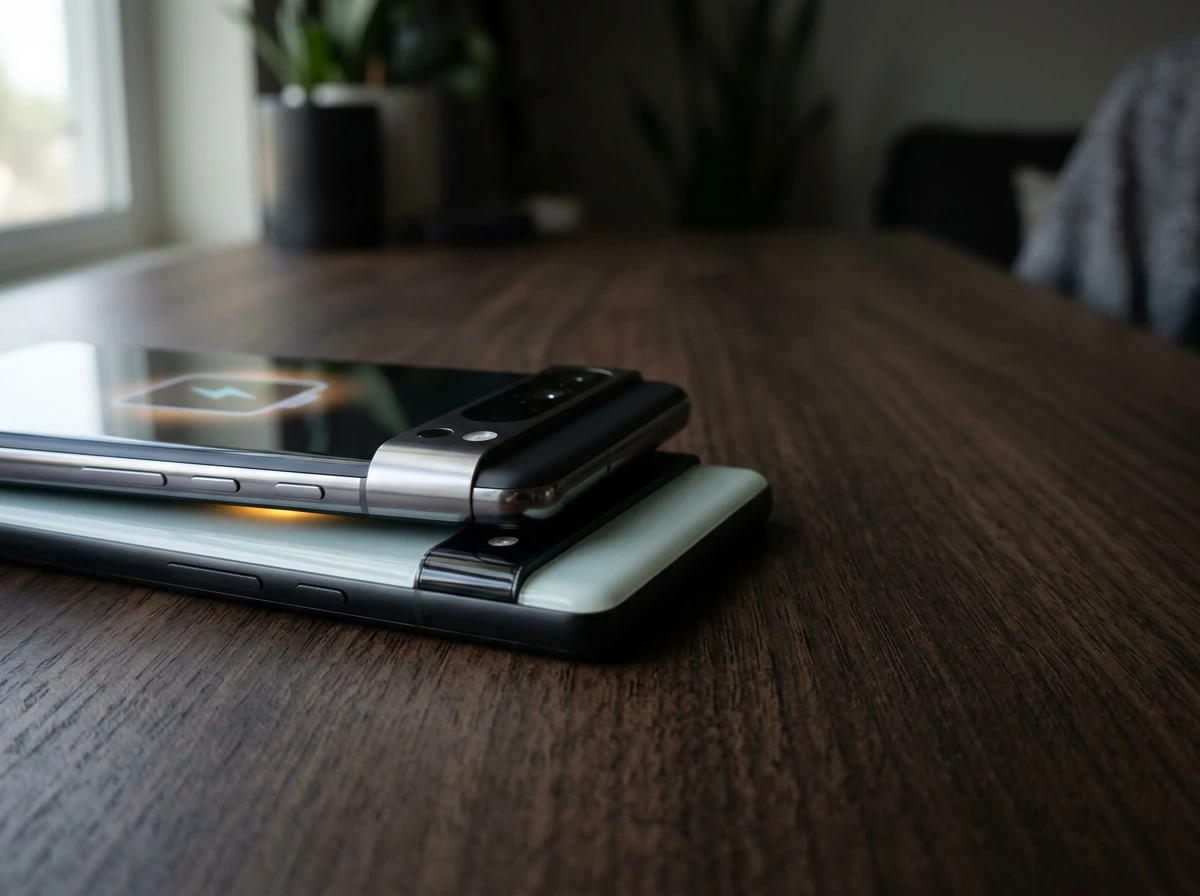
The Pixel 6 and Pixel 6 Pro ran the first three QPR1 betas without trouble, then vanished. PhoneArena reported in June that Google’s fourth beta skipped the Pixel 6 generation entirely, while reassuring developers the phones would return in a later build. They stayed off Beta 5 and Beta 6’s device lists too, only resurfacing now with Beta 7.
Google has never said why the two phones were dropped in the first place. Tech outlet tech-ish, which has tracked the phones’ beta history closely, described the June removal as unexplained and called their reappearance now a signal that Google intends to see the aging pair through a final, fully finished Feature Drop rather than letting them fall behind quietly. That framing is tech-ish’s own read on the situation, not a confirmed Google statement, but the device lists back up the timeline.
Some of this began during Beta 4’s rollout to Pixel devices in June, when the exclusion first appeared. It’s worth separating what’s documented from what’s still a guess.
- What we know: Pixel 6 and Pixel 6 Pro ran QPR1 Beta 1 through Beta 3, were absent from device lists for Beta 4 through Beta 6, and are back on Beta 7’s rollout according to Android Authority and Droid Life.
- What we know: The Pixel 6a stayed eligible through every single build, without interruption.
- What’s unconfirmed: Google has not published a reason for the original removal or the return.
- What’s unconfirmed: Whether standalone factory images for the standard Pixel 6 and Pixel 6 Pro will follow, since Beta 7’s published system image list names the Pixel 6a specifically rather than the two older flagships.
That last gap matters for anyone who wants to flash the build manually instead of waiting for an over-the-air notification.
Which Pixel Phones Qualify for Beta 7?
Nearly every actively supported Pixel qualifies for Beta 7, spanning six device generations plus a tablet. The build carries the July 2026 security patch and lands as CP31.260623.005 across the eligible lineup.
- Pixel 6 series – Pixel 6 and Pixel 6 Pro rejoin testing, alongside the Pixel 6a that never left
- Pixel 7 series – Pixel 7, Pixel 7 Pro and Pixel 7a
- Pixel 8 series – Pixel 8, Pixel 8 Pro and Pixel 8a
- Pixel 9 series – Pixel 9, Pixel 9 Pro, Pixel 9 Pro XL, Pixel 9 Pro Fold and Pixel 9a
- Pixel 10 series – Pixel 10, Pixel 10 Pro, Pixel 10 Pro XL, Pixel 10 Pro Fold and Pixel 10a
- Pixel Tablet – included in the same rollout as the phones
Android Authority noted one wrinkle among the foldables: the Pixel 10 Pro Fold’s system image is available, but the older Pixel Fold and Pixel 9 Pro Fold are missing from that same list. Testers wanting those two will likely need to wait for the OTA route instead of a manual flash.
Anyone not already enrolled can enroll a phone in the beta program through Google’s own signup page, then watch Settings for the download.
A Fast Two-Week Sprint to Platform Stability
Beta 6 landed on July 1 and locked the API surface for developers, the milestone Google calls Platform Stability. Mishaal Rahman posted the announcement himself.
Android 17 QPR1 has reached Platform Stability, meaning the API surface for developers has been locked.
Rahman wrote that on X the day Beta 6 reached platform stability, and Beta 7 is the first release since that milestone. That’s a fast cadence for a quarterly release: Android 17 QPR1 Beta 1 arrived April 22, and by July 1 the whole API surface was already frozen.
The base Android 17 release had already brought App Bubbles to Pixel phones in June, so QPR1’s job is narrower: polish, not new features. Rivals are moving at different speeds. Samsung is set to unveil its Android 17 software on July 22 in London, with its own One UI 9 beta still on a fourth build limited to Galaxy S26 owners in six countries. Xiaomi, meanwhile, has already pushed a stable Android 17 build to its 17 series phones. Google got its stable Android 17 out to Pixels in mid-June and is now polishing the follow-up while Samsung is still finalizing the reveal.
What Still Has to Happen Before September
Beta 7 isn’t the finish line. Android Authority and tech-ish both point to a stable QPR1 release in September 2026, arriving as part of what Android Authority calls the September Feature Drop.
There’s a timing quirk worth flagging for anyone eyeing new hardware. Google has confirmed an August event for its next Pixel phones and teased a redesigned rear camera, with leaks pointing to a lighting feature that could be called Pixel Glow. Reporting from Android Police and true-tech both note the new phones won’t ship with QPR1 already on board. They’ll launch on an earlier build and pick up these fixes through a software update afterward.
For Pixel 6 and Pixel 6 Pro owners, September’s build carries extra weight. Whatever role Google has planned for the pair in these final betas, it plays out over the next two months.
Frequently Asked Questions
How do I install Android 17 QPR1 Beta 7?
Enrolled testers get Beta 7 as an over-the-air notification within hours of the July 15 rollout. Anyone else can sign up first through Google’s beta program page, then check Settings for the update, or sideload the OTA file and factory image if a manual install is preferred.
Which Pixel phones are eligible for Beta 7?
Every Pixel from the 6a through the Pixel 10a can join, along with the Pixel Tablet and select foldables. Google’s original Pixel and the Pixel 2 through Pixel 5a generations were never eligible for any QPR1 build and stay on a separate, older update schedule entirely.
When does Android 17 QPR1 become the stable release?
Outlets tracking the beta cycle expect the stable QPR1 build in September 2026, around two months after Beta 7 and roughly three months after the update reached platform stability with Beta 6 on July 1.
Does installing the beta wipe my phone’s data?
Switching between a stable build and a beta build in either direction wipes all user data during the switch, according to Google’s own developer documentation, which is why testers are told to back up first. Accepting a routine OTA update within the same beta track does not erase anything.


Nvidia Buys Hugging Face, the Platform That Turned It Down

OpenAI Names GPT-6 Astra AGI, Then Locks It Down

Relay Q Bets a $150 Puck Can Beat Dictation Apps

Accel Backs Atira to Automate Industrial Sales Engineering

Beyerdynamic Hides a Spare Battery in the Aventho Y

Lummis Pushes the CLARITY Act to Export Wyoming’s Crypto Banks

AI Exposure Turns a Cloud Beat Into a Selloff

Citadel’s XRP ETF Filing Looks Like Dealer Inventory

Revolut’s OCC Nod Starts an 18-Month US Bank Clock

British Business Bank’s Zinc Fund Will Mint 80 Startups

Walter’s TWG Insists No Fraud as Insurer Probes Force Cleanup

30-Year Yield Hits 5.32% Highest Since 2007 as Debt Supply Locks In Costs

PCE Stays at 3.7% as Gas and Tariffs Outrun Coming Revisions

Astute’s $1.2M bet makes B2B creator deals feed AI discovery

Strategy Parks $1.59B Cash While Bitcoin Stack Stays Flat

The 20% Savings Ideal Meets a 2.7% Reality Check

Amber’s €7M locks Mittelstand knowledge inside Europe

SpaceX Stock Rebound Tests Real Demand Before Huge Unlock

Monzo chair Gary Hoffman exits after board revolt fallout

AI data centers win as RAM kits jump nearly 500 percent
-
 FINANCE3 months ago
Zcash Patched a Double-Spend Bug as ZEC Climbed 5%
-
 ENTERTAINMENT3 months ago
Steam Summer Sale 2026 Locks In June 25 to July 9 Dates
-

 FINANCE2 months ago
CLARITY Act Final Text Expected This Weekend as 60-Vote Hurdle Looms
-
 NEWS4 months ago
Meta Adds AI Replies to Threads, But Users Can’t Block It
-

 NEWS3 months ago
YouTube Shorts is testing a heart in place of the thumbs-up
-

 NEWS1 month ago
Senators Force Apple Off Chinese Memory as Big Three Cash In
-

 NEWS3 months ago
NEURA Robotics’ $1.4B Series C Redraws Europe’s Physical AI Bet
-
 ENTERTAINMENT5 months ago
Extraction 3 Is Officially Coming to Netflix in 2027