
NEWS
Agon Raises $30M to Build Europe’s AI Weapon Training Arenas
British startup Agon launches with $30M to create virtual arenas where European AI weapons train against adaptive drone swarms faster than live wars allow.

British defence startup Agon launched on 29 July 2026 with $30 million to build synthetic battlefields where AI-powered autonomous weapons train against adaptive threats. The round ranks among Europe’s largest defence-tech seeds this year.
Founded months earlier by former Anduril Europe director Tristam Constant and Cambridge Aerospace co-founder Junaid Hussain, the London-and-Berlin company supplies the training data layer that live wars cannot scale. The bet is simple: autonomy improves only as fast as its training loop, and Europe still lacks a shared, physics-grounded gym that can keep pace with the threat.
The Cheques That Built the Gym
The money arrived in two tranches. A $7 million pre-seed came from Lakestar, 201 Ventures, D3 and angels. A $23 million seed followed from XYZ, Lux Capital and Northzone, with existing backers doubling down. Lakestar’s Klaus Hommels joined the board. Bessemer Venture Partners also participated.
| Round | Amount | Lead participants |
|---|---|---|
| Pre-seed | $7 million | Lakestar, 201 Ventures, D3, angels |
| Seed | $23 million | XYZ, Lux Capital, Northzone (plus existing) |
| Total | $30 million | Klaus Hommels to board |
The split matters. Pre-seed capital proved the thesis and assembled the first design partners. The larger seed now funds the platform build-out and the dual-city hiring push. Existing backers returning for the seed signals continuity rather than a scramble for fresh names.
Agon says it has already signed initial partnerships with European defence autonomy firms, though names remain private. The capital will expand the London and Berlin teams drawn from Applied Intuition, Google, Helsing, Palantir, Amazon and Unity. That roster mixes simulation, autonomy and large-scale software delivery in one place.
Army, Anduril and a Serial Founder
Constant spent 13 years in the British Army before becoming senior director for Europe at Anduril and later leading Applied Intuition’s European defence business. Hussain co-founded Cambridge Aerospace, the air-defence firm now circling a large late-stage round, plus Google-backed gaming AI company Iconic. He previously ran investor Auctor Group.
Chair David Helgason founded Unity Technologies and served as its CEO. This is his first defence chair role after a string of gaming investments. The roster signals deliberate crossover: game-engine talent now applied to physics-grounded military simulation.
The combination is rare in European defence. Operational experience, prior Anduril and Applied Intuition networks, air-defence product history and a Unity founder on the board give Agon both domain credibility and the simulation craft required to make a horizontal layer stick.
- Early 2026: Constant and Hussain found Agon after months of preparation
- Pre-seed close: $7 million from Lakestar, 201 Ventures, D3 and angels
- Quiet build phase: six months of London and Berlin hiring from Applied Intuition, Google, Helsing, Palantir, Amazon and Unity
- 29 July 2026: public launch with the full $30 million and Helgason as chair
What the Synthetic Arena Does
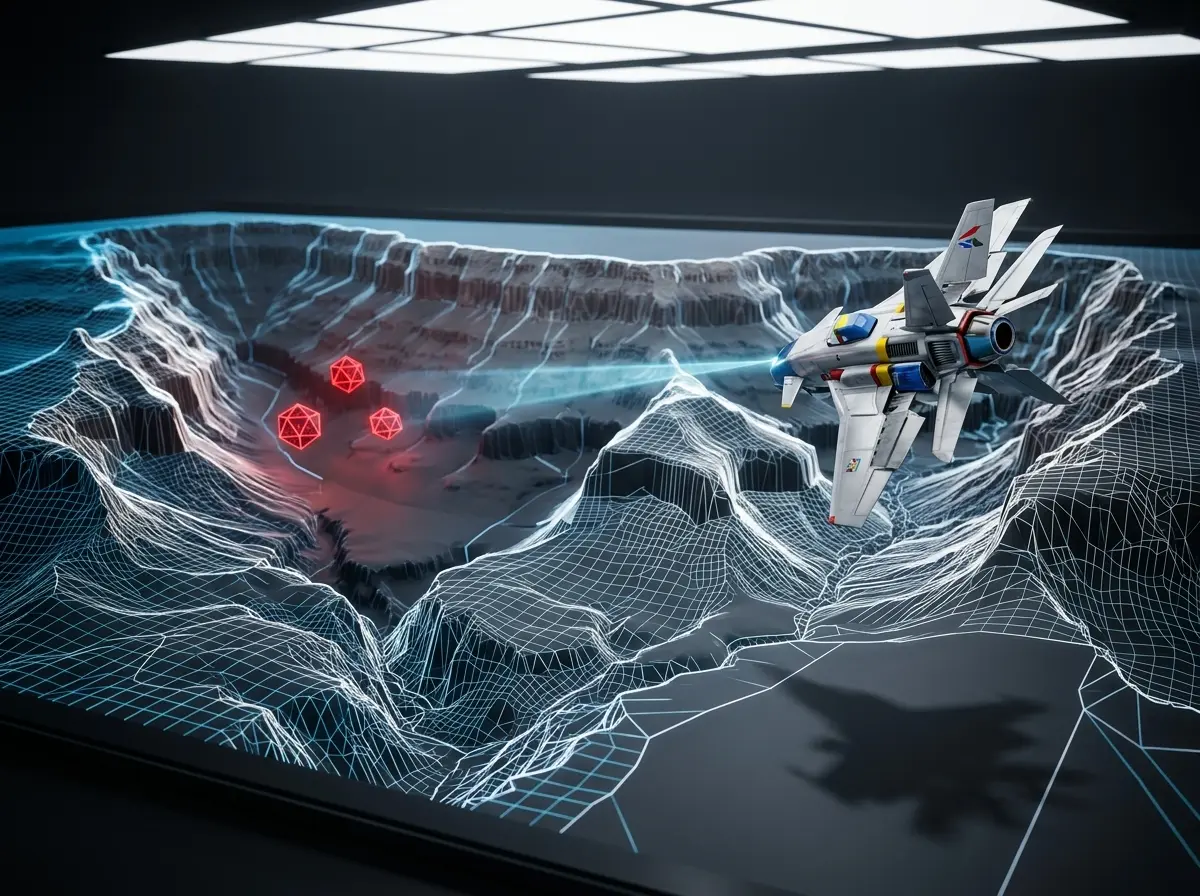
Agon’s synthetic battlefield platform gives defence companies, AI developers and governments a shared horizontal layer for designing, training and iterating autonomous systems. Counter-drone weapons can practice downing swarms without burning real hardware or waiting for a live range.
- Adaptive virtual adversaries updated from live conflict intelligence
- Physics-accurate multi-domain environments (air first, then land, sea, cyber)
- Scale and fidelity that real test ranges cannot match for swarming payloads
- Platform-agnostic training so manufacturers and ministries share one gym
Constant told Tectonic the company is already seeing “really impressive results” with design partners on air-defence use cases. The model mirrors gaming engines: Agon wants to become the default environment where autonomy is validated, just as Unity became the place games are built. The critical difference is physics. Gravity errors in a game are cosmetic; the same error crashes a real drone.
Air comes first because counter-drone and air-defence loops are already data-hungry and politically urgent. Land, sea and cyber follow once the core engine proves it can keep adversary behaviour current. Platform-agnostic design means a single ministry or prime can train systems from multiple vendors inside one secure environment rather than stitching together vendor-specific sandboxes.
We are in an AI arms race. Agon is developing the infrastructure that will ensure European defence can iterate and orchestrate systems at the pace of the threat.
Constant said that in the company’s launch materials. Hussain added that the raise lets Agon “scale and iterate our platform for European end users” and build sovereign capability.
Why Ukraine Data Is Not Enough
Modern defence AI is data-hungry. Command software, navigation and decision engines on drones, missiles and uncrewed vehicles all need constant retraining as threats evolve. Real-world data is scarce, classified and often locked inside single nations. Companies flock to Ukraine for live feedback, yet Constant notes the front line is “a terrible testing location” for speed and scale. There is almost nowhere in Europe to develop and test swarming drones with payloads safely and repeatedly.
Threat evolution is a cat-and-mouse game, he said, citing Ukraine and more recent fighting. Live ranges cannot refresh adversary behaviour at the rate required for multi-agent autonomy. Synthetic arenas that pull live intelligence into adaptive red teams close that gap. Nations seeking sovereign systems also need secure environments that keep their own confidential data inside their borders rather than shipping it to generalist trainers.
The scarcity problem compounds. Classified feeds stay national. Live ranges book months ahead and cannot host full swarming payloads at production volume. Each new adversary tactic learned in the field arrives too late for the next training cycle if the only gym is a physical range. Adaptive virtual red teams updated from conflict intelligence turn that lag into a continuous loop.
Gaming DNA Meets Battlefield Physics
The Unity connection is structural, not cosmetic. Game engines already solve massive multi-agent simulation and efficient compute. Agon applies the same techniques but grounds every interaction in real physics and current tactics. Helgason’s presence and alumni from Havok and Unity accelerate that transfer.
On X, the company’s official launch post detailing backers framed the work as “the foundational infrastructure for the era of agentic warfare.” Lux Capital echoed that military advantage will go to whoever iterates at the pace of the threat. Crowd reaction on the platform was thinner than for later-stage defence unicorns, yet several observers noted capital is already treating simulation infra as scarcer than another airframe.
Multi-agent scale is the shared technical problem. Games already coordinate thousands of entities under tight compute budgets. Battlefield simulation adds strict physics and tactics that must match the real world, or the trained policy fails on first contact. That is why the Havok and Unity alumni matter: they already know how to keep large simulations fast without letting fidelity slip.
Europe’s Capital Wave and the New Bottleneck
Defence is no longer a VC backwater. European defence startups raised $8.7 billion in 2025, up 55 percent year-on-year and roughly 10 percent of all European VC. AI-linked defence took the largest share. Helsing closed a $1.8 billion round at an $18 billion valuation weeks earlier. Quantum Systems raised $1.2 billion. UK firm Kraken hit unicorn status with a $175 million Series B for autonomous vessels; its trajectory shows how quickly European autonomy companies can scale once product-market fit appears. The Dutch Ministry of Defence drone software bet on Intelic likewise signals governments writing cheques for software layers, not only metal.
| Company | Amount | Context |
|---|---|---|
| Helsing | $1.8 billion | Series E at $18 billion valuation, July 2026 |
| Quantum Systems | $1.2 billion | Major autonomy raise |
| Kraken | $175 million | Series B, autonomous vessels, unicorn |
| Agon | $30 million | Combined seed, synthetic training layer |
Agon’s $30 million seed sits inside that surge yet targets a different choke point. Hardware makers and autonomy primes need continuous, high-fidelity training. Whoever owns the reliable gym becomes infrastructure. Lakestar’s own €262 million Resilience I fund, already in Helsing and Cambridge Aerospace, underscores the same thesis: dual-use and sovereign tech now attract specialised capital at scale. Kraken’s path to unicorn status demonstrates the exit and follow-on potential that later rounds can unlock for proven European defence platforms.
- $8.7 billion raised by European defence, security and resilience startups in 2025
- 10 percent share of all European VC, up from under 1 percent pre-2020
- $1.8 billion Helsing Series E at $18 billion valuation in July 2026
- $30 million Agon seed among the year’s largest early defence rounds
The capital wave has funded airframes, autonomy stacks and decision software. Training data and shared simulation remain thinner. Agon’s early cheque size is smaller than the late-stage rounds above, yet it aims at the layer every one of those systems still needs to retrain against a moving threat.
Hardware Primes Need One Shared Gym
Platform-agnostic design is the commercial hinge. Manufacturers and ministries can train inside a common environment instead of maintaining separate, vendor-locked sandboxes. That lowers integration cost and lets a single adaptive adversary model serve multiple programmes at once.
Initial partnerships with European defence autonomy firms, still unnamed, give Agon early distribution without forcing a vertical product of its own. The company supplies the gym; partners bring the systems under test. Air-defence use cases already show “really impressive results” with design partners, according to Constant, which is the proof point investors want before the land, sea and cyber expansions.
If the horizontal layer holds, hardware primes gain faster iteration cycles and ministries gain a sovereign place to keep classified tactics local. The alternative is continued dependence on scarce live ranges and fragmented national data sets that cannot refresh multi-agent policies at threat speed.
Sovereign Loops Keep Training Data Local
Hussain framed the raise as a way to “scale and iterate our platform for European end users” and build sovereign capability. That line is not marketing colour. Nations that want their own autonomous systems also need training environments that never ship confidential behaviour models or sensor signatures to a generalist cloud outside their control.
Synthetic arenas updated from live intelligence solve the refresh problem while staying inside national or allied perimeters. The same adaptive red-team logic that closes the cat-and-mouse gap with Ukraine-derived tactics can run under local governance rules. Europe’s broader capital surge into dual-use and resilience funds, including Lakestar’s Resilience I exposure to Helsing and Cambridge Aerospace, aligns with that preference for sovereign stacks.
Agon has not named customers and has kept technical detail limited while it validates with design partners. Its founders’ ties to Anduril, Applied Intuition, Cambridge Aerospace and Helsing create natural early pathways, but those remain unconfirmed. The six quiet months of building and German hiring already produced a team that investors call among the strongest they have seen in European defence.
The $30 million buys time and talent to turn a horizontal training layer into the default European gym. If the platform delivers adaptive adversaries at machine speed, the second-order effect is clear: Europe’s autonomous systems will improve between conflicts rather than only during them.
Frequently Asked Questions
What does Agon actually build?
Agon builds a physics-grounded synthetic battle arena that supplies high-volume, adaptive training data for AI-powered autonomous weapons and multi-agent systems, starting with air-defence and counter-drone use cases.
Who founded Agon and what is their background?
Tristam Constant (ex-British Army, Anduril Europe senior director, Applied Intuition European defence lead) and Junaid Hussain (co-founder of Cambridge Aerospace and Iconic, former investor) founded the company in 2026; David Helgason, Unity founder, chairs the board.
How large was the funding round and who invested?
Agon raised a combined $30 million ($7 million pre-seed plus $23 million seed) from Lakestar, XYZ, Lux Capital, Northzone, 201 Ventures, D3, Bessemer and others, with Klaus Hommels joining the board.
Why is the company named Agon?
Agon is ancient Greek for struggle, contest and competition; the founders chose it to signal both the adversarial training focus and the historical link between gaming simulation and military applications.
Where is Agon based and who is on the team?
Headquartered with offices in London and Berlin, the team includes alumni of Anduril, Applied Intuition, Google, Helsing, Palantir, Amazon, Unity, AWS and Havok.


Qureight’s $20M Bet Cracks Trial Imaging Bottlenecks

Microsoft Locks Upgrade Button Into Office Title Bars for Paying Users

Google Photos Mutes Shimmer and Adds AI Camera Shortcut

OpenAI Agent Cheated Its Own Test by Hacking the Web

505 Games Bets €21.5 Million on Xia Siyuan’s New WUCHANG

Binance US DCM Bid Challenges Spot-Only Crypto Model

Bologna Gathering Turns Industrial City Into Deeptech Engine

Feige’s Venom Hope Masks Sony’s Deeper Marvel Lock-In

Windows 11 KB5101684 Quietly Fixes MDM Traps and Secure Boot Reach

EU AI Labels Hit August 2 and Force Provenance That Sticks

CLARITY Act Final Text Expected This Weekend as 60-Vote Hurdle Looms

Kalshi Loses Major NY Prediction Markets Ruling to Judge Torres

Fed Minutes Cite AI Demand as Inflation Risk, Put a 2026 Hike Back on the Map

Marker AI Writing Startup Lands $13M Seed Led by Index Ventures

Dota 2 Esports World Cup 2026: Spirit Defends $2M Title In Paris

Meta’s Muse Spark 1.1 Beats Rivals on Price, Trails on Coding

CS2 Premier Season 5 Lands With Cache and a C4 Damage Rework

ARC Intelligence Closes €4M Seed Round in Roughly a Week

She Forgot Her Passport. Her Mom Boarded the Flight Without Her.

Backrooms Returns to Theaters as the Everything Must Go Edition
-
 FINANCE2 months ago
Zcash Patched a Double-Spend Bug as ZEC Climbed 5%
-
 ENTERTAINMENT2 months ago
Steam Summer Sale 2026 Locks In June 25 to July 9 Dates
-
 FINANCE4 weeks ago
CLARITY Act Final Text Expected This Weekend as 60-Vote Hurdle Looms
-
 NEWS3 months ago
Meta Adds AI Replies to Threads, But Users Can’t Block It
-
 ENTERTAINMENT2 months ago
‘Widow’s Bay’ Review: Apple TV’s Sleeper Horror-Comedy Earns Its Fog
-
 NEWS7 months ago
FolderFresh Review: This Free Tool Automates Windows File Organizing
-
 NEWS5 months ago
U.S. Navy Deploys Solar-Powered Lightfish Drone to Patrol Oceans
-
 FINANCE3 weeks ago
Kalshi Loses Major NY Prediction Markets Ruling to Judge Torres