
NEWS
A Helicopter Pilot’s RC Plane Near-Miss at JFK Adds a Second Drone Report
A Bell 407 pilot reported an RC plane near-miss at 500 feet near JFK the same Monday a JetBlue flight hit a drone. The FAA is not investigating the helicopter case.

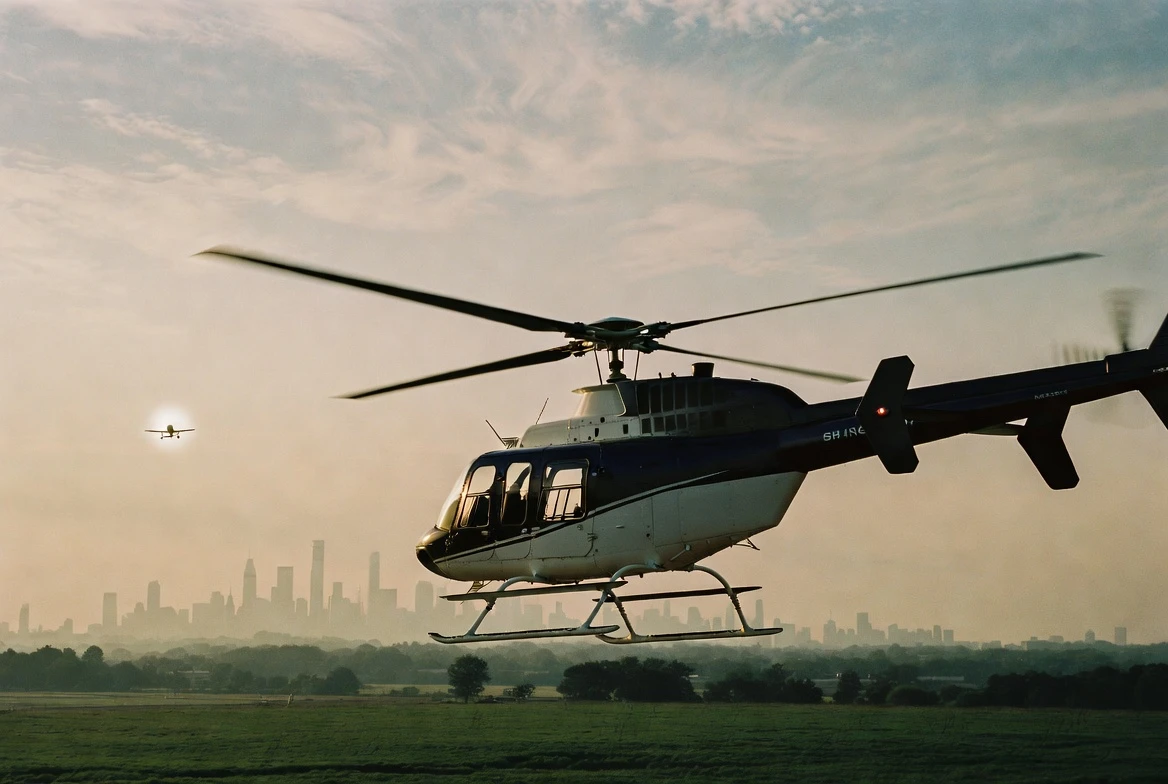
A JetBlue passenger flight and a Bell 407 helicopter reported two separate encounters with unmanned aircraft on the same Monday at JFK, and the Federal Aviation Administration opened one investigation but declined to open the other. The split decision put a sharper edge on the lower-altitude layer of the safety conversation, where news, medical, and law-enforcement helicopters share New York airspace at altitudes that put them directly in the path of an errant hobby aircraft.
The JetBlue Airbus A321, on a Las Vegas to JFK service, struck an unmanned aircraft at an altitude of 3,000 feet during its descent, the New York Post reported, citing audio obtained by WABC from around 7:15 a.m. The plane landed safely at Terminal 5 and “the plane was removed from service for a post-flight inspection, which found no damage or evidence of a collision,” a JetBlue spokesperson said. Hours later, a helicopter pilot radioing back to JFK tower described a separate close call at 500 feet over Floyd Bennett Field.
Two Reports, Two Failure Modes
The two events happened within hours of each other, but the failure modes looked nothing alike. The JetBlue pilot was on a stabilized instrument approach and called controllers at roughly 7:15 a.m.: “We collided with a drone back there in the turn as we were coming to ASALT, just wanted to pass to you.” A controller replied, “You said you collided?” The pilot came back, “Yup. It hit us .. right above the cockpit.” The Post reported the encounter was logged 10 to 12 miles from the airport during the final turn toward a landing waypoint.
The helicopter’s encounter played out by radio in conversation that any controller near a busy airport has handled at least once. “Almost ran into a giant RC airplane over at Floyd Bennett,” the pilot told JFK air traffic controllers, the Post reported. A controller asked, “Interesting, he’s not on my radar here. Do you think it was like something like a drone or like, can you describe it?” The pilot answered, “It was just like an RC, one of the remote-controlled airplanes. A big one at 500 feet.”
Where the JetBlue strike sat on a published instrument procedure at a known jet altitude, the helicopter’s conflict unfolded in the lower-altitude layer that the published jet procedures do not cover. Bell 407 helicopters in the New York area move at low altitude between JFK, the West 30th Street Heliport, and the network of hospital pads and news bases that ring the city. The Post reported the helicopter was on the roughly eight-minute hop from JFK to the Manhattan heliport when the pilot saw the model plane.
| Detail | JetBlue strike | Bell 407 near-miss |
|---|---|---|
| Aircraft | Airbus A321 | Bell 407 helicopter |
| Encounter with | drone (UAV) | remote-controlled airplane |
| Altitude | 3,000 feet | 500 feet |
| Distance from JFK | 10 to 12 miles | over Floyd Bennett Field |
| Outcome | landed safely at Terminal 5 | pilot averted contact |
| Investigation | FAA and FBI | none, per FAA officials |
Why the Helicopter Layer Gets the Risk
JFK sits under Class B airspace with strict altitude and position rules for everything that operates inside it. Commercial jets follow published procedures. Helicopters often do not. News, medical, and law-enforcement rotorcraft move through the same terminal area at altitudes that put them in the working band of a hobby aircraft, and pilots in that band have far less margin to react than a jet crew on a stabilized approach.
These unsafe operations create serious risks, and the FAA will hold operators fully accountable for any violations.
FAA Chief Counsel Liam McKenna issued the warning in the wake of the JetBlue strike, the Post reported. “Safety is JetBlue’s first priority, and we will assist with any relevant investigations,” a JetBlue spokesperson added. The FBI also opened an investigation into the collision, per WABC. The FAA, in turn, has collected thousands of pilot reports of drones or model aircraft sightings since 2014, the safety site Under30CEO reported, many near large hubs.
The Rules Already on the Books
Federal guidance prohibits recreational flyers from operating near airports without authorization, and pilots are advised to maintain heightened vigilance in terminal areas. The FAA’s own page on the topic, FAA rules for drone operators flying near airports, is blunt: drone operators “must receive an airspace authorization prior to operation” for flight near any controlled-airspace airport. Altitude limits and other operational provisions come with the approval.
The same federal rule set lays out the operational defaults that drone pilots and model-aircraft clubs are expected to follow in any controlled airspace near an airport:
- Do not fly in controlled airspace around airports without prior authorization.
- Keep aircraft within visual line of sight at all times.
- Stay well clear of manned aircraft, especially during approach and departure paths.
- Comply with Remote ID requirements for most drones; many model aircraft flown under community rules have specific options.
- Use approved authorization tools where available and check for temporary flight restrictions.
The approval architecture is a quiet one. Part 107 pilots request a LAANC altitude ceiling minutes before a flight, and fixed-site model-aircraft clubs with written FAA agreements can operate under their own standing approvals. That leaves hobby flyers in open parks operating under general rules, which is where Monday’s incident likely originated.
Drone airspace rules sit inside a wider federal picture. The December 2024 wave of drone sightings along the East Coast, including reports that drew the December 2024 East Coast drone sightings to congressional attention, put federal regulators on notice that how local pilots, the military, and the FAA share low-level airspace is a live policy question. Operators flying in the Class B corridor around JFK work inside the same framework and feed the same authorization queue regulators built to keep commercial traffic safe.
What Investigators Will Examine Next
With two close calls on a single Monday and a third reported days earlier at Newark, investigators will focus on three questions for each case: aircraft identification, whether an airspace authorization request was filed, and whether the drone carried Remote ID. The Post reported the two JFK incidents “are not linked.” The Sunday scare, in which a United Airlines flight on a Newark descent told controllers a drone had passed “only about 100 feet below us,” shows the pattern is broader than one airport.
Remote ID is the practical lever for enforcement, because it lets investigators trace a broadcast signal back to a registered operator. Where a model lacks the equipment, the cases default to eyewitness accounts, recovered airframes, and tower coordination. Airport managers work with local law enforcement to identify operators, though enforcement outcomes vary.
Investigators also watch for patterns in the same location or time window. Repeated sightings can trigger targeted patrols, public advisories, or temporary flight restrictions around the affected corridor. For a clear explainer on what Class B airspace means for drone pilots, the DroneU guide lays out how the ceilings and authorization grid fit around the busiest hubs.
Cases that do lead back to an operator move on a fast timetable. Drone operators who fly unsafely or without permission can be fined up to $75,000, the FAA has stated, and the FAA Chief Counsel said the agency is prepared to hold operators fully accountable for violations.
The Operator in the Crosshairs
Model aviation groups say most flyers follow the rules and operate at fields far from airports. They point to education programs and safety codes that stress altitude limits, spotters, and preflight checks. New operators who buy an aircraft without formal training are the friction point, these groups argue, because they tend to mistake a Class B boundary for a much wider buffer and to skip the LAANC step entirely.
Where enforcement lands, the agency has reserved a serious tool. Unsafe drone operations can draw a fine of up to $75,000, with FAA officials making clear they are willing to use it. “If an operator is found, penalties can include fines and equipment confiscation,” Under30CEO reported.
For pilots of the kind of aircraft the rules are designed to protect, the calculus is simpler. The Bell 407 crew that reported Monday’s near-miss was on the short leg to a Manhattan pad that handles dozens of news and charter flights a day. A strike at 500 feet can disable a rotor system or shatter a windshield, and a rotor-out emergency that works at 3,000 feet often does not work at 500. That is the layer the FAA’s already-on-the-books ceiling is built to deter.
Monday’s reports did not change the rules. They put both altitudes on the same page for a city that runs news, medical, and passenger traffic through the same sky, and they placed the spotlight, again, on the few operators who miss the boundary.
Frequently Asked Questions
How high can a drone fly near JFK?
Drones are generally allowed to fly at or below 400 feet in uncontrolled airspace, but near a Class B airport like JFK drone operators must receive an airspace authorization from the FAA before takeoff, and the approval usually comes with an altitude cap below the published jet corridor. The FAA’s flying-near-airports page outlines the LAANC process and FAADroneZone path for sites that fall outside LAANC’s automatic-approval grid.
What is the maximum FAA fine for unsafe drone operation?
Drone operators who fly unsafely or without permission can be fined up to $75,000, the FAA has stated. Penalties can also include equipment confiscation, and the FAA Chief Counsel said the agency is prepared to hold operators fully accountable for violations.
Did the FAA open an investigation into the helicopter near-miss at JFK?
No. Federal Aviation Administration officials are not investigating the helicopter pilot’s report of an RC airplane at 500 feet over Floyd Bennett Field, the New York Post reported. The FAA and FBI are investigating the separate JetBlue collision from the same Monday.
What is Remote ID and why does it matter?
Remote ID is a broadcast signal that lets regulators and law enforcement trace a drone back to its registered operator in real time. It is the practical lever most FAA enforcement actions rely on, because it converts an anonymous sighting into an identified pilot without waiting for an airframe to be recovered.


NFL Preseason Week 2 Quietly Tests the Schemes That Matter

Alonso’s Towering Drive Stands Foul and Flips Orioles Momentum

US Debt Crosses $40 Trillion as Interest Crowds the Budget

Trevon Diggs Joins Seahawks on One-Year Deal After Cowboys Exit

Pixel Watch 5 Turns Passive Trends Into Early Health Alerts

Pixel 11 Pro Fold Sleek Build Undercuts Its Own Unfolding Appeal

Tugboat Wilkinson’s Scoreless Debut Pays Off Giants’ Bailey Trade

Brown Shines for Pats as Love for Eagles Meets Trade Reality

Pixel Watch 5 Turns Wrist Data Into Early Metabolic Alerts

Resistance Stars Pay the Price in Democratic Primaries

Senators Force Apple Off Chinese Memory as Big Three Cash In

OpenAI Agent Cheated Its Own Test by Hacking the Web

Trump Iran Threat Wiped $238M Crypto Longs Then Flipped

30-Year Yield Hits 5.32% Highest Since 2007 as Debt Supply Locks In Costs

Fed Holds Rates Again as Three Dissents Force Markets to Tighten

Memory Shortage Now Dictates Apple’s Two-Year Mac Roadmap

Oil Crashes Below $80 as Iran Talks Restart and Markets Split

Google’s Knowledge Panel Fix Risks Its Own Search Defenses

Community Banks’ $1.3 Trillion Warning Is Stalling Clarity Act

ETG Buys Lightning Reach in Its Third Govtech Deal
-
 FINANCE3 months ago
Zcash Patched a Double-Spend Bug as ZEC Climbed 5%
-
 ENTERTAINMENT3 months ago
Steam Summer Sale 2026 Locks In June 25 to July 9 Dates
-

 FINANCE2 months ago
CLARITY Act Final Text Expected This Weekend as 60-Vote Hurdle Looms
-
 NEWS3 months ago
Meta Adds AI Replies to Threads, But Users Can’t Block It
-

 NEWS2 months ago
YouTube Shorts is testing a heart in place of the thumbs-up
-

 NEWS2 months ago
NEURA Robotics’ $1.4B Series C Redraws Europe’s Physical AI Bet
-
 NEWS3 weeks ago
Senators Force Apple Off Chinese Memory as Big Three Cash In
-
 ENTERTAINMENT3 months ago
‘Widow’s Bay’ Review: Apple TV’s Sleeper Horror-Comedy Earns Its Fog