
BUSINESS
Honda Kills the Prologue and Exits the US Electric Car Market
Honda confirmed it will stop selling the Prologue after 2026, leaving it with no US electric vehicle after a $15.7 billion strategy reversal.

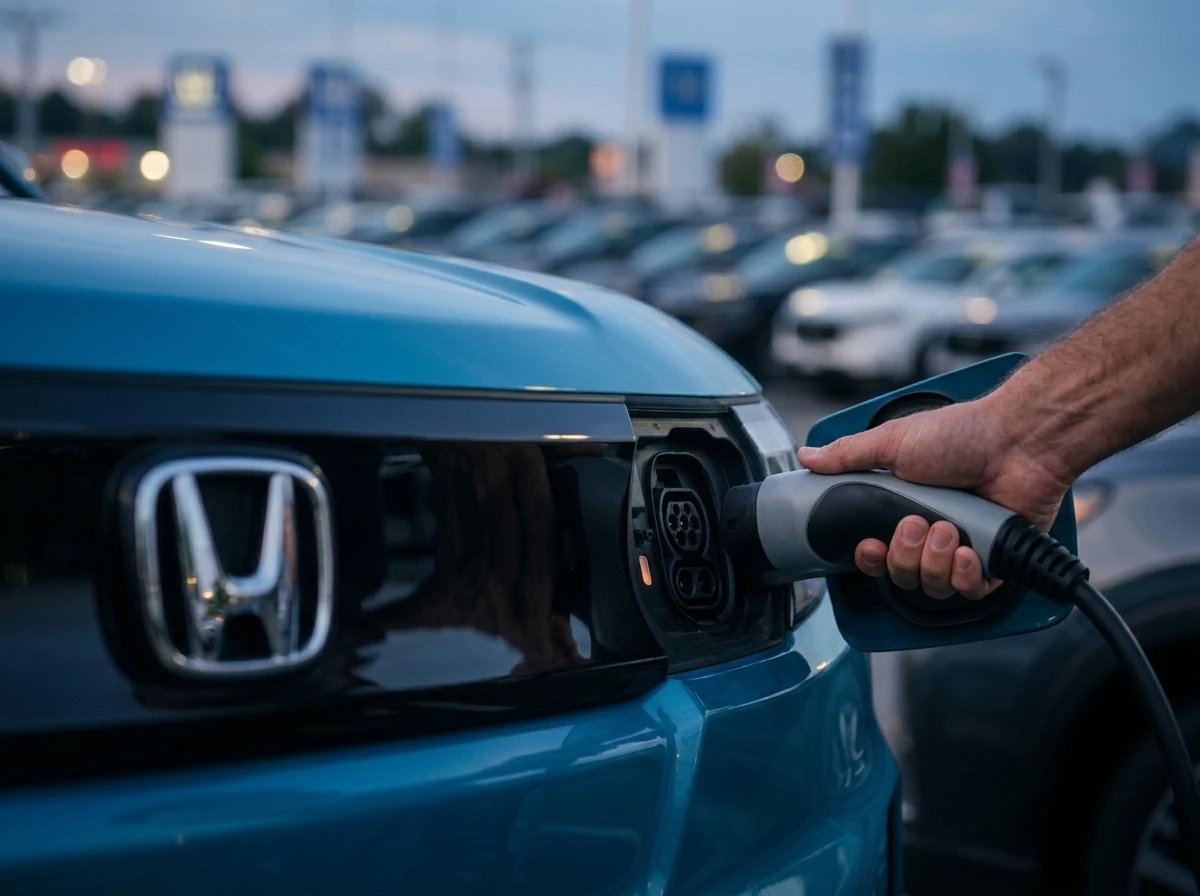
Honda confirmed this week it will stop selling the Prologue after the 2026 model year, ending its only battery-electric vehicle (EV) in the United States. The move leaves Honda with zero EVs on sale in America, just two years after the Prologue arrived as an unexpected sales hit.
This closes out a stretch that has already cost Honda as much as $15.7 billion in write-offs, buried the Acura ZDX, and killed the software-defined 0 Series sedan and SUV the company once called its electric future.
Honda Pulls the Plug on Its Last American EV
CarBuzz first reported that dealers were being notified, and a Honda spokesperson confirmed the decision on Thursday to CarBuzz, Bloomberg and InsideEVs.
Honda will conclude sales of Prologue later this year following completion of the 2026 model year. Prologue customers will continue to receive full support through our dealer network, including service, parts, and warranty coverage.
To InsideEVs, Honda added that “customer demand for EV models has shifted significantly over the past 18 months,” framing the move as a way to align its lineup with “market conditions” and its “long-term goals.” Automotive News, citing forecasting firm AutoForecast Solutions, has reported production will wind down in December.
With the Prologue gone, Honda has no electric vehicle left to sell in the United States. Its only other EV, the Acura ZDX, was pulled last September after a single model year.
Sales Cratered the Day the Tax Credit Died
The Prologue launched in March 2024, built by General Motors (GM) on its Ultium battery platform alongside the Chevrolet Blazer EV. It became a surprise hit, ranking among the top-selling electric vehicles in the country behind only Tesla’s Model Y and Model 3 during its early months on sale.
Momentum carried into 2025. Honda sold 39,194 Prologues that year, up 19.1% from about 33,000 the year before. Most of those sales landed before the $7,500 federal EV tax credit expired on September 30, 2025.
Then the bottom fell out.
| Period | US Prologue Sales | Year-Over-Year Change |
|---|---|---|
| 2024 (launch year) | About 33,000 units | First year on sale |
| 2025 (full year) | 39,194 units | +19.1% |
| December 2025 | 932 units | -88.6% |
| First half of 2026 | 8,407 units | -48.5% |
By July, Honda was moving roughly 1,400 Prologues a month, a fraction of the pace it kept before the credit disappeared. The collapse wasn’t unique to Honda either. Ford’s F-150 Lightning, the Hyundai Ioniq 6, the Nissan Ariya, the Volkswagen ID.4 and the Kia Niro EV have all been discontinued this year as the broader US EV market cooled.
Inside Honda’s own showroom, the damage looked even worse by comparison. The Prologue finished 2025 as the automaker’s second-slowest-selling model, behind only the Prelude, a coupe that had been on sale for a matter of weeks. All told, Honda has sold more than 80,000 Prologues since the model’s debut.
A $279 Lease for a Car With No Future
Honda cut the Prologue’s starting price by $7,500 in April, from $47,400 to $39,900 before destination, an attempt to offset the loss of the federal credit. It didn’t reverse the slide.
What it did produce, on the way out, is a bargain. As of July 16, dealers were advertising Prologue leases as low as $279 a month for 36 months, a figure Electrek also reported this week as Honda works through remaining inventory. That undercuts the lease cost of a Honda CR-V or Accord Hybrid, and even beats a Civic Hatchback Hybrid.
That’s a low price for 308 miles of range and a familiar nameplate. Current owners and lessees keep dealer support: service, parts and warranty work continue as promised. What they don’t get is a path to a newer electric Honda if they want to stay electric. Discontinued nameplates also tend to lose resale value faster once a model’s future ends, a dynamic already playing out with Polestar’s US wind-down, as TopSpeed has noted, though Honda’s dealer network is far larger.
The Retreat Has Cost Honda $15.7 Billion So Far
The Prologue’s exit is the last domino in a chain Honda started knocking down last September. In under a year, the company has shut down every electric vehicle program it had planned for North America.
- Acura ZDX ended after a single model year last September; it shared the Prologue’s GM-built Ultium platform.
- Honda 0 Series SUV and Saloon, the software-defined models unveiled at CES in January 2025, were canceled on March 12, 2026, before either reached production.
- Acura RSX was scrapped the same day, even though one supplier had already begun building parts for it.
- Afeela 1, the electric sedan from Honda’s joint venture with Sony, was shelved before reaching showrooms on March 25, 2026.
- Honda Prologue is the last model standing, and it now ends sales after the 2026 model year.
Honda’s own accounting of the damage, filed with investors in March, put the maximum toll at up to 2.5 trillion yen in reassessment losses tied to the strategy reversal, or roughly $15.7 billion. The US supplies about 40% of Honda’s global sales, more than Toyota’s 24% or Nissan’s 29%, according to Japanese business outlet Nippon.com, which is why a miscalculation here cuts deeper than it would for its rivals.
- $9.2 billion in EV-related losses landed in the fiscal year that ended in March 2026 alone.
- $2.6 billion was Honda’s operating loss for that same year, the worst in company history.
- $1 billion is roughly what Honda’s Ohio retooling commitment grew to, up from an initial $700 million.
That operating loss was Honda’s first annual net loss since it listed on the Tokyo Stock Exchange in 1957, according to trade outlet Automotive Manufacturing Solutions. Honda’s partnership with GM had already been fraying for years; the two automakers shelved plans for jointly developed affordable EVs back in 2023 and wound down a shared hydrogen fuel-cell venture in Michigan earlier this year.
Ohio’s EV Hub Builds Hybrids Instead
Honda’s Marysville and East Liberty plants in Ohio, retooled for electric production, are pivoting to gasoline and hybrid models instead. “Honda established a highly flexible manufacturing environment in Ohio capable of building the right products to meet customer demand,” said Honda and Acura Midwest spokeswoman Lynn Seely. “That flexibility remains central to our strategy.”
Suppliers got caught in the middle. One Tier 1 supplier executive working on the now-canceled Acura RSX told Automotive News his company had already hired workers and begun manufacturing components before the plug was pulled. “Equipment’s on the ground, it’s running, it’s making product,” the executive said, speaking on condition of anonymity.
GM has its own cleanup ahead. The Prologue was assembled at GM’s Ramos Arizpe plant in Mexico, alongside the Chevrolet Equinox EV and Cadillac Optiq, and that capacity needs a new tenant. GM plans to build the Chevrolet Groove and Aveo there for Latin American markets starting next year. Vehicles built in Mexico, including the Prologue, also face tariffs of up to 25% depending on their US content. GM’s own domestic EV plans keep moving regardless, including reviving the Bolt nameplate at a $28,995 starting price for the 2027 model year.
Is Honda Walking Away From Electric Cars?
Not entirely, by Honda’s own account. CEO Toshihiro Mibe calls the hybrid pivot a timing problem, tied to EV demand arriving years later than Honda projected, and the company says it is still developing a next-generation EV platform and solid-state battery technology. Honda has no Prologue successor on the schedule, though, and the 0 Series is dead, leaving no near-term way back into the US electric market it just left.
“Electrification now is a little bit different from what we were expecting before,” Mibe told reporters in Tokyo last fall, before estimating the industry was facing something close to a five-year delay compared with Honda’s original timeline.
Toyota took a different path. Rather than leaning on regulation-driven EV targets, it tracked actual hybrid demand in the US and adjusted accordingly, an approach that has held up better through the same downturn, per Nippon.com’s comparison of the two companies.
Honda’s answer is a hybrid buildout: 4.4 trillion yen ($27.8 billion) over three years for new gasoline and hybrid models, plus another 1 trillion yen for software technology. Two prototypes came out of a Tokyo business briefing in May, the Honda Hybrid Sedan and the Acura Hybrid SUV, both slated to reach showrooms within two years, part of a plan for 15 new hybrids worldwide by 2030. Honda’s relationship with electrification runs deeper than the Prologue suggests; its Insight hybrid beat the Toyota Prius to the US market back in 1999, and the company has sold hydrogen fuel-cell cars in some form since 2002. It still sells battery-electric models in Japan, Europe, the UK and China through its Honda Mobility joint venture, just not in the market it built the Prologue for.
The Prologue’s showroom slot goes empty when the new year turns, and Honda has not said when, or if, another electric model will fill it.
Frequently Asked Questions
Can I Still Buy or Lease a Honda Prologue?
Yes, through the rest of the 2026 model year. Dealers were advertising leases as low as $279 a month for 36 months in mid-July, and production at GM’s Ramos Arizpe plant is expected to continue until output winds down at year’s end.
What Happens to My Prologue’s Warranty After Production Ends?
Honda has promised uninterrupted dealer support, including service, parts and warranty coverage. The Prologue’s high-voltage battery carries the industry-standard eight-year or 100,000-mile warranty, and Honda Care coverage runs three years or 36,000 miles regardless of when production stops.
Why Did Honda Discontinue the Prologue?
Sales collapsed after the $7,500 federal EV tax credit expired in September 2025, falling from 39,194 units that year to roughly 8,400 in the first half of 2026. That drop, combined with a fraying manufacturing partnership with GM, which has moved on from the Ultium platform underpinning the Prologue, made the math impossible to justify.
Will Honda Build Another Electric Car for the US Market?
None is confirmed yet. Honda continues developing a smaller 0 Alpha Series EV for India and Japan, and executives say next-generation US platform work and solid-state battery research are still underway, but no timeline or model has been announced for America.
What Is Replacing the Prologue in Honda’s Lineup?
Hybrids. Honda’s Ohio plants, originally retooled for electric production, will build gasoline and hybrid models instead, part of a plan for 15 new hybrids worldwide by 2030, including larger models sized for the North American market.


Nvidia Buys Hugging Face, the Platform That Turned It Down

OpenAI Names GPT-6 Astra AGI, Then Locks It Down

Relay Q Bets a $150 Puck Can Beat Dictation Apps

Accel Backs Atira to Automate Industrial Sales Engineering

Beyerdynamic Hides a Spare Battery in the Aventho Y

Lummis Pushes the CLARITY Act to Export Wyoming’s Crypto Banks

AI Exposure Turns a Cloud Beat Into a Selloff

Citadel’s XRP ETF Filing Looks Like Dealer Inventory

Revolut’s OCC Nod Starts an 18-Month US Bank Clock

British Business Bank’s Zinc Fund Will Mint 80 Startups

Walter’s TWG Insists No Fraud as Insurer Probes Force Cleanup

30-Year Yield Hits 5.32% Highest Since 2007 as Debt Supply Locks In Costs

PCE Stays at 3.7% as Gas and Tariffs Outrun Coming Revisions

Astute’s $1.2M bet makes B2B creator deals feed AI discovery

Strategy Parks $1.59B Cash While Bitcoin Stack Stays Flat

SpaceX Stock Rebound Tests Real Demand Before Huge Unlock

The 20% Savings Ideal Meets a 2.7% Reality Check

Amber’s €7M locks Mittelstand knowledge inside Europe

Monzo chair Gary Hoffman exits after board revolt fallout

AI data centers win as RAM kits jump nearly 500 percent
-
 FINANCE3 months ago
Zcash Patched a Double-Spend Bug as ZEC Climbed 5%
-
 ENTERTAINMENT3 months ago
Steam Summer Sale 2026 Locks In June 25 to July 9 Dates
-

 FINANCE2 months ago
CLARITY Act Final Text Expected This Weekend as 60-Vote Hurdle Looms
-
 NEWS4 months ago
Meta Adds AI Replies to Threads, But Users Can’t Block It
-

 NEWS3 months ago
YouTube Shorts is testing a heart in place of the thumbs-up
-

 NEWS1 month ago
Senators Force Apple Off Chinese Memory as Big Three Cash In
-

 NEWS3 months ago
NEURA Robotics’ $1.4B Series C Redraws Europe’s Physical AI Bet
-
 ENTERTAINMENT5 months ago
Extraction 3 Is Officially Coming to Netflix in 2027