
BUSINESS
Toyota’s 4Runner Sales Soar in 2026, but Its Luxury Bet Falls Short
Toyota’s 2026 4Runner sales rose 141% this year, but testers say the hybrid engine and luxury trims still fall short of their price and promise.

Toyota sold 72,320 4Runners in the United States through the first half of 2026, up 141% from the same period a year earlier. A week behind the wheel of the range-topping Platinum trim shows why that boom comes with a catch.
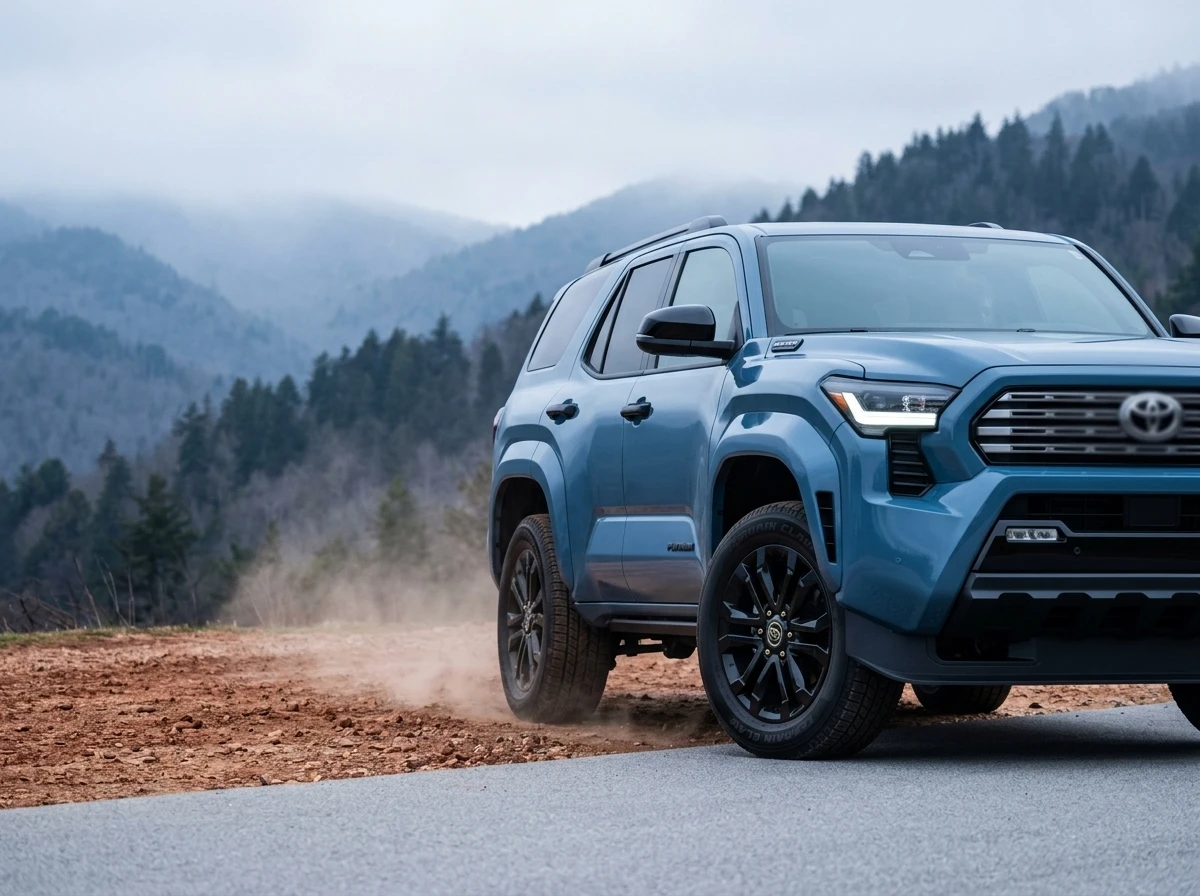
SlashGear tested a 2026 Toyota 4Runner Platinum, finished in a deep Heritage Blue, through the Blue Ridge Mountains of southwestern Virginia. Its verdict: the redesigned SUV’s price climbs faster than its off-road character, and its flagship hybrid engine burns more fuel than the window sticker promises.
4Runner Sales Jump 141% While Rivals Stumble
The 4Runner is closing in on the Grand Highlander as Toyota’s second-best-selling SUV, a jump from fifth place a year ago, according to Autoblog’s review of the automaker’s first-half sales figures. Hybrid versions are growing even faster than gas models.
- 72,320 units sold in the first half of 2026, up 141% year over year
- 17,142 hybrid 4Runners sold so far in 2026, up 211% from a year earlier
- Toyota held total SUV sales losses to just 4% even as the RAV4 struggles with supply constraints
- The 4Runner has climbed from Toyota’s fifth-best-selling SUV toward the edge of second place in a single year
The surge stands out against a bumpier year elsewhere in the industry. Ford’s decision to start extending employee pricing to every buyer came after a 9% sales drop, a sign of how uneven 2026 has been for other brands while Toyota’s midsize off-roader keeps climbing.
The Price Ladder Now Tops $68,000
Toyota builds the 2026 4Runner across nine distinct grades including Trailhunter and Platinum, but pricing splits into 12 tiers once the optional i-FORCE MAX hybrid gets layered onto three of those grades. Toyota introduced the lineup last November at a $41,570 starting MSRP; current listings put the SR5 at $42,070 before a $1,495 destination charge.
Here is how the ladder breaks down across a representative slice of the range:
| Trim | Starting Price | Standard Powertrain |
|---|---|---|
| SR5 | $42,070 | i-FORCE turbo four |
| TRD Off-Road | $50,490 | i-FORCE turbo four |
| TRD Off-Road Premium | $56,270 | i-FORCE turbo (i-FORCE MAX optional, $59,070) |
| Limited | $56,700 | i-FORCE turbo (i-FORCE MAX optional, $61,500) |
| Platinum | $64,160 | i-FORCE MAX hybrid, standard |
| Trailhunter | $68,200 | i-FORCE MAX hybrid, standard |
| TRD Pro | $68,400 | i-FORCE MAX hybrid, standard |
Every one of those trims now clears the $40,000 ceiling that anchors lists like our roundup of 2026’s most affordable cars under $40,000. The tested Platinum’s as-tested sticker reached $66,860 with destination included.
Dealer lots tell a similar story. An analysis of 10,659 4Runners sitting in dealer inventory found the SR5 with part-time four-wheel drive averaging $47,477, just $165 below sticker, with the deepest stock of any trim in the lineup.
A Week in the Platinum’s Quiet Comfort
The Platinum trim wears 20-inch wheels wrapped in Yokohama Geolandar X-CV tires built for a quiet highway ride, not for scrambling over rocks. The Trailhunter, by contrast, rides on 33-inch Toyo all-terrain tires mounted to bronze 18-inch alloys built for exactly that.
Inside, the top trim adds heated rear seats for three second-row passengers, premium hide upholstery and a 14-speaker JBL sound system with a removable dash-top speaker for campsite listening. Power running boards, also offered on the Limited, make climbing into the cabin easier.
The compromises show up in the back seat. Second-row legroom measures 34.8 inches, and the optional third row squeezes riders into 31.8 inches, thin numbers next to the 41.8 inches up front. The rear door openings are tight enough that entry felt about as awkward as with a decades-old RAV4’s smaller doors, per the review.
Cargo capacity splits by drivetrain, too. Non-hybrid models without a third row offer 48.4 cubic feet with the rear seats up and 90.2 cubic feet folded flat. Hybrid models lose ground to the battery pack sitting above the rear axle, dropping to 42.6 and 82.6 cubic feet because the load floor sits higher.
On the road, the SUV’s weight is obvious through corners and even in parking lots, the unmistakable feel of a body-on-frame truck. High ground clearance came in handy for an unplanned curb climb out of a tight spot, and the Platinum stayed composed descending a mountain grade in Sport mode.
The Hybrid’s Fuel Economy Doesn’t Match the Window Sticker
The EPA’s own fuel economy ratings for the 2026 4Runner put the i-FORCE MAX hybrid at 23 mpg city and 24 highway. The base SR5’s turbo four is rated at 20 city and 26 highway.
Real-world testing has landed under both figures. The Platinum returned a combined 19.2 mpg over a week of mixed city and highway driving. A separate long-term test truck, a hybrid TRD Off-Road, averaged 20.5 mpg after 10,000 miles, 2.5 mpg under its EPA combined rating, according to Cars.com’s ongoing long-term test.
The i-FORCE MAX also asks for premium gasoline, while the standard turbo four runs on regular. Hybrid buyers pay more per gallon on top of burning through it faster than the window sticker implies.
Are 2026 4Runner Owners Happy with Their Purchase?
Most are, based on the available data, though opinions split once the conversation turns to build quality. Kelley Blue Book’s owner surveys skew glowing, professional reviewers call the redesign merely average, and enthusiast forums carry a steady stream of complaints about rattles and hood flex on early production trucks.
Among six owners who reviewed the 2026 4Runner i-FORCE MAX for Kelley Blue Book, all six recommended the vehicle and five ranked it five out of five stars.
- Kelley Blue Book’s owners call the redesign dependable and refined, with one saying it feels built for long-term ownership
- Edmunds rates the redesign only average, pointing to its cramped back seat and rough on-road ride
- Forum owners on 4Runner6G report hood flex and cabin rattles that worsen with mileage on early trucks
The edge of my hood by the windshield behaves like a banjo string.
A 2026 TRD Pro owner posted that complaint on the 4Runner6G owners’ forum in March, describing flex severe enough to question whether the hood is rigid enough for normal driving loads. Another owner, writing after 11 months of ownership, said the truck “rattles more than my 11 year old ford Escape” despite never leaving pavement.
Rivals Close In on the Price Gap
The 4Runner’s climbing prices have opened room for cross-shoppers who once wouldn’t have looked twice.
- Honda Passport TrailSport – starts at $48,450, with the TrailSport Elite at $52,450; a unibody rival that reaches nearly everywhere the 4Runner does
- Ford Bronco – spans $40,495 to $79,995; more capable off-road on paper, but less roomy and comfortable day to day
- Jeep Grand Cherokee and Grand Cherokee L – $38,415 to $62,195, with a third-row option the 4Runner limits to just two trims
- Toyota Land Cruiser – starts around $58,275, sharing the 4Runner’s TNGA-F platform one rung up Toyota’s own ladder
None of them quite match the 4Runner’s mix of reliability reputation and resale strength, but the gap between the cheapest 4Runner and the priciest one has grown wide enough that shoppers now cross-shop trims within the same nameplate as often as they cross-shop brands.
Toyota Sends the Luxury Question to Lexus
Toyota already builds a body-on-frame flagship engineered purely around comfort, the Lexus LX. The Platinum trim borrows pieces of that playbook, heated rear seats, premium hide, a JBL system with a portable speaker, without fully committing to it.
A buyer chasing genuine trail capability can swap the Platinum’s street tires and wheels for something rougher. That just adds cost to a trim that already starts above $64,000. The 4Runner’s cheapest trim still opens with real four-wheel-drive hardware under $43,000, and it’s the priciest trims, the ones outselling everything else this year, where testers say the gap between the pitch and the reality is widest.
Frequently Asked Questions
What does the 2026 Toyota 4Runner cost?
Pricing runs from $42,070 for the base SR5 to $68,400 for the TRD Pro, before a destination charge. Kelley Blue Book’s Fair Purchase Pricing data suggests most shoppers pay less than sticker, typically between $41,800 and $55,300 depending on trim.
What’s the difference between the i-FORCE and i-FORCE MAX engines?
The standard i-FORCE turbo four makes 278 horsepower and 317 lb-ft of torque. The i-FORCE MAX hybrid adds an electric motor for 326 horsepower and 465 lb-ft, but it also adds more than 600 pounds to a Limited trim, according to J.D. Power’s testing, part of why its real-world mpg gains are modest.
Can the 2026 4Runner seat seven people?
Only two trims offer a third row. The SR5 offers it as a $770 option and the Limited as a $1,330 option, each adding a 50/50-split bench that pushes seating from five to seven.
How much can the 2026 4Runner tow?
Every 2026 4Runner can tow up to 6,000 pounds when properly equipped. The roof can carry up to 165 pounds of gear while driving and up to 770 pounds when supporting a rooftop tent overnight.
Is the i-FORCE MAX hybrid worth the extra cost?
It depends on how the SUV gets used. The hybrid option costs roughly $4,000 more than the standard engine, and testers have found its real-world fuel economy gains over the standard turbo four are smaller than the window sticker implies.
What changed on the 4Runner for the 2026 model year?
Toyota made few changes after the 2025 redesign. The main update lets buyers add the Stabilizer Disconnect Mechanism to the i-FORCE MAX TRD Off-Road Premium, a feature previously reserved for the Trailhunter and TRD Pro trims.
Does the 4Runner hold its value well?
Yes. Kelley Blue Book gave the 2026 4Runner its Best Resale Value Award among new SUVs, citing depreciation that trails most competitors after five years of ownership.


Nvidia Buys Hugging Face, the Platform That Turned It Down

OpenAI Names GPT-6 Astra AGI, Then Locks It Down

Relay Q Bets a $150 Puck Can Beat Dictation Apps

Accel Backs Atira to Automate Industrial Sales Engineering

Beyerdynamic Hides a Spare Battery in the Aventho Y

Lummis Pushes the CLARITY Act to Export Wyoming’s Crypto Banks

AI Exposure Turns a Cloud Beat Into a Selloff

Citadel’s XRP ETF Filing Looks Like Dealer Inventory

Revolut’s OCC Nod Starts an 18-Month US Bank Clock

British Business Bank’s Zinc Fund Will Mint 80 Startups

Walter’s TWG Insists No Fraud as Insurer Probes Force Cleanup

30-Year Yield Hits 5.32% Highest Since 2007 as Debt Supply Locks In Costs

PCE Stays at 3.7% as Gas and Tariffs Outrun Coming Revisions

Astute’s $1.2M bet makes B2B creator deals feed AI discovery

Strategy Parks $1.59B Cash While Bitcoin Stack Stays Flat

SpaceX Stock Rebound Tests Real Demand Before Huge Unlock

The 20% Savings Ideal Meets a 2.7% Reality Check

Amber’s €7M locks Mittelstand knowledge inside Europe

Monzo chair Gary Hoffman exits after board revolt fallout

AI data centers win as RAM kits jump nearly 500 percent
-
 FINANCE3 months ago
Zcash Patched a Double-Spend Bug as ZEC Climbed 5%
-
 ENTERTAINMENT3 months ago
Steam Summer Sale 2026 Locks In June 25 to July 9 Dates
-

 FINANCE2 months ago
CLARITY Act Final Text Expected This Weekend as 60-Vote Hurdle Looms
-
 NEWS4 months ago
Meta Adds AI Replies to Threads, But Users Can’t Block It
-

 NEWS3 months ago
YouTube Shorts is testing a heart in place of the thumbs-up
-

 NEWS1 month ago
Senators Force Apple Off Chinese Memory as Big Three Cash In
-

 NEWS3 months ago
NEURA Robotics’ $1.4B Series C Redraws Europe’s Physical AI Bet
-
 ENTERTAINMENT5 months ago
Extraction 3 Is Officially Coming to Netflix in 2027