
NEWS
Viral Video Exposes Tesla Robot Teleoperation Fail

A shocking new video has hit the internet and it is causing a massive stir in the tech world. Tesla’s Optimus robot was caught on camera taking a clumsy fall while seemingly trying to remove an invisible headset. This incident has reignited a heated debate about the truth behind Elon Musk’s robotic claims.
Is the robot actually thinking for itself or is a human pulling the strings? The footage suggests the latter. It points to a “crash out” by a remote human operator rather than a computer glitch. Investors and tech enthusiasts are now demanding answers about the real capabilities of the Optimus program.
Viral Footage Sparks New Questions on Autonomy
The video in question is both humorous and concerning for Tesla shareholders. It captures the humanoid robot standing near a table at a demonstration event. Suddenly, the machine mimics the motion of someone pulling a VR headset off their head. Immediately after this gesture, the robot loses its balance and tumbles awkwardly behind the furniture.
This specific movement is the smoking gun for many critics. It looks exactly like a human teleoperator forgetting they are still connected to the machine. In industrial VR setups, a worker wears a headset to see what the robot sees. If that worker takes off their gear without pausing the system, the robot mimics that motion.
The result is a heavy metallic collapse that looks nothing like a software error. Autonomous robots usually freeze or attempt to correct their balance when they encounter an error. They rarely pantomime human frustration or fatigue before falling over.
Social media users were quick to dissect the clip. Many pointed out the timing of the fall. It happened right when the robot appeared to be “done” with a task. This suggests the human pilot simply clocked out too early.
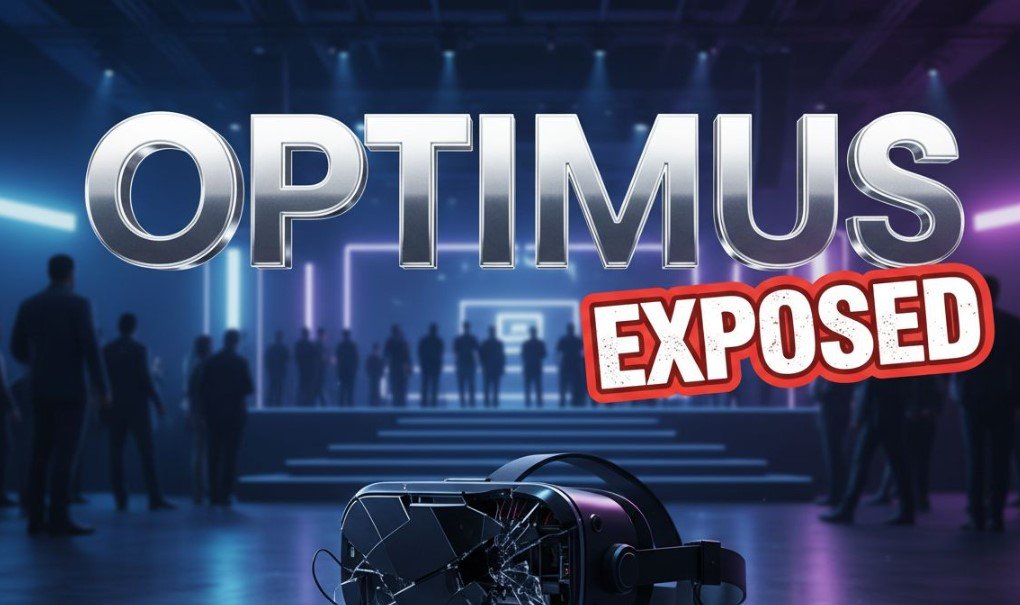
Tesla Optimus robot falling over near table during live event demonstration
Remote Control Claims Haunt Tesla Progress
This is not the first time Tesla has faced accusations of faking autonomy. The company has a history of blurring the lines between what the robot can do and what a human is doing for it.
During the “We, Robot” event held previously, guests were amazed as Optimus poured drinks and played games. It seemed like the future had finally arrived. However, the magic wore off quickly when reports surfaced that humans were remotely controlling the bots.
Key Indicators of Teleoperation:
- Latency in movement: There is often a tiny delay between a guest’s action and the robot’s reaction.
- Human-like voice responses: The robots spoke with distinct human intonations that AI has not yet perfected.
- Complex dexterity: Tasks like handling fragile glassware are still incredibly difficult for fully autonomous systems to do quickly.
- Safety protocols: Real autonomous robots move slowly and cautiously around humans to avoid lawsuits.
Analysts from Morgan Stanley noted this discrepancy early on. They reported that the robots relied heavily on “tele-ops” or teleoperation. This means a human is wearing a suit and headset nearby or in a remote location. They drive the robot like a sophisticated puppet.
The recent fall reinforces this theory. If the robot was truly autonomous, it would rely on cameras and sensors to balance. It would not act out the physical removal of a headset that it is not wearing.
Elon Musk Defends Optimus Amidst Growing Doubts
Elon Musk remains the biggest cheerleader for the Optimus project. He has stated that the robot could eventually account for the majority of Tesla’s value. He envisions a world where these machines cook dinner, mow lawns, and work in factories.
Musk recently shared a video of Optimus sparring with a Kung-Fu expert to silence the doubters. The movements in that clip were fluid and precise. When asked directly on social media if that specific fight was teleoperated, Musk claimed it was not.
The Contrast in Performance:
| Feature | Kung-Fu Demo | Viral “Fall” Video |
|---|---|---|
| Movement | Smooth, calculated strikes | Clumsy, erratic stumbling |
| Balance | Perfect center of gravity | Complete loss of stability |
| Context | Controlled studio setting | Live event environment |
| Result | Success | Failure |
This massive gap in performance is hard to ignore. How can a robot fight a martial artist one week and fall over while standing still the next? The answer likely lies in the control method. The Kung-Fu video may have been a heavily practiced routine or a “best take” from many attempts. The live event fall shows the raw reality of remote control risks.
Skepticism is natural when a CEO promises the world but delivers mixed results. The tech community wants to believe in the dream of a helpful butler bot. Yet, incidents like this damage trust. It makes people wonder if the technology is years behind schedule.
Global Competitors Move Ahead with Real Automation
While Tesla struggles with optics, other companies are making quiet but verified progress. The robotics race is not a one-horse show. Firms in China and established players like Boston Dynamics are pushing the limits of what code can do without human help.
Reports indicate that Chinese robotics firms are deploying units in factories right now. These machines are performing repetitive tasks autonomously. They are not serving drinks at parties for show. They are welding, sorting, and carrying loads. These companies often sell their units for a fraction of the price Tesla is targeting.
Even in consumer spaces, we see varied results. A recent robot marathon in China showed the reality of the tech. Some robots ran well while others fell face-first. The difference is transparency. Those companies admitted their robots failed because of coding errors or terrain issues. They did not try to hide a human operator behind a curtain.
Why Transparency Matters:
- Investor Confidence: Shareholders need to know they are funding real AI, not a mechanical Turk.
- Safety Regulations: Regulators need to know if a robot makes its own decisions before allowing it in homes.
- Consumer Trust: Buyers will not purchase a $20,000 helper if they think it needs a constant internet connection to a pilot.
Tesla risks losing its lead in the public eye if it continues to hide the “human in the loop.” Innovation requires failure. Everyone accepts that robots will fall. The issue is not the fall itself. The issue is the deception regarding why it happened.
The industry is watching closely. If Tesla wants to win the robotics war, it needs to show the robot thinking for itself. It needs to show the raw code handling the real world. Until then, every stumble will look like a puppet master losing their grip.
The dream of a robot in every home is still alive. But this viral video serves as a cold splash of water. It reminds us that looking futuristic is easy, but being truly autonomous is incredibly hard. As we wait for the next update, fans and critics alike are keeping a close watch on who is really pulling the strings.


ChapsVision Quiet Roll-Up Now Holds French and German Intel Keys

Culkin’s Home Alone Pitch Flips Kevin Into the Locked-Out Dad

Sigvi’s €1.2M AI Layer Cracks Idle Fleet Rental Moat

Tapo C675D Dual Lenses Cut Multi-Camera Install Costs

Tapo DL130 Palm Vein Lock Delivers Jedi Fun at a Cost

LiberNovo Maxis Gives Big Frames a True Fit Before Deal Ends

Google Find Hub Remove Button Clears Years of Ghost Earbuds

Nadella Warns Single AI Reliance Kills Firms He Also Funds

Robinhood Faces Earnings Test After Slide Toward 93

Apple’s 194-CVE Drop Quietly Shields Older Macs Too

CLARITY Act Final Text Expected This Weekend as 60-Vote Hurdle Looms

Kalshi Loses Major NY Prediction Markets Ruling to Judge Torres

Fed Minutes Cite AI Demand as Inflation Risk, Put a 2026 Hike Back on the Map

Marker AI Writing Startup Lands $13M Seed Led by Index Ventures

Dota 2 Esports World Cup 2026: Spirit Defends $2M Title In Paris

Meta’s Muse Spark 1.1 Beats Rivals on Price, Trails on Coding

CS2 Premier Season 5 Lands With Cache and a C4 Damage Rework

ARC Intelligence Closes €4M Seed Round in Roughly a Week

She Forgot Her Passport. Her Mom Boarded the Flight Without Her.

Finto Picks Munich Over Silicon Valley After YC, Raises $3.4M
-
 FINANCE2 months ago
Zcash Patched a Double-Spend Bug as ZEC Climbed 5%
-
 ENTERTAINMENT2 months ago
Steam Summer Sale 2026 Locks In June 25 to July 9 Dates
-
 FINANCE4 weeks ago
CLARITY Act Final Text Expected This Weekend as 60-Vote Hurdle Looms
-
 NEWS3 months ago
Meta Adds AI Replies to Threads, But Users Can’t Block It
-
 ENTERTAINMENT2 months ago
‘Widow’s Bay’ Review: Apple TV’s Sleeper Horror-Comedy Earns Its Fog
-
 NEWS5 months ago
U.S. Navy Deploys Solar-Powered Lightfish Drone to Patrol Oceans
-
 NEWS7 months ago
FolderFresh Review: This Free Tool Automates Windows File Organizing
-
 FINANCE3 weeks ago
Kalshi Loses Major NY Prediction Markets Ruling to Judge Torres