
NEWS
2026 Toyota Camry: The Value Sedan With a $44,000 Catch

The cheapest 2026 Toyota Camry leaves the lot at $29,300 before a $1,195 destination charge. The one Toyota lent reviewers, a loaded XSE in Supersonic Red, rang up at $43,974. That gap of nearly $15,000 between the same nameplate is the whole story of why this car still sells, and why the word “value” needs an asterisk. The ninth-generation Camry now comes only as a hybrid, pairing one of the lowest entry prices in the midsize class with fuel economy that tops out at 51 miles per gallon.
So the value case is real. It is also conditional. Buy at the bottom and you get a frugal sedan that shames most of the lot. Climb toward the top and the math starts to look a lot like the crossovers everyone is trying to escape.
Why a $29,300 Sedan Looks Smart Next to a Six-Figure Truck
Walk a dealer lot in 2026 and the windshields tell a brutal price story. The Ford Maverick, the small truck that launched near $21,000 in 2021, now opens just above $28,000 and tops out close to $41,000. Bigger metal goes further still: a Ram 1500 or a Chevrolet Suburban can clear the six-figure line once you tick the right boxes. Fuel costs sit on top of all that, and these heavy haulers drink hard.
Against that backdrop, a sedan that starts under $30,000 and sips fuel reads like a small act of rebellion. Toyota has leaned into it. The Camry stayed cheap while the rest of the lot inflated, and buyers noticed. America’s best-selling sedan posted 78,255 units in the first quarter of 2026, up 11.3 percent year over year, enough to make it Toyota’s top-selling model for the quarter. The number sits inside a wider shift back toward affordable hybrids, the same logic driving Ford’s pivot toward hybrids and cheaper electric models for the year.
History backs the bet. Toyota has sold more than 22 million Camrys worldwide since the first one rolled out for the 1982 model year, a run no rival sedan can claim. None of the competition can call itself the best-selling car of its kind, and that reputation does quiet work on a shopper weighing a $28,000 base truck against a $29,300 sedan that holds its value.
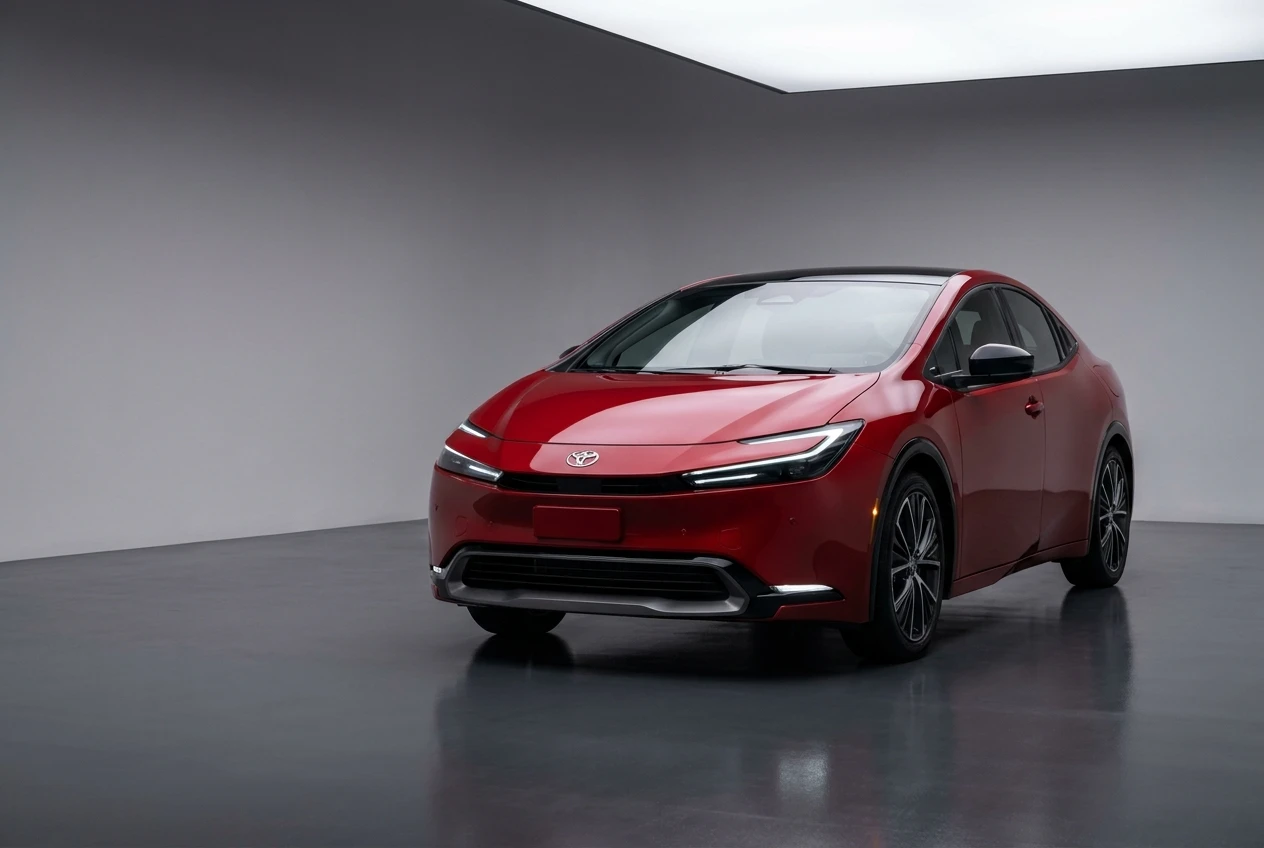
The 2026 Camry Trim Ladder, Priced Against Its Rivals
Five hybrid trims make up the lineup, and the spread is wide. The entry LE undercuts most rivals, while the XSE creeps into territory where a Toyota Crown or a near-luxury badge starts to whisper. Here is where each trim opens, before the $1,195 destination fee, set against the hybrid sedans a shopper would actually cross-shop.
| Model (hybrid) | Starting price | Top of range |
|---|---|---|
| Toyota Camry (LE to XSE) | $29,300 | $35,700 |
| Honda Civic Hybrid | $29,295 | $33,495 |
| Honda Accord Hybrid | $33,795 | $39,495 |
| Hyundai Sonata Hybrid | $29,200 | $38,250 |
| Toyota Corolla Hybrid | $24,575 | $28,940 |
| Toyota Prius | $28,550 | $36,965 |
The base Camry is competitive on paper. The catch is that the as-tested XSE landed at $43,974 once Toyota piled on the option packages, which is Accord-plus money and brushes against the $41,440 starting point of the larger Toyota Crown. The cheap Camry is genuinely cheap. The expensive Camry is a different conversation. Official pricing and configurations sit on Toyota’s 2026 Camry product page for anyone building one out.
Two Motors, One Drone, and 51 MPG on a Good Day
Every Camry now runs the same heart: a 2.5-liter four-cylinder paired with two electric motors for a combined 225 horsepower and 163 lb-ft of torque, sent to the front wheels through a continuously variable transmission (CVT, a gearless setup that holds engine revs flat under load). For $1,525 on any trim, a third motor on the rear axle adds all-wheel drive (AWD) and nudges output to 232 horsepower.
The Numbers on the Window Sticker
Fuel economy is the headline, and the headline is strong. The front-drive LE earns an Environmental Protection Agency (EPA) combined estimate of 51 mpg (52 city, 49 highway). The figures slide as you add weight and the rear motor, bottoming out at 43 mpg combined on the AWD XSE.
- 51 mpg combined, the front-drive LE, the most efficient trim in the range.
- 43 mpg combined, the loaded AWD XSE, the thirstiest of the bunch.
- 34.5 mpg, the real-world figure one reviewer logged over 140 mixed miles in the XSE.
- 225 to 232 hp, the combined output band from front-drive to AWD.
What It Sounds Like Doing It
Efficiency comes with a soundtrack, and it is not a flattering one. Push the throttle and the CVT pins the engine at a flat, grumpy buzz that the SlashGear reviewer compared unfavorably to the drone of the 2025 Prius Plug-In Hybrid. There is real pace here, with a Sport mode that adds urgency for highway merges and passing the big rigs, so nobody will feel short-changed in traffic. It just announces the effort louder than a buyer at this price might like. The EPA’s per-trim ratings are listed on the government’s official fuel economy comparison tool.
For contrast, the Camry that wins on Sundays shares almost nothing with the one in the driveway. The NASCAR Cup car runs a 5.9-liter pushrod V8 built by Toyota Racing Development, good for 510 to 750 horsepower depending on the track, through a five-speed sequential manual. The road car drinks regular unleaded; the race car needs Sunoco.
Where the Value Sticker Starts Climbing
The standard kit is honest. Every Camry ships with wireless Apple CarPlay and Android Auto, satellite radio, five USB ports, wireless charging, and Toyota Safety Sense 3.0 (TSS, the brand’s bundle of driver-assist features), which covers forward collision warning, blind-spot monitoring, pedestrian detection, lane-keeping assist, and adaptive cruise. That is a strong floor for under $30,000.
The trouble starts when you want more, because Toyota gates the good stuff behind packages that add up fast:
- Premium Plus package, $4,760, the big one, bundling the nine-speaker JBL audio, head-up display, ventilated front seats, traffic-jam assist, parking sensors, and rain-sensing wipers.
- The 12.3-inch touchscreen, $735 plus a $600 Convenience Package, on SE and Nightshade trims, meaning the bigger display alone costs more than $1,300 to add.
- Cold Weather package, $600, for heated seats and a heated steering wheel on lower trims.
- All-wheel drive, $1,525, which also drops the LE’s combined rating from 51 to 50 mpg and the XSE’s to 43.
Stack the Premium Plus on an XSE and you understand how a $35,700 sticker becomes $43,974. The value is front-loaded into the base car. The further up the ladder you climb, the more the Camry behaves like the pricey crossovers it is supposed to undercut.
Cabin Space the Accord and Sonata Can’t Quite Match
Where the Camry quietly earns its keep is in the back seat, the metric families care about and spec sheets bury. Front legroom measures 42.1 inches, with 38 inches behind it for rear passengers. That rear figure is the one that matters in a class full of compromises.
Rivals make you choose. The Honda Accord Hybrid matches the Camry up front but gives rear riders 40.8 inches, more generous in back. The Hyundai Sonata Hybrid swings the other way, lavishing 46.1 inches on front occupants while leaving just 34.8 inches for anyone behind, the same cramped figure as the much smaller Prius.
| Model | Front legroom | Rear legroom |
|---|---|---|
| Toyota Camry | 42.1 in | 38.0 in |
| Honda Accord Hybrid | ~42 in | 40.8 in |
| Hyundai Sonata Hybrid | 46.1 in | 34.8 in |
Trunk space lands at 15.1 cubic feet with the 60/40 rear seats up, and more with them folded. A Honda Civic Hatchback Hybrid swallows far more at 24.5 cubic feet, but that is a hatchback playing a different game. For a sedan asked to haul a family and the weekly shop, the Camry covers the brief without drama. Comfort holds up too, with a sport-tuned suspension on the XSE that stays composed over broken pavement rather than punishing it. Buyers wanting genuine three-row room rather than sedan practicality tend to step up to something like the three-row Grand Highlander hybrid instead.
The Catch for European Buyers
Here is the twist a European reader runs into fast. You cannot buy this car. Toyota pulled the Camry from European showrooms by 2024, citing thin sales and a market that kept rotating toward SUVs and electrified models. The same logic took it out of Japan, where Toyota now plans to reintroduce a U.S.-built Camry from 2026.
So the best-selling sedan in the world, the one printing money in the United States and China, is a ghost across most of the European Union. The continent that arguably invented the practical family saloon decided the segment was not worth the floor space.
That makes the American value story slightly bittersweet on this side of the Atlantic. The Camry’s pitch, an affordable hybrid that shields buyers from rising fuel costs and crossover price creep, would land just as hard in Europe, where pump prices run far higher than in NASCAR country. The car that answers the question is simply not on sale. Toyota’s global figures, published in its own production and sales data, show where the volume now lives, and Europe is not it.
For European drivers chasing the same low-running-cost promise, the realistic path runs through Toyota’s hybrid hatchbacks, crossovers, and people-movers rather than the sedan, which is a genuine loss for anyone who simply wanted a frugal, roomy three-box car for under $30,000.
Frequently Asked Questions
How much does the 2026 Toyota Camry cost?
The 2026 Camry starts at $29,300 for the LE trim and climbs through the SE ($31,800), Nightshade ($32,800), XLE ($34,500), and XSE ($35,700), all before a $1,195 destination fee. A fully loaded XSE with the Premium Plus package can reach $43,974 as tested.
Is the 2026 Camry only available as a hybrid?
Yes. The ninth-generation Camry has been hybrid-only since the 2025 model year. Every trim uses a 2.5-liter four-cylinder with electric motors for a combined 225 horsepower, rising to 232 horsepower when you add the optional rear motor for all-wheel drive.
What fuel economy does the 2026 Camry get?
The front-drive LE earns an EPA combined estimate of 51 mpg, the best in the range, while the all-wheel-drive XSE drops to 43 mpg combined. Real-world driving sits lower; one reviewer logged 34.5 mpg over 140 mixed miles in the XSE.
How does the Camry compare to the Honda Accord and Hyundai Sonata?
The Camry undercuts the Accord Hybrid on starting price and offers more balanced rear legroom (38 inches) than the Sonata, which gives front passengers 46.1 inches but leaves just 34.8 inches in back. The Accord is roomier in the rear at 40.8 inches.
Can you buy the Toyota Camry in Europe?
No. Toyota discontinued the Camry across European markets by 2024 due to low sales and a shift toward SUVs and electrified vehicles. European buyers seeking similar low running costs are directed toward Toyota’s hybrid hatchbacks and crossovers instead.
Is the all-wheel-drive option worth it on the Camry?
All-wheel drive adds $1,525 to any trim and bumps output to 232 horsepower, but it cuts the combined EPA rating, dropping the LE from 51 to 50 mpg and the XSE to 43 mpg. It is useful in poor weather but trims both efficiency and budget.


Replit Opens Its London Office Inside an AI Crowd

Straight Circle Trailer Lands Without a U.S. Date

Anemo Labs Bets £700,000 on an AI Sense of Smell

Nintendo Prices the Zelda 40th Switch 2 at $519

Copilot Capital Buys the Autopilot Already Running 90 GW

Ground A Raises €9.1 Million for a Pallet Laser

Gibney’s Musk Film Opens in Venice Without Its Subject

Torvalds Blames AI for a Full-Fat Linux 7.3-rc2

Dexter Returns Sharper, Older, and Stuck Between Killers

Meta’s Muse Agent Can Spend Before the Privacy Lock

Walter’s TWG Insists No Fraud as Insurer Probes Force Cleanup

30-Year Yield Hits 5.32% Highest Since 2007 as Debt Supply Locks In Costs

PCE Stays at 3.7% as Gas and Tariffs Outrun Coming Revisions

Evernorth S-4 Clears Path for Active XRP Treasury on Nasdaq

Astute’s $1.2M bet makes B2B creator deals feed AI discovery

Strategy Parks $1.59B Cash While Bitcoin Stack Stays Flat

Instinct Hits $2.5 Billion as AI Agent Access Sparks Trust Fights

Oracle’s 2.8 GW Bloom Deal Exposes the AI Power Bypass

CLARITY Act Cloture Opens a Door Ethics Still Blocks

Monzo chair Gary Hoffman exits after board revolt fallout
-
 FINANCE3 months ago
Zcash Patched a Double-Spend Bug as ZEC Climbed 5%
-
 ENTERTAINMENT3 months ago
Steam Summer Sale 2026 Locks In June 25 to July 9 Dates
-

 FINANCE2 months ago
CLARITY Act Final Text Expected This Weekend as 60-Vote Hurdle Looms
-
 NEWS4 months ago
Meta Adds AI Replies to Threads, But Users Can’t Block It
-
 ENTERTAINMENT5 months ago
Extraction 3 Is Officially Coming to Netflix in 2027
-

 NEWS3 months ago
YouTube Shorts is testing a heart in place of the thumbs-up
-

 NEWS1 month ago
Senators Force Apple Off Chinese Memory as Big Three Cash In
-

 NEWS3 months ago
NEURA Robotics’ $1.4B Series C Redraws Europe’s Physical AI Bet