
NEWS
Luminance Legal AI Now Keeps the Why Behind Every Clause
Luminance’s institutional memory was sold as 30% time back. The follow-on stack puts that why on a private contract model as Harvey takes the 2026 capital.

Luminance launched institutional memory for contracts on January 27, 2026, and said legal teams would get 30% of their time back. The months that followed put that memory on a private contract model and a citation feed, which is a heavier product than a faster redline.
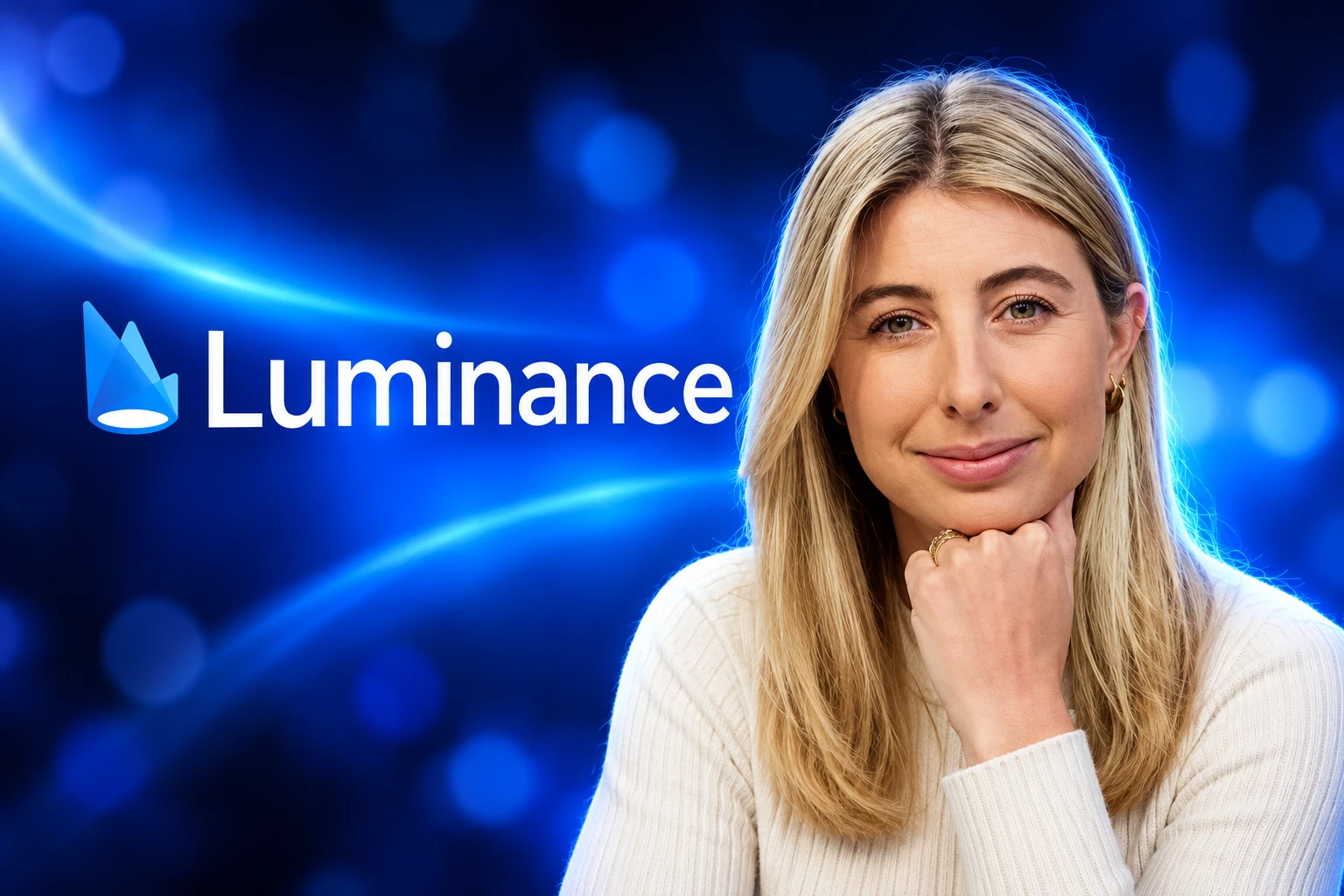
CEO Eleanor Lightbody sold a cure for “enterprise amnesia,” the habit of keeping the signed clause and losing who accepted it and why. General counsel Harry Borovick said a decade of work had already cut negotiation time by 70 to 80%, and that this relaunch lifts that saving to 90%. The second effect is simpler, and stickier: the why now lives in Luminance’s stack, not in a departing lawyer’s head.
Luminance Stored the Reasoning Behind Every Signed Clause
The London company called the release the largest update in its ten-year history. The new architecture is built to retain negotiation history and legal decision-making across the whole contract file, the gap left by systems that stored outcomes and dropped the context. Design partners included Deloitte, Quantinuum, Ingram Micro and Baringa. Broader availability was set for February 25.
Lightbody put the buyer question in one line, the one executives ask when a deal comes back around.
Enterprise amnesia is real and it’s costly. Whenever it’s time to renegotiate a contract, executives ask: who agreed to this, and why? Current AI systems are helpful in moments but disconnected over time. Our new platform remembers, reasons, and stays with the work in perpetuity, which distinguishes it from anything else on the market.
Eleanor Lightbody, CEO, Luminance press briefing
She added that this memory turns legal AI from a tool into “the central brain for the entire enterprise.” That is a vendor sentence, and it is also the switching-cost sentence. A brain that stays in perpetuity stays with the supplier that hosts it.
THE GROWTH LUMINANCE CITED IN JANUARY
- North America: 127% year-over-year growth, including the company’s first eight-figure enterprise deal.
- Revenue: Global revenue doubled in 2025 for the second straight year.
- Headcount: Grew by over 40% across the UK, Europe, Australia and the United States.
- Volume: More than 18 million contracts analysed in the prior 12 months, on a corpus of more than 220 million documents, with over 1,000 organisations in 70+ countries.
Those figures sat on a February 2025 Series C of $75 million led by Point72 Private Investments, which took capital raised in the prior 12 months to over $115 million. As of that round Luminance served more than 700 organisations, generated 40% of revenue in the United States, and said corporate customers had risen 5 times and their ARR 6 times over two years. Point72’s own note on the deal cited a market in which 79% of legal departments expected more demand and 67% planned to hold or cut headcount. The January product is how a lean in-house team is supposed to absorb that split.
What Walks Out When a Senior Counsel Leaves
Contract files already keep the PDF. They rarely keep the trade: why liability capped at that number, why termination for convenience survived, why this counterparty got language nobody else gets. When the person who made that call leaves, the next review starts as if the file were new. Lightbody’s “who agreed to this, and why?” is that moment.
Deloitte has been measuring the same leak outside legal. In a survey of more than 11,000 workers across 17 countries, 60% said AI can help experienced workers share knowledge and skills with the rest of the organisation. A later Deloitte note on baby-boomer retirements put lost output from vanished institutional knowledge in a range of $6.9 trillion to $9.6 trillion, with more than 30 million Americans turning 65 over four years. Legal is a small slice of that, and a loud one, because a missing rationale on a master agreement is not a soft skill gap. It is a repeatable giveaway.
Claire Eldridge, director of legal and compliance operations at Quantinuum, described the practical change after the company put natural-language queries on both the repository and live negotiations. “We no longer have to rely on manual processes across multiple tools or spend time searching through individual documents; the answer is there when we need it in a format appropriate to the circumstances,” she said. That is the amnesia pitch in a working legal ops seat: less hunting, more reuse of a position the firm already paid to form.
The January upgrade that first stored negotiation history listed four product surfaces for that reuse. Negotiation AI reasons across whole agreements and pulls prior history in real time. Workflow orchestration is meant to know the state of each contract and ping the right person. Contract intelligence answers questions across families, amendments and obligations. Ask Lumi is the chat layer, with cited answers from first review through portfolio view. That is not interesting if the context dies when the associate closes the laptop. All of it compounds if the context stays.
The Tool That Negotiates Without Legal in the Room
On March 11 in New York, at Legalweek, Luminance pushed the January memory into a product it now calls Autonomous Negotiation, previously Autopilot. Two changes landed together. Designated staff outside legal can run it. And each automated move is supposed to show the history and legal logic behind it, not only the redline.
“Luminance’s Autonomous Negotiation can now take decisions automatically while making the why behind choices totally transparent. It’s not just recording outcomes, it actually shows the context and the history driving every decision,” Lightbody said. The company says the agent can review an agreement, apply house standards, redline, send revisions, watch the counterparty, and reply, including in an agent-to-agent exchange. Human by choice is the slogan. Legal keeps governance. Sales, procurement and operations get the button.
WHAT AUTONOMOUS NEGOTIATION NOW CLAIMS TO DO
- Open the door: Named users across the business can launch a negotiation without waiting on a lawyer for every standard pass.
- Show the why: Each automated edit is paired with the context, history and references that produced it.
- Aim at volume: Luminance says NDAs account for 16% of enterprise contracts, the stack it wants to clear first.
- Keep a human off-ramp: Legal remains the control point for high-risk paper; the rest is meant to move without a 11 p.m. Slack to counsel.
Agent-to-agent NDAs are the logical end of a file that already knows the house position. If two Luminance instances can trade a standard non-disclosure with a dial on aggressiveness, the memory is not a search box. It is the playbook the bot is allowed to spend. That is useful in a quarter-end crush. It is also how a playbook stops being a document on SharePoint and becomes a setting the vendor runs.
How Luna Crescent Differs From General Models
On June 19 Luminance put a name on the engine. Luna is a proprietary vertical model family for contract work. Luna Crescent is the first release, trained on a curated slice of the 220 million-document legal set and already wired into contract intelligence. Co-founder and director of AI Graham Sills said customers “finally have an LLM built for their work rather than borrowed from elsewhere,” and that building it in Luminance’s own stack gives them a clearer view of how the intelligence is governed.
Cambridge R&D scored the model on ContractIQ Bench, a private test of over 180,000 hand-reviewed data points on items such as liability caps, termination for convenience and confidentiality. Against leading general-purpose models on unseen legal concepts, plus blind lawyer review, Luminance said Luna Crescent posted 5% higher accuracy on contract understanding and was preferred by legal experts most of the time. The company also said the model writes at 200 to 400 tokens per second, nearly four times a generalist pace, so work that takes 30 seconds on a general model takes under eight on Crescent.
LUNA CRESCENT VERSUS GENERAL-PURPOSE MODELS
| Claim | Luna Crescent | General-purpose baseline as Luminance framed it |
|---|---|---|
| Contract understanding | 5% higher accuracy on ContractIQ Bench | Leading general models on held-out legal concepts |
| Generation speed | 200 to 400 tokens per second, under 8 seconds | About 30 seconds for the same job |
| Training diet | Fine-tuned on a subset of 220 million verified legal documents | General text, not built around obligations and absences |
| Where it runs | Inside Luminance’s own model stack and multi-model panel | External model providers as a dependency |
A 5% edge on a private bench is a vendor score, not a court finding. What it buys, if the score holds, is a reason to keep the memory and the model in one house. Luminance also said Luna sits in a wider panel, so agents can still mix models by task. The strategic point is the option to stop renting the brain by the API call.
The April 21 alliance with LexisNexis Legal & Professional sits on the other side of the same bet. Inside Ask Lumi, mutual in-house customers can query LexisNexis Protégé and Shepard’s citations, then step into Lexis+ for deeper work. Lightbody said AI is only as good as the data behind it, stacking Luminance’s 220 million negotiated documents against LexisNexis’s library of 200 billion legal documents, with 4 million added daily. Sean Fitzpatrick, CEO of Global Legal at LexisNexis, said the aim was trusted, citation-backed insight where those customers already work. Private deal memory plus public law is the completeness claim. It is also two more systems a team now has a reason not to peel apart.
The $15.5 Billion Legal AI Pile-Up
While Luminance was wiring memory to a private model, the capital went elsewhere. PitchBook data show Harvey’s $550 million raise as 16% of the $3.35 billion put into legal tech worldwide in 2026 so far, at a $15.5 billion valuation. Legora’s $600 million Series D is in the same cut. Three mega-deals took 40.3% of the year’s legal-tech capital. Frontier labs have also shipped legal-specific tools. Luminance’s last disclosed round remains the $75 million Series C from February 2025.
That gap is the point of the memory stack. Harvey and Legora are winning the research-and-drafting seat in Big Law. Ironclad and the older contract-lifecycle names still own a lot of the workflow paperwork. Luminance is trying to be the file that remembers how this company actually negotiates, then to act on it. A $15.5 billion research assistant that forgets last year’s concession is a different product from a smaller vendor that does not.
THE 2026 MEMORY STACK
- January 27, 2026: Luminance launches institutional memory across the contract portfolio and sets February 25 for broader availability.
- March 11, 2026: At Legalweek in New York, Autonomous Negotiation opens to the wider business and starts showing the why behind each automated call.
- April 21, 2026: LexisNexis alliance puts Protégé and Shepard’s citations inside Lumi for mutual in-house customers.
- June 19, 2026: Luna Crescent ships as the first model in the Luna family, scored on ContractIQ Bench and run in Luminance’s own stack.
- July 2026: Community Fibre, the London broadband builder, picks the platform for contract and procurement ops, with procurement director Mike Brooman calling it a fit for a lean operating model.
Customer logos already on the book include AMD, Hitachi, LG Chem, SiriusXM, Rolls-Royce and Lamborghini, with all of the Big Four and more than a quarter of the Global Top 100 law firms among users in later company tallies. The July Community Fibre deal is smaller theatre than Harvey’s round and closer to the actual job: a procurement lead who wants obligations, renewals and inbound supplier paper in one place without adding headcount.
Why a Memory of Concessions Can Become Exhibit A
A file that can answer “who agreed to this, and why?” is a gift in a renewal. It is also a record. In February 2026, in United States v. Heppner, Judge Jed S. Rakoff in the Southern District of New York held that a defendant’s chats with a public AI system were covered by neither attorney-client privilege nor work product. Law-firm notes that followed, including Mayer Brown’s warning that AI prompts may become litigation ammunition, drew a hard line between consumer chatbots and closed enterprise tools with contracts that bar training, limit retention and lock down disclosure.
Luminance’s own-stack model and cited answers are the company’s reply to that line, even when the press copy talks about speed. A negotiation log that shows why a team accepted a weak cap is useful to the next counsel on the file. It is also the kind of trace a counterparty, an auditor or a regulator would like to read. Enterprise deployment with tight terms is safer than pasting the same question into a public bot. It is not invisible. The January product remembers in perpetuity. Perpetuity is a long discovery window.
The time-back number is still the number on the banner. The thing Luminance actually built, from the January memory layer through Luna Crescent, is a contract brain that outlasts the person who made the call, sits in one vendor’s cloud, and now cites both the last deal and the case law beside it. In-house teams under a hiring freeze will take that trade. They should know the other side of it: when the why is finally written down, it can be asked for.
Disclaimer: This article is news reporting and analysis of a legal-technology product launch and related market facts. It is for information only and is not legal advice, technology-procurement advice, or a recommendation to buy, deploy or avoid any platform. Privilege, discovery, data-protection and contract-risk questions should be reviewed with qualified counsel in the relevant jurisdiction before a team puts negotiation history or client facts into any AI system. Figures, product claims, funding totals and case holdings reflect the company statements, survey research, PitchBook data and court material cited here as of the dates on those sources, and those statuses can change.

UPI MDR Delay Hands Traders the Calendar After Paytm Falls

Google Messages Builds Nine In-Chat Games After Samsung’s Exit

Anthropic’s $100 Million Academy Trains the Firms That Bill Both Sides

Toyota’s Electric C-HR Leaves the Cheap Twin to Subaru

Markets Bet the Fed Skips October After Hawkish Minutes

The Orchard Bug Forced Zcash to Open an Empty Pool

The $5.99 Game That Won Steam’s 2026 Summer Sale

Don Lee Joins Hemsworth as Extraction 3 Starts Shooting

YouTube Shorts Retires Dislikes and Swaps Likes for Hearts

NEURA Robotics Is Spending Its $1.4B on a Machine Stack
-
 NEWS5 months ago
The Orchard Bug Forced Zcash to Open an Empty Pool
-
 GAMING5 months ago
The $5.99 Game That Won Steam’s 2026 Summer Sale
-
 ENTERTAINMENT7 months ago
Don Lee Joins Hemsworth as Extraction 3 Starts Shooting
-
 NEWS4 months ago
YouTube Shorts Retires Dislikes and Swaps Likes for Hearts
-
 NEWS4 months ago
NEURA Robotics Is Spending Its $1.4B on a Machine Stack
-

 NEWS5 months ago
Atlantic City Turned WWE’s Return Into a Civic Night
-

 AUTO6 months ago
Kawasaki Bets the New Z1100 Against Its Own Supercharger
-

 BUSINESS5 months ago
Norway’s Export Bank Backs Nscale’s $790 Million Narvik Loan