
BUSINESS
UPI MDR Delay Hands Traders the Calendar After Paytm Falls
India may push the 0.4% UPI merchant fee to January 1 after trader pushback, and Paytm fell 10% because the tariff now looks political.

India may push the new 0.4% UPI merchant fee from October 15 to January 1, and Paytm stock hit a 10% lower circuit on the news. One 97 Communications, Paytm’s parent, briefly traded at ₹1,558.80, wiping nearly ₹10,972 crore of market value and taking the firm below ₹1 lakh crore.
The UPI and Services Steering Committee met on October 7 to reopen a tariff it had already published. That reopen, not the festive calendar on its own, is what listed aggregators sold.
A 0.4% Fee Was Priced for October 15
On September 15 the National Payments Corporation of India posted a FAQ that set a 0.4% MDR on eligible P2M payments above ₹2,000, with a ₹300 cap once a ticket hits ₹75,000. Shoppers pay nothing. Apps cannot add a platform fee. Banks were told merchants must not pass the charge on.
Person-to-person transfers stay free at any size. The finance ministry said those flows make up 70% of UPI value, so they sit outside the fee map. Payments to merchants up to ₹2,000 stay free as well. Small shops on the person-to-person-merchant track, taking up to ₹1 lakh a month through UPI QR into their own accounts, keep zero MDR even on a larger ticket.
THE PUBLISHED UPI MDR SLABS
| Ticket | Rate | Merchant pays |
|---|---|---|
| Up to ₹2,000 | Nil | ₹0 |
| ₹3,000 | 0.4% | ₹12 |
| ₹50,000 | 0.4% | ₹200 |
| ₹75,000 and above | Cap | ₹300 |
| Rail, telecom, insurance, fuel, farm inputs | Flat | ₹5 |
| Mutual funds and brokers | 0.02% | Cap ₹300 |
The ministry’s September 15 note said 96% of merchant transactions remain unaffected because they are either under ₹2,000 or covered by the small-shop rule. The same note put only about 4% of merchant transactions in scope. Jefferies has said tickets above ₹2,000 are a thin slice of person-to-merchant volume and about 67% of that value, which is why listed payment firms treated October 15 as a cash date even though most scans would still be free.
The original start date sits inside the autumn festival window. Shardiya Navratri begins on October 11. Dussehra falls on October 20. October 15 is Durga Puja Maha Chaturthi in Bengal, which is why trader groups argued a new fee in that week would hit the busiest tills of the year.
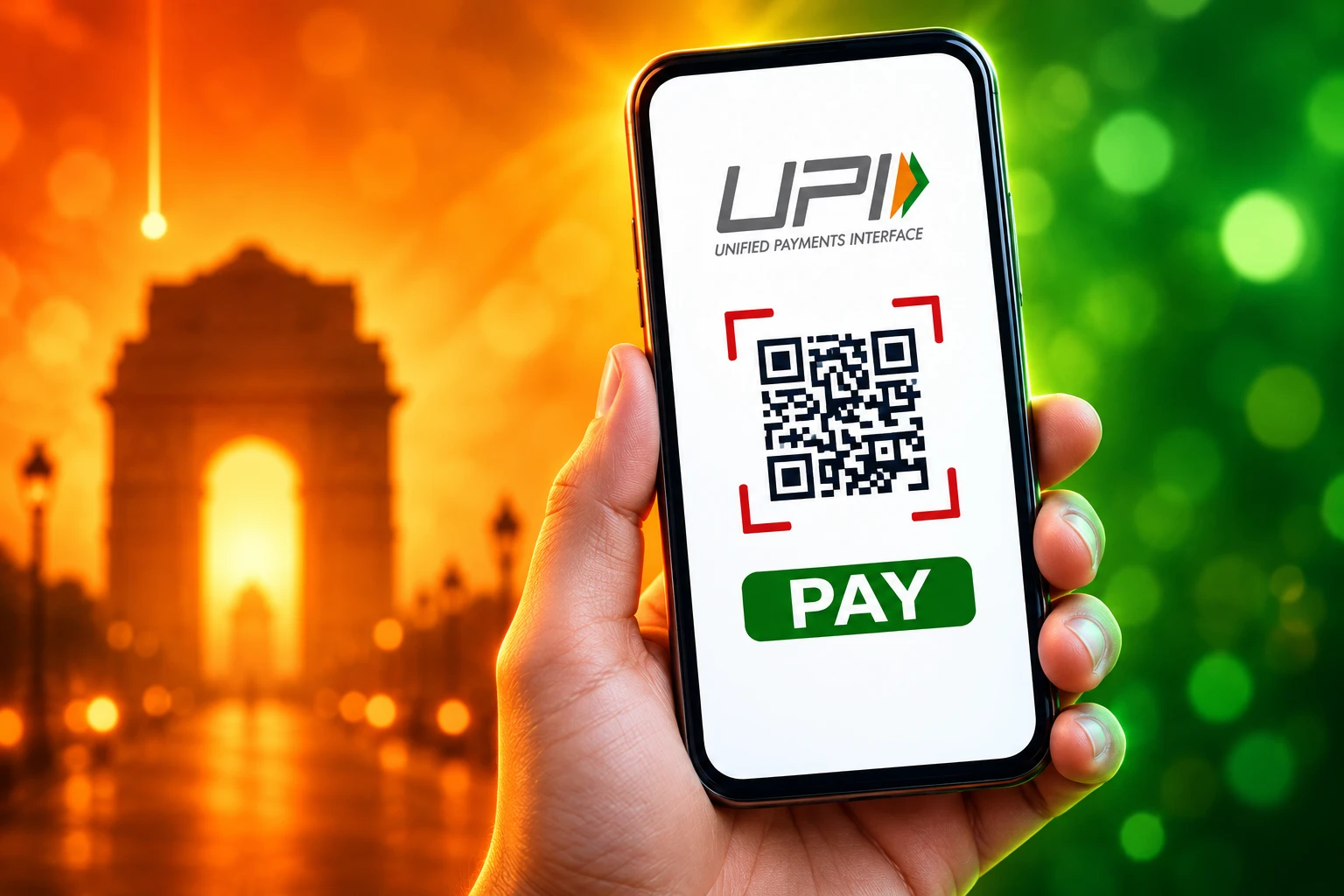
Traders Reopened a Closed Tariff Date
NPCI had already given banks, aggregators and billing software a 30-day runway from the September 15 FAQ. The Supreme Court on September 28 refused to stay the October 15 start and asked the Centre, the Reserve Bank of India and NPCI to respond to a challenge. The legal track did not move the date. Street pressure did.
The All India Mobile Retailers Association and the All India Consumer Products Distributors Federation had called a “No UPI Day” for October 2, Gandhi Jayanti. Confederation of All India Traders secretary general Praveen Khandelwal, who is also the Chandni Chowk MP, led about 20 trade leaders to finance minister Nirmala Sitharaman on September 30. AIMRA chairman Kailash Lakhyani and AICPDF president Dhairyshil Patil were in the room. The two groups then withdrew the protest after she said their concerns would be taken up.
CAIT had already said it never called a nationwide boycott. Regional bodies still planned local action. In Gujarat, more than 600 trade associations said they would cover soundboxes and QR posters for a day. AIMRA put the extra cost at about ₹40 crore a month, or nearly ₹500 crore a year, and asked for the monthly free threshold to rise from ₹1 lakh to ₹5 lakh. Some groups also floated a 0.20% start that would climb 0.05 percentage points a year until it reached 0.40%.
People familiar with the talks now say merchant bodies, fintechs and payments firms have asked NPCI to wait until after the festive rush, with January 1 as the working date. The government, those people add, also worries about a new cost landing on festive sales while inflation is still in the room. NPCI is expected to decide in the coming days, and talks with the Department of Financial Services are open.
THE ROAD TO THE DELAY
- January 2020: The Centre scraps merchant fees on UPI and RuPay debit, paying banks and fintechs through a budget incentive instead.
- September 15, 2026: NPCI publishes the 0.4% framework and sets the start for October 15.
- September 16, 2026: Paytm stock hits a 52-week high of ₹1,856.50 as investors price the new fee.
- September 28, 2026: The Supreme Court refuses a stay and issues notices to the Centre, RBI and NPCI.
- September 30, 2026: Trade leaders meet Sitharaman; AIMRA and AICPDF call off the October 2 protest.
- October 7, 2026: The UPI and Services Steering Committee meets on timing and other carve-outs.
- October 8, 2026: Word of a possible January 1 start hits the market; Paytm, MobiKwik and Pine Labs fall.
The committee can change a date it set. That is the second fact the stocks were pricing, after the fee itself.
Who Collects the 40 Basis Points
Sitharaman has said the money does not go to the Consolidated Fund. Of each rupee of MDR, 40% is meant for the customer’s bank, 30% for payment gateways, 20% for the UPI app and 10% for the app’s sponsor bank. Issuer banks, not the listed wallets, take the largest slice. A separate 5% of collections is earmarked for a fund to onboard small shops in smaller towns, the North-East, Jammu and Kashmir and Ladakh, with the detailed scheme to be settled with RBI.
WHERE THE 0.4% IS MEANT TO GO
- Issuer banks: 40% of the fee, the largest share, goes to the bank that holds the payer’s account.
- Acquirers and gateways: 30% goes to the firms that bring the merchant onto UPI.
- UPI apps: 20% goes to the third-party app the shopper used.
- Sponsor banks: 10% goes to the bank that sponsors that app on the NPCI switch.
Paytm, PhonePe and Google Pay sit in the 20% line as apps, and Paytm and Pine Labs can also sit in the 30% line as acquirers. That double seat is why their shares moved harder than a bank book would on a delayed start. NPCI put the FAQ in public on September 15.
Regarding Merchant Discount Rate (MDR) on Select UPI (P2M) Transactions
Please refer to the FAQs here: https://t.co/DTOZFVHAVB pic.twitter.com/4HMU0YZ2AC
— NPCI (@NPCI_NPCI) September 15, 2026
The same FAQ says UPI handled 2,451 crore transactions worth ₹29.9 lakh crore in August, and that the network is live in 11 countries. A fee delayed by a quarter does not shrink that stack. It does delay the first rupee that was supposed to come off the large-ticket slice of it.
Why Paytm, MobiKwik and Pine Labs Sold Off
One Mobikwik Systems fell as much as 8% to ₹234.52. Pine Labs fell as much as 4% to ₹170.21. Paytm’s drop was its sharpest session since February 1. The three names had rallied after September 15 because the fee would pay them on tickets that used to clear at zero.
Emkay has said UPI person-to-merchant flow is 85% of Paytm’s gross merchandise value, and that 35% of that value would be MDR-eligible once caps and special rates are netted out. MobiKwik had told exchanges it would earn both as a third-party app on eligible consumer payments and as an acquirer on its merchant volume. Paytm’s own filing said the change “will generate additional revenue from the merchant business for many of the payment transactions that were free earlier.”
JM Financial has pencilled in extra Paytm revenue of ₹214 crore in the year to March 2027 and ₹473 crore the year after, assuming the company keeps a 20% share of the pool, or about 8 basis points. Goldman Sachs has said the fee could lift Paytm’s earnings before interest, tax, depreciation and amortisation by up to 40%, and it raised its target to ₹2,070 from ₹1,500 even as the stock was falling. Those models had an October start in them. A January start pushes the first full quarter of that line out of the December quarter.
Paytm’s June quarter showed why the date is so sensitive on a thin margin. Operating revenue was ₹2,448 crore, of which ₹1,384 crore came from payment services, and merchant GMV rose 31% to ₹7.1 trillion. A fee on a third of that UPI stack is a lot of operating leverage. A fee that does not start is a lot of leverage in reverse, which is what Thursday’s tape showed.
The twist is that some of the same payment firms asking NPCI for more time are the ones whose shares then fell. People in the industry say the category map, the ₹5 list, the 0.02% capital-market slab and the P2PM-to-P2M flip after three heavy months are still messy in software. They wanted a clean go-live. The market wanted a dated cash flow. Those two wants collided before lunch.
Banks Still Carry Most of the UPI Bill
Zero MDR has been the rule since January 2020. The FAQ published with the new rates says the annual cost of about ₹20,000 crore covers servers, bandwidth, fraud controls and bank technical support. The 2026-27 budget line for RuPay and low-value UPI incentives is ₹2,000 crore. That gap is why the steering committee moved at all.
This is not a tax, this is not a cess, and it is not even a surcharge. The collection is not going to the Consolidated Fund of India.
Nirmala Sitharaman, finance minister, to PTI
Sitharaman also said merchants already absorb card fees and that this charge is on the merchant, not the shopper. Credit-card MDR still runs about 1.5% to 2.5%. Debit-card MDR is capped up to 0.90%. UPI at 0.4%, and only above ₹2,000, remains the cheap rail. The cheap rail still has to be paid for by someone, and for six years that someone has been banks, fintechs and a shrinking budget top-up.
UPI IN ONE SCREEN
- 96% free: The finance ministry says that share of merchant transactions stays outside the fee.
- 70% of value: Person-to-person transfers remain free at any size.
- ₹20,000 crore: The ministry FAQ’s figure for yearly operating cost across the network.
- ₹2,000 crore: Budget support for RuPay and low-value UPI in 2026-27.
A later start does not close that gap. It leaves issuer banks, who were due 40% of a new stream, funding the same stack through the festive peak, when volumes are fattest. That is the hidden ledger behind a delay sold as shopkeeper relief.
A ₹40 Lakh Exemption Is Also on the Table
People familiar with the October 7 meeting say members are looking at a wider small-business cut: firms with annual turnover up to ₹40 lakh could be spared, against the present P2PM line of ₹1 lakh a month. Twelve months at ₹1 lakh is ₹12 lakh a year. A ₹40 lakh test would more than triple that shield.
The FAQ already says GST registration is not required for the zero-MDR P2PM tier. Eligibility is a monthly inward-credit check. If a shop takes more than ₹1 lakh a month through UPI for three months running, the acquirer is supposed to move it onto the charged P2M track. A yearly ₹40 lakh test would pull a large belt of kirana and wholesale tickets out of the 0.4% pool and leave them on the free side through the year, not just through a quiet month.
That carve-out, if it lands, does more damage to the earnings models than a 11-week delay. JM’s ₹214 crore already assumed a 20% eligible mix after exemptions. Widen the free belt to GST-scale turnover and the eligible slice shrinks again. Traders asked for ₹5 lakh a month, which would be ₹60 lakh a year. ₹40 lakh is the number now in the room, and it is still only a number in the room.
AutoPay and UPI mandates stay outside the prescribed MDR. Education, utilities and the ₹5 list already blunt the headline rate on fat tickets in thin-margin lines. Each extra exemption makes the 0.4% look more like a charge on large retail and e-commerce, which is where Paytm’s eligible 35% lives, and less like a general merchant fee.
NPCI Has Not Signed Off on January 1
No circular replacing October 15 had been issued when the shares fell. The ₹2,000 floor stays in the published design even if the start moves. The P2P free rule stays. The ban on passing the fee to customers stays. What moved on October 8 was the belief that those rules would begin to print cash in a week.
WHAT WE KNOW
- Published rate: 0.4% on specified person-to-merchant UPI above ₹2,000, capped at ₹300 from ₹75,000, with a ₹5 list for essential sectors.
- Shopper shield: Consumers pay nothing, and apps cannot add a platform fee.
- Small-shop line: P2PM merchants taking up to ₹1 lakh a month through UPI QR keep zero MDR.
- Market move: Paytm hit ₹1,558.80, MobiKwik fell as much as 8% to ₹234.52, and Pine Labs fell as much as 4% to ₹170.21 on October 8.
WHAT IS UNCONFIRMED
- New start: January 1 is the date in circulation; NPCI has not issued a replacement circular.
- Turnover cut: An annual ₹40 lakh exemption is being discussed and has not been notified.
- Who asked: Merchant bodies, fintechs and payment firms have all been named as requestors; the mix of those requests is still a matter of unnamed briefings.
If NPCI keeps October 15, the stocks will have sold a rumour. If it prints January 1, traders get a free festive season on large UPI tickets and the listed aggregators wait until the January quarter for the first rupee of a fee the state spent a month defending. The committee can still do either. Until it writes a new date, the only hard print is the one from September 15, and the only hard tape is the one from October 8.
Disclaimer: This article is news reporting and analysis of a payments-policy proposal and related share-price moves. It is for information only and is not investment advice, a recommendation to buy or sell any security, or tax or legal advice on merchant fees. Readers who are considering a position in payment stocks, or a change to how their business accepts UPI, should consult a SEBI-registered investment adviser or a qualified chartered accountant before acting. Figures and statuses reflect the official FAQs, ministry note and market prints cited above and can change when NPCI issues a fresh circular or when the stocks move again.

UPI MDR Delay Hands Traders the Calendar After Paytm Falls

Google Messages Builds Nine In-Chat Games After Samsung’s Exit

Anthropic’s $100 Million Academy Trains the Firms That Bill Both Sides

Toyota’s Electric C-HR Leaves the Cheap Twin to Subaru

Markets Bet the Fed Skips October After Hawkish Minutes

The Orchard Bug Forced Zcash to Open an Empty Pool

The $5.99 Game That Won Steam’s 2026 Summer Sale

Don Lee Joins Hemsworth as Extraction 3 Starts Shooting

YouTube Shorts Retires Dislikes and Swaps Likes for Hearts

NEURA Robotics Is Spending Its $1.4B on a Machine Stack
-
 NEWS4 months ago
The Orchard Bug Forced Zcash to Open an Empty Pool
-
 GAMING4 months ago
The $5.99 Game That Won Steam’s 2026 Summer Sale
-
 ENTERTAINMENT6 months ago
Don Lee Joins Hemsworth as Extraction 3 Starts Shooting
-
 NEWS4 months ago
YouTube Shorts Retires Dislikes and Swaps Likes for Hearts
-
 NEWS4 months ago
NEURA Robotics Is Spending Its $1.4B on a Machine Stack
-

 AUTO6 months ago
Kawasaki Bets the New Z1100 Against Its Own Supercharger
-

 BUSINESS5 months ago
Norway’s Export Bank Backs Nscale’s $790 Million Narvik Loan
-

 GAMING4 months ago
Game of Thrones Dragonfire Follows Boston’s Conquest Playbook