
BUSINESS
Niccol Bets on Speed After Starbucks AI Failed at Milk
Brian Niccol is betting four-minute service and extra staff can restore Starbucks, after the chainwide AI inventory scanner was switched off.

Brian Niccol told Starbucks partners on September 10, 2026, that the coffeehouse chain is back. US same-store sales rose 7.9% in the quarter ended June 28, the fourth straight period of global growth under his watch.
The robot story that travelled with that rebound is already out of date. The AI scanner rolled into North American stores to count milk and syrups was switched off in May, nine months after it went chainwide, and crews went back to counting by hand.
Starbucks Is Counting Milk by Hand Again
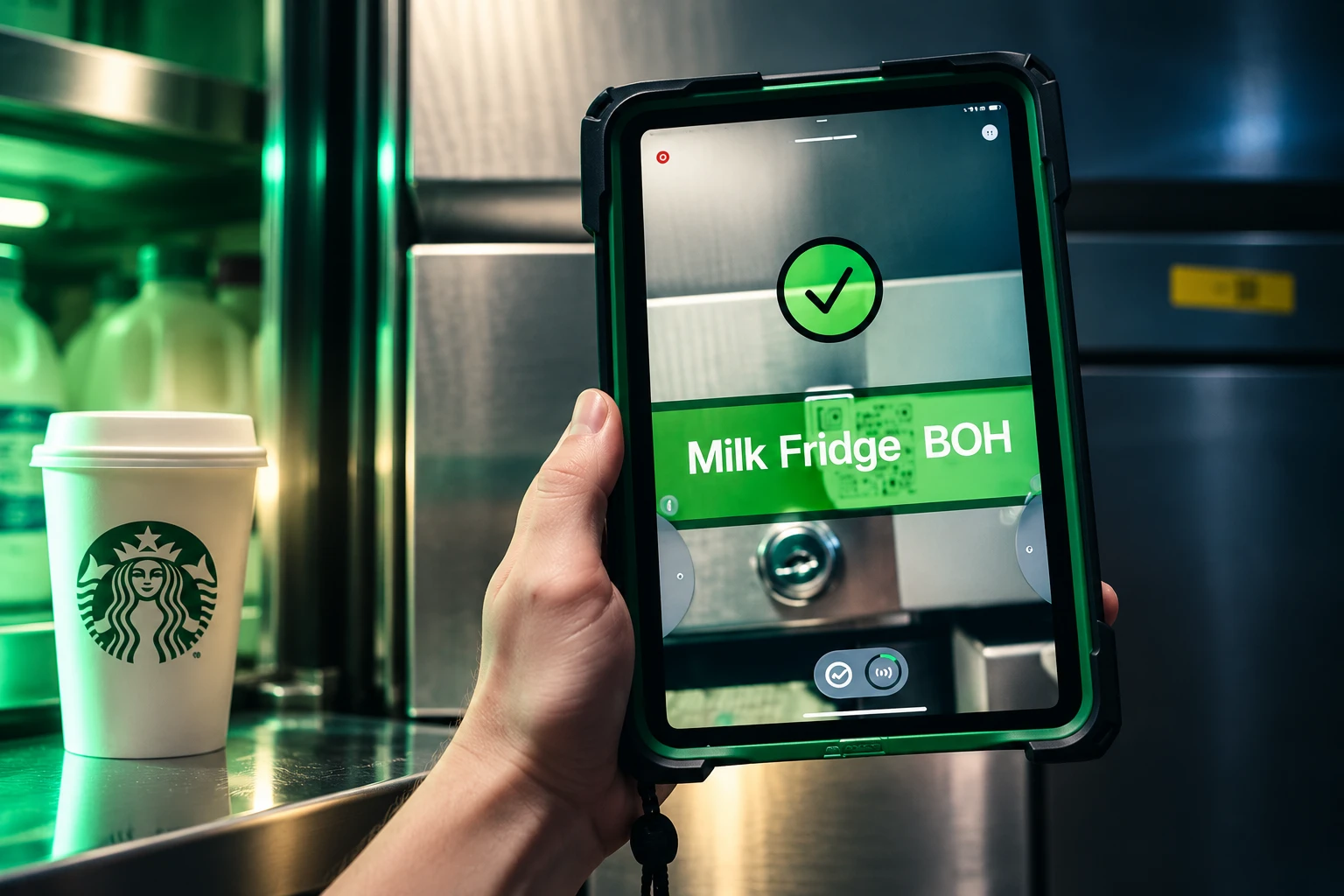
When Niccol arrived in September 2024, empty pastry cases and missing milks were a standing joke among regulars. Starbucks tried to kill that chore with a tablet. Partners held the screen up to the shelf. Cameras and LiDAR, built with Seattle-area firm NomadGo, were meant to tally beverage components in minutes.
Chief technology officer Deb Hall Lefevre said at launch that stores were already counting inventory eight times more often, with a full North America rollout due by the end of September 2025. The pitch was simple. Less clipboard time, fewer gaps, more time on the bar.
WHAT THE SCANNER DID
- The rollout: Automated Counting went into company-operated North American coffeehouses in September 2025.
- The method: A handheld tablet used cameras, LiDAR and on-device vision to tally milks, syrups and other beverage stock.
- The kill switch: An internal note in May 2026 said the tool was retired and that milk and beverage components would be counted the same way as everything else.
- The snag: The model mixed up similar cartons, missed bottles and made staff wave tablets at shelves to trip the sensors.
One partner note that circulated after the shutdown put it plainly: the thought was fine, the execution was not. Pulling a tool after a chainwide launch is not a small product tweak. It is an admission that the people on the floor still own the count, and that a model which cannot tell oat milk from whole does not belong in the open-to-close rhythm of a cafe.
The operational win on stock did not come from that tablet. On the July 29 call, Niccol said food availability was close to 99%, about 10 points better than a year earlier, and he credited daily delivery, sharper ordering and more store-level ownership, not the retired scanner.
Niccol Already Ran This Play at Chipotle
The milk episode sits inside a larger wager, and it is one Niccol has made before. At Chipotle he rebuilt a brand that had lost trust, then used a second make line, app pickup shelves and Chipotlanes so digital tickets did not stall the people standing at the counter. Sales nearly doubled on his watch and profit rose about sevenfold.
He has said Chipotle automated the prep jobs crews disliked, including frying chips and cutting avocados, so people could stay on the line that customers actually see. Starbucks is the same bet with different props. Handwritten names on cups, ceramic mugs, condiment bars and free refills are the front-of-house theater. Smart Queue, extra hours and a four-minute ticket are the engine.
The speed rule is blunt. Four minutes or less from till to handoff in the cafe. Four minutes at the drive-thru. Twelve minutes for a mobile order. Starbucks calls that 4-4-12. Green Apron Service, the staffing and sequencing model behind it, went live in August 2025. In early tests, pairing more people with Smart Queue put a large share of cafe tickets under four minutes and held drive-thru times to the same mark.
Niccol has been open about why he reached for all of this. He has said the company got too caught up in spreadsheets and averages, and “got a little too distracted on efficiency and technology,” losing the plot of a coffee shop that has to be run shop by shop. The irony writes itself. He is using more software to undo a culture that, in his telling, worshipped software.
He does not see a fight. “It’s a way for us to make the experience have less friction,” he said. The inventory tool was supposed to be that kind of quiet help. It was not.
US Same-Store Sales Rose 7.9%
Traffic, not a novelty bot, is what showed up in the till. In the fiscal third quarter, customers came more often and spent a little more when they did. North America, which rang up $7.4 billion of the company’s $9.3 billion in sales, led the print. Global revenue still fell 1% because China moved into a licensed joint venture, which takes store sales off the top line and leaves royalties and product shipments instead.
Q3 SAME-STORE SALES
| Market | Comps | Transactions | Average ticket |
|---|---|---|---|
| United States | 7.9% | 4.2% | 3.6% |
| North America | 8.1% | 4.5% | 3.5% |
| International | 5.7% | 2.6% | 3.1% |
| Global | 7.9% | 4.2% | 3.5% |
GAAP earnings were $0.91 a share, up 86%. On a non-GAAP basis, earnings were $0.85, up 70%, and operating margin widened 430 basis points to 14.4%. GAAP margin was thinner at 10.5%, up 60 basis points, after restructuring costs and the labor hours poured into the turnaround. North America operating margin ticked up to 13.6% from 13.3%, the first year-on-year gain there since the first quarter of fiscal 2024.
Niccol used his third quarter earnings call remarks to argue that sales were supposed to come first and profit later. “We said we would drive sales growth first and earnings would follow,” he said. “Our results show we’re walking the talk.” Brand tracking in the quarter, he added, put affinity, consideration and purchase intent at five-year highs, with growth across ages, incomes and both Rewards members and walk-ins.
Two-thirds of North America company-operated houses now sit at four or more “shots” on the internal GROW scorecard, up more than 40 points since that ranking launched in October 2025. That is a store-ops statistic, not a robot statistic. It is also the number Niccol leans on when he says the plan is taking hold.
The Barista Assistant Is Still on the Floor
The scanner is gone. Other software is not. Starbucks still describes technology as a way to protect craft, not replace it, and its public AI page now leads with Green Dot Assist rather than shelf scans.
TOOLS STILL IN THE BET
- Green Dot Assist: A conversational helper, shown in 2025 as an Azure-powered iPad app piloted in 35 stores, that answers recipe questions, helps with routines and can walk a partner through a sick espresso machine.
- Smart Queue: The sequencer that lines up cafe, mobile, drive-thru and delivery tickets so a lunch rush does not bury the handoff plane.
- Drive-thru voice: A test at some locations that lets software take the order so a partner can stay on hospitality or the bar.
- Scheduled pickup: A mobile slot so a drink is made closer to when the customer actually walks in, rather than sitting on the counter.
- Mood ordering: A chatbot and a ChatGPT app beta that start from how someone feels, not from a menu tree.
The company now casts Green Dot Assist as a live AI companion for coffeehouse partners, the thing you ask when a new drink lands and the binder is a room away. That is a different job from counting oat milk. It also scales more like a help desk than a robot barista, which is likely why it survived the same season that killed Automated Counting.
Smart Queue is the unglamorous piece that matches the Chipotle playbook most closely. Digital tickets at Starbucks were already more than 30% of transactions when Niccol set the four-minute clock, and a mid-teens share of app users were abandoning carts over waits. Sequencing those orders, then staffing to the clock, is how a burrito line and a bar start to look like the same problem.
The drive-thru voice is still a test, and Starbucks has not hung a vendor name on it the way Taco Bell and Dairy Queen have. Customers who have met it describe a polite speaker, then a human if the order gets weird. That is not yet a system. It is a trial sitting next to a much larger, quieter change in how tickets are lined up.
Savings of $2 Billion Have to Fund the Extra Staff
Investors let Niccol buy traffic with people. They have not agreed that the bill is finished. Starbucks put about $500 million into more hours, bigger rosters and peak coverage, the Green Apron spend that makes 4-4-12 possible. It also promised $2 billion in gross cost cuts through fiscal 2028, split across product and distribution, store operating costs and overhead.
Chief financial officer Cathy Smith has told analysts the early identified slice, once about $800 million, keeps rising, and that she and Niccol see a weekly update. In 2026 a lot of those saves show up in lower G&A, then get spent again in the stores. That is why same-store sales can look healthy while the GAAP margin still carries the labor investment and restructuring.
Niccol has said he does not want to raise prices if he can help it. “It really is the last lever I want to pull,” he said, and if the firm does move, “it should be fairly muted.” He is counting on cooler inflation, a softer coffee market and the White House decision to take coffee off a tariff list that had lifted costs the year before.
THE 2028 SCOREBOARD
- Sales growth: 5% or more in consolidated revenue, with 3% or more same-store sales in the US and worldwide.
- New stores: More than 2,000 net additions, including about 400 US company-operated houses, plus 2% to 3% of sales from that new space.
- Margin: Non-GAAP operating margin of 13.5% to 15%, and non-GAAP earnings of $3.35 to $4.00 a share.
Those fiscal 2028 growth targets are the actual payoff of the robot talk. Software that fails in the stockroom does not get Niccol to 13.5%. Software that lets a smaller support center, a tighter supply chain and a four-minute bar run with the extra people he hired might. The company already used part of the China proceeds to tender about $1.3 billion of notes, a balance-sheet move that does not require a single latte to be poured by a machine.
Workers United Called a National Boycott in August
The people who would be “freed” by all of this are also in a fifth year without a first contract. Starbucks Workers United, which says it represents more than 12,000 baristas at more than 700 stores, called an open-ended boycott on August 25, 2026. The demand list is a $17 an hour floor, enough hours to live on, better staffing and basic protections. The union had already cut that wage ask from $20 in a bid to restart talks.
Starbucks has repeatedly demonstrated a lack of care for the workers who fuel the company’s profits by wasting millions of dollars on AI and technology that doesn’t work, launching countless gimmicky drinks designed to distract from real problems, and inventing pointless policies that do nothing but make our jobs harder.
Starbucks Workers United, boycott statement, August 25, 2026
The union’s charge is specific. It is not a vague fear of robots. It is that money went to tools that do not run a shift, while a contract that it says would cost less than one day’s sales still is not signed. None of the unionized stores has a contract. The union also points to a pile of unfair-labor-practice cases it says remains open.
🚨BREAKING: Our union of over 12,000 baristas are officially calling for a Starbucks boycott.
Read this statement penned by Starbucks workers on why a boycott from ALL customers, allies, and organizations is necessary to fight back against corporate greed: pic.twitter.com/wiUJ1QB1XJ
— Starbucks Workers United (@SBWorkersUnited) August 25, 2026
Spokesperson Jaci Anderson said the company is “committed to engaging in productive bargaining” and that pay and benefits already compete. Niccol, asked about a timeline, said he was “wildly open” to the talk and that he would “love to get to a deal,” but only one that is “viable, sustainable.” He was granted a package worth $97 million in 2024 and $30 million the following year; the average employee, in the figures circulating around that debate, earned about $17,300.
That gap is now part of the operating story. So are 224 support-center cuts tied to a Nashville office that is meant to hold 2,000 people, and the earlier wave of store closures, about 400 of them, in September 2025. Niccol is adding hours in the cafes and taking them out of the corporate layer. The union hears that as leverage. He frames it as putting the coffeehouse back at the center.
Fiscal 2028 Hinges on a Higher Margin
On his second day, Niccol announced Back to Starbucks. Two years later, in a two-year Back to Starbucks letter to partners, he listed the props that had returned: cup writing, condiment bars, ceramic mugs, free refills, weekly pay, doubled parental leave, and a quarterly “Best of Starbucks” bonus of up to $300. He also said the business had “made the turn.”
THE CLOCK ON THE BET
- September 2024: Niccol joins and, on his second day, announces Back to Starbucks.
- August 2025: Green Apron Service becomes the operating model for speed, staffing and sequencing.
- September 2025: Automated Counting goes chainwide in North America; hundreds of stores close after a portfolio review.
- January 29, 2026: Investor Day sets the fiscal 2028 sales, store and margin targets after the first stretch of positive US comps.
- May 2026: Automated Counting is retired; milk goes back to a hand count.
- June 28, 2026: The fiscal third quarter closes with US comps up 7.9% and more than 1,000 cafe uplifts already done.
- August 25, 2026: Workers United calls a national boycott.
- September 10, 2026: Niccol tells partners Starbucks is back and that the same six ambitions now guide a growth chapter, not only a rescue.
Uplifts, budgeted at about $150,000 a store in the early plan, are the physical half of the third-place pitch: warmer rooms, more seats, a four-year slog. The company hit 1,000 North America uplifts ahead of schedule and now wants at least 1,500 by the end of fiscal 2026, after early data showed more transactions across dayparts. It still talks about adding more than 25,000 cafe seats in the US. At the end of the third quarter it had 41,304 stores worldwide, 16,933 of them in the US, with 33% company-operated and 67% licensed.
The longer map is bigger than any tablet. Niccol’s team has talked about room for up to 5,000 more US houses, and about doubling the international footprint over time toward 40,000 locations outside the United States, with 15,000 to 20,000 of the new ones in China through the Boyu Capital joint venture that left Starbucks with 40%. COO Mike Grams’s line at Investor Day was that connection and convenience are not a trade. Throughput, he said, is the advantage that lasts.
The next earnings date on the calendar is October 29, 2026, when fiscal 2026 closes. Guidance already asks for US comps of 6.5% or better in the fourth quarter and a little more than 6% for the full year, with a non-GAAP margin above 11%. That is the near test. The far test is whether 13.5% to 15% in fiscal 2028 can be reached without taking back the labor Niccol just bought, and without another chainwide tool that cannot tell the milks apart.
Niccol is still selling a gathering place. “People want these places to gather,” he has said. “It doesn’t matter if you’re eight years old or 80 years old, a third place is relevant.” The bet is that a four-minute ticket, a handwritten name and a quieter stack of software can fund that room. The scanner that could not count milk is no longer part of how he gets there.
Disclaimer: This article is news reporting and analysis of Starbucks Corporation’s operations, labor talks and disclosed financial results. It is for information only and is not investment advice, a recommendation to buy or sell any security, or a prediction of future share performance. Readers who may act on company results, margin targets or turnaround claims should consult a licensed financial adviser who can consider their own objectives and risk tolerance. Figures, store counts, guidance and labor status reflect company filings, official letters and public statements as of the dates named above and can change with later earnings, contracts or product decisions.

UPI MDR Delay Hands Traders the Calendar After Paytm Falls

Google Messages Builds Nine In-Chat Games After Samsung’s Exit

Anthropic’s $100 Million Academy Trains the Firms That Bill Both Sides

Toyota’s Electric C-HR Leaves the Cheap Twin to Subaru

Markets Bet the Fed Skips October After Hawkish Minutes

The Orchard Bug Forced Zcash to Open an Empty Pool

The $5.99 Game That Won Steam’s 2026 Summer Sale

Don Lee Joins Hemsworth as Extraction 3 Starts Shooting

YouTube Shorts Retires Dislikes and Swaps Likes for Hearts

Atlantic City Turned WWE’s Return Into a Civic Night
-
 NEWS5 months ago
The Orchard Bug Forced Zcash to Open an Empty Pool
-
 GAMING5 months ago
The $5.99 Game That Won Steam’s 2026 Summer Sale
-
 ENTERTAINMENT7 months ago
Don Lee Joins Hemsworth as Extraction 3 Starts Shooting
-
 NEWS5 months ago
YouTube Shorts Retires Dislikes and Swaps Likes for Hearts
-
 NEWS5 months ago
Atlantic City Turned WWE’s Return Into a Civic Night
-
 NEWS4 months ago
NEURA Robotics Is Spending Its $1.4B on a Machine Stack
-
 AUTO6 months ago
Kawasaki Bets the New Z1100 Against Its Own Supercharger
-
 BUSINESS5 months ago
Norway’s Export Bank Backs Nscale’s $790 Million Narvik Loan