
BUSINESS
Amazon Prime Day 2026 Tests Cautious Shoppers in June
Amazon Prime Day 2026 runs June 23 to 26, moving the sale into a weak-confidence window with grocery deals, seller pressure and Q2 stakes.

Amazon Prime Day 2026 will run from June 23 through June 26, a four-day sale in late June with millions of member-only deals, grocery offers, early back-to-school promotions and Alexa shopping tools. Amazon’s official Prime Day announcement lays out the dates and offer mix before the event begins.
The timing lands after The Conference Board’s May consumer survey said its Consumer Confidence Index slipped to 93.1 and two-thirds of consumers cited spending cutbacks tied to rising prices. Amazon is asking households to bring summer, school and pantry purchases forward before July begins.
Prime Day Leaves Its July Slot
Amazon announced the event on June 1, with the sale opening at 12:01 a.m. Pacific daylight time on June 23 and running through June 26. Last year’s first four-day version ran from July 8 to July 11, according to Amazon’s expanded Prime Day release, so the company has kept the 96-hour format and moved the buying window earlier.
The shift pulls the sale into the last full week of the quarter. It also gives the retailer an earlier shot at categories that usually build later in summer, including school supplies, dorm furnishings, outdoor goods and travel add-ons.
Consumer confidence edged downward in May as the inflationary impacts of the war in the Middle East intensified
Dana M. Peterson, chief economist at The Conference Board, said that in the group’s May 26 release. The same report said buying plans for major appliances, home furnishings and electronics eased or were unchanged on a six-month moving average basis. Those are Prime Day categories, and a 96-hour sale gives the retailer more chances to find the price that clears hesitation.
The old July rhythm also gave shoppers more distance from spring expenses. A late-June event reaches families before the month closes, just as summer camps, utility bills and holiday food planning compete for the same card balance.
A Sale Built Around Groceries
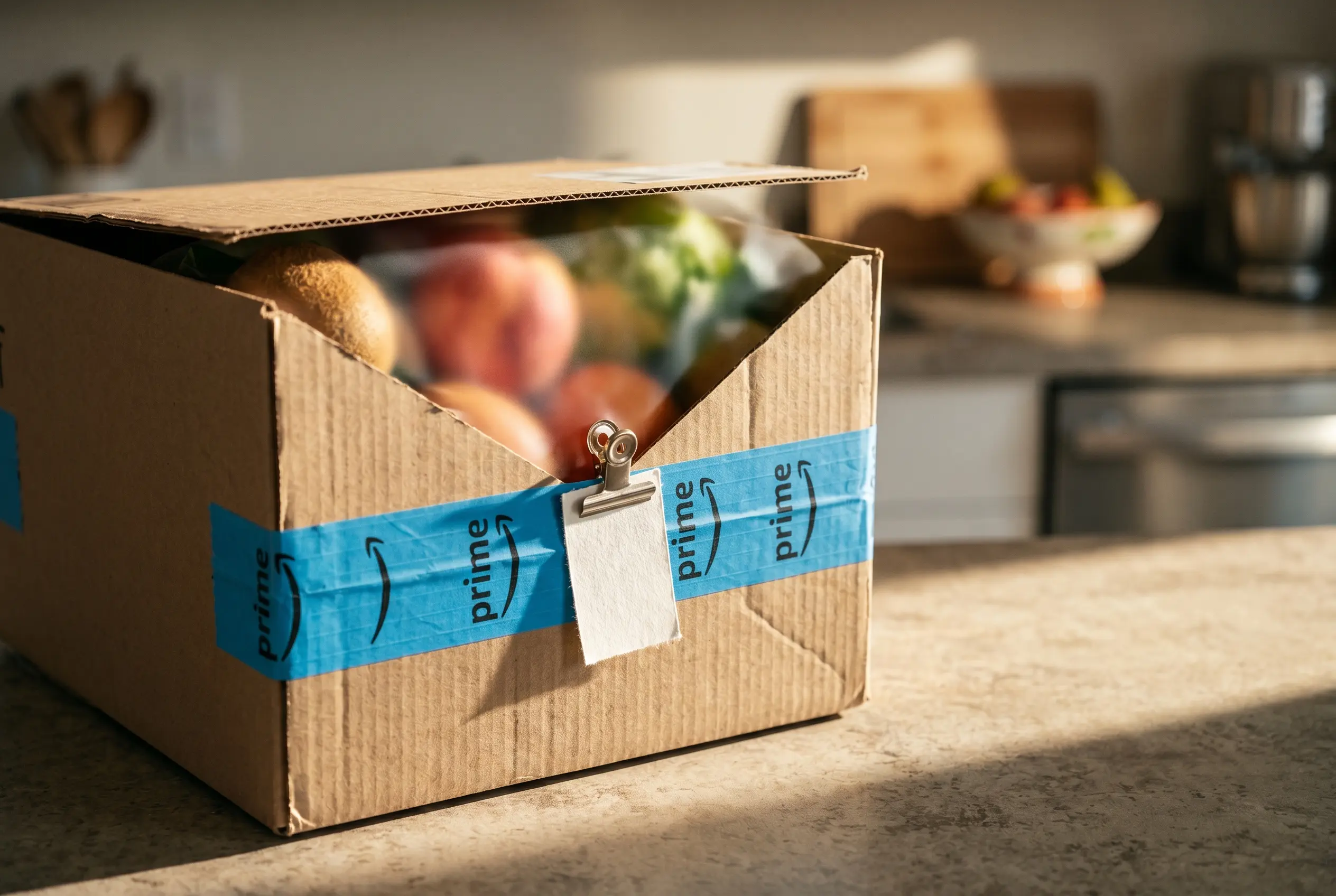
Amazon’s public offer sheet gives grocery a bigger role than the old gadget-heavy image of Prime Day. The posted examples include $1 red cherries, $1 hot dogs and buns, 4-for-$1 corn, and barbecue items priced at $3 and under through Whole Foods Market, Amazon Fresh and local grocery stores on Amazon.com.
That list puts weekly basket items beside laptops, Ring doorbells and Fire TV sticks. The company is using member prices on products shoppers already buy to create repeat visits across the four days.
| Offer Area | Amazon’s Posted Number | Purchase Being Pulled Forward |
|---|---|---|
| Groceries | $1 red cherries, $1 hot dogs and buns, 4-for-$1 corn | Weekly food basket before early July cookouts |
| Back-to-school | Up to 40% off HP and ASUS laptops, up to 45% off Sharpie, Paper Mate, Expo and Avery supplies | Classroom buying before the usual midsummer sale calendar |
| Dorm and home | Up to 40% off Amazon Basics dorm essentials | Move-in spending before campus bills arrive |
| Devices | Up to 65% off select Kindle, Ring, Echo, Fire TV, Blink and eero devices | Amazon hardware inside the member sale |
| Travel | Up to 30% off Avis and Budget base rates, plus 10% back on an Amazon gift card | Summer trip booking through the Prime page |
The target is narrower than a broad mall sale. Groceries and school goods sit close to the paycheck cycle, so a discount can move a decision already on the calendar. The offers also give Prime a daily-use role at a moment when households are sorting needs from wants.
The Revenue Mix Favors Repeated Visits
The sale feeds more lines than the checkout total. In Amazon’s first-quarter results, the company reported online store sales, third-party seller services, advertising services and subscriptions as separate revenue categories. Prime Day touches all four when a member searches, clicks an ad, buys from a marketplace seller and stays in Prime.
| Amazon Metric | First-Quarter Level | Year-Over-Year Change |
|---|---|---|
| Online stores | $64.3 billion | Up 12% |
| Third-party seller services | $41.6 billion | Up 14% |
| Advertising services | $17.2 billion | Up 24% |
| Subscription services | $13.4 billion | Up 15% |
The first-quarter release also said worldwide sellers accounted for 60% of paid units. That mix allows the public sale page to carry national brands, Amazon devices, independent merchants and Prime membership perks in one event.
Prime for Young Adults adds another layer. Amazon says eligible higher education students and 18-to-24-year-olds can use a six-month trial, then pay $7.49 per month or $69 per year, with extra cash back during the sale on eligible beauty, apparel, PCs, electronics and personal care purchases.
Sellers Get Traffic With a Larger Bill
For third-party merchants, the event is a traffic surge with costs attached. A seller can discount the item, pay for advertising, stock inventory earlier and absorb return risk after the sale. Amazon’s own filings say third-party seller services include commissions plus fulfillment and shipping fees, so a Prime Day order can leave money in several Amazon lines before the seller sees margin.
The June placement tightens the preparation window. Back-to-school inventory, summer outdoor items and grocery-adjacent household goods are already seasonal, so small merchants have to choose products before they have July traffic data. Thunder Tiger Europe has also covered Amazon delivery fee pressure linked to fuel costs, a reminder that the delivery promise sits on transport costs that have been moving.
Visibility draws merchants into the event. The same traffic pushes them into an ad market that grew 24% year over year in the first quarter. The sale brings buyers; the auction for attention can take a larger share of the basket.
Amazon’s own deal design increases that pressure. Today’s Big Deals are scheduled three times daily, and fresh drops can appear as often as every five minutes during selected periods. A seller missing the first wave may still have more chances, but the budget has to last through the full run.
How Shoppers Can Keep the Deal Honest
A longer sale gives shoppers more time to compare prices, which is the only useful defense against countdown pressure. The Federal Trade Commission online shopping advice tells buyers to compare prices, check delivery and return policies, save order records and review seller rules before paying.
Amazon says Alexa for Shopping will offer deal alerts, target-price auto-buy and price history for up to 365 days on hundreds of millions of products. Those tools help only when the shopper sets the target before the sale starts.
- Write down the current price for any item over your personal impulse limit, then compare it with the sale price and any coupon.
- Check the seller name, return window and delivery date before adding the item to the cart.
- Separate planned purchases from items discovered during the event, especially for electronics and home goods.
- Count card rewards, financing offers and delayed payments as part of the purchase decision.
A Thunder Tiger Europe article on blocking shopping apps at night covered the same household tactic from another angle, slowing the moment between seeing a deal and paying for it. Prime Day’s timer pushes toward faster checkout.
The Result Lands in Amazon’s Second Quarter
The timing turns the sale into a second-quarter retail data point for Amazon. The company told investors in April that its guidance assumes Prime Day occurs in the second quarter, with net sales expected between $194.0 billion and $199.0 billion and operating income expected between $20.0 billion and $24.0 billion.
Household data give the report a harder backdrop. The U.S. Bureau of Economic Analysis said in April personal income and outlays data that disposable personal income fell 0.1% while personal consumption expenditures rose 0.5%. Consumers kept spending, but the income line moved the other way.
Amazon has four days to test how much demand moves at a visible discount across groceries, school offers and repeated deal drops. The second-quarter placement means the answer goes into the next earnings cycle.
The sale ends June 26, and the quarter closes four days later.


Veridue Raises $4 Million to Speed Energy Deal Diligence

Healey Adds a £150m Rung for Northern Scale-Ups

Ten Deals Took Most of Europe’s August Tech Money

Holmes Hired Fielder to Film Her Last Days

Molten Bets £100m of Plc Cash on Late-Stage Tech

Garlinghouse Cited Dutch Gold, and London Got the Bars

byFounders Bets $4.3 Million on Fluencify After $2M ARR

Alpha Gang Puts A-List Stars on a Zellner Wager

Angel Bets a Recut PG-13 Chase on Ritchson and Wilson

Flex IT and T1A Combine to Own Corporate Device Supply

Walter’s TWG Insists No Fraud as Insurer Probes Force Cleanup

30-Year Yield Hits 5.32% Highest Since 2007 as Debt Supply Locks In Costs

PCE Stays at 3.7% as Gas and Tariffs Outrun Coming Revisions

Evernorth S-4 Clears Path for Active XRP Treasury on Nasdaq

Astute’s $1.2M bet makes B2B creator deals feed AI discovery

Strategy Parks $1.59B Cash While Bitcoin Stack Stays Flat

Instinct Hits $2.5 Billion as AI Agent Access Sparks Trust Fights

Oracle’s 2.8 GW Bloom Deal Exposes the AI Power Bypass

CLARITY Act Cloture Opens a Door Ethics Still Blocks

Amber’s €7M locks Mittelstand knowledge inside Europe
-
 FINANCE3 months ago
Zcash Patched a Double-Spend Bug as ZEC Climbed 5%
-
 ENTERTAINMENT3 months ago
Steam Summer Sale 2026 Locks In June 25 to July 9 Dates
-

 FINANCE2 months ago
CLARITY Act Final Text Expected This Weekend as 60-Vote Hurdle Looms
-
 NEWS4 months ago
Meta Adds AI Replies to Threads, But Users Can’t Block It
-
 ENTERTAINMENT5 months ago
Extraction 3 Is Officially Coming to Netflix in 2027
-

 NEWS3 months ago
YouTube Shorts is testing a heart in place of the thumbs-up
-

 NEWS1 month ago
Senators Force Apple Off Chinese Memory as Big Three Cash In
-

 NEWS3 months ago
NEURA Robotics’ $1.4B Series C Redraws Europe’s Physical AI Bet