
ENTERTAINMENT
Judge’s Pause on Paramount’s Warner Bros. Deal Starts a Costly Countdown
A California judge’s restraining order freezes Paramount’s Warner Bros. Discovery deal, colliding with a fee deadline that costs millions for every extra day.

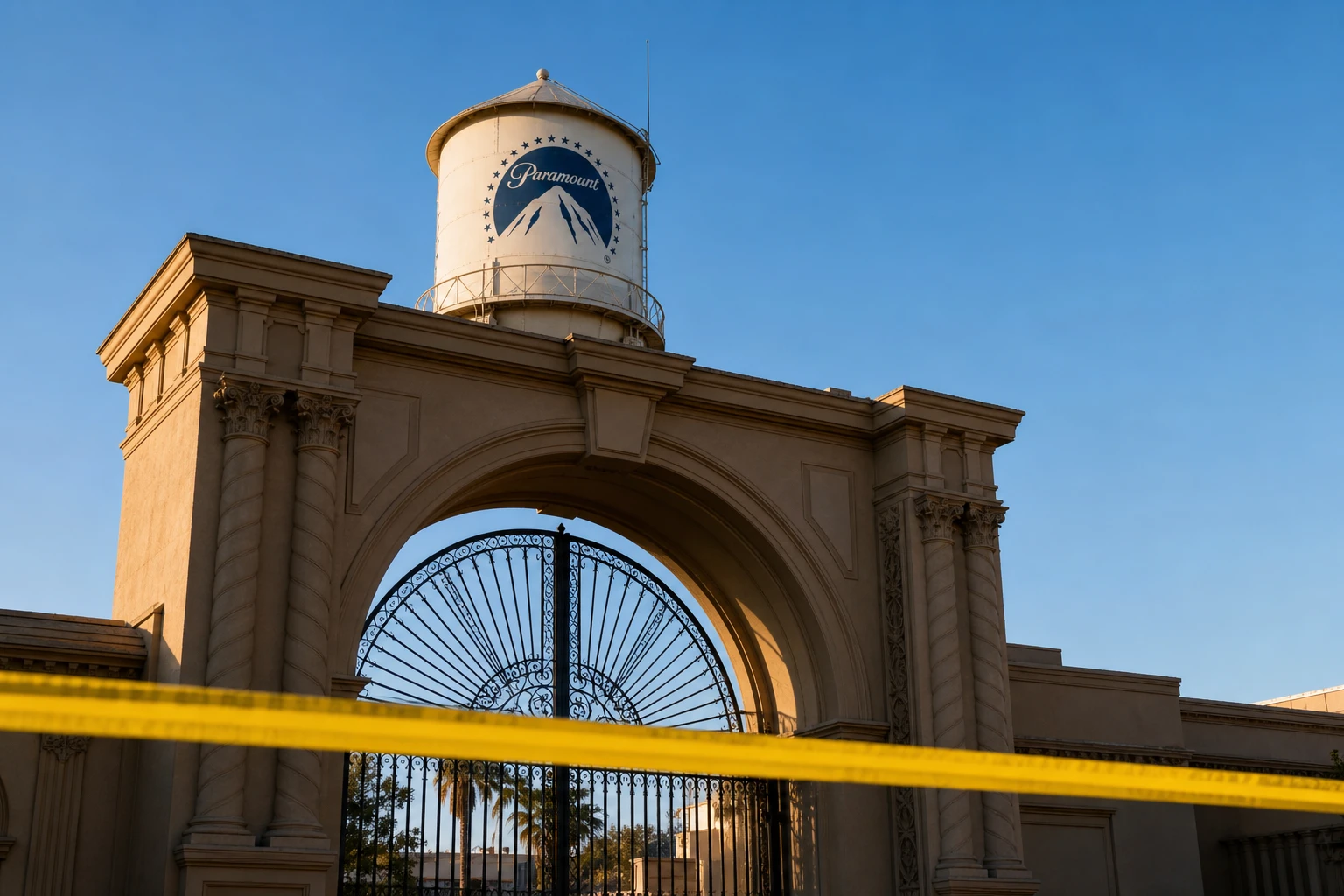
A federal judge froze Paramount Skydance’s $110 billion bid for Warner Bros. Discovery on Monday, stopping the deal just days before it was set to close. The order buys a coalition of 12 states more time to argue in court that the merger is illegal.
But there is a second clock running that no judge controls. Paramount wrote its own penalty fee into the contract last year to beat out Netflix for Warner Bros. Discovery, and that same clause now counts against Paramount for every day this fight drags past September 30.
The Ruling Turns on Movie Theaters, Not Streaming
U.S. District Judge Araceli Martínez-Olguín granted the temporary restraining order after hearing arguments from both sides in an Oakland courtroom on Friday. The order runs 14 days, with room for a two week extension, and bars Paramount from closing the transaction or taking any steps to integrate the two companies.
Her written order rested on one finding. Martínez-Olguín wrote that the states presented a level of market concentration she called compelling in the wide release theatrical business, enough on its own to presume the deal likely breaks antitrust law. She added that Paramount had effectively conceded it would suffer no real harm from a short delay.
The states, led by California Attorney General Rob Bonta, argue the combined studio would dominate three separate markets at once:
- Wide release theatrical distribution, where a merged Paramount and Warner Bros. would control a large share of nationwide movie bookings
- Anticipated blockbuster films, a submarket the complaint pegs at roughly 30 percent combined share of expected top grossing releases
- Basic cable television distribution, where the deal would join two of the industry’s largest programmers under one owner
Paramount countered that the real competitive map now includes Amazon MGM Studios, Apple, Lionsgate, A24 and NEON, along with streaming giants Netflix and Amazon. Martínez-Olguín was not persuaded. She wrote that she could not treat streaming as part of the relevant market, calling it ancillary to the theatrical and cable businesses at the center of the case, and noted that courts have repeatedly rejected efficiency arguments of that kind.
Why Paramount Can’t Just Walk Away
The deal’s price tag was never fixed. To outbid Netflix for Warner Bros. Discovery earlier this year, Paramount agreed to add a per share sweetener to beat Netflix’s bid, a so called ticking fee that rewards Warner Bros. Discovery shareholders for every extra quarter the deal stays open.
Under the terms now in force, that fee starts accruing after September 30 at 25 cents per share each quarter, adding $650 million in cash value each quarter the transaction remains unfinished. Spread across a quarter, that works out to roughly $7 million a day, paid to Warner Bros. Discovery shareholders once the deal eventually closes.
There is a second, harsher number if the deal never closes at all. If regulators ultimately block the transaction, Paramount owes Warner Bros. Discovery a $7 billion termination fee, a separate penalty triggered specifically by regulatory failure rather than by delay.
| Mechanism | What Triggers It | Amount | Who Gets Paid |
|---|---|---|---|
| Ticking fee | Deal remains open past September 30, accrues quarterly | $0.25 per share per quarter, about $650 million a quarter | Warner Bros. Discovery shareholders, if the deal eventually closes |
| Regulatory termination fee | Deal collapses over antitrust objections | $7 billion lump sum | Warner Bros. Discovery |
That gap between the two numbers explains Paramount’s posture in court. Herbert Hovenkamp, an antitrust scholar at the University of Pennsylvania, said the structure is built to keep Paramount in the fight rather than let it walk. He told Inc. that the termination fee is designed mainly to keep the company focused on defending the merger, and predicted the two sides are more likely to litigate than settle.
Wall Street’s Read on a Weakening Hand
Investors and analysts parsed the judge’s language within hours of the ruling. Rich Greenfield, a media analyst at Lightshed Partners, wrote in a research note that the order was no sign of momentum for Paramount.
While the bar for a temporary restraining order is lower than the bar for a preliminary injunction, the wording of the judge’s ruling cannot be viewed as a positive for Paramount.
Paramount rejected that reading in its own public filings, calling the states’ case one of the weakest merger challenges in modern antitrust history. In a statement after the ruling, the company said it was grateful for the court’s swift order and remained confident the states’ market definitions would not hold up at trial.
Bonta struck a very different tone. He called the ruling a critical first win in the states’ case and said he expects the court fight to continue for months.
The Writers Guild Fights on a Separate Track
The states are not the only plaintiffs in front of Martínez-Olguín. The Writers Guild of America (WGA) filed its own antitrust suit a day after the states, arguing the merger would create the largest buyer of film and television writing services in the country and give it room to suppress pay.
Tom Fontana, president of the WGA East, said the union would not stand by as the merger deepened the contraction entertainment workers already feel, warning that the combined company would gain outsized power to cut jobs and reduce programming. Its filing warns the deal would suppress writers’ wages across three specific markets: top grossing films, episodic television and streaming series, and the overall development deals writers rely on for steady work.
A fact sheet accompanying the suit says the combined company would push concentration levels topping 700 points on the index regulators use to flag anticompetitive mergers, the Herfindahl-Hirschman Index, far above the 100 point increase that triggers a legal presumption of harm under 2023 federal merger guidelines. The WGA’s case has been assigned to the same judge but has not been merged with the states’ lawsuit.
Paramount has pushed back hard on the labor argument, pledging to release at least 30 movies a year and describing its own recently renewed labor agreement with the guild as proof it intends to expand opportunities for writers, not shrink them. A separate consumer lawsuit targeting the Paramount+ and HBO Max combination is also pending before Martínez-Olguín, though she already declined to freeze the deal on those claims specifically.
London and Brussels Add Pressure From Abroad
Legal risk for the deal is not confined to the United States. Lisa Nandy, the United Kingdom’s Secretary of State for Culture, Media and Sport, said in a written statement to Parliament that she is minded to intervene on public interest grounds, citing the need for a sufficient plurality of views in news media and in who controls Britain’s media enterprises.
Nandy’s concern centers on how much of British television the combined company would hold at once, including Channel 5, TNT Sports, Cartoon Network, Nickelodeon and CNN International, plus the Paramount+ and HBO Max streaming services. If she formally intervenes, Britain’s competition and media regulators would assess the deal before her department issues a final decision. The European Union’s own antitrust review of the transaction has been moving on a parallel track this year.
None of that foreign scrutiny slows the American ticking fee. It keeps running regardless of what happens in London or Brussels, which is part of why Paramount pressed so hard for a fast timeline in Oakland rather than a drawn out one.
The Countdown to August 3
Paramount had hoped to have full control of Warner Bros. Discovery, and CNN, by the end of this week. Instead, the case now moves on a court ordered calendar that squeezes both sides.
- June 2026: The Department of Justice closes its own eight month investigation, reviewing more than two million documents, without challenging the deal.
- July 13, 2026: California and 11 other states file suit and move for a temporary restraining order.
- July 14, 2026: The Writers Guild of America files a separate antitrust suit over harm to writers.
- July 20, 2026: Martínez-Olguín grants the 14 day restraining order.
- July 23 to 30, 2026: The states file their preliminary injunction motion, Paramount files its opposition, and the states reply.
- August 3, 2026: Martínez-Olguín holds a 3 p.m. hearing on the preliminary injunction that could freeze the deal for months.
- September 30, 2026: The ticking fee begins accruing against Paramount if the deal has still not closed.
A preliminary injunction would not decide whether the merger is illegal. It would decide whether Paramount and Warner Bros. Discovery keep operating as rivals while the underlying antitrust case, which could take months, works its way through the same courthouse. Deals of this size have a track record of falling apart entirely once a judge grants that kind of freeze, rather than surviving a long trial.
Paramount already went to court once this month having shareholders had already approved the tie-up back in April, only to watch a dozen attorneys general reopen the fight in July with the states’ original antitrust complaint. David Ellison, Paramount’s chief executive and the son of Oracle co-founder Larry Ellison, built this deal to make his young company one of the largest in Hollywood. Whether he gets to keep it now rests on a single afternoon in an Oakland courtroom, less than two months before the fee clock starts running for real.
Frequently Asked Questions
Could Paramount close the Warner Bros. deal before the court rules?
No. Martínez-Olguín’s order explicitly bars Paramount and Warner Bros. Discovery from closing or consummating the transaction, or from taking any steps, directly or indirectly, to integrate or consolidate their operations while the order stands.
What is Section 7 of the Clayton Act?
It is the federal antitrust law barring mergers that may substantially lessen competition or tend to create a monopoly in any market. It is the specific statute the 12 state attorneys general are using to challenge the Paramount and Warner Bros. Discovery deal.
Can state attorneys general block a merger the Justice Department already cleared?
Yes. Federal antitrust law gives state attorneys general independent authority to sue over the same transaction even after a federal agency like the Department of Justice closes its own investigation without objecting.
What happens if Martínez-Olguín grants a preliminary injunction on August 3?
A preliminary injunction would not rule the merger illegal outright, but it would freeze the transaction for the length of a full trial, a process that can take months. Companies facing that kind of freeze often abandon a merger rather than fight through a lengthy, unpredictable trial.


Veridue Raises $4 Million to Speed Energy Deal Diligence

Healey Adds a £150m Rung for Northern Scale-Ups

Ten Deals Took Most of Europe’s August Tech Money

Holmes Hired Fielder to Film Her Last Days

Molten Bets £100m of Plc Cash on Late-Stage Tech

Garlinghouse Cited Dutch Gold, and London Got the Bars

byFounders Bets $4.3 Million on Fluencify After $2M ARR

Alpha Gang Puts A-List Stars on a Zellner Wager

Angel Bets a Recut PG-13 Chase on Ritchson and Wilson

Flex IT and T1A Combine to Own Corporate Device Supply

Walter’s TWG Insists No Fraud as Insurer Probes Force Cleanup

30-Year Yield Hits 5.32% Highest Since 2007 as Debt Supply Locks In Costs

PCE Stays at 3.7% as Gas and Tariffs Outrun Coming Revisions

Evernorth S-4 Clears Path for Active XRP Treasury on Nasdaq

Astute’s $1.2M bet makes B2B creator deals feed AI discovery

Strategy Parks $1.59B Cash While Bitcoin Stack Stays Flat

Instinct Hits $2.5 Billion as AI Agent Access Sparks Trust Fights

Oracle’s 2.8 GW Bloom Deal Exposes the AI Power Bypass

CLARITY Act Cloture Opens a Door Ethics Still Blocks

Amber’s €7M locks Mittelstand knowledge inside Europe
-
 FINANCE3 months ago
Zcash Patched a Double-Spend Bug as ZEC Climbed 5%
-
 ENTERTAINMENT3 months ago
Steam Summer Sale 2026 Locks In June 25 to July 9 Dates
-

 FINANCE2 months ago
CLARITY Act Final Text Expected This Weekend as 60-Vote Hurdle Looms
-
 NEWS4 months ago
Meta Adds AI Replies to Threads, But Users Can’t Block It
-
 ENTERTAINMENT5 months ago
Extraction 3 Is Officially Coming to Netflix in 2027
-

 NEWS3 months ago
YouTube Shorts is testing a heart in place of the thumbs-up
-
 NEWS1 month ago
Senators Force Apple Off Chinese Memory as Big Three Cash In
-

 NEWS3 months ago
NEURA Robotics’ $1.4B Series C Redraws Europe’s Physical AI Bet