
NEWS
Oxford Quantum Circuits’ £260M Raise Tests the UK Bet
Oxford Quantum Circuits’ £260M funding gives Britain a record quantum round, a state-backed scale test and a tighter race for data-centre customers.

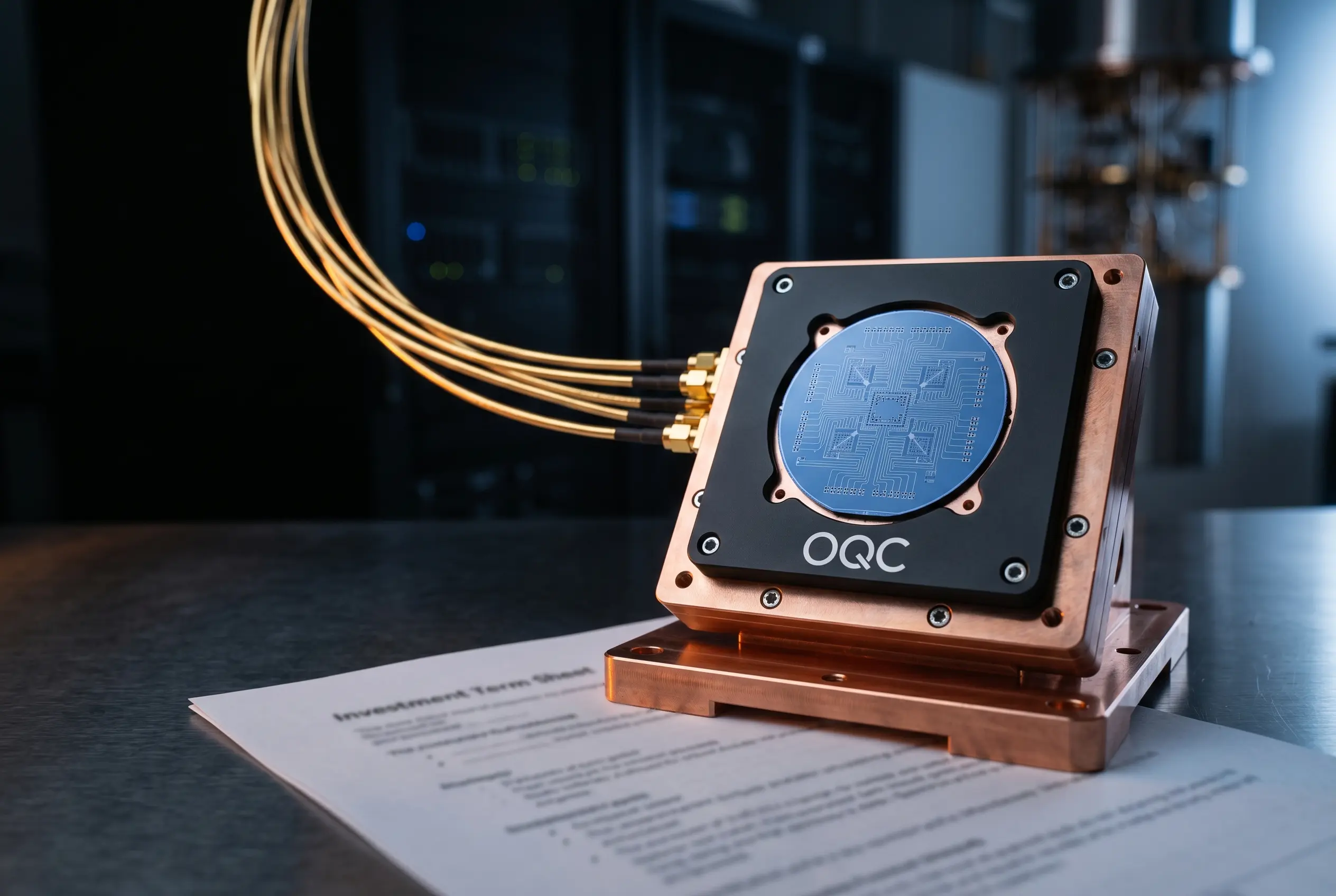
Oxford Quantum Circuits, the UK quantum computing company known as OQC, raised £260 million ($350 million) in an oversubscribed Series C to expand its data-centre quantum systems. In the quantum funding announcement, the Reading-based University of Oxford spinout said the deal is Europe’s largest private funding round for a quantum computing company. The money backs a push to sell superconducting machines built from quantum bits (qubits, units of quantum information) to enterprise and government customers.
The investor list turns the raise into a scale test for Britain’s quantum policy. The British Business Bank commitment was £100 million, and the company’s next public test is engineering: make deployed systems useful enough for finance, defence and security buyers before rival architectures catch the same capital wave.
A Record Round With a State Anchor
Bullhound Capital led the Series C. New investors included Fynveur, advised by Invus, COFIDES, RCM Private Markets Fund managed by Rokos Capital Management (US) LP, Alpha Edison, Fulcrum Asset Management, Pentland Ventures, Magdalen College Oxford, Adaptive Capital Partners, Firgun Ventures, 18 West and Oxford Capital. Existing backers Oxford Science Enterprises, SBI, Chevron Technology Ventures, The University of Tokyo Edge Capital Partners and OTIF Ventures also joined. J.P. Morgan acted as exclusive placement agent.
The public-capital detail changes the reading of the round. British Business Bank says it had already invested £7 million in the company’s Series A in 2022, and its latest cheque sits alongside private growth capital. Rachel Reeves, the Chancellor of the Exchequer, used the announcement to point to a government commitment of up to £2 billion for UK quantum companies to reach commercial scale.
Gerald Mullally, the company’s chief executive, called the raise a “coming-of-age moment” for British quantum computing. The phrase will get the headline treatment. The cap table gives the phrase its weight.
The Data Centre Model Gets Its Test
The company develops superconducting quantum computers for deployment in data-centre environments. That choice puts the product close to the way large banks, defence contractors and research groups already buy compute: through secure facilities, cloud access and colocated infrastructure, instead of a lab machine sitting on a customer’s own site.
The current commercial system, TOSHIKO, is a 32-qubit machine. The company says it is deployed in the UK, Spain and Japan. GENESIS, its fourth-generation device, is designed for New York City and uses 16 dual-rail dimon qubits, a design the company says can detect errors at the individual-qubit level. The data-centre pitch has four parts that buyers can understand without reading a physics paper:
- scheduled cloud access for researchers and enterprise teams testing quantum workflows;
- direct colocation for customers that want low-latency links to existing compute infrastructure;
- sovereign deployments for customers that need local control over sensitive workloads;
- hybrid work with classical processors for problems where quantum hardware handles a narrow part of a larger job.
That last point is where the round touches the artificial intelligence boom. Quantum machines still need classical systems for orchestration, benchmarking and post-processing. For now, the company’s commercial story depends on fitting into the compute rooms customers already trust.
GENESIS Sets Up the TITAN Deadline
The company’s technical roadmap for commercial advantage gives investors dates, machine names and performance claims. GENESIS starts the logical-qubit phase. TITAN is the system tied to the new money: a planned device with 200 logical qubits, 2,000 lattice sites, a 1 MHz QuOp cycle rate and a target logical error rate of 10^-6.
| System | Public Timing | Claimed Scale | Target Use |
|---|---|---|---|
| GENESIS | Commercially available from 2026 | 16 logical qubits and 16 lattice sites | First logical-era device with quantum error detection |
| TITAN | 2028 | 200 logical qubits and 2,000 lattice sites | Finance, security and defence applications |
| ATHENA | 2031 | 5,000 logical qubits and 75,000 lattice sites | Quantum chemistry and materials simulation |
| ATLAS | 2034 | 50,000 logical qubits and 1 million lattice sites | Large-scale chemistry and cryptographic workloads |
The roadmap is unusually specific for a private hardware company. It also gives customers and investors a checklist. A funding round can close in a day; a fault-tolerant quantum system takes packaging, cryogenics, controls, manufacturing yield and software that behaves under enterprise conditions.
Europe’s Hardware Race Narrows Around Buildability
OQC’s raise lands after a run of European quantum hardware rounds built around industrial claims. Quantum Motion’s silicon Series C brought in $160 million in May and pitched complementary metal-oxide-semiconductor (CMOS, the standard chip manufacturing approach used in everyday electronics) as the route to systems that fit standard data-centre racks. The company said its silicon transistor-based approach could reduce cost and space requirements by 100-fold and energy needs by 1,000-fold compared with alternatives.
Delft-based QuantWare took a different route. QuantWare’s processor funding was $178 million for VIO technology, a 10,000-qubit processor architecture and KiloFab, which it describes as a dedicated open-architecture quantum fab. That round brought Intel Capital and In-Q-Tel into the same European funding conversation.
The common thread is manufacturing. Investors are funding teams that can explain how a quantum device leaves a lab, repeats in production and plugs into infrastructure. The superconducting route has deep research support and known engineering burdens. Silicon spin, neutral atom, photonic and trapped-ion rivals all carry their own version of the same question: who can make the machine repeat?
Procurement Gives the State a Customer Role
The UK has been moving toward procurement as well as grants. The government’s ProQure quantum computing competition opened on March 27 and closed on May 29. Phase 1 allowed organisations to apply for contracts of up to £14 million to develop and validate integrated quantum hardware and software. The brief says phase 2 contracts can reach £75 million, and that early phases will help inform a future public procurement of large-scale quantum computers beyond 2030, with a budget of up to £1 billion.
That procurement timetable matters for a company selling secure access to machines in controlled environments. A government customer buying a large system cares about performance, but also about supply chain control, local operation, security standards and service life. The same concerns sit inside banks and defence users, where moving sensitive data to a remote experimental system can be harder than renting ordinary cloud compute.
Public money can also narrow the field. A company that wins early government work gets reference customers, engineering feedback and a reason to build support teams around the machine. The companies that miss those early deployments still have to carry hardware costs while waiting for commercial buyers to commit.
Who Gets the First Seat?
Financial services, defence and security are the sectors named in the funding announcement. That ordering is no accident. Banks have optimisation, risk and cryptography problems. Defence customers have simulation, sensing, logistics and secure-compute requirements. Both groups can pay for access before a general-purpose quantum computer exists.
The finance link is already visible. JPMorganChase and Advanced Micro Devices (AMD, a chipmaker supplying AI and high-performance compute) said on June 3 that they had started a London quantum-AI research collaboration with the company. JPMorganChase will be the first dedicated user of the UK platform, which is expected to become fully operational within 12 months and physically integrate GENESIS with AMD-supported classical and AI compute.
That customer work gives the round a calendar. The company has money, a government-backed investor, a roadmap and named enterprise research. For now, the public test is dated on the company’s own roadmap: TITAN in 2028.


Replit Opens Its London Office Inside an AI Crowd

Straight Circle Trailer Lands Without a U.S. Date

Anemo Labs Bets £700,000 on an AI Sense of Smell

Nintendo Prices the Zelda 40th Switch 2 at $519

Copilot Capital Buys the Autopilot Already Running 90 GW

Ground A Raises €9.1 Million for a Pallet Laser

Gibney’s Musk Film Opens in Venice Without Its Subject

Torvalds Blames AI for a Full-Fat Linux 7.3-rc2

Dexter Returns Sharper, Older, and Stuck Between Killers

Meta’s Muse Agent Can Spend Before the Privacy Lock

Walter’s TWG Insists No Fraud as Insurer Probes Force Cleanup

30-Year Yield Hits 5.32% Highest Since 2007 as Debt Supply Locks In Costs

PCE Stays at 3.7% as Gas and Tariffs Outrun Coming Revisions

Evernorth S-4 Clears Path for Active XRP Treasury on Nasdaq

Astute’s $1.2M bet makes B2B creator deals feed AI discovery

Strategy Parks $1.59B Cash While Bitcoin Stack Stays Flat

Instinct Hits $2.5 Billion as AI Agent Access Sparks Trust Fights

CLARITY Act Cloture Opens a Door Ethics Still Blocks

Oracle’s 2.8 GW Bloom Deal Exposes the AI Power Bypass

AI data centers win as RAM kits jump nearly 500 percent
-
 FINANCE3 months ago
Zcash Patched a Double-Spend Bug as ZEC Climbed 5%
-
 ENTERTAINMENT3 months ago
Steam Summer Sale 2026 Locks In June 25 to July 9 Dates
-

 FINANCE2 months ago
CLARITY Act Final Text Expected This Weekend as 60-Vote Hurdle Looms
-
 NEWS4 months ago
Meta Adds AI Replies to Threads, But Users Can’t Block It
-
 ENTERTAINMENT5 months ago
Extraction 3 Is Officially Coming to Netflix in 2027
-

 NEWS3 months ago
YouTube Shorts is testing a heart in place of the thumbs-up
-

 NEWS1 month ago
Senators Force Apple Off Chinese Memory as Big Three Cash In
-

 NEWS3 months ago
NEURA Robotics’ $1.4B Series C Redraws Europe’s Physical AI Bet