
NEWS
Samsung Galaxy Watch 9 Ditches Its Own Chip for Qualcomm’s
Samsung’s Galaxy Watch 9 swaps its own Exynos chip for Qualcomm’s Snapdragon Wear Elite, ending years of in house wearable silicon as prices rise again.

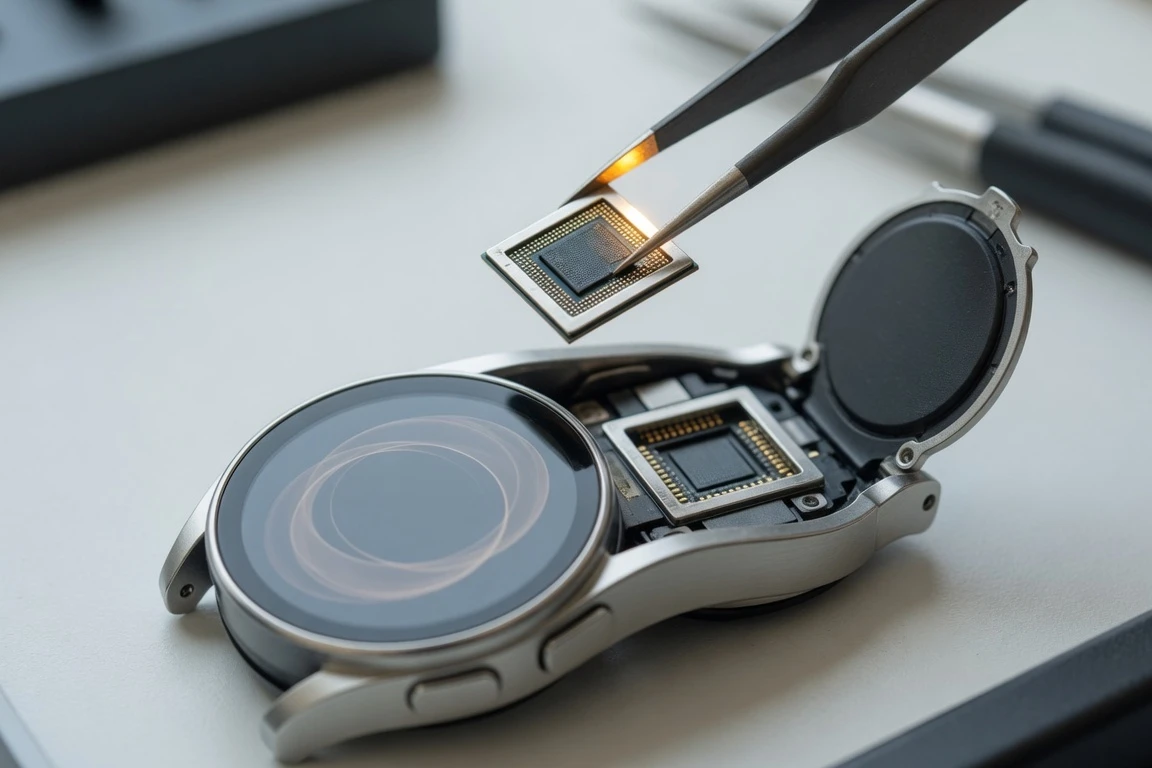
Samsung unveiled the Galaxy Watch 9 and Galaxy Watch Ultra 2 on July 22, and for the first time, neither watch runs on a chip Samsung built itself. Qualcomm’s new Snapdragon Wear Elite platform replaces the Exynos W1000 that powered the last two watch generations, and the switch arrives with a real performance jump, a bigger battery and a $30 higher price tag.
The bigger change is invisible on a spec sheet. Qualcomm’s chip now also runs Samsung’s new foldables and its first pair of smart glasses. That makes 2026 the year Qualcomm became the sole silicon supplier across nearly every new device carrying the Galaxy name.
Every New Galaxy Device Now Runs on Qualcomm Silicon
Qualcomm confirmed the full scope of the arrangement a day after Unpacked. Snapdragon forms the foundation of Samsung’s new device lineup, and the companies described it as enabling a unified AI experience across smartphones, wearables, and intelligent eyewear. That covers the Galaxy Z Fold8 Ultra, Z Fold8 and Z Flip8 on the phone side, the Watch 9 and Watch Ultra 2 on the wrist, and a new line of Intelligent Eyewear built with Gentle Monster and Warby Parker.
| Device | Chip Platform |
|---|---|
| Galaxy Z Fold8 Ultra | Snapdragon 8 Elite Gen 5 for Galaxy |
| Galaxy Z Fold8 | Snapdragon 8 Elite Gen 5 for Galaxy |
| Galaxy Z Flip8 | Snapdragon 8 Elite Gen 5 for Galaxy |
| Galaxy Watch9 | Snapdragon Wear Elite |
| Galaxy Watch Ultra2 | Snapdragon Wear Elite |
| Intelligent Eyewear | Snapdragon AR1 Gen 1 |
At the same event, Gentle Monster and Warby Parker unveiled two additional eyewear designs as part of larger collections coming this fall, both built on the same Qualcomm foundation as the watch.
The Chip That Used to Beat Qualcomm’s
Exynos W1000 first powered the Exynos W1000 chipset, which is set to power the upcoming Galaxy Watch7 and Watch7 Ultra, back in July 2024. The same silicon carried over a year later, when all three devices, the Galaxy Watch 8, Watch 8 Classic and Watch Ultra 2, used the 3nm Exynos W1000 chip paired with 2GB RAM.
That wasn’t a compromise. For years, Samsung’s own chip was considered the stronger option. Coverage of the switch noted that the Galaxy Watch series had exclusively used Exynos chipsets over the years, which actually worked to Samsung’s benefit during the long stretch when Qualcomm’s wearable chips lagged behind. The chip’s own product page still lists a single 1.6GHz core paired with four efficiency cores, specs that won’t appear inside another new Samsung watch again.
Galaxy Watch 8 owners running that chip only recently got their software sorted out, when Samsung shipped a critical security patch to the series in February. Now the chip itself is gone from the new lineup. The manufacturing shift matters too: both chips use 3 nanometer processes, but the W1000 was built on Samsung’s own foundry node, while the Wear Elite is fabricated by TSMC, which generally offers better process technology. Samsung didn’t just hand the chip design business to a rival. It handed the manufacturing business to one too.
Is the New Chip Really Five Times Faster?
Not by Samsung’s own math. Qualcomm markets the Snapdragon Wear Elite as a huge leap in raw power, but that comparison is against Qualcomm’s own older chip, not the Exynos W1000 the Galaxy Watch 9 actually replaces. Samsung’s own Unpacked comparison put the real generational gain at 32 percent for CPU tasks and 19 percent for graphics.
Qualcomm’s marketing numbers come from a different baseline entirely. The company claims 5x higher single-core CPU performance and up to 7x faster GPU performance versus its own previous wearable platform, plus 30% longer battery life compared to the previous generation. That is not measured against the chip Samsung actually used last year. Pre-launch leaks split the difference, with benchmarks reported by SamMobile putting the Wear Elite roughly 50% ahead of the W1000 on Geekbench, though those results came from a pre-release test board. The number that survived to launch day, straight from Samsung, is the smaller one.
| Spec | Exynos W1000 (Watch 8) | Snapdragon Wear Elite (Watch 9) |
|---|---|---|
| Manufacturer | Samsung Foundry | TSMC |
| Battery, 40mm | 325mAh | 390mAh |
| Battery, 44mm | 435mAh | 445mAh |
| Bluetooth | 5.3 | 6.0 |
| Wi-Fi | Wi-Fi 4 | Wi-Fi 6 |
| OS updates promised | 4 | 5 |
Samsung also says the new watch is 17% lighter, with a softer wristband than last year’s model. The 40mm battery jump is real, up 20 percent, but the 44mm case barely moves, gaining just 10mAh. Qualcomm has good reason to chase this business hard: the wearable AI market was calculated at $32.60 billion in 2025 and is projected to reach approximately $224.82 billion by 2035, according to a wearable AI market projected past $224 billion by 2035.
Buyers Pay $30 More This Time
The Galaxy Watch 9 now starts at $379.99 for the 40mm Bluetooth model, with the 44mm Bluetooth version at $409.99. LTE adds $50 to each size, bringing the 40mm to $429.99 and the 44mm to $459.99. Samsung says the $30 increase over the Galaxy Watch 8’s starting price of $349.99 is attributed to rising memory and storage costs.
This isn’t the first hike in a row. Tom’s Guide covered last year’s launch too, and noted the pattern repeating.
I was surprised to see Samsung raise the price of the Watch 9 this time around.
The outlet had also written that it wasn’t surprised to see a $50 price increase across the board when the Galaxy Watch 8 arrived compared to the Galaxy Watch 7, which makes this the second straight year of higher sticker prices on the same product line.
It isn’t isolated to watches. Samsung’s new Galaxy Z Flip8, unveiled at the same Unpacked event, picked up a price increase of its own tucked behind introductory deals. Industry watchers have connected the two. Samsung appears to be resetting prices across nearly its entire premium catalog, from phones to wearables, and rising component costs are the reason most often cited.
Four Health Tools Built for the New Chip
The extra processing power isn’t just about faster app launches. It also enables on-device features Samsung is pitching as its next differentiator. As leaked coverage of the chip put it before launch, instead of constantly sending data back and forth to a phone or a cloud server, the watch can handle AI tasks locally on the wrist.
- Hearing – alerts the wearer after detecting potentially unsafe listening levels from music or ambient sound.
- Vitals – monitors overnight deviations from a personal health baseline and offers guidance the next morning.
- Fitness Index – compares a user’s fitness stats against others of a similar age, functioning like an informal leaderboard.
- Heart Health Score – condenses cardiac data into a single score with personalized suggestions for improvement.
Samsung framed the ambition simply. The company said the new hardware would let the watch become an even more holistic wellness companion. TM Roh, head of Samsung’s Device eXperience Division, told the Unpacked audience the company wants to make the shift from reactive treatment to proactive care as seamless as possible.
Samsung’s Wearable Chip Program Goes Quiet
Samsung’s chip division gets no mention in this year’s watch story. Exynos W1000 doesn’t appear anywhere on the Galaxy Watch 9 or Watch Ultra 2 spec sheet, ending a run that started with the Watch 7 in 2024. That doesn’t necessarily retire Exynos wearable silicon for good, but it is absent from a new Samsung watch for the first time since the chip debuted.
There’s a naming quirk buried in the announcement too. This year’s flagship is still called the Watch Ultra 2, the same name Samsung used for the Galaxy Watch lineup that included the Galaxy Watch 8, Galaxy Watch 8 Classic, and the Galaxy Watch Ultra 2 back in 2025. The standard line moved from 8 to 9. The Ultra tier didn’t move at all.
What comes after this generation is already leaking out. Firmware code hints at a three model Watch lineup for next year, suggesting Samsung isn’t done rethinking how it splits the watch business, even after handing the chip side of it to Qualcomm.
The Rollout From Here
Pre-orders for the Galaxy Watch 9 opened July 22, the same day as the announcement, and the watch reaches general sale on August 7. It’ll be sold directly through Samsung, at Amazon, and through AT&T, Verizon and T-Mobile, though carriers only stock the LTE version.
Qualcomm’s reach extends past Samsung this year too. German outlet Notebookcheck reported that Google and Motorola are named as partners in Qualcomm’s materials, with the Pixel Watch 5 expected to carry the same Snapdragon Wear Elite chip when it launches in August. Samsung got there first by about two weeks. Whether that head start still matters once Google’s version ships is the next chapter, not this one.
Frequently Asked Questions
Will Galaxy Watch 8 owners get the new health features through a software update?
It’s unclear. Coverage of the launch noted that the new fitness and holistic tracking tools may or may not ultimately make it to older models via future firmware, and Samsung hasn’t confirmed a backport plan for Vitals, Fitness Index or Heart Health Score.
Does the Snapdragon Wear Elite support satellite messaging?
Yes. Qualcomm built the platform with a multi-mode architecture that includes 5G RedCap, Micro-Power Wi-Fi, Bluetooth 6.0, UWB, GNSS, and NB-NTN, the last of which covers satellite-based messaging. Samsung hasn’t detailed which of those connectivity modes are active in the Galaxy Watch 9 specifically.
Was the Exynos W1000 ever meant for products besides the watch?
Early reporting around its 2024 debut floated that possibility. One report at the time noted the Exynos W1000 would power the Galaxy Watch7 and Galaxy Watch7 Ultra but could also potentially make it inside the Galaxy Ring, though that never became an official Samsung roadmap item.
What’s the model number of the new watch chip?
Samsung’s own spec sheet lists it as the 5-core, 3nm Qualcomm SDW6100, marketed as Snapdragon Wear Elite, distinguishing it from Qualcomm’s separate W5+ series used in cheaper Wear OS watches from other brands.
Is the Galaxy Watch 9 the same price everywhere?
At launch, yes. Samsung, Amazon, AT&T, T-Mobile and Verizon all listed the 40mm Bluetooth model at $379.99 when pre-orders opened. Trade-in credits and retailer promotions can lower that before general sale on August 7.


Veridue Raises $4 Million to Speed Energy Deal Diligence

Healey Adds a £150m Rung for Northern Scale-Ups

Ten Deals Took Most of Europe’s August Tech Money

Holmes Hired Fielder to Film Her Last Days

Molten Bets £100m of Plc Cash on Late-Stage Tech

Garlinghouse Cited Dutch Gold, and London Got the Bars

byFounders Bets $4.3 Million on Fluencify After $2M ARR

Alpha Gang Puts A-List Stars on a Zellner Wager

Angel Bets a Recut PG-13 Chase on Ritchson and Wilson

Flex IT and T1A Combine to Own Corporate Device Supply

Walter’s TWG Insists No Fraud as Insurer Probes Force Cleanup

30-Year Yield Hits 5.32% Highest Since 2007 as Debt Supply Locks In Costs

PCE Stays at 3.7% as Gas and Tariffs Outrun Coming Revisions

Evernorth S-4 Clears Path for Active XRP Treasury on Nasdaq

Astute’s $1.2M bet makes B2B creator deals feed AI discovery

Strategy Parks $1.59B Cash While Bitcoin Stack Stays Flat

Instinct Hits $2.5 Billion as AI Agent Access Sparks Trust Fights

Oracle’s 2.8 GW Bloom Deal Exposes the AI Power Bypass

Amber’s €7M locks Mittelstand knowledge inside Europe

CLARITY Act Cloture Opens a Door Ethics Still Blocks
-
 FINANCE3 months ago
Zcash Patched a Double-Spend Bug as ZEC Climbed 5%
-
 ENTERTAINMENT3 months ago
Steam Summer Sale 2026 Locks In June 25 to July 9 Dates
-

 FINANCE2 months ago
CLARITY Act Final Text Expected This Weekend as 60-Vote Hurdle Looms
-
 NEWS4 months ago
Meta Adds AI Replies to Threads, But Users Can’t Block It
-
 ENTERTAINMENT5 months ago
Extraction 3 Is Officially Coming to Netflix in 2027
-

 NEWS3 months ago
YouTube Shorts is testing a heart in place of the thumbs-up
-

 NEWS1 month ago
Senators Force Apple Off Chinese Memory as Big Three Cash In
-

 NEWS3 months ago
NEURA Robotics’ $1.4B Series C Redraws Europe’s Physical AI Bet