
ENTERTAINMENT
The Hawaiian Mob Boss in Scorsese’s Film Is Still Alive
Martin Scorsese’s Hawaii crime film follows living boss Nappy Pulawa, with a 2027 shoot after Hawaii uncapped credits for $60 million spends.

Wilford “Nappy” Pulawa is still alive, and Martin Scorsese’s Hawaii crime picture is built around him. Dwayne Johnson will play the Native Hawaiian boss who ran The Company in the 1960s and 1970s, with Leonardo DiCaprio and Emily Blunt also attached at 20th Century Studios. Cameras are now aimed at 2027, and possibly 2028.
Johnson has already sat with Pulawa in Hawaii and called him Uncle. The man the studio logline still bills as an “untold” true story has a federal tax file, a Nevada casino ban that has never been lifted, and a state that just changed how much a giant production can claim in credits.
Nappy Pulawa Is Still in the Room
Pulawa was born in 1935. When Johnson posted from Hawaii on June 11, 2025, he said the old boss was 90, “full of life, full of wisdom,” and still carrying “an edge to him you don’t want to mess with.” Johnson said he would play him for Scorsese. He also posted Pulawa’s line back to him: “Love you Bruddah Dwayne, you my loyal warrior, my son.”
Nappy Pulawa’s extraordinary and impossible life, has 100% impacted mine.
My multiple trips back home to Hawaii to spend time with Uncle Nappy have been sacred.
“Talking story” about life, ambition, instinct, love, guts, heartbreak, loyalty, and doing whatever it takes to… pic.twitter.com/ASN806hYeT
— Dwayne Johnson (@TheRock) June 11, 2025
That visit is the part the production notices keep skipping. The subject of the movie can still talk. He can still bless the casting, or not. Johnson wrote that their families connect “by blood,” a Polynesian kinship claim he has made before, and he treated the meetings as “sacred.”
This isn’t just a gangster story, it’s about power, identity, and what was taken from the Hawaiian people. What drew me to this project wasn’t just the action and the intensity; for me, this story hits close to home. It’s not just history, it’s personal. My own family lived through parts of this era, and I’ve seen firsthand the complicated legacy it left behind.
Dwayne Johnson, actor and producer, in a Crown book statement
Johnson grew up in Honolulu and is Samoan, not Native Hawaiian. Pulawa recruited Native Hawaiian criminals into a statewide syndicate and sold himself, in the book’s telling, as a man reclaiming land and culture. Those are not the same histories, even if Johnson folds them under “Polynesian.” The living boss is the person who can still draw that line.
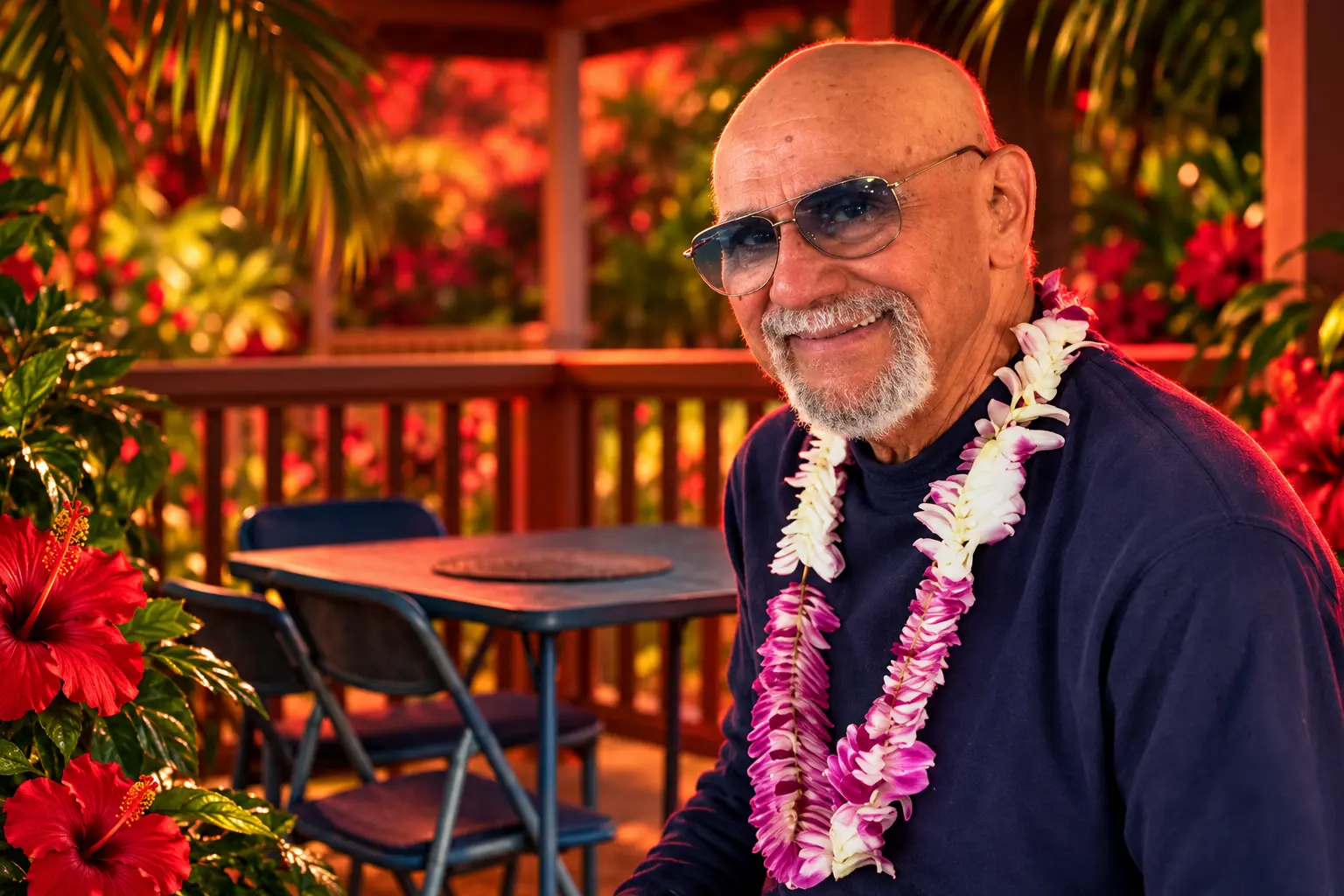
Blunt, Johnson and a 60 Minutes Producer
The idea did not start in a Scorsese office. Emily Blunt brought it. She and Johnson, already paired on Disney’s “Jungle Cruise” and on Benny Safdie’s “The Smashing Machine,” took the pitch to Scorsese and DiCaprio. Twentieth Century Studios landed the package on March 27, 2025. Crown bought the companion nonfiction book from Johnson and Nick Bilton a week later, on April 2, 2025.
Bilton is writing the screenplay. He is also the executive producer Bari Weiss installed at “60 Minutes.” People around the show floated a rumor that he would leave the newsroom in October 2026 to be on a Hawaii set. The shoot is not that soon. Johnson, Bilton, Scorsese, DiCaprio, and Blunt are all producing, through Seven Bucks, True Story, Sikelia, Appian Way, and Ledbury. Dany Garcia, Lisa Frechette, Rick Yorn, and Chris Donnelly are on as executive producers. David Greenbaum and Steve Asbell are the studio overseers.
WHO HOLDS A PIECE OF THIS STORY
- Pulawa: The living subject, already meeting the star who will play him.
- Blunt: She originated the idea and is producing through Ledbury.
- Johnson: Star, producer, and co-author of the Crown book on The Company.
- Bilton: Screenwriter and book co-author, while running “60 Minutes.”
- Local crews: The 80 percent hire test that unlocks an extra five credit points.
- The state: A refundable credit with a $60 million annual cap and a new uncapped tier for huge spends.
Bilton’s day job is the controversy the June coverage wanted. His research claim is the more useful fact. He and Johnson say they went through tens of thousands of pages of court transcripts and federal files, then found people who lived the era and sat them down. Bilton called it “excavating a lost history that was never meant to be found.” Honolulu papers were printing Pulawa’s name in the 1970s. The files were not lost. They were local.
Hawaii Just Rewrote the Check for Big Pictures
On July 6, 2026, Governor Josh Green signed the film credit rewrite in July as Act 185. The timing sits a month after the Scorsese picture’s shoot slid toward 2027. The credit has existed since Act 107 in 1997. This version is the one a 20th Century period epic would actually file under.
The Hawaii Film Office now posts 22 percent on Oahu and 27 percent on the neighbor islands. Productions that put at least 80 percent local hires on the workforce get five more points, which lifts Oahu to 27 percent and the neighbor islands to 32 percent. Those uplifts apply to qualified costs incurred after December 31, 2025. The program now runs to January 1, 2038.
HAWAII FILM CREDIT AFTER ACT 185
| Where you shoot | Base credit | With 80 percent local hires |
|---|---|---|
| Oahu | 22 percent | 27 percent |
| Maui, Kauai, Hawaii Island, Molokai, Lanai | 27 percent | 32 percent |
The per-production cap is $20 million. Spend at least $60 million in qualified costs in the state and that cap disappears. The statewide annual cap is also $60 million, a different pot, and unused room now rolls into the next year. A Scorsese picture that actually films in Hawaii is one of the few titles that could touch the uncapped tier. The state did not write Act 185 for this movie. This movie is the kind of spend the new law was built to keep.
What the Company Controlled
The logline talks about a war for cultural survival in paradise. The court record is colder. After Korean crime boss George Soon Bock “Yobo” Chung was shot to death in a Honolulu gambling den in July 1967, Native Hawaiian Wilford Pulawa, a former lieutenant of Samoan boss Alema Leota, pulled local criminals of Native Hawaiian heritage into the group that became known as The Company. It muscled bookmakers and backroom games, ran prostitution in resort hotels, extorted businesses, moved Chinese white heroin, and was long suspected of paying politicians.
Federal prosecutors in Honolulu said in March 1973 that Pulawa made more than $900,000 in 1970 and 1971, mostly from extortion and racketeering, and paid taxes on $12,000. He was 37 at the indictment, free on $25,000 bail, and already being described as the reputed boss of the Hawaii underworld. He was charged with murder, conspiracy, and kidnapping on February 13, 1974, in a case that ended in a mistrial with associate Alvin George Kaohu. Nevada put both men in the List of Excluded Persons, the Black Book, on January 23, 1975. They are among its longest-serving names. Pulawa was convicted on the tax case, sentenced to 24 years, and paroled after a decade. He later worked as an elevator operator on construction sites.
THE COMPANY, ON THE CLOCK
- July 1967: George Chung is shot dead in a Chinatown gambling hall, opening a fight for the islands’ rackets.
- Late 1960s: Pulawa forms The Company and recruits mainly Native Hawaiian criminals.
- March 1973: A federal grand jury indicts Pulawa and five others on tax charges over more than $900,000 in alleged income.
- February 13, 1974: Pulawa and Kaohu are indicted for murder, conspiracy, and kidnapping; the case later ends in a mistrial.
- January 23, 1975: Nevada places Pulawa and Kaohu in the Black Book over junket and syndicate ties.
- 1975: Pulawa is convicted of tax evasion and sentenced to 24 years; he is paroled after a decade.
- 1977: The state creates the Hawaii Crime Commission, which later outlined more than 60 organized-crime killings from 1962 to 1978.
- June 11, 2025: Johnson posts that he will play Pulawa for Scorsese and that the 90-year-old boss has already received him as family.
Known for aloha shirts and fresh orchid leis, Pulawa still drew local sympathy after the tax conviction. A young golfer, after winning a public-links title on Kauai, called him “Mister Nappy Pulawa” and said they had put the wrong man away. The book and the film will have to hold that affection next to the Black Book and the mistrial, not sand it off.
Scorsese Wants Goodfellas Voice-Over in Paradise
Notes from Scorsese have pushed Bilton’s draft toward the voice-over rhythm of “Goodfellas.” That is the grammar he has used when he wants a rise-and-fall told from inside the crew. It is also a choice that will decide whether Pulawa sounds like a narrator of his own myth or like a man the picture is prosecuting.
He has been down this road with a living community before. After Osage leaders asked him to come to Oklahoma, he rewrote the Osage murders film after tribal meetings, moving the story off a white-agent spine and onto the people whose land and kin were the stake. Pulawa is one man, not a nation, and he is a convicted boss, not a victim on the oil headrights. The parallel still holds in one respect: the people inside the history are available, and the first draft is not the last one if they talk back.
Johnson has already framed Pulawa as a godfather who “took it back” from yakuza, triads, Korean gangs, Vegas operators, and American corporations cutting up the islands. That is the speech that sells a studio on ancestral land. The tax case, the mistrial, and the casino ban are the record that will sit in the same frame. A Goodfellas voice-over can bless all of it. It can also let the audience hear the boast and the indictment in the same breath.
Local Hires Hold a Five-Point Bonus
Act 185 does not only raise rates. It ties the extra five points to a workforce that is at least 80 percent local, counted in each filing year, with residency proved by a Hawaii ID, a state tax form, or a recent utility bill. Productions that spend more than $1 million must also let IATSE Local 665, Hawaii Teamsters Local 996, and SAG-AFTRA know when cameras roll. Under Act 188, the state now posts a production’s name and a contact when it registers for the credit. A Scorsese picture will not sneak onto the islands.
The same bill creates no per-production cap above $60 million in qualified costs. That is the clause a period epic with three movie stars actually cares about. The $20 million cap still binds smaller shows. The $60 million annual statewide cap still binds everyone. The waiver is for the rare shoot that drops $60 million into Hawaii vendors, wages, rentals, and airfare.
THE MONEY HAWAII PUT ON THE TABLE
- Local-hire bonus: Five extra points if 80 percent of the workforce is local, taking neighbor-island jobs to 32 percent.
- Project cap: $20 million, unless qualified in-state costs hit $60 million, in which case the cap is gone.
- Statewide cap: $60 million a year, with unused room carried into the next year.
- Sunset: January 1, 2038, which covers a 2027 shoot and a long post-production.
We’ve always had the talent, the culture and the stories. What we’ve needed is the opportunity to tell them here at home.
Jason Momoa, actor and filmmaker, at the Act 185 signing
Momoa was talking about the credit, not Scorsese. He still named the pressure this production will feel. A film about Hawaiian land, written by a “60 Minutes” producer and led by a Samoan star, will be judged in Honolulu on who is on the call sheet below Johnson, DiCaprio, and Blunt. The extra five points are the state’s way of putting a number on that judgment.
The Ghost Picture Comes First
Scorsese wrapped “What Happens at Night,” the Apple ghost story with DiCaprio, Jennifer Lawrence, and Mads Mikkelsen, after a 35-day Prague shoot that ran from February 25 to April 2, 2026, then moved to New York for interiors. He is in post. He takes his time in the cut. The Hawaii picture, even with a script was called 95 percent done in June 2026 after Scorsese’s notes, does not get a camera until that film is out of his hands. Bilton’s October 2026 set visit was always a fantasy on that calendar.
Johnson’s commercial face is the bet 20th Century is making against that wait. The same audience that will show up for him in a franchise will be asked to sit for a period crime picture about a tax-evading boss who wore leis to work. Some of that bet is already being argued in public, and the split is not subtle: either this is the role that finally uses Johnson’s size and Hawaii childhood, or it is a movie star standing where Ray Liotta’s voice should be. “The Smashing Machine” was the audition. Pulawa is the exam, and the man giving it is still in the room.
If the picture does go in 2027, Pulawa will be 91 or 92, Scorsese will be shooting in his eighties, and Hawaii will be writing checks under a credit that no longer caps a $60 million spend. The ancestral-land story the logline promises will then be filmed, at mainland-studio scale, on the same islands the Company once taxed. Pulawa already told Johnson he had his back. The rest of Hawaii has not been asked yet.

UPI MDR Delay Hands Traders the Calendar After Paytm Falls

Google Messages Builds Nine In-Chat Games After Samsung’s Exit

Anthropic’s $100 Million Academy Trains the Firms That Bill Both Sides

Toyota’s Electric C-HR Leaves the Cheap Twin to Subaru

Markets Bet the Fed Skips October After Hawkish Minutes

The Orchard Bug Forced Zcash to Open an Empty Pool

The $5.99 Game That Won Steam’s 2026 Summer Sale

Don Lee Joins Hemsworth as Extraction 3 Starts Shooting

YouTube Shorts Retires Dislikes and Swaps Likes for Hearts

Atlantic City Turned WWE’s Return Into a Civic Night
-
 NEWS5 months ago
The Orchard Bug Forced Zcash to Open an Empty Pool
-
 GAMING5 months ago
The $5.99 Game That Won Steam’s 2026 Summer Sale
-
 ENTERTAINMENT7 months ago
Don Lee Joins Hemsworth as Extraction 3 Starts Shooting
-
 NEWS5 months ago
YouTube Shorts Retires Dislikes and Swaps Likes for Hearts
-
 NEWS5 months ago
Atlantic City Turned WWE’s Return Into a Civic Night
-

 NEWS5 months ago
NEURA Robotics Is Spending Its $1.4B on a Machine Stack
-

 AUTO6 months ago
Kawasaki Bets the New Z1100 Against Its Own Supercharger
-
 BUSINESS5 months ago
Norway’s Export Bank Backs Nscale’s $790 Million Narvik Loan