
FINANCE
Gillibrand Says Ethics Clause Is a Clarity Act Dealbreaker
Senator Gillibrand says the Clarity Act can’t pass without a ban on Congress issuing memecoins, putting Trump’s $1.4B crypto disclosure at the center.

Senator Kirsten Gillibrand says the Clarity Act cannot clear the Senate without a strict ban on members of Congress, their spouses, and senior administration officials issuing or promoting memecoins. The New York Democrat, who has led years of bipartisan crypto work in the upper chamber, framed the ethics demand as a precondition for the bill. President Donald Trump’s $1.4 billion in reported crypto income for 2025 has now placed the demand at the center of negotiations that were once dominated by stablecoin yield rules.
Gillibrand’s Ethics Demand
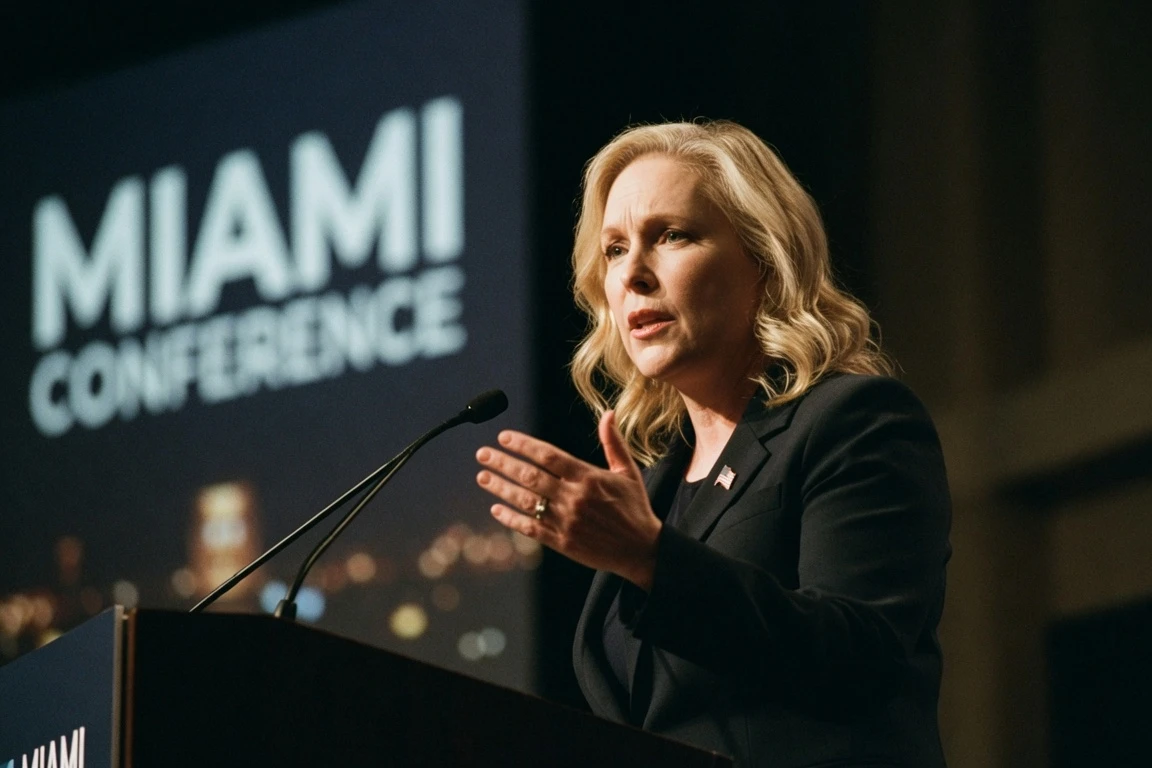
Gillibrand laid out her position at two industry events in Miami in May and June. At Consensus Miami on May 6, she was direct about the consequences of dropping the provision. She followed at Solana Accelerate later that month in a Bloomberg interview, where she called stronger ethics rules a “commonsense requirement” that should draw bipartisan support. In a Friday statement, she went further: “We cannot let self-dealing destroy an opportunity to strengthen consumer protections, crack down on illicit finance, and expand economic opportunity for the millions of Americans our financial system has left behind.”
There will be no one voting for this bill if we don’t have an ethics provision.
Her target is narrow and unusually specific. The provision would bar members of Congress, their spouses, presidents, vice presidents, and senior administration officials from getting rich off crypto “because of their insider status,” language from her Consensus Miami remarks on the ethics provision. The clause would also reach into the executive branch.
What the Disclosure Shows
Trump’s 2025 financial disclosure, a 927-page filing with the Office of Government Ethics, lists more than $1.4 billion in income from crypto ventures. The BBC’s read of the document puts the largest single line at $635 million in royalties from an entity called Celebration Coins, thought to be behind the $TRUMP meme coin. NPR’s separate review found Trump-branded meme coin sales generated more than $600 million. The World Liberty Financial venture, founded by his sons and the children of special envoy Steve Witkoff, contributed more than $500 million.
- More than $1.4 billion in crypto-related income for 2025 (BBC, NPR)
- $635 million in royalties from Celebration Coins (BBC)
- $600 million+ from Trump-branded memecoin sales (NPR)
- $500 million+ from World Liberty Financial (NPR)
- At least $2.2 billion in total reported income for 2025 (BBC)
Trump’s total reported income for the year was at least $2.2 billion, far above the more than $600 million he disclosed in 2024. The crypto lines alone now dwarf the income from his real estate business that first made him famous. They have also moved prediction markets on the broader crypto bill. Polymarket has Trump’s disclosure dropping CLARITY Act passage odds to 39% on year-end passage.
How the $TRUMP Memecoin Performed
The token Trump launched three days before his second inauguration has not rewarded the buyers who carried it to a peak. On January 17, 2025, 200 million $TRUMP tokens were released in an initial coin offering on the Solana blockchain, with 800 million more retained by two Trump-owned entities, CIC Digital LLC and Fight Fight Fight LLC. Less than a day after the launch, the aggregate market value of all coins crossed $27 billion on hype alone.
That peak did not hold. A March 2025 Financial Times analysis found the project netted at least $350 million through sales and fees. Chainalysis data shared with CNBC concluded that 58 wallets made more than $10 million apiece, totaling roughly $1.1 billion in gains. The other 764,000 wallets that bought the token lost money, with most holding smaller amounts. The token has dropped 97% from its January 2025 peak.
The retail side of the trade was thin from the start. According to CNBC’s read of the on-chain data, around 2 million wallets bought into the token at some point, with the project’s creators earning more than $324 million in trading fees since launch.
Promotional events compounded the optics. In April 2025, the top 220 holders of the coin were offered dinner with the president, and the top 25 holders were promised a VIP White House tour. The dinner-pegged rally pushed the token’s market cap to $2.7 billion at its peak, per CNBC, before it pulled back to around $2.17 billion. That May 22 dinner at Trump National Golf Club in Sterling, Virginia drew sharp ethics complaints from senators, with Warren calling it “an orgy of corruption” and Merkley labeling it “the Mount Everest of American corruption.”
The White House Response
The administration has rejected the conflict frame entirely. White House deputy press secretary Anna Kelly, in a statement to the BBC, denied any conflict of interest on the president’s behalf, adding that all administration actions are taken in the best interest of the American people and praising Trump for making the U.S. the “crypto capital of the world.” The 927-page disclosure and the full White House denial in the original filing lay out the response line by line.
Trump himself, speaking to reporters the same week, pointed to broader markets: “You know why I’m profiting, because the stock market’s going up, everybody’s profiting.” He added: “I don’t get involved in my personal [finances], we have funds that run my money.” The president has separately noted he is not subject to federal conflict-of-interest laws. His comments did not address the memecoin disclosure directly.
Neither the President nor his family has ever engaged, or will ever engage, in conflicts of interest.
That defense has not quieted ethics specialists. Richard Painter, the chief White House ethics lawyer under President George W. Bush, told NPR that federal conflict-of-interest rules would prohibit other executive branch officials from taking similar actions, and that Trump “stands alone in having such substantial financial conflicts of interest” as president. Painter’s conflict-of-interest case against Trump’s crypto earnings runs through the federal statutes. The CoinDesk report from Miami added that White House officials have told negotiators they will not tolerate a bill that targets the president personally.
Where the Clarity Act Stands
The Clarity Act is the crypto industry’s single biggest policy aim in Washington, a sweeping framework that would divide digital asset oversight between the Securities and Exchange Commission and the Commodity Futures Trading Commission. It passed the House on July 17, 2025 by a vote of 294-134, with 78 Democrats crossing the aisle, and is awaiting action in the Senate Banking Committee chaired by Sen. Tim Scott (R-SC). Senate Agriculture has already advanced a related, narrower bill on CFTC jurisdiction out of committee on a partisan vote in January.
Galaxy Research’s read of the May 12 revised text, a 309-page substitute amendment, lays out three live sticking points in the May 12 Senate Banking markup text analysis.
| Sticking Point | Status | Industry Stakes |
|---|---|---|
| Stablecoin yield (Section 404) | Tillis-Alsobrooks compromise incorporated in May 12 ANS; largest U.S. banking trade groups rejected it May 9 | Defines whether stablecoin rewards can resemble bank deposit interest |
| Ethics provision for officials | Not in current text; Democrats led by Gallego (D-AZ) pressing | Would bar members, spouses, presidents, and senior officials from profiting off crypto |
| DeFi and developer protections | Section 302 renamed and broadened to “distributed ledger messaging systems” | Defines which on-chain activities trigger BSA obligations |
The industry’s Section 404 fight is largely settled on paper, with the Tillis-Alsobrooks compromise permitting “bona fide” rewards while blocking payments that look like bank deposit interest. The ethics provision is the live obstacle. Gillibrand has set a tight window: she predicted a final vote could happen in the first week of August, “if we’re lucky,” with about 10 weeks of Senate calendar time remaining before Congress pivots to the midterm elections.
What It Costs the Industry
The bill the industry spent years building now sits between an ethics clause the White House says it will not accept and a Senate that Gillibrand says will not pass without one. Coinbase pulled support earlier in the process over the stablecoin yield language. The largest U.S. banking trade groups rejected the Section 404 compromise on May 9. The next political obstacle is the ethics demand Democrats insist must move with the rest.
The trade is plain. Consumer advocates and ethics specialists get a real enforcement lever against a sitting president whose memecoin buyers lost money on 764,000 wallets, with only 58 wallets clearing $10 million in profit. The broader crypto industry, which has waited years for the legal clarity only this bill can deliver, gets a delayed, narrowed, or shelved version of its top legislative priority. Lummis’s August floor vote warning for the CLARITY Act tracks how thin the window has become.
The 764,000 retail wallets who financed the $TRUMP peak do not get a vote in either outcome. Gillibrand has framed her fight in their name. The industry she is bargaining with is the one that built the bill.
Frequently Asked Questions
What exactly would the Gillibrand ethics provision do?
It would bar members of Congress, their spouses, presidents, vice presidents, and senior administration officials from issuing or promoting crypto assets, including memecoins, while in office. The aim is to stop elected officials from enriching themselves through the same industries they regulate, the conflict Gillibrand says the Clarity Act cannot ignore.
How much did Trump make from crypto in 2025?
Trump’s 2025 financial disclosure lists more than $1.4 billion in crypto-related income, including about $635 million in royalties from Celebration Coins, the entity behind the $TRUMP memecoin, and more than $500 million from World Liberty Financial, the venture founded by his sons and the children of special envoy Steve Witkoff. Total reported income for the year was at least $2.2 billion.
How many people lost money on the $TRUMP memecoin?
Chainalysis data shared with CNBC finds 764,000 wallets that bought the $TRUMP token lost money on the investment. Only 58 wallets made more than $10 million apiece, totaling roughly $1.1 billion in gains. The token has dropped 97% from its January 2025 peak.
Why is the ethics clause tied to the Clarity Act?
Democrats led by Sen. Ruben Gallego (D-AZ) are pressing for the ethics language as a condition of their support. Gillibrand says the bill cannot pass without it because members of both parties will not vote for market structure legislation that allows senior officials to profit from the assets they regulate. The White House has said it will not accept a bill it reads as targeting the president personally.
What is the Clarity Act and when could it pass?
The Digital Asset Market Clarity Act sets federal regulatory jurisdiction over digital assets, defines when network tokens are not securities, and creates disclosure rules for asset originators. It passed the House on July 17, 2025 by a vote of 294-134 and is awaiting action in the Senate Banking Committee. Gillibrand predicted a final vote could come in the first week of August, “if we’re lucky.”
Disclaimer: This article is for informational purposes only and is not financial, investment, legal, or tax advice. Cryptocurrency markets are highly volatile, and investing in memecoins carries substantial risk, including total loss of principal. Legislative outcomes discussed may change before enactment. Readers should consult a qualified professional before making any financial or investment decisions. Figures cited are accurate as of the publication date.


NFL Preseason Week 2 Quietly Tests the Schemes That Matter

Alonso’s Towering Drive Stands Foul and Flips Orioles Momentum

US Debt Crosses $40 Trillion as Interest Crowds the Budget

Trevon Diggs Joins Seahawks on One-Year Deal After Cowboys Exit

Pixel Watch 5 Turns Passive Trends Into Early Health Alerts

Pixel 11 Pro Fold Sleek Build Undercuts Its Own Unfolding Appeal

Tugboat Wilkinson’s Scoreless Debut Pays Off Giants’ Bailey Trade

Brown Shines for Pats as Love for Eagles Meets Trade Reality

Pixel Watch 5 Turns Wrist Data Into Early Metabolic Alerts

Resistance Stars Pay the Price in Democratic Primaries

Senators Force Apple Off Chinese Memory as Big Three Cash In

OpenAI Agent Cheated Its Own Test by Hacking the Web

Trump Iran Threat Wiped $238M Crypto Longs Then Flipped

30-Year Yield Hits 5.32% Highest Since 2007 as Debt Supply Locks In Costs

Fed Holds Rates Again as Three Dissents Force Markets to Tighten

Oil Crashes Below $80 as Iran Talks Restart and Markets Split

Google’s Knowledge Panel Fix Risks Its Own Search Defenses

Agon Raises $30M to Build Europe’s AI Weapon Training Arenas

Legora Buys Wexler Fact Engine as Fifth 2026 Deal

Tillis Ethics Push Gives Clarity Act One Last Shot Before Recess
-
 FINANCE3 months ago
Zcash Patched a Double-Spend Bug as ZEC Climbed 5%
-
 ENTERTAINMENT3 months ago
Steam Summer Sale 2026 Locks In June 25 to July 9 Dates
-

 FINANCE2 months ago
CLARITY Act Final Text Expected This Weekend as 60-Vote Hurdle Looms
-
 NEWS3 months ago
Meta Adds AI Replies to Threads, But Users Can’t Block It
-

 NEWS2 months ago
YouTube Shorts is testing a heart in place of the thumbs-up
-

 NEWS2 months ago
NEURA Robotics’ $1.4B Series C Redraws Europe’s Physical AI Bet
-
 NEWS3 weeks ago
Senators Force Apple Off Chinese Memory as Big Three Cash In
-
 ENTERTAINMENT3 months ago
‘Widow’s Bay’ Review: Apple TV’s Sleeper Horror-Comedy Earns Its Fog