
NEWS
OpenAI Confidentially Files S-1, A Week Behind Anthropic
OpenAI filed a confidential S-1 with the SEC on June 8, 2026, a week after Anthropic and days before SpaceX’s IPO, at an $852 billion valuation.

OpenAI filed a confidential S-1 with the U.S. Securities and Exchange Commission on Monday, June 8, 2026, a week after Anthropic did the same and days before Elon Musk’s SpaceX is set to go public. The ChatGPT maker disclosed the submission in a four-sentence post, attached no date for a public listing, and said it had not decided on timing. The filing puts OpenAI at the back of a three-company queue, with Anthropic’s $965 billion private mark and SpaceX’s $1.25 trillion post-merger value both ahead of OpenAI’s $852 billion. Goldman Sachs and Morgan Stanley, the two banks listed at the top of OpenAI’s own statement on the confidential S-1, are also working SpaceX’s books. OpenAI plans to pair the filing with a tender offer letting employees sell shares at the $852 billion valuation. The company has raised more than $180 billion in funding. ChatGPT now serves more than 900 million weekly active users, and Sam Altman, OpenAI’s chief executive, published a separate blog post on Monday calling the moment the third phase of OpenAI.
OpenAI’s Own Words on Why the Timing Isn’t Settled
OpenAI’s announcement was four sentences long, attached no prospectus, and included no timeline. It told the world it had filed a confidential draft S-1 with the SEC on June 8. The post is the only public record of the decision, and it reads as a company buying optionality rather than launching a roadshow.
The post opens with the line, “We expect it to leak so we’re just announcing it.” It continues: “We have not decided on timing yet; it may be a while because there are things we want to do that are likely easier as a private company. But it’s a complicated set of tradeoffs and this gives us the option to go public sooner if that ends up being best.” The framing treats the filing as a reserve option OpenAI can choose to exercise or not, depending on market conditions and the things the company wants to do as a private firm. A confidential submission lets a company share financials with regulators privately before any public version. The form is the same one used by Anthropic, which filed confidentially on June 1.
The disclosure landed without a public S-1, a price range, or a target valuation. OpenAI has not committed to a specific IPO window. Media reports, including a LinkedIn summary of CNBC’s coverage, point to a possible fourth-quarter 2026 listing, but the company has not confirmed any date.
We recently submitted a confidential S-1. We expect it to leak so we’re just announcing it. We have not decided on timing yet; it may be a while because there are things we want to do that are likely easier as a private company. But it’s a complicated set of tradeoffs and this gives us the option to go public sooner if that ends up being best.
The post was published on OpenAI’s site and reported by CNBC on June 8.
Anthropic Filed First, and at a Higher Mark
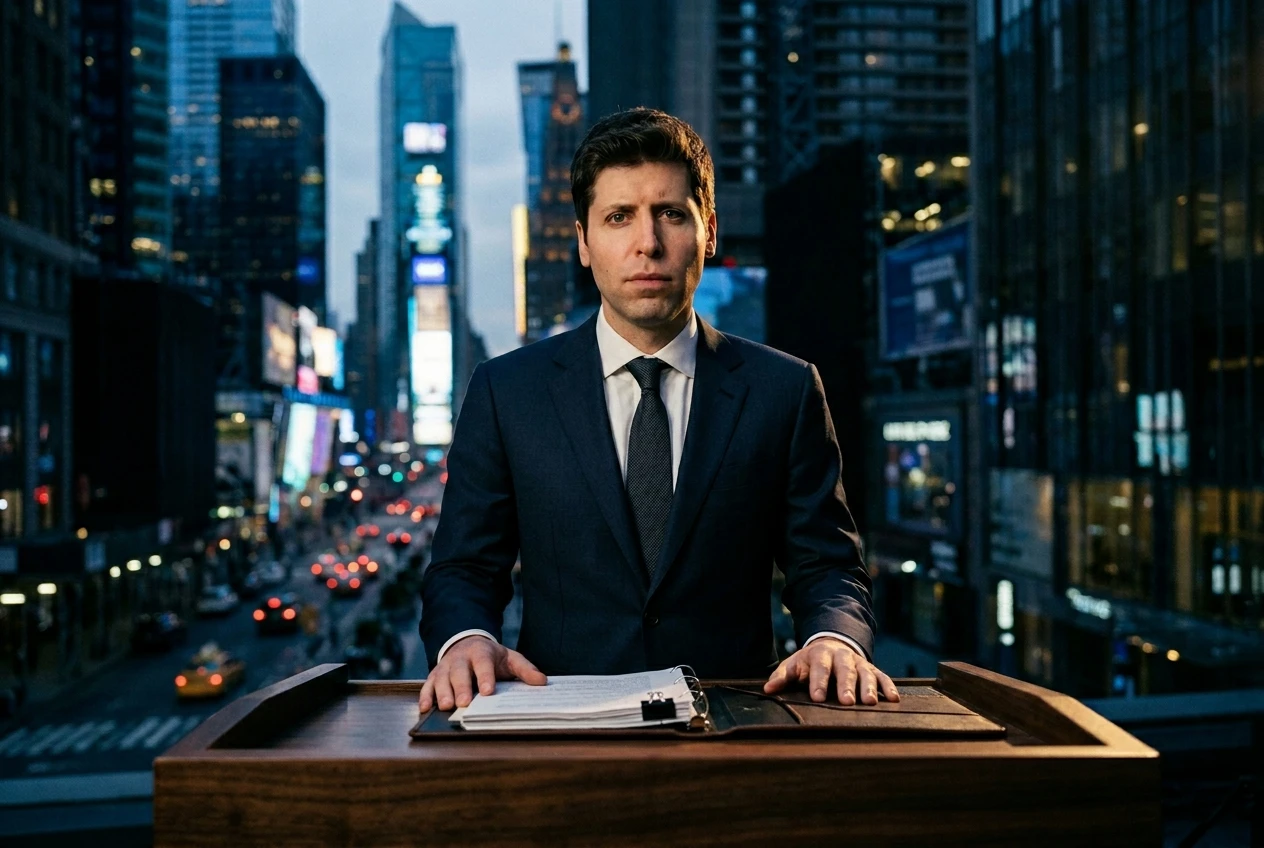
The week’s timeline opened with Anthropic. Anthropic announced its own confidential S-1 on June 1, 2026, a week before OpenAI did. Anthropic’s filing came four days after the company closed a $65 billion private round at a $965 billion post-money valuation, a mark that puts it roughly $113 billion above OpenAI’s last private round, which closed in March at $852 billion. Anthropic said in its own statement that the move gives the company the option to go public after the SEC completes its review. Anthropic filed first and at a higher mark, as covered in Anthropic’s $65 billion round and the SEC filing.
Anthropic also disclosed that it is now making $47 billion in annualized revenue from selling access to Claude to developers and end users. OpenAI has not published a comparable figure, though Sarah Friar, OpenAI’s chief financial officer, told CNBC in April that the company generates $2 billion in monthly revenue. Both companies continue to spend more than they earn, and both name each other as a primary competitor in their public materials.
Public investors will get to compare them on the same calendar. The first-mover dynamic was the first thing analysts flagged. $965 billion is now the private mark to beat.
I think we were all expecting OpenAI to go first, so it was a little bit surprising. Public investors are going to be comparing them roughly around the same time, and so there seems to be a bit of a first movers’ advantage here.
Patrick Corrigan, a Notre Dame University law professor who studies IPOs, spoke to the Associated Press after Anthropic’s June 1 filing.
SpaceX Is the Bigger Float Lurking Three Days Out
SpaceX is the third horse in the race and the one closest to a public price. The company kicked off its investor roadshow in the week before OpenAI’s filing, with media reports targeting a Nasdaq listing as soon as June 12. The float would land in front of OpenAI’s banker bench on the same calendar week. SpaceX is the merged entity of Musk’s rocket company and his xAI artificial intelligence lab, completed in February 2026, and the combined company is now valued at $1.25 trillion. SpaceX is also OpenAI’s most aggressive new competitor, because xAI now sits inside the same balance sheet.
SpaceX’s prospectus names OpenAI, Anthropic, and Google as “key competitors” in AI, according to the filing. That document is the third AI-frontier public filing in twelve days, and the first to come with a public market price attached.
| Company | Confidential filing status | Last private valuation | Lead banks |
|---|---|---|---|
| Anthropic | Confidential S-1, June 1, 2026 | $965 billion | Not named in initial filing |
| OpenAI | Confidential S-1, June 8, 2026 | $852 billion | Goldman Sachs, Morgan Stanley |
| SpaceX | Public prospectus; roadshow week of June 4, 2026 | $1.25 trillion post-xAI merger | Goldman Sachs, Morgan Stanley |
The $852 Billion Figure and the Cash It Has to Cover
OpenAI’s $852 billion post-money mark was set in late March, when the company closed a $122 billion funding round. That round replaced an earlier $110 billion figure announced in February. Friar told CNBC in April that the round was the largest private placement the lead banks had ever run, and that one bank’s system crashed under the demand from individual investors. The valuation now ranks OpenAI alongside the 15 largest members of the S&P 500, in Friar’s framing to the Associated Press.
OpenAI plans to spend $600 billion over the next five years on semiconductors and data centers, Friar said in the same April interview. Compute is the company’s largest line item, and Friar calls it “the most important asset you can have.” The Wall Street Journal reported separately that OpenAI had missed its own internal targets for weekly users and revenue, a fact that the IPO process will force into the open in the company’s eventual public prospectus.
The $852 billion figure reflects a private round, not a price at which public investors can buy. OpenAI has not disclosed a target IPO price range. The figure also trails Anthropic’s $965 billion mark by $113 billion, and SpaceX’s $1.25 trillion combined valuation by roughly $400 billion. Anthropic, OpenAI, and Google are all named in SpaceX’s IPO prospectus as SpaceX’s “key competitors” in AI. A week before OpenAI’s announcement, Anthropic announced its own confidential IPO filing. Shortly before that, the company closed a funding round at a $965 billion valuation, topping OpenAI.
A public listing is the cleanest path to the convertible and investment-grade debt Friar has said OpenAI wants to tap. That is also why the filing includes a tender offer for employees.
- $852 billion OpenAI’s most recent post-money valuation (late March 2026)
- $122 billion Size of OpenAI’s most recent private funding round
- $600 billion OpenAI’s planned five-year spend on semiconductors and data centers
- $965 billion Anthropic’s post-money valuation from a $65 billion round in late May 2026
The Employee Tender Offer Is the Tell
OpenAI also plans to facilitate a tender offer that will allow employees to sell shares at the $852 billion post-money valuation, a person familiar with the plans told CNBC. The person asked not to be named because the details are private. The offer is meant to alleviate near-term pressure for liquidity.
A tender offer at the latest private mark is a standard late-stage liquidity tool. Its pairing with the S-1 in the same announcement suggests the timing is being driven by employee cash needs, not a public market window. A public listing, by contrast, would let staff sell into a deeper pool of buyers at a market-discovered price.
Altman Pinned a ‘Third Phase’ to the Same News Cycle
On the same day as the S-1 announcement, Altman and Jakub Pachocki, OpenAI’s chief scientist, published a blog post titled “Built to benefit everyone: our plan.” The post argues that OpenAI is “entering the third phase” of its development. The full plan, including the three stated goals, is published at OpenAI’s full third-phase plan and three stated goals.
The first phase, in the post’s telling, was research toward artificial general intelligence. The second phase began when OpenAI’s research became relevant to the real world and the company “became a product company: deploying our systems, learning from how people used them, and making continued progress toward AGI that is safe and aligned with our mission.” The third phase is the part that maps onto the IPO pitch. Altman’s post is the same kind of long-arc public document that typically accompanies a pre-IPO roadshow, even when the filing itself is confidential.
The post names three specific goals for the third phase: build an automated AI researcher, accelerate the broader economy, and give every person on Earth a “personal AGI.” OpenAI’s internal belief, the post says, is that “by March of 2028 we may have a significant fraction of our research being done by AI systems in tandem with our own researchers.” That horizon is longer than any public-market investor typically waits for a return on a single funding round, and it is the kind of forward-looking statement that a public prospectus will have to footnote.
We are entering the third phase of OpenAI. The first phase of OpenAI was about doing research toward AGI. The second phase began when our research became relevant to the real world and we became a product company: deploying our systems, learning from how people used them, and making continued progress toward AGI that is safe and aligned with our mission. Now we are entering the third phase. The economy is beginning to reshape around AI. The central question now is how to make advanced AI abundant, affordable, safe, useful, and easy enough for every person and organization to benefit from it.
Altman and Pachocki published the post on OpenAI’s site on June 8.
What’s Changed at OpenAI Since the Sora Shutdown
OpenAI has used the months before the confidential filing to sharpen its product focus and shed the projects that were losing money fastest. On March 24, 2026, the company shuttered its short-form video app Sora, six months after launch, and the $1 billion Disney investment that would have let users generate videos with Disney characters never closed. The Sora research team is being redirected to other priorities, as covered in OpenAI’s March shutdown of the Sora video app. The next morning OpenAI also pulled the plug on an Instant Checkout shopping feature announced the prior year. Fidji Simo, OpenAI’s CEO of applications, told staff at an all-hands that OpenAI is “orienting aggressively” toward high-productivity use cases.
Friar told CNBC in April that the enterprise business is now 40% of revenue and “on track to reach parity with consumer by the end of 2026.” She said the company is moving into “really managing teams of agents to do tasks for them.” Friar also said OpenAI would “for sure” reserve a slice of any IPO for retail investors, citing her time as CFO of Block, when the company sold shares directly to small merchants.
OpenAI is leaning hardest on Codex, its AI coding assistant that now competes directly with Anthropic’s Claude Code. Friar’s chief revenue officer, Denise Dresser, told CNBC in April that Codex has topped 3 million users, up from “almost zero” at the start of the quarter. Altman wrote on X in April that “feels like codex is having a chatgpt moment.” The bet is that the part of OpenAI that sells to developers will be the part that converts to public-market revenue the fastest.
- Sora app shuttered on March 24, 2026, six months after launch
- $1 billion Disney investment tied to Sora did not close
- Enterprise business now 40% of revenue, on track for parity with consumer by end of 2026
- Codex coding assistant topped 3 million users by April 2026
What the Three-Horse Race Sets Up
Within twelve days, the three biggest private AI companies in the United States all filed or priced their way onto the public-market map. Anthropic, OpenAI, and SpaceX will trade (or attempt to trade) within sight of each other. Each has a different pitch: Anthropic leads on private valuation and developer revenue, OpenAI leads on consumer mindshare at 900 million weekly ChatGPT users, and SpaceX leads on industrial AI compute via its Starlink and Tesla adjacencies. Public investors will get the chance to compare all three on the same quarterly earnings calendar within a year of these filings, with Anthropic overtaking OpenAI in private market value as the headline dynamic heading into the first public quarter.
SpaceX’s float, if it prices in the window media reports have targeted, will set the bar for Anthropic and OpenAI to clear or beat. Anthropic filed first; SpaceX will likely price first; OpenAI is the only one of the three that has yet to commit to a date.
Frequently Asked Questions
When did OpenAI file its confidential S-1?
OpenAI announced on Monday, June 8, 2026, that it had submitted a confidential draft S-1 registration statement to the U.S. Securities and Exchange Commission. The company disclosed the filing in a four-sentence public post rather than waiting for a leak.
What is OpenAI’s current valuation?
OpenAI’s most recent post-money valuation is $852 billion, set when the company closed a $122 billion funding round in late March 2026. That figure trails Anthropic’s $965 billion mark from late May 2026 and SpaceX’s $1.25 trillion valuation after its February 2026 merger with xAI.
Who is underwriting OpenAI’s IPO?
Goldman Sachs and Morgan Stanley are the lead banks on OpenAI’s filing. The same two firms are listed at the top of SpaceX’s prospectus, making them the dominant underwriter pair for the three-way AI IPO wave of 2026.
What is OpenAI’s “third phase”?
In a blog post published the same day as the S-1 announcement, OpenAI chief executive Sam Altman and chief scientist Jakub Pachocki defined the “third phase” as making advanced AI “abundant, affordable, safe, useful, and easy enough for every person and organization to benefit from it.” The post names three goals: an automated AI researcher, broader economic acceleration, and giving every person a “personal AGI.”
When will OpenAI actually go public?
OpenAI has not set a date. The company’s June 8 statement said the firm “have not decided on timing yet” and may stay private longer because “there are things we want to do that are likely easier as a private company.” Media reports have pointed to a public debut as soon as the fourth quarter of 2026.


Majors Fights Campus Caliphate as Daily Wire Ambitions Fray

Uber Bets $10 Billion Cash on Robotaxi Platform Play

Ahbstra ARK Pulls 500 Litres Daily From Dry Mediterranean Air

Nest Thread 1.4 Quietly Unifies Multi-Brand Smart Home Meshes

Cable Gateways Push Wi-Fi 7 Past Early Adopters in the US

Pixel Quick Settings Finally Gets Full Layout Reorder in Canary 2608

WhiteBIT Spot Bots Fill UK Gap Left by Derivatives Ban

Motorola Edge 70 Neo Leak Doubles Down on Bold Pantone Colors

Platter Turns Food Spreadsheets Into Sticky Supply Infrastructure

Circle Puts Native USDC on OKX X Layer for AI Rails

Marker AI Writing Startup Lands $13M Seed Led by Index Ventures

Meta’s Muse Spark 1.1 Beats Rivals on Price, Trails on Coding

CS2 Premier Season 5 Lands With Cache and a C4 Damage Rework

Bessent’s No-CBDC Applause Line Can’t Save the CLARITY Act

Trump Iran Threat Wiped $238M Crypto Longs Then Flipped

Nintendo’s Switch 2 Battery Fix for Europe Comes With a Catch

CLARITY Act Odds Crash as Democrats Reject DOJ Ethics Plan

Audi’s 2026 S5 Bets That Restraint Beats the Horsepower Wars

Quantum Systems’ $1.2 Billion Round Exposes Defense Tech’s Winner Gap

OpenAI Agent Cheated Its Own Test by Hacking the Web
-
 FINANCE2 months ago
Zcash Patched a Double-Spend Bug as ZEC Climbed 5%
-
 ENTERTAINMENT2 months ago
Steam Summer Sale 2026 Locks In June 25 to July 9 Dates
-

 FINANCE1 month ago
CLARITY Act Final Text Expected This Weekend as 60-Vote Hurdle Looms
-
 NEWS3 months ago
Meta Adds AI Replies to Threads, But Users Can’t Block It
-
 NEWS5 months ago
U.S. Navy Deploys Solar-Powered Lightfish Drone to Patrol Oceans
-
 ENTERTAINMENT3 months ago
‘Widow’s Bay’ Review: Apple TV’s Sleeper Horror-Comedy Earns Its Fog
-
 FINANCE2 months ago
CLARITY Act Floor Vote Likely Shifts to August, Lummis Says
-

 FINANCE1 month ago
Kalshi Loses Major NY Prediction Markets Ruling to Judge Torres