
FINANCE
Fed Minutes Cite AI Demand as Inflation Risk, Put a 2026 Hike Back on the Map
The Fed’s June minutes flag AI-related demand as an inflation risk alongside the Iran war and tariffs, with 9 of 18 officials expecting a 2026 hike.

The Federal Reserve’s June 16-17 meeting minutes, released Wednesday, formally placed “AI-related demand” on the central bank’s list of forces that could keep inflation elevated enough to force a rate hike, alongside the Middle East war and U.S. tariffs. The unanimous vote kept the federal funds rate at 3.5% to 3.75%, the same target range it has held at every meeting of 2026, in Chair Kevin Warsh’s first meeting leading the Federal Open Market Committee.
Officials laid out two parallel paths from the same June meeting. In one, inflation eases and rates eventually fall. In the other, AI infrastructure spending, energy shocks from the conflict in the Middle East, and tariffs leave price gains persistently above the Fed’s 2% goal, prompting what the minutes called “some policy firming.” The dot plot, the grid of officials’ individual year-end projections, tilted to one rate hike by the close of 2026, then a cut in each of the next two years. Warsh did not participate in the dot plot, because he was confirmed as Fed chair after the March round of projections was already in motion.
The June Vote Was Unanimous. The Debate Inside the Room Was Not
At his post-meeting press conference on June 17, Warsh characterized the debate inside the room as a “family fight” that ended with a 12-0 vote to hold rates. Behind that unity sat a sharp split among participants on the future path of policy, captured in a 14-page summary that walked through the committee’s first discussion of rate hikes in nearly two years. The FOMC statement released after the June meeting ran about one-third the length of a typical Fed communique, and most participants emphasized they preferred not to repeat the prior easing-bias language.
CNBC reported that policymakers “were split on the future of interest rates at their June meeting, with officials offering competing cases for hikes or cuts.” The phrase captured the central tension: no FOMC member wanted to commit to a direction until more data on inflation arrived. Within the committee, the clearest pro-hike voices in intervening remarks have come from Dallas Fed President Lorie Logan, Cleveland Fed President Beth Hammack, and Kansas City Fed President Jeffrey Schmid, though none dissented from the June hold.
The minutes confirmed several reversals from the committee’s posture in 2024 and 2025, when the median member expected steady rate cuts. The most consequential reversal came in the language itself: the prior easing bias was dropped, the statement was compressed, and the minutes themselves ran somewhat shorter than usual. A related reversal sits in the dot plot, described in a separate site read on the stagflation flag at Warsh’s first verdict that ran earlier this month.
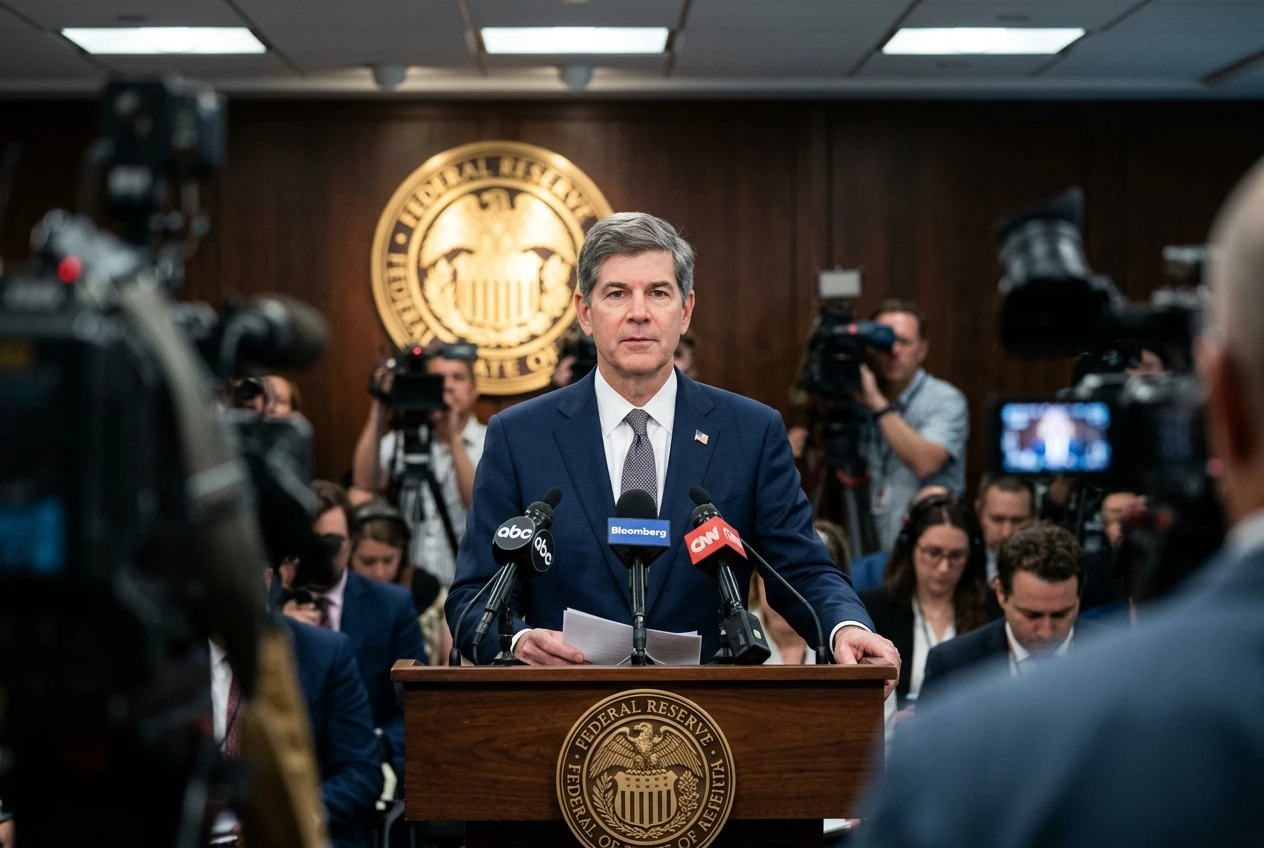
AI Demand Now Joins Iran and Tariffs on the Inflation Risk List
The most consequential line buried in the minutes read: “ongoing strong demand for AI infrastructure would likely sustain upward pressure on prices for technology products and electricity.” It is the first time the FOMC has formally listed AI-related demand, alongside the Middle East conflict and tariff effects, as a path to elevated inflation in its summary of economic conditions.
The Fed’s own staff review framed the AI impact directly. Real private domestic final purchases picked up in the second quarter, with the AI buildout pushing up real investment spending on data centers, high-tech equipment, and software. Core goods price inflation had risen relative to a year earlier, a development the staff judged as largely reflecting the effects of tariffs and AI-related price pressures. The S&P 500 index rose nearly 6% over the intermeeting period, led by the technology sector. Staff estimates of core goods inflation traced a measurable share of the recent pickup to “AI-related price pressures,” the closest the official record has come to admitting the buildout is feeding into the consumer price basket.
Warsh himself is more sanguine about the longer arc. In public comments this year, he has said he believes AI ultimately will be disinflationary, because productivity gains will spread through the economy. His skepticism does not blunt the staff’s near-term conclusion. AI demand is now an inflation source the FOMC cannot ignore. As the minutes put it, “Participants judged that the risks to the inflation outlook were still tilted to the upside,” with demand from data centers doing some of the tilting.
- PCE price inflation: 3.8% in April; staff estimate 4.1% in May
- Core PCE price inflation: 3.3% in April; staff estimate 3.4% in May
- 10-year Treasury yield: up about 20 basis points since the April FOMC meeting
- Unemployment rate: 4.3% in May, “changed little” since mid-2025
A Divided Dot Plot, Even Without the New Chair
The dot plot captured how thinly the committee is divided. Nine of eighteen officials projected at least one 25-basis-point rate hike by year-end, with the median 2026 rate projection, excluding Warsh, rising to 3.75% from 3.375% in March. The projections imply one hike in 2026, then one cut each in 2027 and 2028.
Warsh did not submit a dot, because he was sworn in on May 22 after most FOMC members had already filed their March projections. That left the seated officials, including the rotating regional bank presidents, split almost evenly between those who want rates within or slightly below the current range by year-end and those who want them above it.
The split runs deeper than the median suggests. Among the nine officials who project at least one 2026 hike, six see multiple hikes before year-end, while only one official still expects cuts in 2026. The median projection, in plain terms, is now a single 25-basis-point move higher followed by cuts, and the document language reflects the same tension: “many participants indicated that the appropriate level of the federal funds rate would be within or slightly below the current target range at the end of this year,” even as “many other participants, however, assessed that the appropriate level of the federal funds rate would be above the current target range at the end of this year.”
That tilt from easing to firming happened inside a single FOMC cycle, a sharp reversal from the projections released in March. 9 of 18 officials in the median now lean toward a move that, less than two years ago, would have been the consensus position for an emergency cut.
| Reading | What it signals |
|---|---|
| 9 of 18 see at least one 2026 hike | Hawkish tilt in the median |
| Median 2026 dot: 3.75% (up from 3.375% in March) | Implies one hike before year-end |
| Warsh filed no dot | New chair is uncommitted on the calendar |
| Six of the nine see multiple hikes | Hawkish core is hard to talk down |
Iran, Energy, and the Stagflation Traps That Refuse to Lift
Three inflation pressures are working against the Fed at once, and only one of them, the Iran war, has shown any meaningful sign of easing. Oil futures and near-term inflation compensation fell materially relative to April levels after a U.S.-Iran memorandum of understanding raised hopes for a reopening of the Strait of Hormuz, the minutes noted, and WTI crude ended below $100 a barrel for the first time since late March. The FOMC minutes from the June meeting still flag “supply disruptions related to the closure of the Strait of Hormuz” as one of the factors pushing inflation above target.
The relief has not yet shown up in producer prices. The Producer Price Index for final demand rose a seasonally adjusted 1.1% in May, putting the 12-month wholesale inflation rate at 6.5% in May, the highest annual reading since November 2022. The federal funds rate has held at 3.5%-3.75% at every 2026 meeting, and inflation has climbed higher at the wholesale level without lifting wages fast enough to undo the past two years of real income compression for households. The minutes’ view is that inflation will remain elevated in the near term “and then begin to decline as the effects of tariffs and energy price increases wane.” That timing depends on oil staying contained and tariffs fading. If either reverses, the hawkish scenario the FOMC sketched in the minutes grows more concrete.
Warsh Rewires How the Fed Speaks
Warsh used his first two months as chair to do something that looks small on the page but is institutionally significant. He cut the post-meeting statement to about one-third the length of a normal Fed communique, and the FOMC shortened the minutes themselves to 14 pages. A majority of participants remarked that they saw advantages in shortening the statement, according to the minutes, and most emphasized that they preferred not to repeat the easing-bias language. The dot plot was already in by the time Warsh joined the chair, so his first official imprint is on the text, the format, and the cadence of the institution’s public communication.
At the June news conference, Warsh announced five task forces, each focused on a single Fed policy area, including communications, and the minutes noted only that “some participants commented that they welcomed the opportunity to review the Committee’s communications tools and practices.” Since that press conference, Warsh has made one public appearance, at the European Central Bank Forum in Sintra, Portugal, where he dodged questions about the July FOMC and declined to say where he thinks policy should go.
The pattern is consistent with Warsh’s stated distaste for forward guidance about future rate moves. Reducing the volume of communication is now a deliberate policy tool on the new chair’s watch, and the minutes offered no rebuttal from inside the committee.
There’s some ambiguity in the minutes, suggesting several competing views on policy. If we can tease out any forward guidance from the minutes, it would be the committee is working through a wide range of scenarios and will not commit to a specific scenario until the incoming data provides necessary clarity.
Jeffrey Roach, chief economist at LPL Financial, in a note after the minutes’ release.
Markets Are Leaning Hawkish Without the Fed Saying So
The shift in tone reached markets almost immediately. After the June meeting, equities pushed higher on rate-cut hopes, then sold off as inflation data rolled in. Prediction markets and rates futures now price the next FOMC decision as much more likely to be a hike than traders thought entering the year, even though the Committee itself stayed silent.
Polymarket’s “Fed rate hike in 2026?” market carried a 59% probability for “Yes” in the days after the minutes released, up from 28% at the start of Warsh’s tenure. The platform’s timing market puts October at 52% Yes and September at 45% Yes for the first hike, a calibrated bet that the next move comes late in the year if it comes at all. The piece running earlier on this site’s coverage of Warsh’s Sintra comments and the Bitcoin reaction noted Polymarket was already at 53% on a 2026 hike the day Warsh sat down in Portugal.
- Polymarket 2026 hike odds: 59% “Yes”
- Polymarket timing bets: October FOMC the leading target at 52%, September at 45%
- 10-year Treasury yield: up about 20 bps since the April FOMC meeting
- S&P 500 over the intermeeting period: up nearly 6%, led by tech
The asset mix hints at the Fed’s bind. Equities want a cut, rates traders want a hike, and inflation is too high for either to get what they want cleanly. Polymarket has October as the leading target for any first 2026 hike, at 52% Yes.
Frequently Asked Questions
Did the Fed raise interest rates in June 2026?
No. The Federal Reserve’s policy committee voted 12-0 on June 17 to keep the federal funds rate in a range of 3.5% to 3.75%, the same target range it has held at every FOMC meeting of 2026. The accompanying post-meeting statement dropped the prior easing-bias language and ran about one-third the length of a typical Fed communique. The decision marked Chair Kevin Warsh’s first FOMC meeting since he was confirmed by the U.S. Senate on May 13 and sworn in on May 22.
Why is AI demand showing up in Fed inflation discussions now?
The Fed’s staff review for the June meeting attributed part of the recent pickup in core goods inflation to “AI-related price pressures” tied to data center construction, high-tech equipment, and software. The minutes said ongoing strong demand for AI infrastructure “would likely sustain upward pressure on prices for technology products and electricity.” Chair Kevin Warsh has said he believes AI will ultimately be disinflationary over the long run as productivity gains spread through the economy, but the FOMC has now formally listed AI demand as a parallel risk to the Iran war and tariffs in keeping inflation above its 2% target.
What does the dot plot show about Fed rate expectations?
The dot plot accompanying the June Summary of Economic Projections tilted to one rate hike in 2026 followed by one cut each in 2027 and 2028. Nine of 18 officials projected at least one 25-basis-point hike by year-end, and the median year-end federal funds rate projection, excluding Warsh, rose to 3.75% from 3.375% in March. Warsh did not submit a dot because he became chair after most FOMC members had already filed their March projections, leaving the chair’s own views unstated on the dot.
When is the next Fed meeting, and what is it expected to do?
The next FOMC meeting is scheduled for July 28-29, 2026, per the Federal Reserve’s published calendar, followed by meetings on September 15-16, October 27-28, and December 8-9. CME FedWatch had priced roughly a 30% probability of a 25-basis-point hike at the July meeting after the June minutes, with the balance implying a hold. Polymarket’s “Fed rate hike by…?” market led with October at 52% Yes and September at 45% Yes for the timing of any first 2026 hike.


NFL Preseason Week 2 Quietly Tests the Schemes That Matter

Alonso’s Towering Drive Stands Foul and Flips Orioles Momentum

US Debt Crosses $40 Trillion as Interest Crowds the Budget

Trevon Diggs Joins Seahawks on One-Year Deal After Cowboys Exit

Pixel Watch 5 Turns Passive Trends Into Early Health Alerts

Pixel 11 Pro Fold Sleek Build Undercuts Its Own Unfolding Appeal

Tugboat Wilkinson’s Scoreless Debut Pays Off Giants’ Bailey Trade

Brown Shines for Pats as Love for Eagles Meets Trade Reality

Pixel Watch 5 Turns Wrist Data Into Early Metabolic Alerts

Resistance Stars Pay the Price in Democratic Primaries

Senators Force Apple Off Chinese Memory as Big Three Cash In

OpenAI Agent Cheated Its Own Test by Hacking the Web

Trump Iran Threat Wiped $238M Crypto Longs Then Flipped

30-Year Yield Hits 5.32% Highest Since 2007 as Debt Supply Locks In Costs

Fed Holds Rates Again as Three Dissents Force Markets to Tighten

Oil Crashes Below $80 as Iran Talks Restart and Markets Split

Google’s Knowledge Panel Fix Risks Its Own Search Defenses

Agon Raises $30M to Build Europe’s AI Weapon Training Arenas

Tillis Ethics Push Gives Clarity Act One Last Shot Before Recess

Legora Buys Wexler Fact Engine as Fifth 2026 Deal
-
 FINANCE3 months ago
Zcash Patched a Double-Spend Bug as ZEC Climbed 5%
-
 ENTERTAINMENT3 months ago
Steam Summer Sale 2026 Locks In June 25 to July 9 Dates
-

 FINANCE2 months ago
CLARITY Act Final Text Expected This Weekend as 60-Vote Hurdle Looms
-
 NEWS3 months ago
Meta Adds AI Replies to Threads, But Users Can’t Block It
-

 NEWS2 months ago
YouTube Shorts is testing a heart in place of the thumbs-up
-
 NEWS3 weeks ago
Senators Force Apple Off Chinese Memory as Big Three Cash In
-

 NEWS2 months ago
NEURA Robotics’ $1.4B Series C Redraws Europe’s Physical AI Bet
-

 FINANCE2 months ago
Kalshi Loses Major NY Prediction Markets Ruling to Judge Torres