
FINANCE
Fed Flags Rising Stagflation Risk in Warsh’s First Verdict
The Federal Reserve held rates at 3.5%-3.75% on June 17, 2026, but raised its 2026 core PCE forecast to 3.3% from 2.7% in Chair Kevin Warsh’s hawkish debut.

The Federal Reserve held its policy rate steady at 3.5%-3.75% on June 17, 2026, but new Chair Kevin Warsh’s debut meeting lifted the committee’s 2026 core PCE inflation forecast to 3.3% from 2.7% and dropped the easing bias that had signaled future rate cuts. The combination points to a central bank now bracing for a Federal Reserve stagflation risk where unemployment and inflation can rise together, with no clean policy lever to pull.
The Federal Open Market Committee voted 12-0 to keep rates in the target range, but raised its median projection for the federal funds rate at year-end 2026 from 3.4% to 3.8%. That revision implies the Fed’s next move could be a hike rather than a cut, a notable shift for a chair who took office less than a month earlier and inherits a forecast already tilting both ways.
Warsh’s First Verdict: Steady Rates, Hawkish Tilt
Kevin Warsh chaired his first FOMC meeting on June 16-17, 2026, weeks after the Senate confirmed him 54-45 on May 13 and he took office on May 22 for a four-year term ending May 21, 2030. He succeeds Jerome Powell in the role, per the leadership turnover reshaping the Federal Reserve Board. Powell, whose term as a governor runs until January 2028, remains on the Board.
The committee approved the rate decision unanimously. The accompanying statement removed language that had previously hinted at rate cuts and adopted a tone that markets read as hawkish. TD Economics noted that Warsh had criticized the dot plot’s usefulness as a communication tool during his prior tenure as a Fed governor from 2011 to 2016, and had questioned the value of forward guidance more broadly. Treasury yields rose sharply on the release; Fed futures moved to price in 30 basis points of rate hikes by year-end, up from 20 basis points before the meeting, TD Economics reported.
The Fed’s statement was characteristically measured. It noted that “productivity growth and capital investment are strong” and that “job gains have kept pace with the workforce, and the unemployment rate has changed little.” Those lines sat inside a release that, elsewhere, signaled the committee’s patience is running out. The June 17, 2026 FOMC statement is the primary document for the decision.
The Committee decided to maintain the target range for the federal funds rate at 3-1/2 to 3-3/4 percent, in support of the Federal Reserve’s dual mandate.
The line is drawn directly from the FOMC statement released by the Federal Reserve on June 17, 2026. The June 17, 2026 FOMC meeting consensus forecast had already pointed toward a hold, and the committee delivered it without dissent.
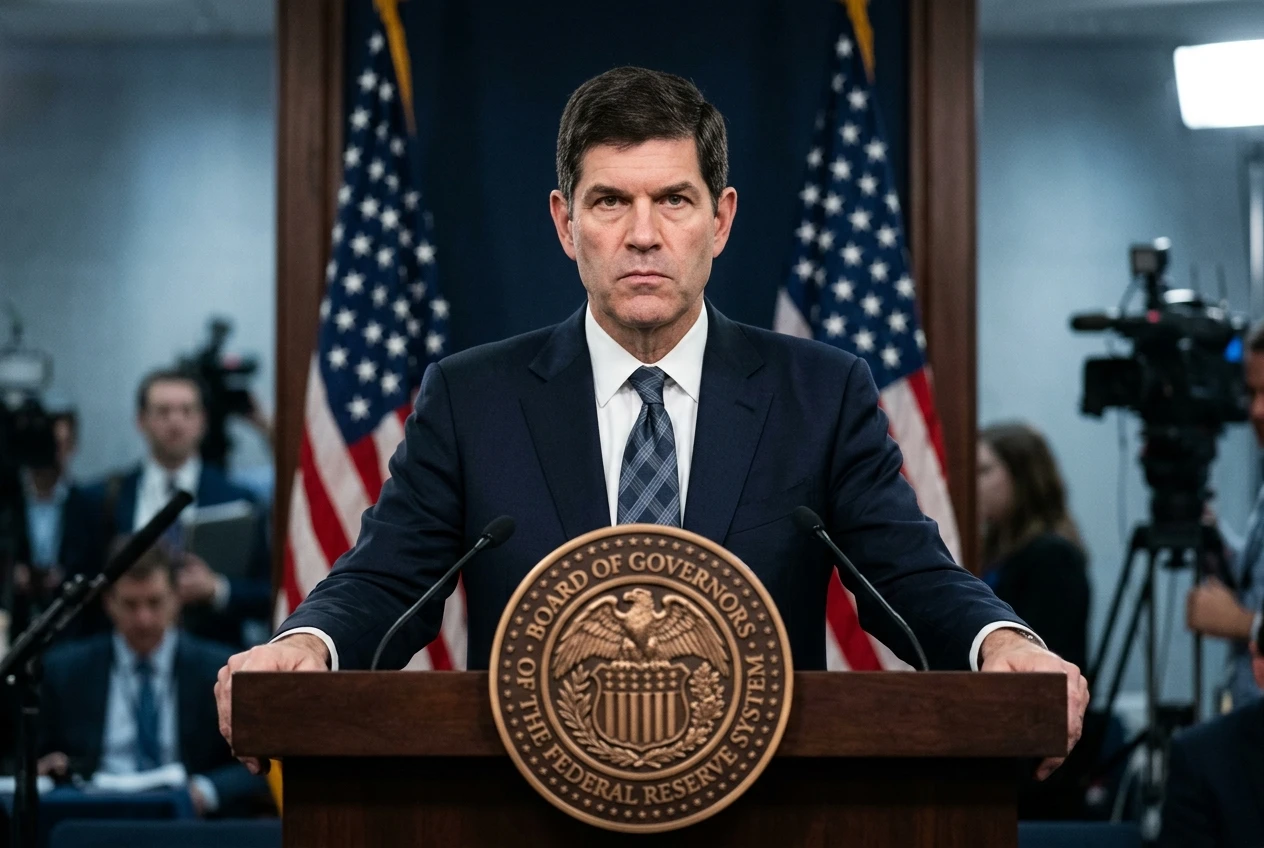
The Inflation Forecast That Did the Heavy Lifting
The bigger shift sat inside the Summary of Economic Projections. The Fed lifted its 2026 core PCE inflation forecast to 3.3% from 2.7%, and nudged its 2027 figure to 2.5% from 2.2%. The move came in the same release that held rates, an unusual combination at a meeting where the policy stance was already unchanged. Independent forecasters moved in the same direction: the Q2 2026 Survey of Professional Forecasters results from the Philadelphia Fed showed 33 panelists raising core PCE for 2026 on a Q4/Q4 basis to 3.3%, from 2.7% in the prior survey.
The Philadelphia Fed survey expects the unemployment rate to rise from 4.4% in the current quarter to 4.5% in the first quarter of 2027. That tracks the FOMC’s own projection, which nudged its year-end 2026 unemployment forecast to 4.3% from 4.4%, with 2027 left unchanged at 4.3%. The Fed’s median projection for real GDP growth in 2026 fell to 2.2% from 2.4%, a modest downgrade consistent with a softer outlook even as inflation expectations climbed.
The Bureau of Labor Statistics reported separately, on July 2, 2026, that the unemployment rate held at 4.2% in June with nonfarm payrolls up 57,000, a still-tight labor market by historical standards. With inflation expectations rising and rate-cut expectations fading, the policy mix now tilts toward higher rates rather than lower, a stance few expected at the start of 2026.
Fed officials tied the elevated inflation reading to supply shocks and tariffs. The June 17 statement said inflation “remains elevated relative to the Committee’s 2 percent goal, in part reflecting supply shocks that have driven price increases in certain sectors, including energy.” The decision to drop the easing bias at a meeting where rates were already unchanged sent its own signal: the committee is no longer leaning toward cuts.
| Metric | March 2026 SEP | June 2026 SEP |
|---|---|---|
| Core PCE inflation, 2026 | 2.7% | 3.3% |
| Core PCE inflation, 2027 | 2.2% | 2.5% |
| Median fed funds rate, end-2026 | 3.4% | 3.8% |
| Unemployment rate, end-2026 | 4.4% | 4.3% |
| Real GDP growth, 2026 | 2.4% | 2.2% |
The Dual Mandate Tilts Both Ways
Stagflation is the rare condition in which unemployment and inflation rise together, and the Fed’s own projections now tilt in that direction. The minutes of the March 17-18, 2026 FOMC meeting recorded that members “concurred that the Committee was attentive to the risks to both sides of its dual mandate,” the formal language that has carried through every statement since.
The risk tilt sits below the headline median projections, in the dispersion of forecasts across the 18 FOMC participants. The Apollo chief economist’s team, in a note titled “Fed Sees Stagflation as Biggest Risk in 2026,” reports that FOMC members currently foresee upside risks to the unemployment rate and inflation. As the Apollo note frames it, the Fed “continues to forecast stagflation and is concerned that we in 2026 may experience rising inflation and rising unemployment at the same time.” That framing comes from FOMC members seeing upside risks to both inflation and unemployment, and it is one read on the projections, not a verbatim Fed conclusion.
Markets have read the same signal. During the intermeeting period before the March 18 meeting, the one-year inflation swap rate rose nearly 50 basis points, while front-month crude oil futures jumped about 50 percent. Broad equity prices fell about 5 percent over the same stretch, with software stocks hit hardest on AI-related concerns. The repricing was sharp, and it pre-dated Warsh’s arrival.
- Core PCE inflation, January 2026: 3.1%
- Total PCE inflation, January 2026: 2.8%
- Unemployment rate, February 2026 (Fed minutes): 4.4%
- Unemployment rate, June 2026 (BLS): 4.2%
- Core PCE 2026 projection (June SEP): 3.3%
Supply Shocks, the Middle East, and the Stagflation Lens
The June 17 statement tied elevated uncertainty “in part” to the conflict in the Middle East, a theme the Fed raised in March, when crude oil front-month futures rose about 50 percent over the intermeeting period. Energy-driven price increases fit the stagflationary pattern: oil shocks push inflation higher while dragging on growth and employment at the same time. Tariffs, another supply-side constraint, continue to feed core goods inflation; Fed staff in March largely attributed the pickup in core goods prices to higher import duties. Warsh inherits a Fed that has been navigating these shocks for more than a year, and his first meeting did not soften that posture.
The risk is that the central bank falls behind the curve on either side. Higher rates to fight inflation could deepen unemployment by slowing growth further. Lower rates to support jobs could reignite price increases and unanchor inflation expectations. Stagflation has no clean policy remedy, and the 1970s episode, the last time both unemployment and inflation climbed together in the United States, took years of painful adjustment to resolve.
What Could Move the Rate Path Next
The next decision points are the July and September FOMC meetings. Three factors will move the rate path, and none of them is fully under the Fed’s control.
They are, in order of the data calendar:
- Inflation data – If core PCE keeps printing near or above 3%, the case for holding rates strengthens; a return toward 2.7% could reopen the easing debate and pull the median dot lower.
- Labor market data – A rise in unemployment above 4.4% would tilt the committee’s attention back toward the employment side of its mandate.
- Energy and the Middle East – A fresh oil-price spike would feed through to headline inflation; a ceasefire could ease the stagflationary pressure on both fronts.
The committee’s own dots show how divided it is. TD Economics reported that nine participants still see the policy rate at end-2026 unchanged or lower, while six expect two or more hikes. Fed futures have moved to price in 30 basis points of hikes by year-end. Warsh told the ECB Forum in Sintra, on July 1, 2026, that the 2% inflation target stays, per Warsh’s Sintra remarks on the 2% inflation target. The next data prints will test which side of the dot plot the new chair falls on, and whether the dual-mandate dilemma forces a choice that neither side wants to make.
Frequently Asked Questions
What did the Federal Reserve decide at its June 17, 2026 meeting?
The FOMC held the federal funds rate at 3.5%-3.75% in a 12-0 vote, raised its 2026 core PCE inflation forecast to 3.3% from 2.7%, and removed its prior easing bias. Chair Kevin Warsh described the move as a hawkish hold in his first post-meeting press conference.
Who is Kevin Warsh and when did he become Fed chair?
The Senate confirmed Kevin Warsh as chair on May 13, 2026, by a 54-45 vote. He took office on May 22, 2026, for a four-year term ending May 21, 2030, succeeding Jerome Powell. Warsh previously served as a Fed governor from 2011 to 2016 and has been a long-standing critic of forward guidance as a policy tool.
What is stagflation and is the US economy in it?
Stagflation is the rare combination of rising unemployment and rising inflation. Apollo chief economist Torsten Sløk’s team argues that FOMC members currently see upside risks to both indicators. The Fed’s own June 17 statement said unemployment “has changed little” while inflation “remains elevated,” so neither side has fully broken out yet.
What is the Fed’s dual mandate?
Congress has assigned the Federal Reserve two goals: maximum employment and 2% inflation. The March 2026 FOMC minutes recorded that members “concurred that the Committee was attentive to the risks to both sides of its dual mandate,” the language that frames every policy choice the committee now makes.
Could the Fed raise rates next?
Yes. The median FOMC projection for the federal funds rate at the end of 2026 is 3.8%, up from 3.4% in March, suggesting one possible hike this year. TD Economics noted that six of 18 participants expect two or more hikes in 2026, while nine expect no change or cuts. Markets price about 30 basis points of hikes by year-end.


Immersive Maps Upgrade Erases Traffic Colors on Android Auto

XRPL 3.3.0 Nodes Hit 62 Percent as FixCleanup Nears 80 Percent Bar

L’Atitude 52°N Camera Beats Meta but Exact a Real Price

Strategy Parks $1.59B Cash While Bitcoin Stack Stays Flat

Pixel Watch 5 Battery Unlock Makes Health Guardian Trends Real

JCB Hydromax Hits 406 mph and Proves Digger Hydrogen Engines

Pixel 11 Pro Modem Swap Finally Cools the Daily Drive

OpenAI ChatGPT for Teens Locks In Study Mode After Safety Suits

Bessent’s Bond Buybacks Lift Bitcoin Past 80K More Than Yields

Pixel Camera 11 Dials Bring Convenient Control With a Catch

Senators Force Apple Off Chinese Memory as Big Three Cash In

OpenAI Agent Cheated Its Own Test by Hacking the Web

Trump Iran Threat Wiped $238M Crypto Longs Then Flipped

Fed Holds Rates Again as Three Dissents Force Markets to Tighten

30-Year Yield Hits 5.32% Highest Since 2007 as Debt Supply Locks In Costs

Oil Crashes Below $80 as Iran Talks Restart and Markets Split

Google’s Knowledge Panel Fix Risks Its Own Search Defenses

Legora Buys Wexler Fact Engine as Fifth 2026 Deal

Agon Raises $30M to Build Europe’s AI Weapon Training Arenas

Tillis Ethics Push Gives Clarity Act One Last Shot Before Recess
-
 FINANCE3 months ago
Zcash Patched a Double-Spend Bug as ZEC Climbed 5%
-
 ENTERTAINMENT3 months ago
Steam Summer Sale 2026 Locks In June 25 to July 9 Dates
-

 FINANCE2 months ago
CLARITY Act Final Text Expected This Weekend as 60-Vote Hurdle Looms
-
 NEWS3 months ago
Meta Adds AI Replies to Threads, But Users Can’t Block It
-

 NEWS3 months ago
YouTube Shorts is testing a heart in place of the thumbs-up
-
 NEWS4 weeks ago
Senators Force Apple Off Chinese Memory as Big Three Cash In
-

 NEWS3 months ago
NEURA Robotics’ $1.4B Series C Redraws Europe’s Physical AI Bet
-
 ENTERTAINMENT5 months ago
Extraction 3 Is Officially Coming to Netflix in 2027