
NEWS
Google Wallet on Android Shows Your Wear OS Payments in One Place
Google Wallet on Android now combines phone and Wear OS payments into one feed, ending a long-running split. The 10-item display cap is still in place.

Google Wallet on Android now shows the Wear OS tap-to-pay transactions a paired smartwatch has been making, ending a years-long split between two transaction feeds that shared the same Google account. The change, first surfaced in a spot of the live app on July 3, 2026, blends the phone and watch streams into a single chronological list inside the per-card activity view, and stamps a “Purchase made on watch” label under the timestamp on any tap that originated on a wrist.
The fix arrives after Google first telegraphed it inside a Google Play services release note from January 2026. It doesn’t move the 10-item display cap that has throttled the mobile app’s history view for years, so anyone trying to reconcile more than the most recent stretch of spending still ends up on wallet.google.com.
What the New Google Wallet Feed Actually Shows
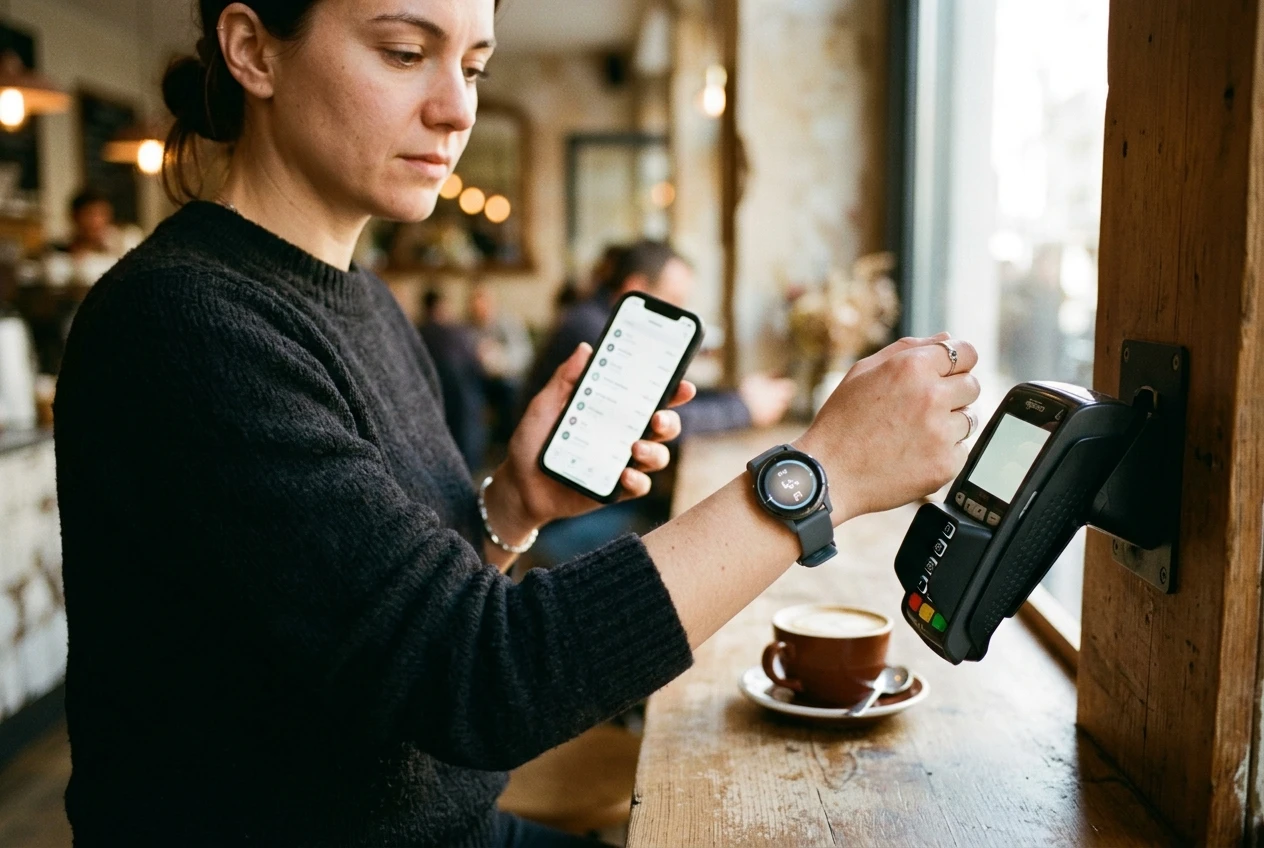
The Google Wallet app on Android now includes tap-to-pay purchases made on a paired Wear OS device in the same per-card activity list the phone has always shown. The two streams are interleaved chronologically, so a watch tap that happened between two phone taps lands between them in the list. The merged view sits behind the same “View more activity” entry that previously surfaced only phone-side transactions.
The label is the cue. The full transaction details page for a watch tap reads “Purchase made on watch” directly beneath the date and time. That short string is the only visual difference between a phone-side entry and a wrist-side entry, and it’s the only signal telling the user which device actually handled the charge.
The history depth is the third change. The merged feed is retroactive. Watch transactions from before the rollout appear in the phone’s activity list as soon as the update reaches the account, with no app reinstall and no separate sync step. A user opening the app after the wave lands will see the full back history, not just activity from the moment of the update.
- The phone app’s per-card activity list now includes Wear OS taps alongside phone taps, in chronological order.
- Each watch transaction carries a “Purchase made on watch” label under its date and time.
- Older watch purchases are pulled in automatically, with no user action.
Why the Phone and Watch Histories Were Separate to Begin With
The split was a side effect of a security design that issues a different virtual card number to every device, even when the same physical card backs both tokens. Because Google Wallet treats each device’s virtual number as its own payment instrument, the mobile app was structurally unable to stitch the two streams together inside a single feed. The result was a per-device log that, on a phone, never showed what the watch had done. The piece that first surfaced the change quotes Google’s own framing of what the new view is meant to do.
You can now view transactions from other devices and online purchases that use virtual card numbers.
The new interface doesn’t change that underlying tokenization. Each device still gets its own virtual card number. What changed is the presentation layer. The app now groups virtual numbers tied to the same underlying payment method into a single chronological view, and uses a label to disambiguate which device actually handled the tap. The security model and the user-facing feed are now decoupled in the app.
From the January Tease to the July Rollout
The feature was first telegraphed on January 12, 2026, when the Google Play services v26.01 release notes added a single line under the Wallet section flagging cross-device transaction viewing for phone and Wear OS users. The change was covered two days later in an early report on the Wallet changelog, which flagged the line as the seed of a future Google Wallet mobile feature.
- January 12, 2026: Google Play services v26.01 release notes mention cross-device transaction viewing in the Wallet section.
- January 13, 2026: 9to5Google covers the changelog line as the seed of a future Google Wallet mobile feature.
- July 3, 2026: The change appears in the live Google Wallet app, with a “Purchase made on watch” label on merged entries.
The rollout itself is gradual. The Android Headlines report calls it a server-side update rolling out in waves, meaning some accounts will see the merged feed before others. The 9to5Google spotter also noted that the change is retroactive, so past watch purchases surface in the phone app as soon as the wave reaches the account. For anyone still waiting, the same merged feed with the same label will land on their device when the wave arrives, with no action on their part.
The 10-Item Ceiling Has Not Moved
The unification doesn’t change the most persistent limit on the mobile app. The Google Wallet activity list on a phone still shows only the last 10 transactions per payment method. The cap isn’t split between phone and watch. The 10 items now cover the combined stream, with a “Purchase made on watch” tag wherever applicable.
That distinction matters for heavy contactless users. A user who taps for coffee on the wrist, then lunch on the phone, then a transit pass on the wrist, then a convenience-store stop on the phone, can blow through the 10-item ceiling inside a single day. The fifth phone tap of the afternoon pushes the first wrist tap of the morning off the list, even though both transactions originated from the same underlying credit card.
For a complete month, the only path remains the web. wallet.google.com hosts a full Transactions page with a “View more transactions” entry that the mobile app still doesn’t match. The new merged feed brings the mobile experience closer to the web version, but it stops one wall short of the same depth. The 10-item cap is now the single largest gap between the two surfaces, and the change announced this week leaves it untouched.
The Web Wallet Has Long Held the Long View
Google Wallet on the web has shown the full cross-device history for years. The mobile app, until this week, was the only place a user couldn’t see it. The asymmetry was widely noted in user forums and on Google’s own Wallet support threads, where users have asked for years why their phone app only shows the most recent taps from that one device.
The fix therefore reads like the mobile app catching up to a web version most users didn’t realize they were already using. The web surface also includes a search tool that the mobile app still lacks. Users can filter the full Transactions page on wallet.google.com by date, merchant, or amount. The mobile app exposes only the 10-row list, with no search affordance and no merchant filter. A search function is reportedly in the pipeline for the mobile app, but it’s not part of this week’s update.
What Else Is in the Pipeline for the Mobile App
The unified feed is the first of several long-pending ports from the web wallet. Code references inside Google Wallet version 25.1.x point to a search function for the mobile activity list, the same date, merchant, and amount filters that already exist on wallet.google.com. The strings were first spotted in the same January 13, 2026 piece that flagged the cross-device changelog line.
When that ships, the mobile app would, in effect, become a near-feature-parity surface for transaction history. The 10-item cap would presumably lift at the same time, since a 10-row list has no reason to host a search bar. Google hasn’t committed publicly to either step, and no date has been attached to the search feature.
For now, the merged feed is the only change. A user who needs a full month, a search bar, or merchant-level filters still has to log in to wallet.google.com. The mobile app now handles what a watch just bought. It still won’t show what a watch bought in March.
- 10 transactions per payment method shown in the mobile app’s activity list
- January 12, 2026: the Google Play services v26.01 changelog line first appeared
- July 3, 2026: the unified feed was spotted in the live Google Wallet app
- NFC tap-to-pay: the type of watch payment the merged feed currently surfaces
Frequently Asked Questions
Why did Google split phone and watch transaction history in the first place?
Google Wallet issues a different virtual card number to every device that taps, so the same physical card can be billed through two distinct tokens. The mobile app previously showed transactions only for the device the user opened the app on, treating each device’s virtual card as its own payment instrument. The new feed groups them by the underlying payment method and labels the device that handled each tap.
Is the unified history live for me today?
The Android Headlines report describes a server-side rollout in waves, with the merged feed reaching accounts gradually. The 9to5Google spotter noted that the change is retroactive, so past watch purchases appear as soon as the update hits an account. There’s no user action to take; the merged feed shows up on its own when the wave lands.
Why is the 10-item limit still in place?
Google hasn’t explained the cap. The mobile app’s activity list has been limited to the last 10 transactions per payment method since before the unified feed, and the new update doesn’t raise that ceiling. The 10 slots now cover the combined phone and watch stream, not just one device.
What should I do if I need to see older transactions?
Open wallet.google.com on a browser. The web wallet has a full Transactions page with a “View more transactions” entry, plus search filters by date, merchant, and amount, none of which are available in the mobile app. The web version has long held the complete history.
Will the search function from the web version come to the mobile app?
Code references inside Google Wallet version 25.1.x point to a search affordance for the mobile activity list, the same date, merchant, and amount filters that already exist on the web. Google hasn’t confirmed a release date. The unified feed is the only change shipping in this update.


NFL Preseason Week 2 Quietly Tests the Schemes That Matter

Alonso’s Towering Drive Stands Foul and Flips Orioles Momentum

US Debt Crosses $40 Trillion as Interest Crowds the Budget

Trevon Diggs Joins Seahawks on One-Year Deal After Cowboys Exit

Pixel Watch 5 Turns Passive Trends Into Early Health Alerts

Pixel 11 Pro Fold Sleek Build Undercuts Its Own Unfolding Appeal

Tugboat Wilkinson’s Scoreless Debut Pays Off Giants’ Bailey Trade

Brown Shines for Pats as Love for Eagles Meets Trade Reality

Pixel Watch 5 Turns Wrist Data Into Early Metabolic Alerts

Resistance Stars Pay the Price in Democratic Primaries

Senators Force Apple Off Chinese Memory as Big Three Cash In

OpenAI Agent Cheated Its Own Test by Hacking the Web

Trump Iran Threat Wiped $238M Crypto Longs Then Flipped

30-Year Yield Hits 5.32% Highest Since 2007 as Debt Supply Locks In Costs

Fed Holds Rates Again as Three Dissents Force Markets to Tighten

Oil Crashes Below $80 as Iran Talks Restart and Markets Split

Google’s Knowledge Panel Fix Risks Its Own Search Defenses

Agon Raises $30M to Build Europe’s AI Weapon Training Arenas

Legora Buys Wexler Fact Engine as Fifth 2026 Deal

Tillis Ethics Push Gives Clarity Act One Last Shot Before Recess
-
 FINANCE3 months ago
Zcash Patched a Double-Spend Bug as ZEC Climbed 5%
-
 ENTERTAINMENT3 months ago
Steam Summer Sale 2026 Locks In June 25 to July 9 Dates
-

 FINANCE2 months ago
CLARITY Act Final Text Expected This Weekend as 60-Vote Hurdle Looms
-
 NEWS3 months ago
Meta Adds AI Replies to Threads, But Users Can’t Block It
-

 NEWS3 months ago
YouTube Shorts is testing a heart in place of the thumbs-up
-
 NEWS4 weeks ago
Senators Force Apple Off Chinese Memory as Big Three Cash In
-

 NEWS2 months ago
NEURA Robotics’ $1.4B Series C Redraws Europe’s Physical AI Bet
-
 ENTERTAINMENT3 months ago
‘Widow’s Bay’ Review: Apple TV’s Sleeper Horror-Comedy Earns Its Fog