
NEWS
The Segway Myon Packs Tech That Fights the Rider
The Segway Myon undercuts $2,000 with a torque hub and a color screen, then wastes the ride on AirLock lag, weak bike maps, and fragile switches.

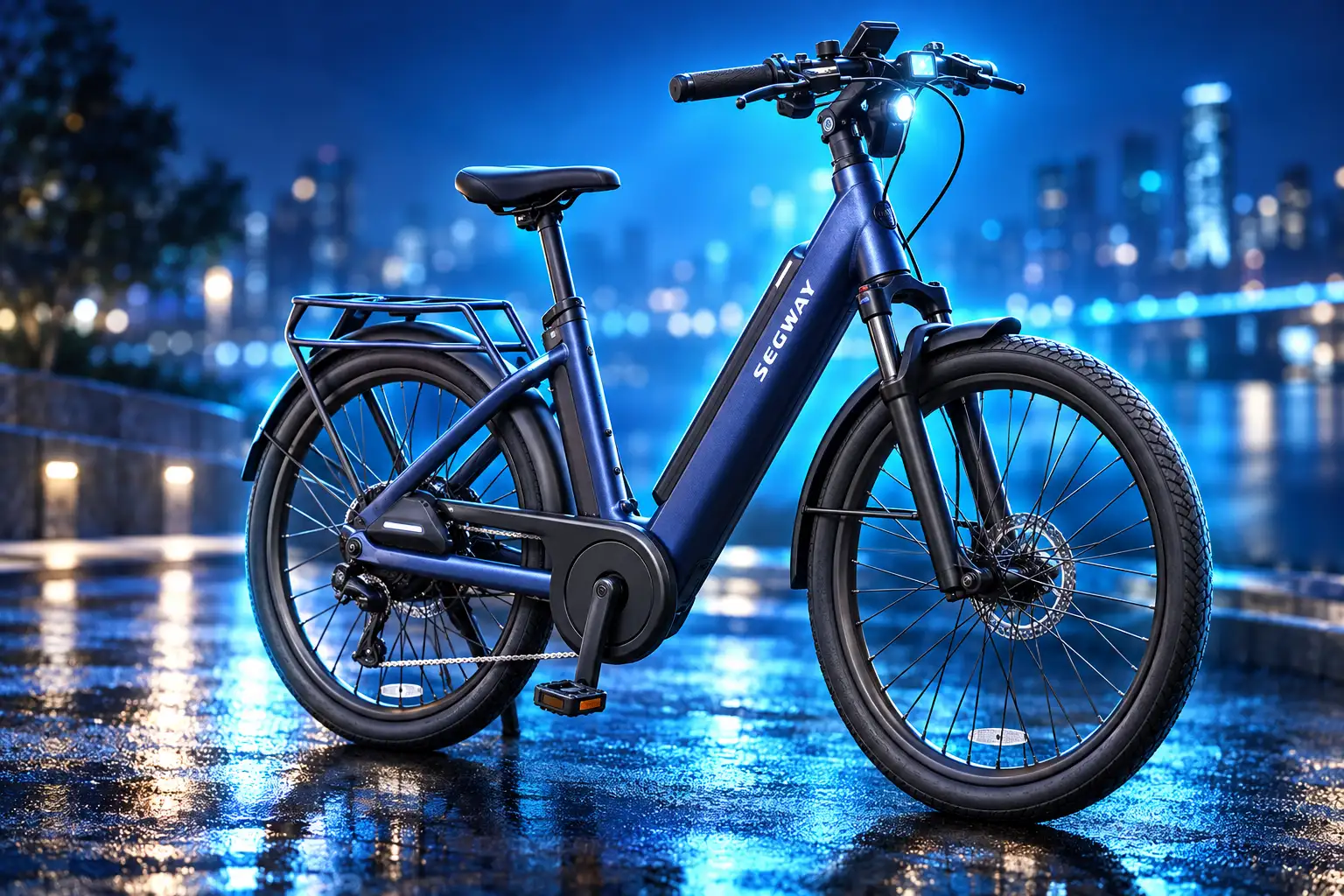
The Segway Myon carried a 270-pound rider 50 miles on a 500 W hub motor, then fought him with a lock, maps, and switches that behave like phone apps. Segway’s U.S. store has the bike listed at $1,799.99 on Segway’s store, $200 under the $1,999.99 MSRP set at CES on January 6, 2026.
Adam Doud, a 49-year-old reviewer in Streamwood, Illinois, did that 50-mile loop in just over four hours in 87-degree heat, using about a quarter to a half of the pedal assist. The motor felt like a stronger version of his own legs. The rest of the cockpit did not.
The 50-Mile Ride Ran on the Motor
Segway rates the rear hub at 500 W and 85 Nm and pairs it with a torque sensor, a cadence sensor, a gyroscope, and an inertial unit it calls Algorithm 2.0. Doud left assist between one-quarter and one-half for most of the day, then bumped it to half on the last climbs because he no longer needed to save charge. The bike still had work left.
A torque sensor measures how hard the cranks are being pushed, then adds motor force in kind, which is why the help feels like a stronger pedal stroke instead of a switch being thrown. Cadence-only bikes fire when the cranks turn, whether the rider is grinding or coasting. Doud prefers the torque setup, and on this frame it is the piece that matches the brochure.
Throttle-only riding is the expensive way to use that motor. On a 12-mile errand to a geocache, pedaling out used about 20% of the pack. Riding the same 12 miles home on throttle burned close to 50%. The legs still do real work if you want the 722 Wh pack to last.
MYON POWERTRAIN AT A GLANCE
| Item | Segway figure |
|---|---|
| Motor | 500 W rear hub, 85 Nm |
| Battery | 48 V, 722 Wh, about 5.5 hours to charge |
| Claimed range | Up to 80 miles |
| Assist table | About 79 miles at 20% assist; about 44 miles at max speed |
| Weight | 72.75 lb (M/L); 71.6 lb (XS/S) |
| Rider / total load | 264 lb rider cap; 300 lb total |
| Wheels and fork | 27.5 x 1.95 in; 80 mm front travel |
| Drivetrain | Shimano Cues 9-speed, 46T chainring, 11-39T cassette |
Doud weighs 270 pounds, six over Segway’s 264 lb rider cap, and still finished the 50-mile day. The electrical system is listed to the UL 2849 electrical-system fire standard, which covers the drive unit, battery, charger, and wiring, not how the bike handles on gravel.
AirLock Treats a Driveway Like a Crime Scene
AirLock is Segway’s proximity lock: the rear wheel freezes and a siren fires if the bike moves without the paired phone nearby. On paper it is the car-fob trick riders have wanted. On a driveway it is a gadget that wakes up faster than Bluetooth can shut it up.
Doud’s phone often failed to unlock the bike before the alarm. He had to open the Segway Mobility app and clear it by hand. Leave the bike locked overnight and security eats about 9% of the pack; leave it three days without a charger and he found about a quarter of the charge gone. He wanted a geofence that would sleep those features at home. The product page still does not advertise one.
Stephanie Pearson, who rode a Myon in June 2026, hit the same wall. Starting the bike felt like signing into a bank. The alarm, she wrote, sounds like a foghorn, and she tripped it hauling the bike out of a garage and unlocking it outside a restaurant.
This isn’t an ebike that allows you to be far from your cell phone, especially if you set off the alarm, which sounds like a foghorn.
Stephanie Pearson, reviewer, June 2026
Segway’s own footnote is blunter than the marketing: auto-lock is for convenience, not guaranteed security, and Find My plus GPS will not stop a theft. Dual tracking is useful after the fact. It does not replace a U-lock, and it does not stop the bike from yelling at its owner.
Why the Onboard Maps Fail Cyclists
Built-in navigation is the headline feature that should make a color display worth fitting. It depends on a live app link, which is the same Bluetooth path that already lags on the lock, and it runs on HERE maps. HERE is strong at truck rules, tolls, and car traffic. It is a poor substitute for a cycling graph that knows a bike path from a shoulder.
Doud hid the nav panel until he edited the app’s quick options, then ran the same trips in Google Maps. HERE sent him onto the shoulder of a road posted 45 mph. Google put him on the bike path that ran parallel about 50 feet to the north. He stopped using the bike’s directions because they were, in his words, useless.
That is not a small miss on a machine sold as a connected commuter. A display that cannot pick the path next to the road trains riders to look down at a phone anyway, which is what the screen was supposed to prevent. Segway can push maps through over-the-air updates for six systems; the marketing page still leads with navigation as if the Illinois routing problem were a rider skill issue.
Eleven Controls and a Rocker That Pops Off
Pearson counted 11 buttons, toggles, switches, and a throttle on the bar, enough that on her first ride she almost hit a car while hunting for the right one. Doud mixed up the identical left and right rockers, hitting the turn signal when he meant to change assist. The layout looks like a small dashboard because it is one.
The hardware is also easier to break than a cable shifter. Loading the bike in a car, Doud caught a slot under the assist rocker on a sharp edge and popped the switch off. Segway sent a new control unit. Reconnecting the harness, he bent pins inside a plug and needed a shop to straighten them before the bar would talk to the board again.
THE GADGET FAILURES
- AirLock lag: The siren and wheel lock fire before the phone can cancel them, so owners open the app by hand.
- Overnight drain: Security used about 9% per night in Doud’s garage, with no home geofence on the spec sheet.
- HERE routing: Onboard directions chose a 45 mph shoulder over a parallel bike path.
- Matched rockers: Turn signal and assist switches feel the same, so the wrong one gets pressed in traffic.
- Pop-off switch: A small slot under the assist rocker can catch an edge; the plug pins behind it bend in a driveway repair.
- Dead blinker: Pearson’s right turn signal never lit, even after she checked the harness.
Electronic shifting is the one cockpit idea that has moved the right way. At launch the bar used plus/minus buttons tied to a servo by the derailleur and a short shift cable, powered by the main battery so there is no second pack to charge. Doud was told automatic shifting would arrive in a software drop. The current product page now puts electronic auto shifting in the spec sheet, using speed, cadence, and incline to pick gears, with Casual, Standard, and Sport modes in the app, or manual taps when you want them. The derailleur can be micro-adjusted in the same app.
That update shows Segway can fix a drivetrain in firmware. It also shows the company chose to finish the fun feature first. The lock, the maps, and the fragile rocker are still the parts that dump a rider into a shop.
Class 2 Keeps the Throttle That Trails Need
U.S. class labels decide where the Myon is a bicycle and where it is a problem. Class 1 is pedal assist to 20 mph with no throttle. Class 2 keeps the 20 mph cap and adds a throttle. Class 3 raises pedal assist to 28 mph and, in the usual definition, drops the throttle. Motors are supposed to stay at or under 750 W rated, which the 500 W Myon does.
Segway lets the rider pick Class 1, Class 2, or Class 3, plus a Hybrid mode that holds throttle to 20 mph and pedal assist to 28 mph where the law allows. California is called out as an exception. Doud left the bike in Class 2 because he wanted the throttle in reserve and because 28 mph is too fast for the trails he used. He also wanted that class switch easier to reach.
MYON SPEED MODES
| Mode | How the motor helps | Cap |
|---|---|---|
| Class 1 | Pedal assist only | 20 mph |
| Class 2 | Throttle and pedal assist | 20 mph |
| Class 3 | Pedal assist only | 28 mph |
| Hybrid | Throttle to 20 mph, assist to 28 mph | Split; not in CA |
Path rules still sit with the state, the city, and the land manager. A Class 3 setting that is legal on a road can be banned on the Illinois Prairie Path Doud used. The software switch is handy. It is not a permit.
What the Myon Costs Next to a Trek FX+
Eight months after CES, the loud public chatter around the Myon is the markdown, not a fight over maps. Segway already cut the launch price by $200 and, in September promotions, has tied accessory credit to the same bike. A shop Doud asked, which started selling the model earlier in 2026, moved about one a week. That is steady, not a frenzy.
The Velo Index’s September 2026 U.S. set of 25 U.S. torque-sensor e-bikes under $2,000 sits at a median list price of $1,999 and a median claimed range of 74 miles. The Myon is on that median price line with a thicker gadget stack than most of the set. Against a name-brand commuter, the hardware gap is clearer.
MYON VERSUS A TREK COMMUTER
| Bike | Price | Motor / torque | Battery / claimed range |
|---|---|---|---|
| Segway Myon (M/L) | $1,799.99 list ($1,999.99 MSRP) | 500 W, 85 Nm | 722 Wh / up to 80 miles |
| Trek FX+ 1S | $2,199.99 | 500 W, 60 Nm | 520 Wh / up to 50 miles |
Trek’s own page prices the Trek FX+ 1S at $2,199.99 for a 500 W class-hybrid commuter with 60 Nm and a 520 Wh pack. You pay more for less battery and less torque, and you do not get AirLock or HERE on the bar. Specialized’s Vado 3 EVO commuters, which lean on a 105 Nm mid-drive and a much denser digital cockpit, list between $4,500 and $7,000. That is the bracket Segway is trying to undercut with a hub motor and a 2.4-inch screen.
Colors are Skyscraper Grey, Shoe Suede Blue, and Minty Fresh. An optional removable top tube is $99.99. Rearview radar is another $99.99, sold separately even though the spec list marks the feature; Segway’s controlled test claims 97% accuracy between 3.1 and 28 mph in daylight on pavement. Pearson still missed cars with it. Lights include a 600-lumen headlamp and handlebar-end turn signals, which are the rare bits of “car tech” that do a cyclist’s actual job in traffic when they work.
Nick Howe Said Tech Should Make Cycling Simpler
Nick Howe, Segway’s head of e-bike, framed the Myon at CES as a machine for people who find cycling intimidating. The pitch was lower barriers, automotive safety cues, and software that stays out of the way.
Technology should make things simpler, not the other way around.
Nick Howe, head of e-bike, Segway CES 2026 announcement
Howe also said the company designed Myon as an everyday bike for every type of rider. The torque hub, the 80 mm fork, and the step-through frame get close to that brief. The password screen, the foghorn, the maps that pick the 45 mph shoulder, and the rocker that pops off in a car hatch do not. Pearson needed the manual before the bar made sense. Doud needed a shop to unkink pins. Both still liked the way the motor pushed.
The September price cut makes the hardware easier to argue for. It does not put a geofence on AirLock, and it does not make HERE read a bike path. Until those two behave like bicycle parts, the Myon remains a strong e-bike with a phone stack bolted to the stem, on sale because the stack was the selling point.
Frequently Asked Questions
Does the Segway Myon have a throttle?
Yes in Class 2, where the throttle and pedal assist both stop at 20 mph. Class 3 drops the throttle and raises pedal assist to 28 mph. Hybrid mode, where allowed, keeps throttle to 20 mph and assist to 28 mph; Segway flags California as an exception, so riders there should stay in a single labeled class.
How much does the Segway Myon weigh?
The M/L frame is 72.75 lb and the XS/S frame is 71.6 lb, before a rider, bags, or the $99.99 top-tube bar. Total payload is 300 lb, with a 264 lb cap on the rider alone, which is why a 270-pound tester was already over the rider rating even with an empty rack.
Is the Segway Myon battery removable?
Yes. The 722 Wh pack sits in the downtube, lifts out for indoor charging, and is listed IPX7, while the rest of the bike is IPX5. Segway quotes about 5.5 hours on the 1.3 A to 3.9 A charger, which is slow enough that overnight charging is the practical habit if AirLock has been nibbling at the pack.
Does the Segway Myon include rearview radar?
No. Radar is a $99.99 add-on that mounts on the rear rack and flashes handlebar warnings for traffic behind. Segway’s own test claims 97% accuracy from 3.1 to 28 mph in daylight on pavement, and the company still tells riders it is an aid, not a substitute for looking back.

UPI MDR Delay Hands Traders the Calendar After Paytm Falls

Google Messages Builds Nine In-Chat Games After Samsung’s Exit

Anthropic’s $100 Million Academy Trains the Firms That Bill Both Sides

Toyota’s Electric C-HR Leaves the Cheap Twin to Subaru

Markets Bet the Fed Skips October After Hawkish Minutes

The Orchard Bug Forced Zcash to Open an Empty Pool

The $5.99 Game That Won Steam’s 2026 Summer Sale

Don Lee Joins Hemsworth as Extraction 3 Starts Shooting

YouTube Shorts Retires Dislikes and Swaps Likes for Hearts

Atlantic City Turned WWE’s Return Into a Civic Night
-
 NEWS5 months ago
The Orchard Bug Forced Zcash to Open an Empty Pool
-
 GAMING5 months ago
The $5.99 Game That Won Steam’s 2026 Summer Sale
-
 ENTERTAINMENT7 months ago
Don Lee Joins Hemsworth as Extraction 3 Starts Shooting
-
 NEWS5 months ago
YouTube Shorts Retires Dislikes and Swaps Likes for Hearts
-
 NEWS5 months ago
Atlantic City Turned WWE’s Return Into a Civic Night
-

 NEWS4 months ago
NEURA Robotics Is Spending Its $1.4B on a Machine Stack
-
 AUTO6 months ago
Kawasaki Bets the New Z1100 Against Its Own Supercharger
-

 BUSINESS5 months ago
Norway’s Export Bank Backs Nscale’s $790 Million Narvik Loan