
NEWS
Kuwait and Jordan Absorb Iran’s Fire as Oil Surges Past $90
Kuwait’s power grid and Jordan’s airspace are absorbing Iran’s retaliation as US strikes hit a ninth night and Brent crude climbs above $90 a barrel.

American warplanes struck Iran for a ninth consecutive night into Monday, and Brent crude broke above $90 a barrel for the first time in months. The strikes followed a weekend in which Iran hit a Kuwaiti power and desalination plant for the second day running and Washington confirmed a third American service member had died in the fighting.
None of the missiles landed in Washington or Tehran that weekend. They landed in Kuwait, Jordan and Bahrain, three governments that did not start this war and cannot end it, while the bill for higher fuel, fertilizer and shipping costs is already spreading far beyond the Gulf.
A Ninth Night of Strikes and a Rising American Toll
The U.S. Central Command, widely known as CENTCOM, said its forces struck Iranian surveillance sites, logistics infrastructure, underground weapons depots and naval assets over the weekend, part of a campaign now in its ninth straight night. Brent crude for September delivery climbed about 2.8% to top $90 a barrel on Monday, while U.S. West Texas Intermediate crude rose roughly 2.4% to $84.49, according to CNBC market data.
The human cost is climbing too. CENTCOM said a third American service member had died in the fighting, and investigators had recovered unidentified remains near the site of an earlier Iranian attack in Jordan that had already left two U.S. personnel dead and a third missing. Iranian state media reported strikes on the partly built Darkhovin nuclear facility in Khuzestan province, a site the International Atomic Energy Agency said held no nuclear material as of its most recent inspection.
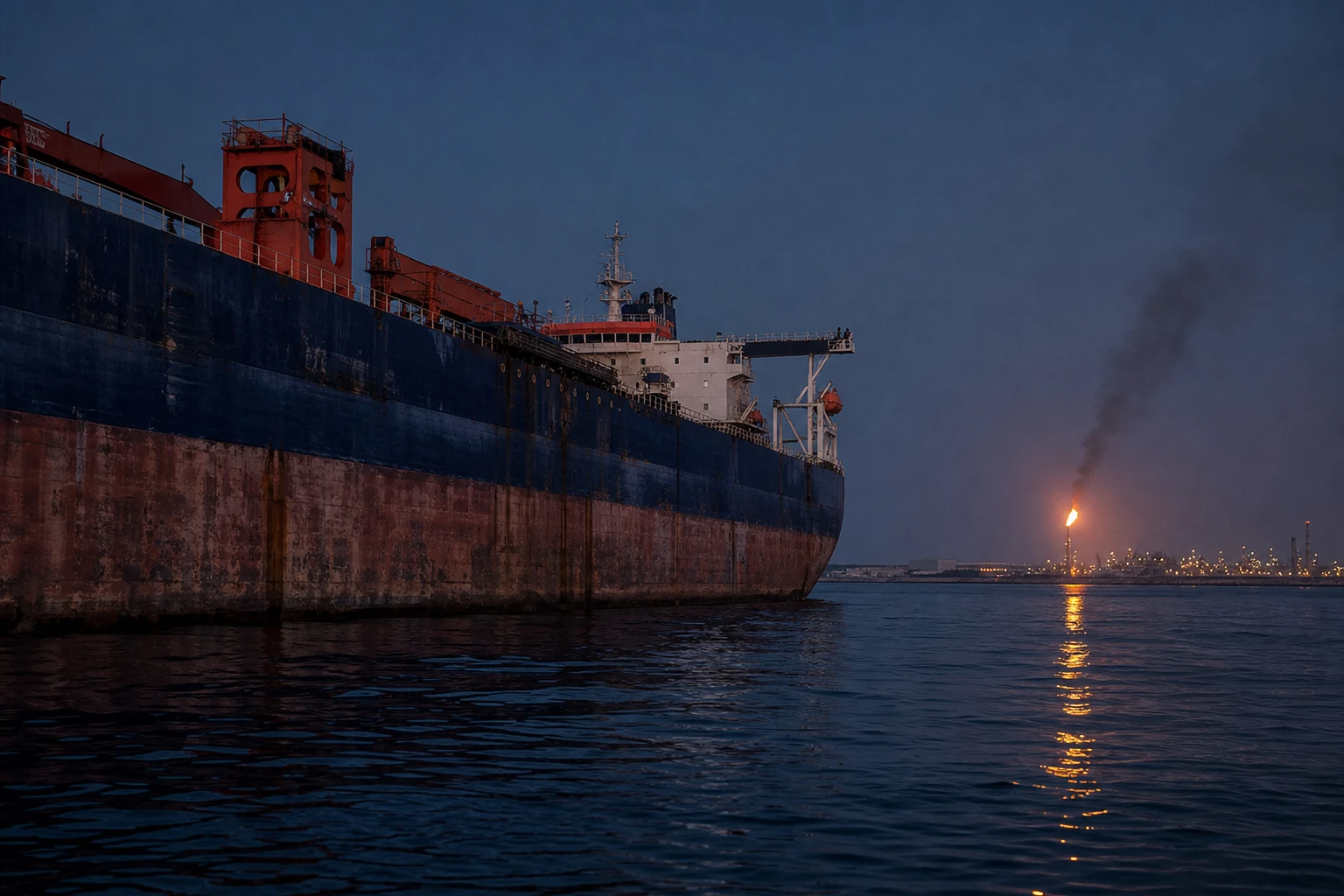
How a Mid-June Truce Collapsed Into Nightly Strikes
This round of fighting did not start over the weekend. The United States and Israel launched the war on February 28, targeting Iranian military and leadership infrastructure. A ceasefire process built through the spring produced a memorandum of understanding in mid-June, intended to wind down hostilities and reopen the Strait of Hormuz on a gradual basis.
It did not hold. Talks stalled, and President Donald Trump announced on July 8 that the agreement was over. Washington reinstated its naval blockade of Iranian ports, and Iran’s Revolutionary Guard Corps, known as the IRGC, declared the strait closed again. Strikes have run nightly since, climbing from a sixth consecutive night in the middle of last week to nine by Monday. The Strait of Hormuz carries about 20 million barrels of oil a day under normal conditions, roughly a quarter of global seaborne oil trade, according to a Congressional Research Service assessment of the waterway’s importance.
Kuwait, Jordan and Bahrain Absorb the Blows Meant for Washington
Iran has repeatedly framed its retaliation as strikes on American military assets. In practice, the damage keeps landing on the civilian infrastructure of its neighbors. Kuwait’s Ministry of Electricity, Water and Renewable Energy said a power and desalination complex was struck for the second time in two days on Sunday, sparking fires that disrupted electricity supply in a country that depends on desalination for its drinking water.
Jordan’s air defenses intercepted three of four Iranian missiles aimed at the southern port city of Aqaba, with the fourth landing in a remote area. Bahrain activated nationwide air raid sirens and said it intercepted multiple missile and drone attacks, placing its defense force on high alert. The Iranian army said separately it had targeted an American ammunition depot and air defense radars inside Kuwait.
| Country | What Was Hit | Reported Outcome |
|---|---|---|
| Kuwait | Power and water desalination plant, struck twice in two days | Fires disrupted electricity supply; emergency crews worked to contain damage |
| Jordan | Missiles toward the port city of Aqaba; earlier strike killed two U.S. soldiers | Three of four missiles intercepted; fourth landed in a remote area |
| Bahrain | Nationwide missile and drone attacks | Air raid sirens sounded; Bahrain Defence Force reported all threats intercepted |
Jordan’s exposure is not new. More than 200 drones and missiles have hit targets inside the kingdom since the war began, and Iranian hackers tried to breach its strategic wheat reserves in March, according to a Washington Institute analysis of Jordan’s wartime position. American support this year covers nearly 8% of Jordan’s entire state budget, which is one reason Amman keeps absorbing the hits rather than distancing itself from Washington.
An analyst identified as Seloom, cited by Arab News on Gulf security issues, argued that the region’s real vulnerabilities get lost in market coverage.
The story that markets crowd out is that the Gulf’s prosperity rests on a small number of catastrophic single points of failure that have nothing to do with crude prices.
Gulf Cooperation Council states import more than 85% of their food, according to a 2025 estimate from Alpen Capital, an investment banking advisory firm, which leaves millions exposed if ports, desalination plants or power grids go down for extended periods.
Tehran’s Own Tankers Still Cross the Strait It Closed
Here is the part that undercuts Iran’s own leverage. Even while the IRGC has mined the strait, boarded ships and attacked tankers flying other flags, Iranian crude has kept moving through the same waterway toward a single buyer.
China once received about 5.35 million barrels a day of Gulf oil through Hormuz. That figure had collapsed to roughly 1.22 million barrels a day, and nearly all of it now originates in Iran, according to tanker-tracking data reported by CNBC. China buys around 90% of Iran’s oil exports, so Tehran needs Beijing’s continued appetite for discounted crude just as much as Beijing needs the barrels.
Some reports say the IRGC has begun charging roughly $1 a barrel for safe passage, which would total about $2 million for a single supertanker transit, according to a Brookings Institution review of the strait’s toll arrangement. Trump had floated his own transit fee on shippers but abandoned the idea in mid-July after the shipping industry pushed back and the International Maritime Organization said mandatory tolls violate international law.
Amos Hochstein, who served as a senior energy and national security advisor to former President Joe Biden, told CNBC’s Squawk Box that the practical control of the waterway has already shifted.
“No matter what happens, the Iranians will control the Strait of Hormuz for the foreseeable future,” Hochstein said.
China’s exposure goes beyond the barrels themselves. Standard modeling suggests a 25% jump in oil prices can shave about half a percentage point off Chinese GDP, a real drag for an economy still nursing a fragile recovery, according to a Bruegel analysis of the war’s impact on China. Beijing has no ships in the fight and no seat at any ceasefire table, yet it is the country with the most oil riding on what happens next in a waterway it does not control.
Fertilizer, Metal and Fuel Costs Carry the War Home
The financial damage is no longer confined to gas pumps. A survey by the American Farm Bureau Federation in April found fertilizer prices had climbed as much as 47% since the war began, with about 70% of surveyed farmers saying they could not afford all the fertilizer they needed.
- Fertilizer: up to 47% higher since February, per the American Farm Bureau Federation’s April survey
- Sulfuric acid: roughly 30% higher, with Qatar, Kuwait and Iran together supplying close to 45% of globally traded sulfur
- Aluminum: up about 8% in March, with Gulf producers supplying roughly 9% of world supply
- Tungsten: up more than 50% in March alone after China, which controls about 80% of production, tightened exports
The World Bank cut its 2026 global growth forecast to 2.5%, its lowest since the pandemic, and trimmed its outlook for Gulf economies specifically to 1.3% growth this year, down from 4.5% in 2025. In Europe, the European Central Bank has warned that a prolonged conflict risks tipping energy-heavy economies including Germany and Italy into technical recession, with eurozone growth potentially cut by 0.1% and inflation pushed up by roughly half a point. Rebuilding damaged American bases in Kuwait, Bahrain and elsewhere could add billions more to the bill and reshape where U.S. forces are stationed in the Gulf long after the fighting stops, according to an American Enterprise Institute estimate of base reconstruction costs.
Bitcoin Holds Steady While Crude Does Not
Away from the Gulf, crypto traders barely flinched. Bitcoin traded around $64,443.88 on Saturday, up 1.2% on the day even as oil markets convulsed, a split that has held through most of the latest escalation.
The calm came in a week that marked one year since the GENIUS Act, the law that created a federal framework for U.S. dollar stablecoins, was signed into law. Traders are now watching for the CLARITY Act, a companion bill setting broader digital asset market rules, to reach a Senate floor vote. The contrast is simple to state. Anyone holding crude, jet fuel or fertilizer futures took a direct hit from this war. Anyone holding Bitcoin, so far, has not.
Will the Strait of Hormuz Ever Fully Reopen?
Probably not to its old volumes, even after a deal. Analysts tracking tanker traffic say Iran’s demonstrated ability to choke the strait through mines, boardings and missile strikes, without ever fully closing it to its own exports, has already changed how shipowners price the risk of sailing through it.
Helima Croft, head of global commodity strategy at RBC Capital Markets, told clients any settlement that leaves Iran with practical influence over the strait will mean permanently lower traffic. Richard Meade, editor in chief of Lloyd’s List, has estimated traffic could settle at 60% to 70% of prewar volumes, with Chinese-linked ships moving freely and Western vessels needing separate arrangements with Tehran. Saudi Arabia and the United Arab Emirates have leaned harder on pipeline routes to Yanbu and Fujairah to bypass the strait entirely, and the U.S. Energy Information Administration now expects most shut-in crude output to return closer to normal by the end of this year, with the remainder back online by early 2027 according to its latest energy outlook. Insurance underwriters and seafarers, once burned, do not forget quickly.
Frequently Asked Questions
Is the Strait of Hormuz Completely Closed Right Now?
Not entirely. The IRGC has mined parts of the strait and attacked vessels, but some ships still cross under informal arrangements. Kpler, a trade intelligence firm, tracked just six ships transiting the strait on one recent Sunday, including cargoes of Iranian crude and Kuwaiti petroleum products, far below normal traffic levels.
How Much Oil and Gas Normally Moves Through Hormuz?
Around 20 million barrels of oil pass through the strait daily in normal times, close to a quarter of global seaborne oil trade and about 20% of world LNG shipments. Europe alone draws an estimated 12% to 14% of its LNG imports from Qatar through the same passage.
Why Is Iran Still Exporting Oil if It Closed the Strait?
Iran’s own tankers have continued loading crude, almost entirely bound for China, even as it has blocked or threatened other flags. The arrangement lets Tehran keep its main revenue source flowing while denying the same route to rivals and neighbors.
Has Iran Threatened to Close the Strait Before?
Yes. Tensions over the waterway go back to the 1988 Operation Praying Mantis and resurfaced in separate disputes in 2011 and 2012 and again in 2019, though none of those episodes produced a closure as prolonged as the current one.


Replit Opens Its London Office Inside an AI Crowd

Straight Circle Trailer Lands Without a U.S. Date

Anemo Labs Bets £700,000 on an AI Sense of Smell

Nintendo Prices the Zelda 40th Switch 2 at $519

Copilot Capital Buys the Autopilot Already Running 90 GW

Ground A Raises €9.1 Million for a Pallet Laser

Gibney’s Musk Film Opens in Venice Without Its Subject

Torvalds Blames AI for a Full-Fat Linux 7.3-rc2

Dexter Returns Sharper, Older, and Stuck Between Killers

Meta’s Muse Agent Can Spend Before the Privacy Lock

Walter’s TWG Insists No Fraud as Insurer Probes Force Cleanup

30-Year Yield Hits 5.32% Highest Since 2007 as Debt Supply Locks In Costs

PCE Stays at 3.7% as Gas and Tariffs Outrun Coming Revisions

Evernorth S-4 Clears Path for Active XRP Treasury on Nasdaq

Astute’s $1.2M bet makes B2B creator deals feed AI discovery

Strategy Parks $1.59B Cash While Bitcoin Stack Stays Flat

CLARITY Act Cloture Opens a Door Ethics Still Blocks

Instinct Hits $2.5 Billion as AI Agent Access Sparks Trust Fights

Oracle’s 2.8 GW Bloom Deal Exposes the AI Power Bypass

AI data centers win as RAM kits jump nearly 500 percent
-
 FINANCE3 months ago
Zcash Patched a Double-Spend Bug as ZEC Climbed 5%
-
 ENTERTAINMENT3 months ago
Steam Summer Sale 2026 Locks In June 25 to July 9 Dates
-

 FINANCE2 months ago
CLARITY Act Final Text Expected This Weekend as 60-Vote Hurdle Looms
-
 NEWS4 months ago
Meta Adds AI Replies to Threads, But Users Can’t Block It
-
 ENTERTAINMENT5 months ago
Extraction 3 Is Officially Coming to Netflix in 2027
-

 NEWS3 months ago
YouTube Shorts is testing a heart in place of the thumbs-up
-

 NEWS1 month ago
Senators Force Apple Off Chinese Memory as Big Three Cash In
-

 NEWS3 months ago
NEURA Robotics’ $1.4B Series C Redraws Europe’s Physical AI Bet