
NEWS
One Nashville Jury Could Redesign Instagram for Every Teen on Earth
Tennessee’s trial over Instagram’s design tests Meta’s Section 230 defense, and the company’s own pattern shows state-forced fixes usually go global.

Jury selection opened Monday in Nashville in a trial over whether Meta built Instagram to hook teenagers, and whether a court can force the company to rebuild it. Tennessee says the app’s feed, Reels and notifications were engineered to keep teens scrolling past the point of choice. The state wants a judge to order design changes on top of financial penalties.
Only one other state has taken that argument to a jury and won. Meta’s own record with regulators suggests a Nashville verdict would not stay in Nashville.
Jury Selection Opens a Seven-Week Fight Over Instagram’s Design
The case, State of Tennessee v. Meta Platforms, Inc. and Instagram, LLC, was filed in October 2023 by Attorney General Jonathan Skrmetti’s office. It reached the Chancery Court for Davidson County on July 20, when jury selection began for what is expected to be a seven-week trial.
The trial runs in two phases. Jurors first decide whether Meta violated the Tennessee Consumer Protection Act. If they say yes, a judge takes over to set financial penalties and decide whether Instagram’s design has to change.
Tennessee is one of 42 states that sued Meta together in October 2023, accusing the company of building Instagram to be “an addiction machine.” The complaint points to autoplay, Reels, push notifications and disappearing content as features designed to maximize engagement among users the company knew were vulnerable. A company survey cited in the filing, reported locally by WSMV, found that more than a quarter of users witnessed bullying on the platform within a single week, about 8% were bullied themselves, and nearly 12% received unwanted advances.
Financial penalties may be the smaller worry for Meta here. Tennessee’s consumer law caps fines at $1,000 per violation, but a court order forcing changes to Reels, autoplay or notifications could reshape the product far beyond Tennessee’s borders.
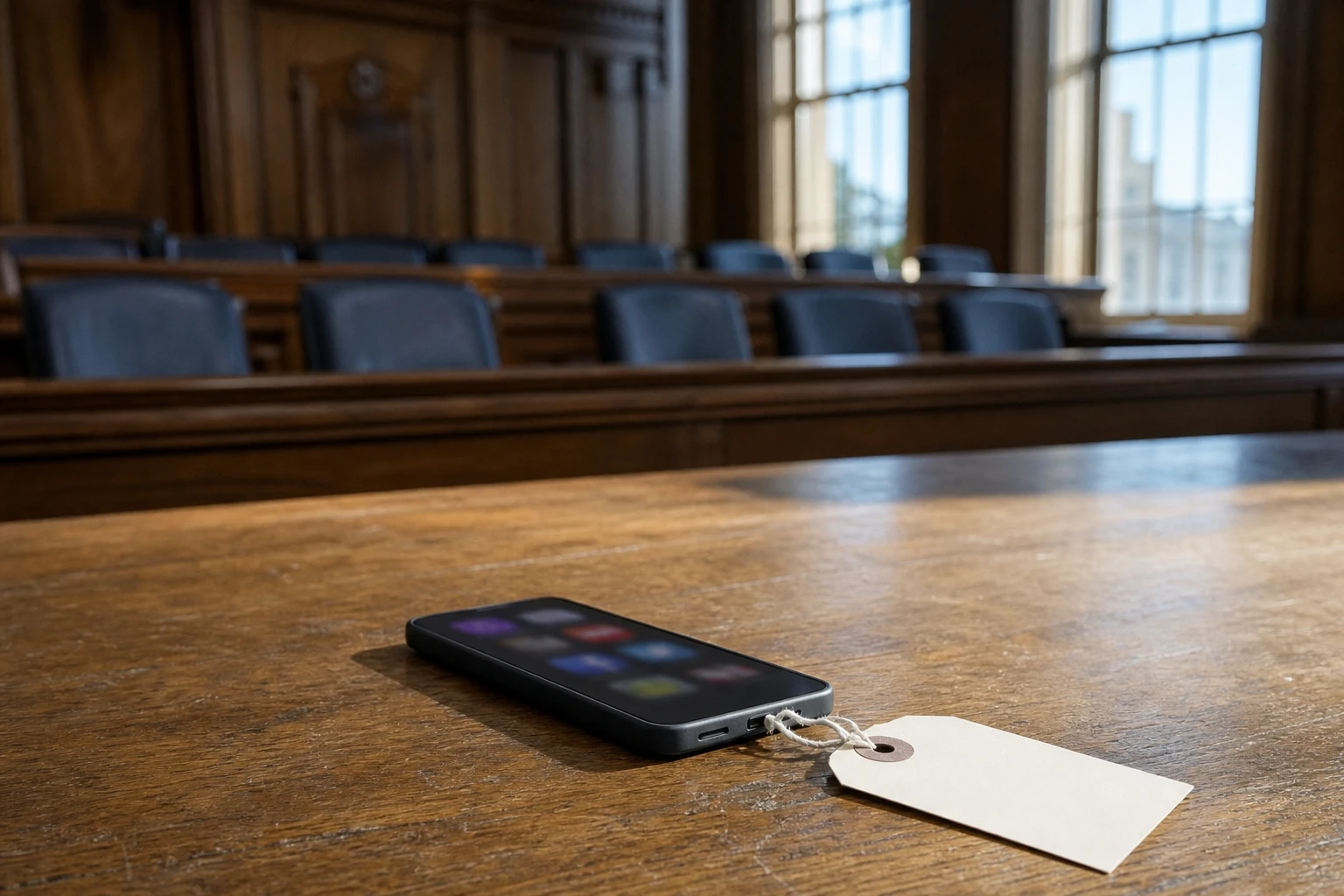
Could One Verdict Redesign Instagram for Everyone?
Probably, yes. Meta doesn’t run fifty separate versions of Instagram for fifty states, and building one just for Tennessee teenagers would be an engineering and legal headache no company wants. A Nashville order touching Reels, autoplay or notifications would likely end up applied to every teen account Meta has, not only the ones in Tennessee.
That isn’t a hypothetical. Meta has followed this exact script before with teen safety features: test a change in a handful of markets, then take it worldwide once it survives contact with regulators and courts.
- September 2024: Instagram launches Teen Accounts with private-by-default profiles, restricted messaging and required parental supervision for users under 16.
- October 2025: A “13+” content setting modeled on movie ratings arrives, but only in the United States, United Kingdom, Australia and Canada.
- April 2026: Ad targeting on under-18 accounts is locked worldwide to just age, location and gender, stripping out every other signal advertisers had used.
- June 2026: The 13+ default, tested first in India, becomes a global default across Instagram, Facebook and Messenger.
Each step began as a response to pressure in one place and ended up as a setting every teenager on the platform lives under. Legal analysts tracking the Tennessee case have made a similar point about any design order that comes out of it: running a different Instagram in Tennessee than everywhere else would be an operational headache, meaning one verdict could set design standards nationwide by default.
What Losing Has Already Cost Meta
Tennessee isn’t the first state to put Instagram’s design in front of a jury, and the figures from the cases that came before it show the stakes rising fast.
| Case | Date | Outcome or Demand | Status |
|---|---|---|---|
| New Mexico v. Meta, Santa Fe | March 2026 | $375 million civil penalty, jury verdict | Meta appealing |
| California bellwether, Los Angeles Superior Court | Verdict March 25, 2026; upheld June 25, 2026 | $6 million against Meta and YouTube | Meta appealing |
| Kentucky school district | May 2026 | $9 million settlement | Resolved |
| Tennessee v. Meta, Nashville | Trial opened July 20, 2026 | Up to $1,000 per violation, plus a redesign order | Jury deciding liability |
| California federal trial, 29 states plus CA, CO, KY, NJ | Opens August 18, 2026 | States seeking more than $1 trillion combined | Pending |
New Mexico’s lawyers had asked jurors for more than $2 billion in that case. They settled on $375 million instead, the maximum available under a law that caps penalties at $5,000 per violation. Tennessee’s cap is a fifth of that per infraction, though its jury could still find far more infractions than New Mexico’s did.
Meta is appealing both the New Mexico penalty and the upheld California verdict. It called the $1 trillion figure in the August case “unmoored” from any real measure of harm in a court filing earlier this month.
Section 230’s Shrinking Shield
Meta’s defense in nearly every one of these cases starts in the same place: Section 230 of the Communications Decency Act, the 1996 federal law shielding platforms from liability for content their users post. Tennessee’s case, like the others, tests whether that shield also covers decisions about how the product itself works.
Courts have increasingly said it doesn’t reach that far. A Massachusetts appeals court rejected Meta’s bid to dismiss a similar state lawsuit in 2024, ruling that the case targeted Meta’s conduct rather than user content. Judges overseeing the two biggest tracks of litigation, Los Angeles Superior Court’s Carolyn Kuhl and the federal MDL’s Yvonne Gonzalez Rogers, have both treated features like infinite scrolling, autoplay and algorithm-driven recommendations as products rather than protected speech.
On June 25, a California judge upheld the $6 million bellwether verdict against Meta and YouTube, rejecting their argument that Section 230 should have barred the case entirely. A panel of the 9th U.S. Circuit Court of Appeals has separately signaled skepticism that the wider litigation can be dismissed on Section 230 grounds.
That fight over how far a liability shield stretches is playing out elsewhere in the courts too. The U.S. Supreme Court ruled this year that Cox Communications wasn’t liable for customer music piracy, a separate test of how much responsibility an intermediary carries for what its users do on its network.
A Summer Calendar With No Empty Weeks
Tennessee’s trial overlaps with a stretch of litigation that leaves Meta almost no room to breathe. A trial pairing Meta with Snap Inc. opens July 27 in a case filed by a 15-year-old Florida boy who says social media harmed his mental health. On August 18, a federal trial opens in California involving 29 states alleging Meta violated federal child data protection law, plus additional claims from California, Colorado, Kentucky and New Jersey.
Both trials run alongside a much larger federal docket. Multidistrict litigation number 3047, overseen by Judge Yvonne Gonzalez Rogers in Oakland, consolidates thousands of lawsuits alleging Meta and other platforms are designed to maximize screen time and encourage addictive behavior in teenagers.
Nearly 600 federal cases were consolidated there in October 2022. By July 2026, the docket held 2,893 pending cases.
- What we know: jury selection began July 20 in Davidson County Chancery Court, the trial is scheduled for seven weeks, and Tennessee wants both fines and a redesign order.
- What we know: Meta’s core defenses are Section 230 immunity and the safety controls already built into Teen Accounts.
- What’s unconfirmed: how many individual violations Tennessee will ask jurors to count, which sets the ceiling on any fine.
- What’s unconfirmed: whether the overlap with the California trials will push either side to seek a delay in Nashville.
Nearly every state in the country has now filed some form of claim against Meta over its platforms’ effect on children, according to Reuters, which first reported the overlap between the Tennessee and California trials.
Meta’s Pitch Leans on a Decade of Safety Defaults
We want them to do that in a protected space, which is why we’ve spent a decade building safe, age-appropriate defaults for teens alongside simple tools for parents to set the right boundaries for their family.
A Meta spokesperson said that in response to Tennessee’s lawsuit, pointing to the company’s built-in parental controls rather than disputing the underlying research directly.
The company backs that argument with its own numbers. In a Meta-commissioned Ipsos survey released alongside the original 13+ rollout, 95% of surveyed parents called the updated settings helpful, and 90% said the changes made it easier to understand what their teen sees on Instagram.
The Nashville trial is scheduled to run seven weeks from its July 20 start. That points to a jury verdict on liability sometime in early September, before the case even reaches the phase where a judge weighs penalties or orders changes to the app.
Frequently Asked Questions
What is Section 230 and why does Meta keep citing it?
Section 230 of the Communications Decency Act, passed by Congress in 1996, generally shields online platforms from liability for content posted by their users. Meta has invoked it in nearly every youth safety lawsuit it faces, but Tennessee and several other states argue the law was never meant to cover a company’s own product design choices, a distinction courts have increasingly accepted in 2026 rulings.
What is MDL 3047?
MDL 3047 is the multidistrict litigation number assigned to consolidate thousands of individual social media addiction lawsuits against Meta, Snap, TikTok’s parent ByteDance and Google’s YouTube before one federal judge in Oakland for shared pretrial rulings. It doesn’t produce its own verdicts on its own; its first bellwether trial was expected to reach a California courtroom this summer.
Will Mark Zuckerberg testify in the Tennessee trial?
No testimony date for Zuckerberg has been confirmed in Nashville, though he is expected to testify in the parallel federal trial opening August 18 in California alongside Instagram’s head, Adam Mosseri. Zuckerberg is also named throughout Tennessee’s complaint as the executive employees say was warned directly about research showing Instagram’s risks to teens.
Has any court dismissed claims against Meta in these cases?
Judges have narrowed some claims without ending the litigation. The federal MDL judge has twice rejected attempts to hold Zuckerberg personally liable as an individual defendant, though the case against Meta as a company continues. No court has yet thrown out the core design-based claims driving the state lawsuits.


Replit Opens Its London Office Inside an AI Crowd

Straight Circle Trailer Lands Without a U.S. Date

Anemo Labs Bets £700,000 on an AI Sense of Smell

Nintendo Prices the Zelda 40th Switch 2 at $519

Copilot Capital Buys the Autopilot Already Running 90 GW

Ground A Raises €9.1 Million for a Pallet Laser

Gibney’s Musk Film Opens in Venice Without Its Subject

Torvalds Blames AI for a Full-Fat Linux 7.3-rc2

Dexter Returns Sharper, Older, and Stuck Between Killers

Meta’s Muse Agent Can Spend Before the Privacy Lock

Walter’s TWG Insists No Fraud as Insurer Probes Force Cleanup

30-Year Yield Hits 5.32% Highest Since 2007 as Debt Supply Locks In Costs

PCE Stays at 3.7% as Gas and Tariffs Outrun Coming Revisions

Evernorth S-4 Clears Path for Active XRP Treasury on Nasdaq

Astute’s $1.2M bet makes B2B creator deals feed AI discovery

Strategy Parks $1.59B Cash While Bitcoin Stack Stays Flat

CLARITY Act Cloture Opens a Door Ethics Still Blocks

Instinct Hits $2.5 Billion as AI Agent Access Sparks Trust Fights

Oracle’s 2.8 GW Bloom Deal Exposes the AI Power Bypass

AI data centers win as RAM kits jump nearly 500 percent
-
 FINANCE3 months ago
Zcash Patched a Double-Spend Bug as ZEC Climbed 5%
-
 ENTERTAINMENT3 months ago
Steam Summer Sale 2026 Locks In June 25 to July 9 Dates
-

 FINANCE2 months ago
CLARITY Act Final Text Expected This Weekend as 60-Vote Hurdle Looms
-
 NEWS4 months ago
Meta Adds AI Replies to Threads, But Users Can’t Block It
-
 ENTERTAINMENT5 months ago
Extraction 3 Is Officially Coming to Netflix in 2027
-

 NEWS3 months ago
YouTube Shorts is testing a heart in place of the thumbs-up
-
 NEWS1 month ago
Senators Force Apple Off Chinese Memory as Big Three Cash In
-

 NEWS3 months ago
NEURA Robotics’ $1.4B Series C Redraws Europe’s Physical AI Bet