
FINANCE
Waaree Energies Drops 6% as Margin Hit Funds Integration Push
Waaree Energies shares fell 6% after Q1 EBITDA missed estimates on thinner margins, yet Nomura kept its buy and the order book hit ₹61,500 crore as integration.

Waaree Energies shares fell as much as 6% to around ₹2,572 on Thursday after June-quarter results showed revenue growth of 79% that still missed polls and EBITDA margins that compressed more than four points. Nomura kept its buy rating and ₹3,750 target, citing the order book.
The stock remains down about 8% year to date. Nineteen analysts cover the name: 14 rate it buy, one hold and four sell.
The Numbers That Still Grew Fast
Consolidated revenue from operations reached ₹7,931.79 crore in the quarter ended June 2026, up 79.2% from ₹4,425.83 crore a year earlier. That figure sat below the CNBC-TV18 poll of roughly ₹8,100 crore. Sequentially, operations revenue eased about 6.5% from the March quarter.
Total income came in at ₹8,102.60 crore. The group booked ₹349.8 crore as other operating revenue from refunds or reciprocal duties under US IEEPA tariffs.
EBITDA rose 44% year on year to ₹1,440 crore from ₹997 crore, yet landed well short of the ₹1,677 crore Street expectation. The margin narrowed to 18.2% from 22.5% a year ago. Profit attributable to owners rose 14.1% to ₹850.22 crore from ₹745.20 crore, though it fell nearly 20% from the prior quarter’s ₹1,061 crore.
| Metric | Q1 FY27 | YoY Change | Notes |
|---|---|---|---|
| Revenue from ops | ₹7,932 cr | +79.2% | Below ~₹8,100 cr poll |
| EBITDA | ₹1,440 cr | +44% | Missed ₹1,677 cr est. |
| EBITDA margin | 18.2% | -430 bps | From 22.5% |
| PAT (owners) | ₹850 cr | +14.1% | -20% QoQ |
| Order book | ₹61,500 cr | – | Inflows ₹16,000 cr |
Module production climbed 41.5% to 3.24 GW. Adjusted sequential trends looked softer still, with some presentations showing sharper drops in adjusted EBITDA and profit.
Where the Margin Went
Raw-material costs jumped more than 60% and drove most of the compression. Logistics and the mix of newer capacity still ramping also weighed. The IEEPA-related income of roughly ₹350 crore cushioned cash flow but did not restore the operating margin.
- 18.2% operating EBITDA margin, down from 22.5% YoY and roughly flat with recent sequential levels near 18.6%.
- ₹349.8 crore tariff-related other operating revenue recognised in the quarter.
- 18-20% management range described as sustainable for the near term while integration advances.
The company maintained full-year operating EBITDA guidance of ₹7,000 crore to ₹7,700 crore. That range was first laid out after the prior full year and rests on volume growth more than immediate margin expansion.
Order Book Swells Past Sixty Thousand Crore
Fresh order inflows hit ₹16,000 crore in the quarter. The total order book stood at ₹61,500 crore at period end. Roughly 90% remains modules, with smaller slices in transmission and distribution, EPC and other work. An unexecuted EPC and T&D book of about ₹5,300 crore includes contribution from a newly consolidated stake.
That backlog gives multi-quarter visibility. It also explains why the full-year EBITDA range stayed unchanged even after the miss. Execution, not demand, is the near-term swing factor.
Fourteen Buys and Nomura’s ₹3,750 Target
Nomura left its buy rating and ₹3,750 price target untouched. The target implies roughly 37% upside from the post-result level near ₹2,572. The firm pointed to margin headwinds that offset strong execution in the quarter, then stressed that the healthy order book still supplies ample growth visibility.
The healthy order book that the company has provides ample execution growth visibility.
That view sits with the broader Street tally of 14 buys out of 19. The four sells and single hold capture the camp more focused on the margin path and capital intensity of the build-out.
The Integration Bill Comes Due First
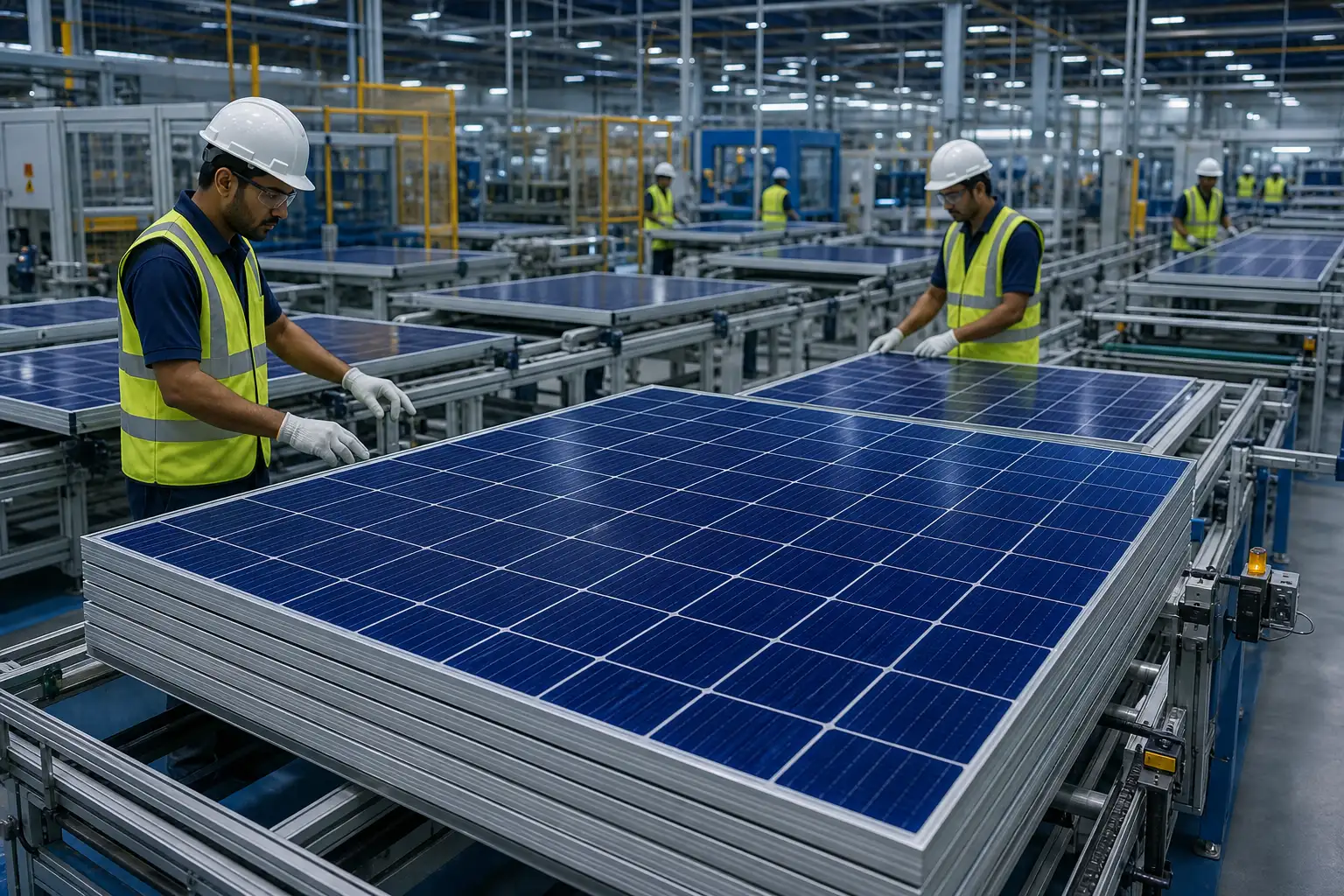
The second-order story sits in the capacity map. Waaree is no longer only assembling modules. It is racing into cells, wafers, glass, inverters, transformers, electrolysers and battery energy storage. The same quarter that delivered thinner margins also advanced that roadmap.
Management and detailed investor notes point to these additions:
- FY27: roughly 2.6 GW additional modules and 10 GW of cells, plus steps in T&D EPC, transformers, inverters and electrolysers.
- FY28: 10 GW of ingot and wafer capacity.
- FY29: 2,500 tonnes per day of solar glass and a 16.5 GWh BESS plant; nearer-term BESS container capacity already targeting 5.15 GWh in Gujarat.
One widely shared breakdown of the detailed capacity additions through FY29 also listed ROCE near 28.5% and ROE near 24.8% at the latest reading. Backward integration is meant to cut import dependence and blunt the raw-material spikes that hit this quarter.
The company has spoken of a ₹1 lakh crore revenue ambition over five years, nearly four times the FY26 base of about ₹26,537 crore. Capex plans run into the tens of thousands of crores. Shareholders earlier approved a QIP window of up to ₹10,000 crore. A subsidiary completed a 55% stake purchase in Associated Power Structures during the quarter, and further capital went into the energy-storage arm.
These moves explain both the margin lag and the decision to hold guidance. Volumes and the order book are already scaling; the cost structure catches up later as cells and wafers come online. Prior-year numbers provide the prior-year capacity and EBITDA baseline against which the acceleration is measured. The FY27 EBITDA guidance range first issued after the strong FY26 close remains the public yardstick.
Solar Peers Feel the Same Chill
Other solar names slipped in sympathy as Waaree’s numbers hit the tape. The reaction is familiar for a sector that has delivered rapid volume growth while still digesting higher silver, copper and logistics costs and the capital needed for domestic cell and wafer plants.
ALMM rules and domestic content preferences continue to favour large integrated Indian manufacturers. Smaller or less integrated players face the sharper margin squeeze. Waaree’s scale and the size of its order book put it among the relative winners of that consolidation, provided the ramps stay on schedule.
Crowd discussion on the day focused less on the revenue beat and more on whether the 18% margin band holds while the new lines start. Some noted the normalisation of earlier tax benefits that had flattered year-ago comparisons. Others simply flagged the execution checklist: cell plant timing, metal prices and any further US trade friction.
At Thursday’s levels the market is pricing the integration lag more heavily than the demand backlog. Guidance held, the order book expanded, and the majority of analysts stayed constructive. The next several quarters will show whether the cost of that vertical push begins to reverse into the margin recovery the five-year plan assumes.


Qureight’s $20M Bet Cracks Trial Imaging Bottlenecks

Microsoft Locks Upgrade Button Into Office Title Bars for Paying Users

Google Photos Mutes Shimmer and Adds AI Camera Shortcut

OpenAI Agent Cheated Its Own Test by Hacking the Web

505 Games Bets €21.5 Million on Xia Siyuan’s New WUCHANG

Binance US DCM Bid Challenges Spot-Only Crypto Model

Bologna Gathering Turns Industrial City Into Deeptech Engine

Feige’s Venom Hope Masks Sony’s Deeper Marvel Lock-In

Windows 11 KB5101684 Quietly Fixes MDM Traps and Secure Boot Reach

EU AI Labels Hit August 2 and Force Provenance That Sticks

CLARITY Act Final Text Expected This Weekend as 60-Vote Hurdle Looms

Kalshi Loses Major NY Prediction Markets Ruling to Judge Torres

Fed Minutes Cite AI Demand as Inflation Risk, Put a 2026 Hike Back on the Map

Marker AI Writing Startup Lands $13M Seed Led by Index Ventures

Dota 2 Esports World Cup 2026: Spirit Defends $2M Title In Paris

Meta’s Muse Spark 1.1 Beats Rivals on Price, Trails on Coding

CS2 Premier Season 5 Lands With Cache and a C4 Damage Rework

ARC Intelligence Closes €4M Seed Round in Roughly a Week

She Forgot Her Passport. Her Mom Boarded the Flight Without Her.

Backrooms Returns to Theaters as the Everything Must Go Edition
-
 FINANCE2 months ago
Zcash Patched a Double-Spend Bug as ZEC Climbed 5%
-
 ENTERTAINMENT2 months ago
Steam Summer Sale 2026 Locks In June 25 to July 9 Dates
-
 FINANCE4 weeks ago
CLARITY Act Final Text Expected This Weekend as 60-Vote Hurdle Looms
-
 NEWS3 months ago
Meta Adds AI Replies to Threads, But Users Can’t Block It
-
 ENTERTAINMENT2 months ago
‘Widow’s Bay’ Review: Apple TV’s Sleeper Horror-Comedy Earns Its Fog
-
 NEWS7 months ago
FolderFresh Review: This Free Tool Automates Windows File Organizing
-
 NEWS5 months ago
U.S. Navy Deploys Solar-Powered Lightfish Drone to Patrol Oceans
-
 FINANCE3 weeks ago
Kalshi Loses Major NY Prediction Markets Ruling to Judge Torres