
BUSINESS
Florida THC Drinks Become a Prize After the 0.4 mg Cap
Florida hemp THC drinks face a 0.4 milligram cap on December 11, while liquor wholesalers and medical dispensaries compete for the customers.

Congress pushed most of the federal hemp THC cap to December 11, 2026, but the 0.4 milligram per-container limit itself did not move. Florida taprooms and smoke shops still pour 5 to 10 milligram cans that will fail that test the moment it lands.
The fight in Pensacola is no longer a simple plea to save a summer seller. It is a fight over who gets the customer when a gas-station can can no longer legally carry a dose.
Congress Moved the Deadline, Not the 0.4 mg Cap
On November 12, 2025, President Donald Trump signed Public Law 119-37, tucked inside a shutdown-ending spending package. Section 781 of the 2025 law that redefined hemp replaced the old delta-9-only yardstick with total THC, including THCA and other cannabinoids that HHS decides have similar effects, and it capped finished hemp products at 0.4 milligrams of that mix per innermost retail container.
The original clock ran 365 days. That would have been November 12, 2026, the date Florida hemp sellers were still citing in late August. Then the White House backed a short extension, and Congress put it in the next stopgap.
THE FEDERAL CLOCK
- November 12, 2025: Public Law 119-37 is signed, rewriting the federal hemp definition and setting a one-year fuse.
- August 8, 2026: The Senate passes the next funding bill 90 to 6 after tabling, 61 to 32, an amendment from Sen. Ted Budd to strip the hemp delay.
- September 1, 2026: The House agrees 370 to 48, with 19 Republicans and 29 Democrats voting no.
- September 2, 2026: Trump signs H.R. 6500, now Public Law 119-103, which funds agencies through December 11 and is written to delay certain hemp definition changes until that same date.
- November 12, 2026: Products with cannabinoids the cannabis plant cannot naturally produce still lose federal hemp status on the original day.
- December 11, 2026: The total-THC test and the 0.4 milligram per-container cap take effect for other finished hemp products.
The White House has said this 30-day move is the last extension it will support. Standalone bills to delay the cap until 2028, repeal it, or replace it with taxes and age gates remain in committee. The 2026 farm bill drafts have not rewritten Section 781.
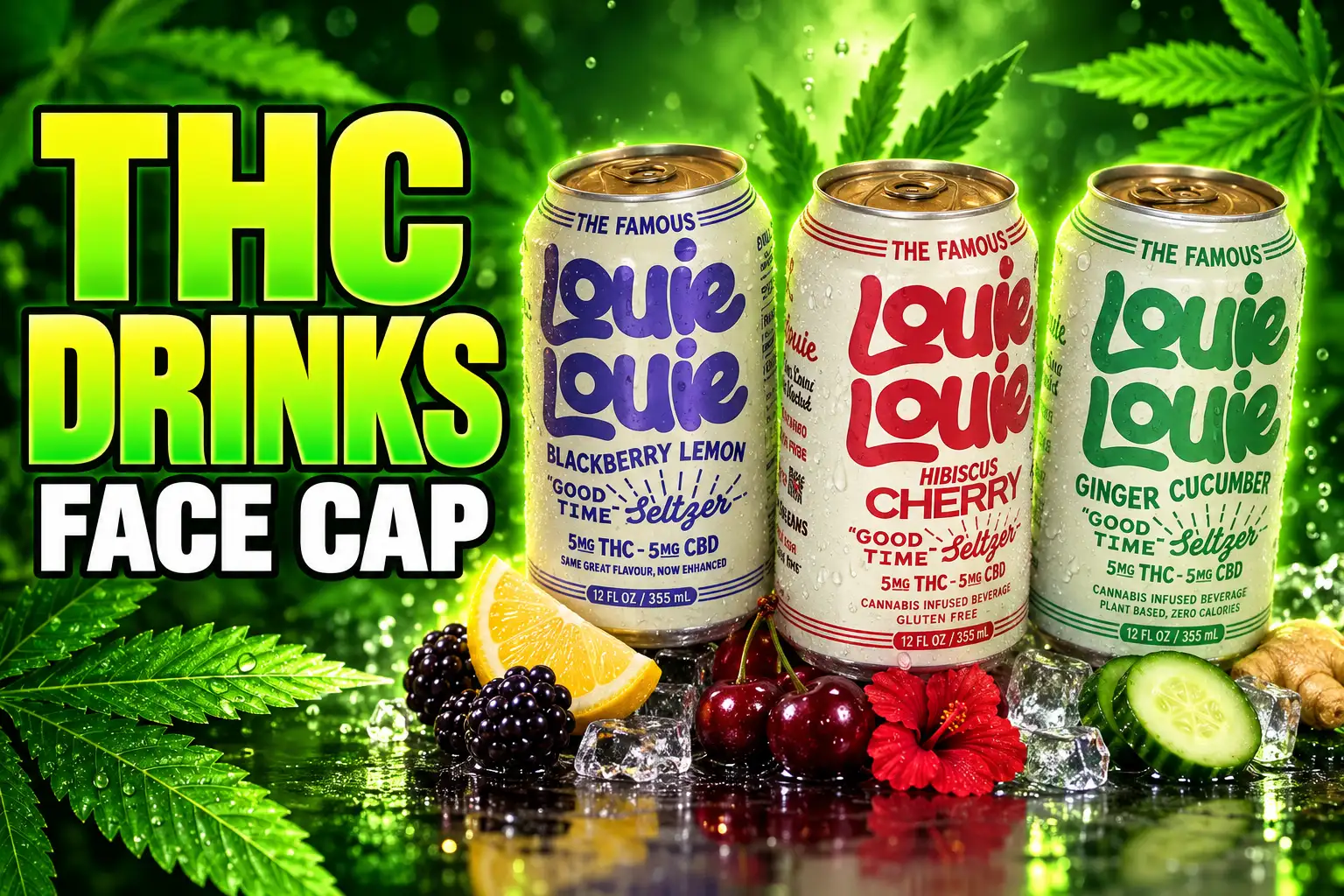
How Low 0.4 Milligrams Is
The cap is not a per-sip rule. It is a per-container rule. A four-pack, a jar, or a single can is one unit, and the milligrams inside are added together. A 10 milligram drink is 25 times the legal line. Reformulating to 0.4 milligrams does not leave a weaker buzz. It leaves a trace.
Mike Smith, co-owner of Herban Flow in St. Petersburg, put the shelf shock in bar math: about 80 percent of what his shop sells would miss the new cut, and a customer who wants 10 milligrams would have to “drink just about 20 cans to get to that same amount.” The statute’s ratio is 25 cans, not 20, which is the same problem in plainer numbers. No one is buying a case of near-zero seltzer to chase a 10 milligram night.
THE 0.4 MG MATH
| Product | THC in the container | Times over 0.4 mg |
|---|---|---|
| One 5 mg gummy | 5 mg | 12.5x |
| One 10 mg drink | 10 mg | 25x |
| 20-count jar of 5 mg gummies | 100 mg | 250x |
The U.S. Hemp Roundtable has estimated that the new definition knocks out roughly 95 percent of hemp-derived cannabinoid products now on sale, including some full-spectrum CBD formulas that were never sold as a high. Fiber and grain hemp stay inside the definition. Industrial stalks were never the target.
NielsenIQ’s retail tape shows why liquor aisles care. THC drinks rang up $239 million in measured retail sales in the 52 weeks ending April 4, 2026, up 135 percent from a year earlier, across more than 1,170 products and 200 brands. Liquor stores led with $132 million. Convenience stores did $55 million. Grocery did $49 million. Cans at 10 milligrams already take 51 percent of those dollars. MRI-Simmons, in the same NielsenIQ packet, found that 28 percent of U.S. adults, about 74 million people, have tried a cannabis-infused drink, and 50 percent, about 130 million, say they would.
Kaleigh Theriault, NielsenIQ’s director of beverage alcohol thought leadership, said nothing in beer, wine, or spirits is putting up numbers like that right now. The measured set excludes dispensaries and most online sales, so the $239 million figure is the supermarket-and-liquor slice, not the whole thirst.
Florida’s Medical System Cannot Catch the Overflow
Florida never passed a milligram cap of its own. Florida’s state hemp program rules still treat hemp extract as legal if total delta-9 THC stays at or under 0.3 percent on a wet-weight basis, with independent testing, and with retail aimed at adults 21 and over. Gov. Ron DeSantis vetoed a 2024 milligram cap. House Bill 801 and Senate Bill 1678, which would have run THC drinks through alcohol licensing, died in the 2026 session.
That is why a 10 milligram seltzer sits next to beer at a Pensacola brewery. Lanie Knight, a bartender at Perfect Plain Brewing Co., told a local crew in August that guests asked for non-alcoholic options, that many are skipping booze and some hold medical cards, and that the drinks became a real slice of summer sales. “I think a lot of people would be disappointed,” she said, if Florida could not keep them.
Youth-access arguments often skip that 21-and-over hemp retail rule. The sharper Florida problem is the medical wall. This state has no adult-use dispensary. If a hemp can is treated as marijuana under the Controlled Substances Act, it does not slide onto a rec menu. It leaves the cooler unless the drinker already has a card.
FLORIDA’S OTHER THC COUNTER
- Active patients: The Office of Medical Marijuana Use counted 941,509 qualified patients with active identification cards as of September 4, 2026.
- Store network: Licensed shops numbered 779 after a new Curaleaf site in Riverview was approved in the week of August 28.
- Who holds the till: About 25 medical marijuana treatment centers run the vertical system, and Trulieve alone had 170 locations in that weekly report.
Tourists, college towns, and anyone without a physician certification are the customers those 779 doors cannot take. Missouri can fold intoxicating hemp into licensed marijuana stores. Florida cannot. The medical program is also fenced: home grow is banned, licenses are capped, and a new operator still faces a seven-figure cost of entry. Hemp drinks were the workaround that did not need a card.
The Liquor Trucks That Want the Category
The people now writing rescue bills are not only hemp farmers. Wine and spirits wholesalers want the cans inside the three-tier system that already moves bourbon and pinot.
In July, Reps. Andy Barr of Kentucky and Angie Craig of Minnesota filed the Lawful Hemp Protection Act, with a 21-and-over age gate, a ban on synthetics, and a federal excise tax of 5 cents per milligram of THC on hemp drinks, paid by the manufacturer. Wine & Spirits Wholesalers of America endorsed that frame and asked for more talk on the rate. In August, Reps. Beth Van Duyne of Texas and Greg Landsman of Ohio filed the Beverage Regulatory Parity Act, which would hand hemp drinks to the Alcohol and Tobacco Tax and Trade Bureau and run them through alcohol distributors. WSWA and a retailer group that includes Total Wine, BevMo, ABC Fine Wine & Spirits, and Spec’s lined up behind it.
We don’t need to reinvent the wheel. The beverage alcohol model has worked for more than 90 years. These beverages are intoxicating products and should be treated like beverage alcohol.
Dawson Hobbs, executive vice president of government affairs, Wine & Spirits Wholesalers of America, on the Barr-Craig bill
Hobbs has also pressed licensed cannabis firms to back three-tier rules for hemp beverages instead of a hard stop. That is a change in the map, not a conversion of the whole liquor lobby. Beer and spirits groups spent 2025 pushing Congress to close the dry-weight opening, and that push helped land the 0.4 milligram line in the November 2025 package. Sen. Rand Paul, who tried to block the language, later said, “There was a little bit of the alcohol lobby and the cannabis lobby.” Some producers wanted the cans gone. The wholesalers now want them taxed, labeled, and on the truck.
Payments are not waiting for a floor vote. Square has already told some sellers to stop hemp and CBD checkout. Joe Gerrity, chief executive of Crescent Canna, has said his company cut half its staff this year as buyers froze. Jake Bullock, chief executive of Cann, has said the drinks are moving at Target while wholesalers pull back on restocks. A 30-day delay does not refill a cooler if the distributor will not take the next pallet.
Who Gains When the Cans Leave Store Shelves?
If December 11 arrives with no new statute, the 0.4 milligram line does not create a Florida rec market. It creates a hole, and several parties are already measuring it.
WHO INHERITS THE COOLER
- Licensed medical shops: They keep selling tested marijuana under state rules, and some of the hemp-drink crowd already holds cards. They cannot ring up a tourist with no certification.
- Alcohol wholesalers: They gain only if a parity bill passes and the can stays legal as a taxed adult drink. If the cap lands first, they lose a SKU that was growing inside liquor stores.
- Fiber and grain farmers: The new hemp definition keeps them in. Their crop was never the intoxicating shelf.
- Smoke shops and taprooms: They lose the 5 to 10 milligram can that needed no medical card and no dispensary counter.
- Unlicensed sellers: Demand does not vanish with a milligram line. Product that cannot sit in a brewery cooler has other doors.
Thirty-five state and territory attorneys general, Tennessee’s among them, urged Congress in August to reject any delay, arguing the intoxicating hemp trade had used the 2018 wording as a sales channel. Sen. Mitch McConnell, who helped write that 2018 definition and later called the drink boom a loophole, said the 2025 fix “will keep these dangerous products out of the hands of children, while preserving the hemp industry for farmers.” He added that industrial hemp and CBD would remain legal for industrial uses. CBD’s fate is messier than that sentence, because some full-spectrum bottles already sit above 0.4 milligrams of leftover THC once the whole container is counted.
The Congressional Research Service has noted that products pushed out of the hemp definition would fall under the Controlled Substances Act as marijuana, and that it is unclear how hard the FDA and DEA will police leftovers on shelves. Operators are planning against a line whose edges the FDA still has not drawn. The agency has not published the cannabinoid lists or the extra “container” guidance the statute told it to issue.
The 2018 Test McConnell Is Closing
The 2018 farm bill defined hemp as Cannabis sativa with no more than 0.3 percent delta-9 THC on a dry-weight basis and pulled that plant out of the federal marijuana definition. Weight did the rest. A 10 milligram pour in a 12-ounce can is a rounding error against the drink’s mass, so the same milligrams that would be a dose in a gummy stayed “hemp” in a seltzer.
That is the opening McConnell spent 2025 trying to shut. It is also the opening Florida never plugged. The state’s hemp extract rule still uses a percentage, not milligrams, which is why Target could put hemp THC drinks on Florida shelves and why a bartender in Pensacola could treat them as the non-alcoholic pour.
Licensed medical operators lived with that parallel market for years. Hemp gummies and seltzers skipped physician visits, vertical integration, and dispensary-only sales. Several multistate marijuana companies still make hemp SKUs; Curaleaf has said it is leaving that lane because of the coming cap. The quiet interest in Florida is simpler than a lobbying spreadsheet. If the can dies, some of those dollars try to become cardholders. Many will not, because a vacation week is a short time to see a doctor.
November 12 Still Hits Lab-Made Cannabinoids
The September 2 law did not freeze every clause. The delay’s carve-out leaves November 12 in force for cannabinoids the Cannabis sativa plant cannot naturally produce. Delta-8 converted from CBD in a lab, and similar isomer products that built a lot of gas-station inventory, are the SKUs most exposed to that earlier date. Lawyers will fight over the phrase “capable of being naturally produced.” Shoppers will see empty pegs before they see a brief.
WHAT WE KNOW
- The cap: 0.4 milligrams of total THC and similar-effect cannabinoids per innermost container is enacted law, not a draft.
- The new date: December 11, 2026, is when that cap applies to most finished hemp products.
- The old date: November 12, 2026, still applies to cannabinoids the plant cannot naturally make.
WHAT IS UNCONFIRMED
- A liquor-style rescue: Neither the Barr-Craig bill nor the Van Duyne-Landsman bill has had a committee vote, and WSWA has not agreed a tax rate.
- Enforcement muscle: No public FDA or DEA plan yet says how leftover 5 and 10 milligram cans will be pulled, ignored, or prosecuted.
- A further delay: The White House has said it will not back another extension; that is a statement, not a lock on what a later spending fight can hold.
December 11 is also the morning the stopgap itself runs out. The 0.4 milligram cap and the next government-funding deadline now share a calendar square, which is why hemp language keeps showing up in bills that are supposed to be about keeping the lights on. Florida’s hemp THC drinks can stay in the cooler through that morning only if Congress writes a different rule than the one it already passed.
Disclaimer: This article is news reporting on federal hemp law and Florida retail rules. It is informational only and is not legal advice, medical advice, or a guide to buying, selling, or possessing controlled substances. Readers who need to act on these dates should consult a licensed attorney, and anyone seeking medical cannabis in Florida should see a qualified physician in the state’s medical marijuana program. Figures, bill statuses, and effective dates reflect public laws and company statements published through September 2026 and can change if Congress or regulators act again.

UPI MDR Delay Hands Traders the Calendar After Paytm Falls

Google Messages Builds Nine In-Chat Games After Samsung’s Exit

Anthropic’s $100 Million Academy Trains the Firms That Bill Both Sides

Toyota’s Electric C-HR Leaves the Cheap Twin to Subaru

Markets Bet the Fed Skips October After Hawkish Minutes

The Orchard Bug Forced Zcash to Open an Empty Pool

The $5.99 Game That Won Steam’s 2026 Summer Sale

Don Lee Joins Hemsworth as Extraction 3 Starts Shooting

YouTube Shorts Retires Dislikes and Swaps Likes for Hearts

NEURA Robotics Is Spending Its $1.4B on a Machine Stack
-
 NEWS4 months ago
The Orchard Bug Forced Zcash to Open an Empty Pool
-
 GAMING4 months ago
The $5.99 Game That Won Steam’s 2026 Summer Sale
-
 ENTERTAINMENT6 months ago
Don Lee Joins Hemsworth as Extraction 3 Starts Shooting
-
 NEWS4 months ago
YouTube Shorts Retires Dislikes and Swaps Likes for Hearts
-
 NEWS4 months ago
NEURA Robotics Is Spending Its $1.4B on a Machine Stack
-

 AUTO6 months ago
Kawasaki Bets the New Z1100 Against Its Own Supercharger
-

 BUSINESS5 months ago
Norway’s Export Bank Backs Nscale’s $790 Million Narvik Loan
-

 GAMING4 months ago
Game of Thrones Dragonfire Follows Boston’s Conquest Playbook