
NEWS
ELO Bets Sentinel XR Gaming Glasses at IFA Berlin
ELO is demoing $599.99 Sentinel XR gaming glasses at IFA after a $585,422 Kickstarter, with retail pairs still due in October.

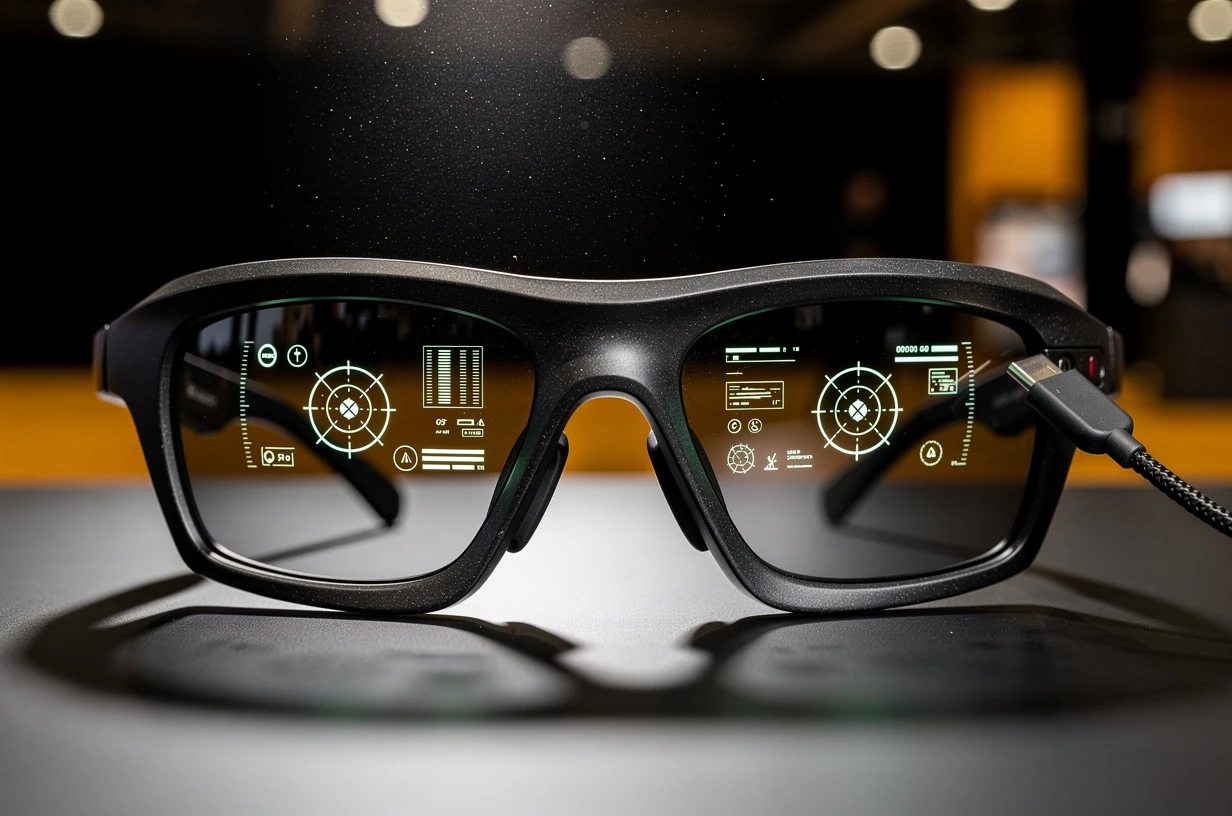
ELO is bringing $599.99 Sentinel XR gaming glasses to IFA Berlin from September 4 to 8, with retail units listed for October. The accessory maker, known for the USB-C Vagabond mobile controller, will share stand H25-375 with Noima Consultancy Ltd. after a Kickstarter that raised $585,422 from 999 backers and missed its first ship window.
Shoppers can already pre-order the Sentinel XR glasses on ELO’s site. The open question at Messe Berlin is whether a delayed, gaming-first pair can take a slot that XREAL and ASUS already sell.
ELO Lands at IFA on a Shared Stand
On September 1, ELO’s account posted the Berlin details: Messe Berlin, stand H25-375, Area B, Space B7, co-exhibiting with Noima Consultancy Ltd. The glasses and the Vagabond controller both go on the table. That is a far smaller footprint than the computing halls around it, and it is the venue for a product that is still on pre-order.
https://x.com/ELO_EsportsG/status/2094800461232763207
IFA 2026 dates and opening hours put the public show from September 4 to 8, with Friday morning held for trade visitors until noon. Media days ran September 2 and 3. ELO is arriving from Gamescom, where it held Hall 10.1, stand F-060, from August 26 to 30, and from Fan Expo Boston, booth 533, on August 7 to 9.
The company line from Gamescom, delivered by CEO Adam Hepburn, was that people would finally see “the complete vision.” IFA is the consumer-electronics version of that same demo, aimed at buyers who never walked the Cologne halls. The stand number is the tell. This is a shared plot, not a solo pavilion, and the first paid boxes are still dated October.
Kickstarter Put Up $585,422 Before Units Shipped
The campaign ran 41 days, from June 24 to August 5, 2025, against a $10,000 goal. It took in $585,422, more than 58 times that target, from 999 backers. Early-bird glasses were $449. The live store price is $599.99, with a 2-year warranty and a 30-day return window listed beside the buy button.
FROM KICKSTARTER TO IFA
- June 24, 2025: Kickstarter opens for Sentinel XR glasses at a $10,000 goal.
- August 5, 2025: Funding closes at $585,422 from 999 backers.
- October 31, 2025: ELO moves delivery from November 2025 to Q1 2026 while arm molds and hinge tests continue.
- December 1, 2025: An update says accessories are ready to ship in January; glasses stay on the Q1 path through EVT, DVT, and a 200 to 500 unit PVT run.
- May 2026: Hepburn says shipping is “in the next couple of months,” with company art still captioned for July.
- August 26, 2026: Gamescom demos run in Cologne. Public pricing is $599 / €499, with October named as the launch month.
- September 4, 2026: IFA Berlin opens with the glasses on a shared stand, retail pairs still listed for October.
That is an 11-month slide from the first promised November 2025 drop. Hepburn did not dress it up when asked about the campaign in May.
Honestly, it’s not the kind of successful Kickstarter story people think it is.
The experience itself? It’s brutal. I wouldn’t sugarcoat that.
Adam Hepburn, CEO of ELO, May 2026 interview
He said building glasses like these takes millions, not thousands, and that Kickstarter has drifted toward a storefront for finished goods. ELO, in his telling, is still doing it the hard way: delays, cash-flow pressure, and factory tweaks on a tight budget. IFA does not erase that ledger. It puts a nearly finished unit in front of people who can still walk next door and buy a rival that already ships.
Sony’s Larger OLED Panels Meet a Narrower View
ELO’s spec sheet lists dual Sony OLED panels at 1,920 x 1,080 per eye, about 4 million pixels, running 120 Hz in 2D and 90 Hz in 3D. Peak panel brightness is 5,000 nits. Light at the eye is listed at 600 nits. Field of view is 52 degrees. Pixel density is listed at 55 PPD. Contrast is 100,000:1, with distortion held under 1 percent. The glasses are TÜV Rheinland certified, with electrochromic dimming that ELO’s own FAQ puts at 99.7 percent light blocking.
Hepburn’s hardware pitch is the panel size. He said ELO is using Sony’s 0.68-inch OLED modules, “the largest panels in this category right now,” in a birdbath optical stack rather than freeform lenses. The point, he said, was a clean image with no odd stretch at the edges, and a true 52-degree view. He also claimed that 52 degrees was the widest in any XR glasses then shipping. The shipping pair that shares ELO’s price, and the ASUS gaming pair above it, both list 57 degrees.
The frame is aircraft-grade aluminum and magnesium, listed at 80 g (2.82 oz). Built-in myopia adjustment runs from 0 to -5.0D, so some short-sighted players can skip clip-on lenses. Interpupillary distance is software-adjusted from 52 to 72 mm. Side fins are there to kill light bleed, a detail Hepburn tied to long sessions rather than a quick flight movie. Dual stereo drivers handle audio. There is no Bose badge on the temples.
A 180-inch virtual screen is the marketing size. Refresh is 120 Hz, with a 1 ms panel response. Those are gaming numbers on paper. They are also the numbers a buyer can already get, in a wider view, from glasses that left the warehouse months ago.
How Sentinel XR Glasses Compare With XREAL and ROG
The honest price fight is not with ASUS’s flagship. It is with the XREAL One Pro for $599, which uses Sony 0.55-inch micro-OLED panels, 120 Hz, 57 degrees, 700 nits at the eye, and an 87 g frame. ASUS and XREAL’s ROG XREAL R1, on sale since June at $849.99, keeps that 57-degree view and 700-nit cap, adds a 240 Hz boost mode, and lists 91 g on the ROG XREAL R1 display specifications page.
PRICE, WEIGHT, AND VIEW COMPARED
| Glasses | Price | Weight | Field of view | Brightness to the eye | Refresh |
|---|---|---|---|---|---|
| ELO Sentinel XR | $599.99 | 80 g | 52° | 600 nits | 120 Hz |
| XREAL One Pro | $599 | 87 g | 57° | 700 nits | 120 Hz |
| ROG XREAL R1 | $849.99 | 91 g | 57° | 700 nits | 240 Hz boost |
Sentinel undercuts the R1 by $250 and sits 11 g under it, 7 g under the One Pro. It also gives up 5 degrees of view and 100 nits at the eye. The 5,000-nit panel peak on ELO’s sheet is the same class of Sony module number other makers quote before the lens; the number that hits the retina, on ELO’s own page, is 600. R1 audio is tuned by Bose and bundled with a control dock that takes HDMI and DisplayPort. Sentinel’s extra cards are the 0.68-inch panels, the 55 PPD claim against the R1’s 40, the built-in diopter, and the 80 g frame.
Birdbath versus prism is the quieter fight. Hepburn says birdbath keeps edges honest. The R1’s flat-prism stack is how ASUS and XREAL stretch to 57 degrees with less bulk at the brow. Until independent meters hit a shipping Sentinel, those are competing design bets, not a settled score.
No Battery on the Face
Hepburn was blunt about what ELO left out. There is no battery in the glasses. A pack, he said, would have pushed the weight past 100 g and added heat and aging. Sentinel pulls power through a magnetic pogo-pin USB-C plug from whatever host it is tied to. Typical draw is under 5 watts. The tether is the cost of the 80 g number.
HEPBURN’S HARDWARE TRADE-OFFS
- No pack in the frame: Glasses stay passively powered over USB-C, so a phone, handheld, or power bank has to feed them.
- Software IPD: Mechanical sliders were skipped to keep the frame clean; the listed range is 52 to 72 mm, which he said was still being tuned in firmware in May.
- No 6DoF chip: That part became viable after the design was locked, and a late swap would have blown the calendar.
- No onboard processor: The host device does the heavy work, which holds the price and the size down and keeps the cable mandatory.
- Heat still in play: He said 5,000-nit panels at 120 Hz forced an aluminum frame, passive cooling, and a multi-layer thermal stack, and that the team was still working the problem.
He put a hard number on the thermal risk: poorly managed glasses can hit 50°C on a face, which he called unusable. Sony’s micro-OLED supply, he added, is the bottleneck for the whole category. ELO went all-in on birdbath because, in his view, that stack still beats waveguide for games and movies. Screen pinning is 3DoF, tuned to cut drift. The spec sheet’s “6DOF Gyro” line is a sensor label; Hepburn said they missed a full 6DoF system on purpose.
Handhelds Need a Cable and Often a Power Bank
The customer ELO is selling is not a mixed-reality worker. It is someone who already owns a Steam Deck, an ASUS ROG Ally, a Lenovo Legion Go 2, a phone, or a Switch 2, and wants a private screen on a train. Hepburn’s kit is explicit: the phone does the processing, the Vagabond Pro is the input, and Sentinel is the display. Plug the glasses into the controller, the controller into the phone, and the handheld stack is a console. The Vagabond Pro is MFi-certified for iOS and Android. iPhone 15 and 16 are on his host list, alongside Android and PC.
Switch and Switch 2 need more than a cable. Nintendo’s USB-C path wants powered passthrough, so ELO points those owners to Envoy, a Qi2.2 power bank that used to be called OmniBase. Without that brick, the Switch claim does not stand. PlayStation 5, Xbox Cloud Gaming, GeForce NOW, and Steam Link are listed as remote-play and cloud paths. HDCP certification, Hepburn said, is what keeps Netflix and Disney+ from blacking out, a detail a lot of no-name glasses skip. ELO’s Unleashed app adds desktop mode and screen anchoring on a phone that has the horsepower to run it.
That is a coherent pitch for people who already live on USB-C handhelds. It is also a pile of dongles next to the R1’s dock and the One Pro’s plug-and-play cable. IFA attendees who only try the glasses on a pre-wired Steam Deck will not see Envoy. Switch 2 owners will.
The Fit Problem From the Cologne Demo
The public X thread around Sentinel is thin. ELO posts booth photos. A few accounts recycle the Gamescom release. The one hands-on that stuck came from XR reviewer VoodooDE on August 28, after time with a unit on the Cologne floor: the display was “insane,” and the prototype fit was “weird.” ELO replied with a thanks. That split is the product in one line. Sony’s panels do the booth trick. The frame still has to sit through Hepburn’s four-hour Zelda session, and a prototype that feels odd on a show floor is the thing October has to fix.
Smart-glasses talk at IFA this year sits in a louder pile, from RayNeo at TCL to the second wave of wearables the show itself has been pushing. Sentinel is not in that AI-glasses conversation. It is a wired monitor for people who already game on USB-C, priced against a shipping XREAL and shown on a consultancy’s shared carpet. Backers who paid $449 in 2025 have been waiting through Q1, through a July caption, and into an October retail date. The stand in Hall 25 opens September 4. The product page still says October.


British Business Bank’s Zinc Fund Will Mint 80 Startups

Philips Hue IFA Gear Opens TVs and Gates the Hub

Souk Raises $1.6 Million for Its AI Partner Manager

Anthropic Bets on Cheaper Cache for Claude Fable 5.1

Food Processors Back Backbone’s €4 Million Quality Round

Scosche Bets IFA Shoppers Will Buy Fewer Charging Bricks

ELO Bets Sentinel XR Gaming Glasses at IFA Berlin

ShiftCam SuperZoom Lenses Bet on a 350mm Phone Gap

Clooney Defends Ruffalo’s Speech While Collecting Venice’s Lion

Jungheinrich Is the Sole Backer of Uplift’s €100M Fund

30-Year Yield Hits 5.32% Highest Since 2007 as Debt Supply Locks In Costs

Walter’s TWG Insists No Fraud as Insurer Probes Force Cleanup

Astute’s $1.2M bet makes B2B creator deals feed AI discovery

Strategy Parks $1.59B Cash While Bitcoin Stack Stays Flat

PCE Stays at 3.7% as Gas and Tariffs Outrun Coming Revisions

SpaceX Stock Rebound Tests Real Demand Before Huge Unlock

The 20% Savings Ideal Meets a 2.7% Reality Check

Amber’s €7M locks Mittelstand knowledge inside Europe

Monzo chair Gary Hoffman exits after board revolt fallout

Nvidia’s $16,000 RTX Pro 6000 Turns Local AI Into a Luxury
-
 FINANCE3 months ago
Zcash Patched a Double-Spend Bug as ZEC Climbed 5%
-
 ENTERTAINMENT3 months ago
Steam Summer Sale 2026 Locks In June 25 to July 9 Dates
-

 FINANCE2 months ago
CLARITY Act Final Text Expected This Weekend as 60-Vote Hurdle Looms
-
 NEWS4 months ago
Meta Adds AI Replies to Threads, But Users Can’t Block It
-

 NEWS3 months ago
YouTube Shorts is testing a heart in place of the thumbs-up
-
 NEWS1 month ago
Senators Force Apple Off Chinese Memory as Big Three Cash In
-

 NEWS3 months ago
NEURA Robotics’ $1.4B Series C Redraws Europe’s Physical AI Bet
-
 ENTERTAINMENT5 months ago
Extraction 3 Is Officially Coming to Netflix in 2027