
NEWS
Philips Hue IFA Gear Opens TVs and Gates the Hub
Signify’s IFA 2026 Philips Hue drop adds a $119.99 screen camera and Nanoleaf hookup, while backup and custom AI stay on Bridge Pro.

Signify opened Philips Hue TV sync without a Bridge on September 3, 2026, then kept cloud backup and custom AI on Bridge Pro. The IFA drop adds a camera that reads the screen, a slimmer 4K HDMI box, a $39.99 Nanoleaf adapter, and a $399.99 rope light.
You can bounce one gradient strip off a TV over Bluetooth. Add a hub later and the cap rises to ten lights. Natural-language automations and a full restore still wait on the $139.99 hub, and restore has no firm ship date.
Hue Will Sync a TV Without a Bridge
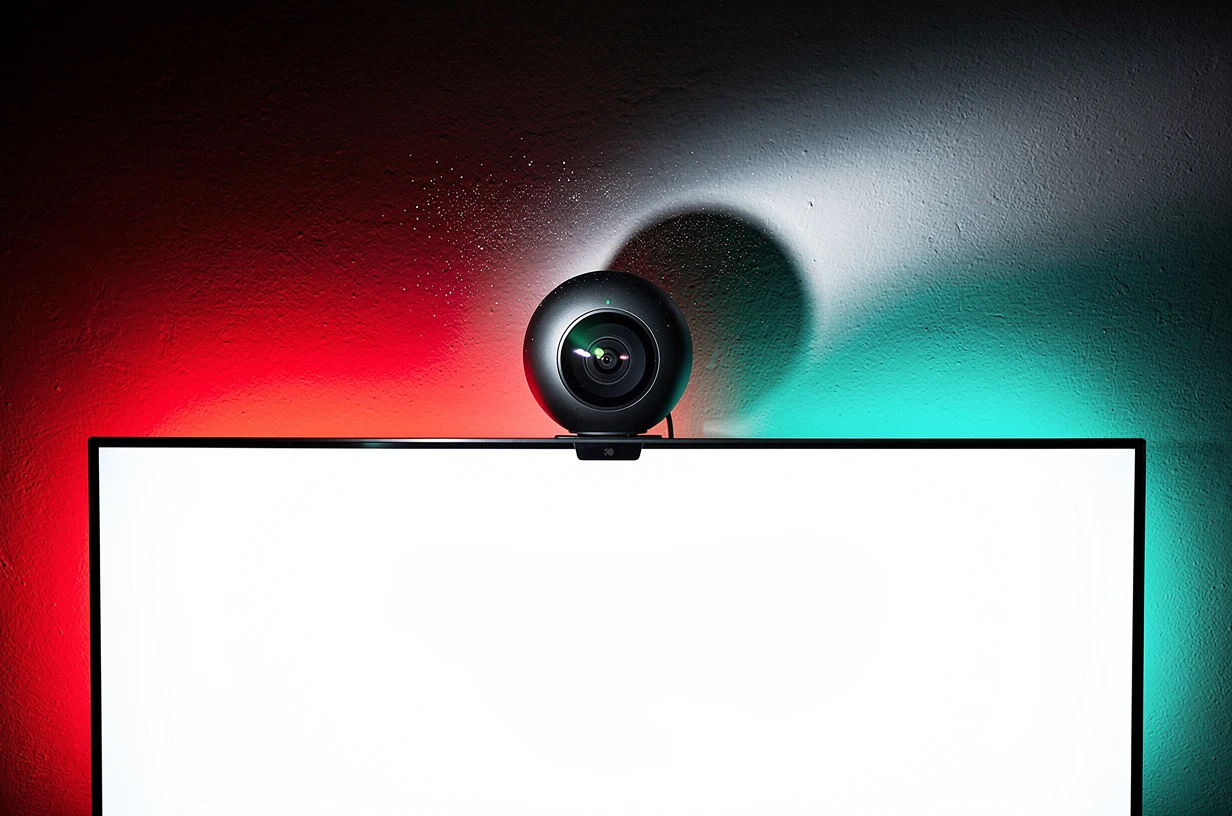
The headline box is Play Screen Sync, listed at $119.99 and due to ship in September 2026. It is a camera that sits on the television, watches the picture, and pushes those colors onto Hue lights in the room. Because it looks at the glass, it does not care whether the image came from an HDMI stick, a built-in Netflix app, or a broadcast tuner.
Signify also cut a slimmer Play HDMI sync box 4K at $149.99, built for a single HDMI run instead of a stack of inputs. Both new boxes share a bridgeless mode: one gradient strip can sync over Bluetooth with no Hue Bridge in the house. Bring in a Bridge or Bridge Pro later and the same setup can grow to ten lights.
THE NEW HUE TV SYNC STACK
| Product | Price | How it reads the picture | Hub needed |
|---|---|---|---|
| Play Screen Sync | $119.99 | Camera on the TV | No, for one strip |
| Play HDMI sync box 4K | $149.99 | One HDMI input | No, for one strip |
| Play HDMI sync box 8K | $384.99 | Four HDMI inputs, HDMI 2.1 | Yes on current listings |
| Hue Sync TV app | Paid app on listed Samsung and LG sets | The TV’s own apps | Yes |
That camera price undercuts the 8K HDMI box on the Hue shop, which still lists at $384.99 with four inputs, HDMI 2.1, 8K at 60Hz, and 4K at 120Hz. The older four-port 4K box, rated for 4K at 60Hz and 1440p at 120Hz, still appears in Hue’s current TV sync options even as the shop marks some of those pages discontinued at $249.99. The new 4K unit is the cheap HDMI path; the camera is the path that skips HDMI entirely.
Govee and Nanoleaf Already Sold This Camera Trick
A camera on the TV is new for Hue Play. It is not new for the category. Govee and Nanoleaf have sold screen-reading kits for years, and Hue’s own pre-event briefings described a single fisheye lens rather than a stereo pair. Pre-launch spec sheets put the assembly at about 9.5 cm tall, with an arm near 17.5 cm and a 3.8 cm camera head, powered over USB-C with two cable clips in the box.
The trade is obvious once you have lived with an HDMI box. A camera sees whatever is on the panel, including apps the HDMI path never touches, and it sidesteps HDCP fights, Dolby Vision quirks, and refresh-rate dropouts. The box stays hidden in the cabinet. The camera stays on the bezel, in the shot, compensating for room light so a sunny window does not wash the colors out.
Signify already sells a cheaper HDMI path under Philips Smart Lighting, the WiZ-based HDMI Sync Box 2.1 that shipped from June 2026 with a strip included. Hue is the dear brand. The Screen Sync camera is how that brand enters the same living room without asking for a $384.99 box first.
Nanoleaf Shapes Join Hue Scenes Through a Wall Module
The other open door is a rival’s wall. Signify announced a Hue Wall Light Module at $39.99, also due in September 2026, that plugs into a Nanoleaf Shapes layout so those panels can sit in Hue rooms, scenes, and automations. Nanoleaf confirmed the tie-up on its own site as the Nanoleaf x Hue Controller, ahead of Hue’s Berlin briefing.
A simple yet powerful addition opens up a whole new ‘Shapes’ experience for you.
Nanoleaf, product copy for the Nanoleaf x Hue Controller
A Philips Hue support page that went up before the event said the panels “behave like a Hue light, ready to be used across your entire smart lighting setup,” with control from the Hue app, Hue accessories, and voice assistants. Nanoleaf Shapes starter kits from Nanoleaf’s own shop follow on October 1, 2026, at $49.99 in the IFA price list.
WHAT THE WALL MODULE ACCEPTS
- Shapes Hexagons: Current hex panels join Hue rooms and zones after the adapter is clicked onto a free connector.
- Triangles and Mini Triangles: Both current Shapes triangle sizes are listed; they can mix with hexagons on one layout.
- Older Aurora panels: The previous Nanoleaf wall panels are out of scope and stay on Nanoleaf’s own controller.
- Cap: Up to 100 panels can hang off one module, which is a full wall, not a nightstand accent.
Independent app maker Stefan Göhler had already started exposing Nanoleaf gear inside iConnectHue, which is a hint that the Hue app will not be the only place these panels show up. The official module is still the path that puts them in Hue scenes without a third-party client.
How the Wall Light Module Treats Nanoleaf Panels
The adapter is a small white brick, about 7.87 cm in leaked photos, closer to Nanoleaf’s own Shapes controller than to Hue’s in-wall switch module. It draws power from the Nanoleaf cable, so there is no second brick on the floor. Hue’s copy talks about five color points across the layout, which is how Hue already treats a gradient strip, not how Nanoleaf treats each tile as its own light.
THE LIMITS INSIDE THE TRUCE
- Color control: Hue sees a gradient with five points, not 100 separately addressable panels.
- Radio: The module speaks Zigbee and Bluetooth, not Thread, even though Shapes controllers can act as Thread border routers.
- Matter: Matter access is listed the Hue way, through the Bridge, not as a direct Matter-over-Thread accessory.
- Touch and Rhythm: Nanoleaf’s tap gestures and music visualizer stay in the Nanoleaf app unless Hue later maps them.
That is a truce for mixed living rooms, not a merger of two lighting systems. Homes that already ran hexagons over the sofa and Hue bulbs in the ceiling can finally park both in one scene. Anyone who bought Shapes for per-panel chases and touch triggers still needs Nanoleaf’s software for those tricks. Hue gets the wall. Nanoleaf keeps the art.
Custom AI Behaviors Stay Locked to Bridge Pro
The software half of the drop is the part owners have asked for in public for years, and it is gated. Custom AI Behaviors lets Bridge Pro owners type an automation in plain language. The Hue app turns that sentence into triggers and lighting actions. The regular Bridge, still sold at $69.99 for 50 lights and 12 accessories, is not on the list.
Back-up & Restore is the longer wait. Philips Hue said users will be able to save lights, scenes, and automations to the cloud. Restore works on Bridge Pro first. There is no firm release date. Third-party scripts that dump Bridge state to JSON have been doing a version of this job for years, because a factory reset still wipes custom scenes if you were not signed into a Hue account.
The timing sits next to a bad summer for the new hub. In July 2026 Philips Hue said firmware 2071353020 had left fewer than 100 Bridge Pro units unresponsive after a narrow sequence: automatic updates off, an old build left sitting, then a manual flash more than ten days after the package landed. The company pledged free replacements regardless of warranty. A cloud restore would have made that mess smaller. It still is not shipping.
WHAT WE KNOW
- Bridge Pro shop price: The hub is $139.99 on the Hue site, up from $98.99 when it launched in September 2025.
- Capacity: Signify sold it on 150 lights and 50 accessories, plus more than 500 custom scenes.
- Migration: Moving a first Bridge onto an empty Pro copies lights, rooms, scenes, automations, and entertainment areas; the app says the job takes 30 to 60 minutes per Bridge.
WHAT IS UNCONFIRMED
- Restore date: Philips Hue has not said when cloud restore leaves Bridge Pro-only status, or whether the regular Bridge ever gets it.
- AI on the cheap hub: Custom AI Behaviors is described for Bridge Pro owners only, with no later-wave promise in the IFA materials.
- Sonos hub rule: Hue remotes will talk to Sonos through the Bridge; pre-event notes did not say the feature needs Pro.
When Signify launched the hub last September, it advertised a five times more powerful processor and memory 15 times larger than the v2 Bridge. That extra headroom is now the gate for the two features that would have helped every Hue house, not only the large ones.
A $399.99 Rope Light Leads the Decorative Drop
The TV wall is not the whole cart. Philips Hue is adding the Liane, a 360-degree rope light at $399.99, plus three new Signe pieces, new Festavia outdoor strings, and a round of indoor and outdoor fixtures. Support copy that appeared before the event described OmniGlow micro-LEDs on both Liane and the Play Gradient Lightstrip Pro, the same dense diode packing Hue already uses on its OmniGlow strip.
The gradient strip range grows to a size built for TVs up to 100 inches, the first time Hue has cut a Play strip for that class of panel. The Play Gradient Lightstrip Pro is $179.99 on September 15, 2026. A separate 85-inch gradient strip is $149.99 on October 6, 2026. Pre-launch store listings also named three Festavia shapes, curtain, icicle, and net, though the IFA price sheet groups curtain and net lights at $249.99.
THE IFA SHIP CALENDAR
- September 3, 2026: Signify unveils the Hue IFA lineup in Berlin, the evening before the show floor opens.
- September 4, 2026: The Liane rope light at $399.99 and Festavia curtain and net lights at $249.99 go on sale, with other new indoor and outdoor fixtures.
- September 2026: Play Screen Sync at $119.99, the HDMI sync box 4K at $149.99, and the Nanoleaf Wall Light Module at $39.99 ship.
- September 15, 2026: The Play Gradient Lightstrip Pro arrives at $179.99.
- October 1, 2026: Nanoleaf’s own starter kits follow at $49.99.
- October 6, 2026: The 85-inch gradient strip ships at $149.99.
- Late October 2026: The Signe pendulum and pole land at $319.99.
IFA Berlin itself runs September 4 through September 8, 2026. Hue inventor George Yianni was listed for a 30-minute Reddit Ask Me Anything on September 3 from 5:00 p.m. German time, 11 a.m. Eastern, which is the company’s usual way of feeding leftover spec questions after the embargo lifts.
Select Hue Switches Will Drive Sonos Speakers
The last software thread is sound. Select Hue switches will start, skip, and change volume on Sonos speakers without opening an app. Last year Sonos Voice Control already reached Hue lights, rooms, and scenes. This is the reverse path: a Hue button in the hall can light the room and kick a playlist in one press, with the link running locally through the Bridge after you attach a Sonos account in the Hue app.
Pre-event support text said those button actions can sit inside Hue scenes and automations, so a single tap can set a color and a station together. Hue also said a migrated Sonos link should rediscover speakers within 24 hours on a new Bridge Pro, or faster if you power the speaker down for 30 minutes. That is the same migration guide that still tells you to rebuild automations by hand when a second Bridge is folded into a Pro.
Put the prices in a row and the shape of the launch is plain. A $119.99 camera and a $39.99 Nanoleaf plug get a television wall talking to Hue without a hub. The $399.99 rope light and $319.99 Signe pieces keep the design catalog expensive. Cloud backup, the feature that would have saved the people who already own all of this, still restores only on Bridge Pro, and Signify has not put a day on the calendar for that restore.


British Business Bank’s Zinc Fund Will Mint 80 Startups

Philips Hue IFA Gear Opens TVs and Gates the Hub

Souk Raises $1.6 Million for Its AI Partner Manager

Anthropic Bets on Cheaper Cache for Claude Fable 5.1

Food Processors Back Backbone’s €4 Million Quality Round

Scosche Bets IFA Shoppers Will Buy Fewer Charging Bricks

ELO Bets Sentinel XR Gaming Glasses at IFA Berlin

ShiftCam SuperZoom Lenses Bet on a 350mm Phone Gap

Clooney Defends Ruffalo’s Speech While Collecting Venice’s Lion

Jungheinrich Is the Sole Backer of Uplift’s €100M Fund

30-Year Yield Hits 5.32% Highest Since 2007 as Debt Supply Locks In Costs

Walter’s TWG Insists No Fraud as Insurer Probes Force Cleanup

Astute’s $1.2M bet makes B2B creator deals feed AI discovery

Strategy Parks $1.59B Cash While Bitcoin Stack Stays Flat

PCE Stays at 3.7% as Gas and Tariffs Outrun Coming Revisions

SpaceX Stock Rebound Tests Real Demand Before Huge Unlock

The 20% Savings Ideal Meets a 2.7% Reality Check

Amber’s €7M locks Mittelstand knowledge inside Europe

Monzo chair Gary Hoffman exits after board revolt fallout

Nvidia’s $16,000 RTX Pro 6000 Turns Local AI Into a Luxury
-
 FINANCE3 months ago
Zcash Patched a Double-Spend Bug as ZEC Climbed 5%
-
 ENTERTAINMENT3 months ago
Steam Summer Sale 2026 Locks In June 25 to July 9 Dates
-

 FINANCE2 months ago
CLARITY Act Final Text Expected This Weekend as 60-Vote Hurdle Looms
-
 NEWS4 months ago
Meta Adds AI Replies to Threads, But Users Can’t Block It
-

 NEWS3 months ago
YouTube Shorts is testing a heart in place of the thumbs-up
-

 NEWS1 month ago
Senators Force Apple Off Chinese Memory as Big Three Cash In
-

 NEWS3 months ago
NEURA Robotics’ $1.4B Series C Redraws Europe’s Physical AI Bet
-
 ENTERTAINMENT5 months ago
Extraction 3 Is Officially Coming to Netflix in 2027