
NEWS
Cytotrait Bets £3 Million on Chloroplasts and Mitochondria
Cytotrait’s £3 million seed funds chloroplast and mitochondrial edits, aiming at hybrid wheat and a containment path nuclear gene editing cannot match.

Cytotrait closed a £3 million seed round on 9 March 2026 to put genes into chloroplasts and mitochondria rather than the plant nucleus. The University of Manchester spinout will use the money to start trait programmes in wheat, maize, potato and canola across Europe and North America.
The cheque is modest by crop-biotech standards. The wager sits one layer below the usual yield pitch: if organelle genomes can be rewritten cleanly, hybrid wheat and a containment argument become possible in a way nuclear gene editing does not buy.
Northern Gritstone Backs an Organelle Platform
Northern Gritstone led Cytotrait’s £3 million seed round, with the UK Innovation & Science Seed Fund (UKI2S, managed by Future Planet Capital) and the Northern Universities Ventures Fund, managed by Parkwalk with Northern Gritstone. Cytotrait is a graduate of NG Studios, the investor’s deeptech venture-building programme.
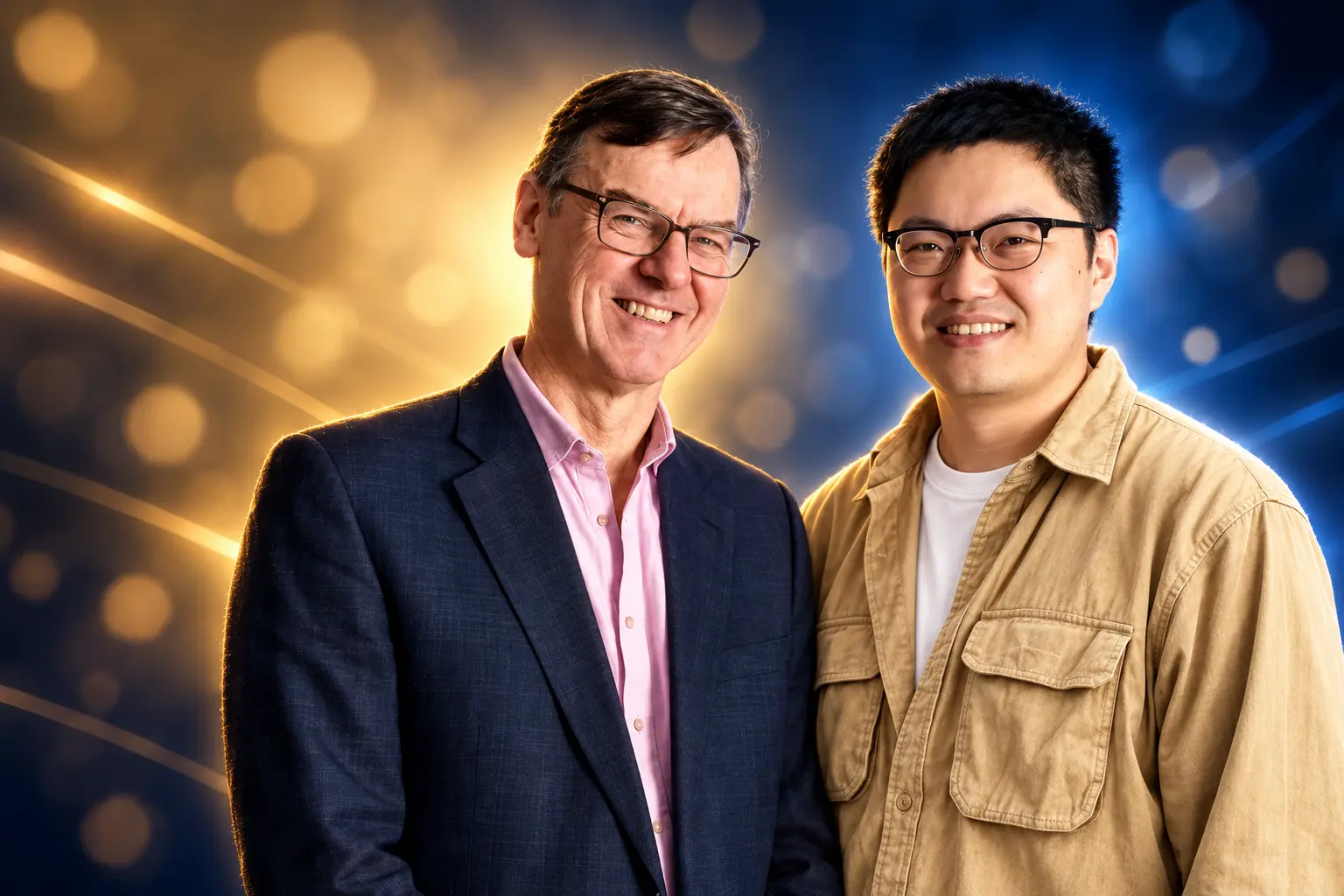
Dr Junwei Ji is co-founder and executive director. Dr Tim Brears is executive chair. Duncan Johnson, chief executive of Northern Gritstone, called the company “a prime example of the world-class innovation from the North of England’s universities” and said the firm looks forward to results from “this first tranche of new development programmes.”
THE MONEY BEHIND MOSS
| Round | Date | Amount | Backer and purpose |
|---|---|---|---|
| ARIA grant | 1 September 2025 | £498,113 | Advanced Research and Invention Agency, hybrid wheat via mitochondria |
| Seed | 9 March 2026 | £3 million | Northern Gritstone (lead), UKI2S, Northern Universities Ventures Fund; trait programmes in four crops |
Hassan Mahmudul, investment manager at UKI2S, said the fund backs engineering biology aimed at large global problems and that Cytotrait’s platform “has the potential to unlock high-value trait expression at levels significantly beyond what is achievable through conventional nuclear genome engineering.” That is the investor case in one line: organelles, not the nucleus, are the product.
Why Chloroplasts and Mitochondria Change the Breeding Math
Most of the past two decades of crop gene editing has targeted nuclear DNA. Each cell has one nucleus. It also packs dozens to hundreds of chloroplasts and mitochondria, each with its own genome. Get a gene into those compartments and the cell can carry many thousand copies, which is the expression level Cytotrait is selling.
The catch that stalled the field is homoplasmy: every organelle in the cell, then the plant, must carry the same change. A 2026 research review of chloroplast bioengineering put the problem plainly. After nearly four decades of work, chloroplast engineering still has little field use, with slow homoplasmy listed among the main barriers, alongside species that simply refuse to transform.
MOSS, the Mutant Organelle Selection System, is Cytotrait’s answer to that bottleneck. Ji said existing methods rely on selection markers that leave a footprint. His system does the opposite job.
Existing methods use selection markers, which can leave an undesirable footprint in the genome. Instead, our technology removes the unedited genome copies, allowing the edited copies to propagate. This leads to rapid homoplasmy and it works in any crop species.
Dr Junwei Ji, Co-Founder and Executive Director, Cytotrait
He said the company has already shown that principle in two crops, which is the early data behind the seed round. The platform is meant to handle both edits of genes the organelle already has and the insertion of new genes.
WHAT THE COMPANY SAYS MOSS CHANGES
- Copy number: Traits can be expressed from many thousand gene copies per cell, localised inside the organelle.
- Phytotoxicity: High expression is claimed with a lower risk that the extra protein poisons the rest of the cell.
- Breeding: Organelle traits are easier to backcross and stack because they move with the cytoplasm, not a nuclear locus.
- Containment: Chloroplast and mitochondrial DNA is rarely carried in pollen, so the trait is mostly maternal.
- Regulation: That pollen argument is the basis for what Cytotrait calls an easier regulatory route.
Those are company claims, not field results. The seed money is meant to turn the two-crop principle into germplasm that a seed firm might license.
Hybrid Wheat Is the First Commercial Test
Before the seed round, Cytotrait’s first paid job was hybrid wheat. On 1 September 2025 the company published a £498,113 grant for hybrid wheat from ARIA. The work is not a generic yield gene. It is stable mitochondrial transformation: insert genes into mitochondria, then use programmable editor genes to switch their function, as a way around the barriers to reliable hybrid seed in wheat.
Wheat is mostly self-pollinating. Hybrid seed, which needs a controlled male-sterile parent, has been a commercial headache for decades even though the yield prize is large. Cytoplasmic male sterility lives in the mitochondrion, which is why an organelle company starts there rather than with a nuclear CRISPR cassette. Ji said wheat will be one of the earliest organelle traits, and that protein and vitamin products are a later fit because organelles already run a heavy protein-synthesis load.
Incumbents are not waiting. Chuck Magro, chief executive of Corteva, has said the firm’s hybrid hard red winter wheat can raise yields by 20%. That claim sits in the same market Cytotrait wants to enter with a mitochondrial method. The Manchester company is not, on present evidence, about to outrun Corteva’s commercial machine. It is trying to sell a different way of making the sterile parent.
WHAT WE KNOW
- The grant: ARIA paid £498,113 for mitochondrial work aimed at hybrid wheat seed.
- The mechanism: Male sterility used in hybrid systems is typically a mitochondrial trait, so the organelle is the logical target.
- The status: Ji said the wheat pipeline was already under way before the seed round.
WHAT IS UNCONFIRMED
- Field performance: No public yield, sterility or restoration data from Cytotrait wheat lines.
- Crop list: The two crops in which the MOSS principle was shown have not been named.
- Seed-firm deals: Partnerships are the stated commercial path, not a signed licence.
Hybrid wheat is also the product that would matter to farmers first, because they would buy new seed each season. That recurring sale is the hidden stake in a mitochondrial sterility system, more than a one-off “super crop” slogan.
New Gene-Edit Rules in England Still Exclude Transgenes
Ji has pitched MOSS as “capable of streamlining regulatory pathways.” The biology behind that line is real: organelle genes rarely move in pollen, which cuts the odds of a trait blowing into a neighbouring field. He called that “a major advantage over nuclear gene editing, especially for herbicide-resistance or pest-resistance traits.”
England’s statute is narrower than that talking point. The Genetic Technology (Precision Breeding) Act 2023 created a lighter class for plants whose laboratory changes could have arisen by traditional breeding, with no leftover foreign DNA. Secondary precision bred organism marketing rules in England came into force on 13 November 2025. They apply in England, not across the UK, and they still require food and feed authorisation before a precision bred crop is sold as food.
Edits of genes a chloroplast already owns might one day sit inside that class. Inserting a transgene into a chloroplast or a mitochondrion does not. Those plants stay under GMO law. Cytotrait’s own description of MOSS covers both endogenous edits and transgenes, so the “easier route” is a containment argument, not a free pass under the 2023 Act.
North America is in the launch plan too. In the United States, developers of food from genome-edited plants can use the FDA’s voluntary premarket path for genome-edited plant foods, while USDA and EPA still split planting and pesticide traits. A maternal organelle trait may ease an environmental file. It does not erase food-safety questions if the protein itself is new.
Four Crops Get Proof Work on Two Continents
The seed round stretches the wheat work into three more species and two markets. Programmes will look at yield and resilience, new food traits, and carbon sequestration. Those are research aims, not traits already sitting in a variety list.
FIRST PROGRAMMES AFTER THE SEED ROUND
| Crop | Markets named | Stated aim |
|---|---|---|
| Wheat | Europe and North America | Earliest organelle trait; hybrid seed via mitochondria, plus later food traits |
| Maize | Europe and North America | Yield, resilience and trait expression in a crop that already runs on hybrids |
| Potato | Europe and North America | Organelle traits in a vegetatively propagated staple |
| Canola | Europe and North America | Oilseed traits, including possible food and sustainability uses |
Maize already has a mature hybrid industry, so a mitochondrial tool there is an add-on, not a new market. Potato keeps its cytoplasm through tubers, which can make an organelle trait stick once it is clean. Canola has a long cytoplasmic-male-sterility history in oilseed breeding. The four-crop list is a map of where organelle DNA already earns its keep, not a random supermarket basket.
Brears called MOSS “truly a breakthrough in the field of crop technology” and said investor support will let the team “expand our pipeline and explore the applications of MOSS in some of the world’s major crop types.” The next deliverable the company has described is proof-of-concept in experimental germplasm, the package a major seed company would need to see before a co-development or licence talk.
The Lab Path From a Manchester PhD
MOSS began as Ji’s doctoral work on an efficient DNA mutagenesis method in plant chloroplast genomes. The company was spun out of the University of Manchester with Innovation Factory’s commercialisation support. That office handled intellectual property, company formation, business planning and investor readiness, helped the founders tap pre-seed money from the university, and used Northern Triangle Talent Initiative grant funding to hire a commercial lead.
Dr Elliott Jennings, head of investment and licensing for life sciences at the Innovation Factory, said the seed close ran “from early-stage research through to this successful seed funding round” and that the office would keep supporting the team. Cytotrait’s public site still frames the firm as cytoplasmic trait innovation: reprogramming chloroplast and mitochondrial genomes, with insect and disease resistance listed among the management benefits of an organelle trait that is hard to move in pollen.
FROM GRANT TO SEED CLOSE
- 1 September 2025: Receives a £498,113 ARIA grant to build mitochondrial methods for hybrid wheat.
- 13 November 2025: England’s precision breeding regulations come into force, opening a lighter path for some nuclear gene edits but not for transgenes.
- 9 March 2026: Closes the £3 million seed round and names wheat, maize, potato and canola as the first development crops.
Outside agritech funding roundups, the raise barely travelled. Organelle engineering is still a specialist bet, which is the point of a university spinout at this size: the science is old enough to have a 40-year bottleneck, and young enough that a seed cheque can still buy the first clean lines.
Seed Companies Are the Intended Buyers
Cytotrait does not plan to sell bags of seed to farms. Ji said the firm will commercialise through partnerships with major seed developers, mixing co-development and licensing. That is the second-order business: if MOSS works, the customer is Corteva, Syngenta or a regional wheat breeder that needs a sterility system or a high-expression vitamin trait, not a grower in Lincolnshire.
Food security language filled the announcement, and it is not empty. Wheat is one of the world’s largest food crops, which is why ARIA paid for the hybrid-seed attempt. Carbon sequestration is on the slide deck too. That is not in a field trial report yet. The paid work in front of the company is narrower: keep homoplasmy fast, without a marker scar, in germplasm a licensee can actually cross.
Johnson is waiting on “positive results from this first tranche of new development programmes.” Until those lines exist, the £3 million buys time on a problem chloroplast labs have been staring at for decades, now aimed at wheat’s mitochondrion and at a regulatory story that only holds if the DNA stays out of the pollen.

UPI MDR Delay Hands Traders the Calendar After Paytm Falls

Google Messages Builds Nine In-Chat Games After Samsung’s Exit

Anthropic’s $100 Million Academy Trains the Firms That Bill Both Sides

Toyota’s Electric C-HR Leaves the Cheap Twin to Subaru

Markets Bet the Fed Skips October After Hawkish Minutes

The Orchard Bug Forced Zcash to Open an Empty Pool

The $5.99 Game That Won Steam’s 2026 Summer Sale

Don Lee Joins Hemsworth as Extraction 3 Starts Shooting

YouTube Shorts Retires Dislikes and Swaps Likes for Hearts

NEURA Robotics Is Spending Its $1.4B on a Machine Stack
-
 NEWS5 months ago
The Orchard Bug Forced Zcash to Open an Empty Pool
-
 GAMING5 months ago
The $5.99 Game That Won Steam’s 2026 Summer Sale
-
 ENTERTAINMENT7 months ago
Don Lee Joins Hemsworth as Extraction 3 Starts Shooting
-
 NEWS4 months ago
YouTube Shorts Retires Dislikes and Swaps Likes for Hearts
-
 NEWS4 months ago
NEURA Robotics Is Spending Its $1.4B on a Machine Stack
-

 NEWS5 months ago
Atlantic City Turned WWE’s Return Into a Civic Night
-

 AUTO6 months ago
Kawasaki Bets the New Z1100 Against Its Own Supercharger
-

 BUSINESS5 months ago
Norway’s Export Bank Backs Nscale’s $790 Million Narvik Loan