
NEWS
Goltsev Got 40 Months After His Chips Hit the Battlefield
Nikolay Goltsev’s 40-month term landed after the same dual-use part numbers had already been pulled from Russian weapons in Ukraine.

Nikolay Goltsev, a Montreal resident, received a 40-month prison term on January 8, 2025, for shipping restricted electronics to Russia. Investigators had already matched those parts to missiles, helicopters and jammers seized in Ukraine.
United States District Judge LaShann DeArcy Hall imposed the term in Brooklyn after Goltsev, then 38, pleaded guilty to conspiring to violate U.S. export controls. His wife, Kristina Puzyreva, 33, had already drawn 24 months for laundering the proceeds. The case was a node in a much larger parts pipeline, not the pipeline itself.
The Same Part Numbers Appeared in Russian Weapons
U.S. officials did not only argue intent. They said some electronic components and integrated circuits moved through a Brooklyn firm, SH Brothers Inc., were the same make, model and part number later found in Russian gear pulled from the war in Ukraine. A Commerce Department official called it one of the most significant cases involving items destined for the Russian military, because those matches were not generic lookalikes.
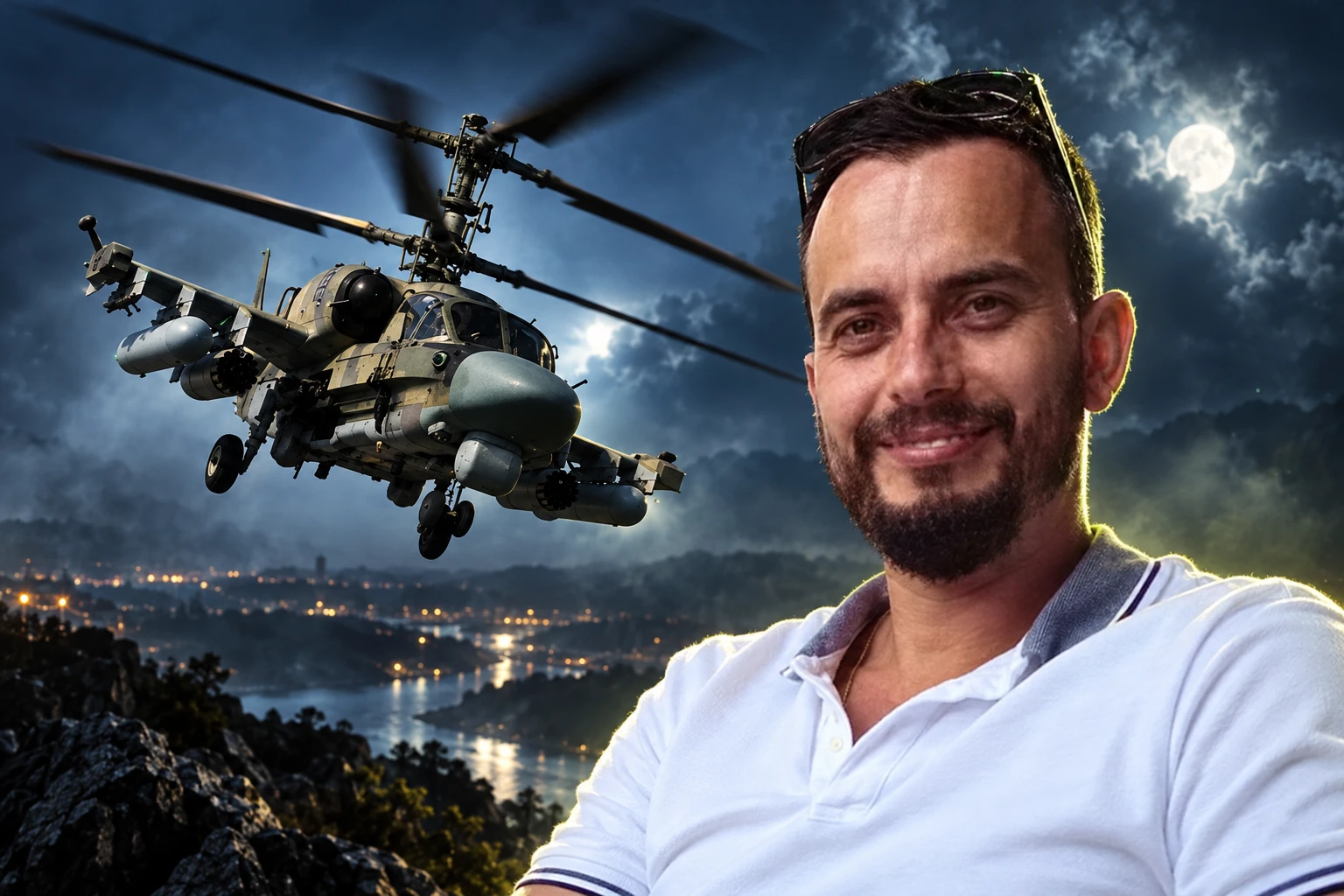
Homeland Security Investigations New York listed the weapons platforms recovered in Ukraine that carried that class of parts. Several of the items sit at the center of Russia’s precision-guided and electronic-warfare kit.
RECOVERED PLATFORMS TIED TO THE SHIPMENTS
| Platform | Role on the battlefield |
|---|---|
| Torn-MDM | Radio reconnaissance complex |
| RB-301B Borisoglebsk-2 | Electronic warfare complex |
| Izdeliye 305E | Light multi-purpose guided missile |
| Vitebsk L370 | Airborne counter-missile system |
| Ka-52 | Attack helicopter |
| Orlan-10 | Reconnaissance UAV |
| T-72B3 | Battle tank |
Those platforms are why a parts order placed in Brooklyn is not a paperwork crime. Orlan-10 drones scout before a strike. Ka-52 helicopters and the Izdeliye 305E missile do the hitting. The Borisoglebsk-2 and Torn-MDM kits jam and listen. Once a chip with a known part number is inside that stack, the export file is already a battlefield file.
Brooklyn Storefronts, Montreal Books
Goltsev and Brooklyn resident Salimdzhon Nasriddinov, 54 at the time of Goltsev’s sentencing, used two New York companies, SH Brothers Inc. and SN Electronics Inc., to buy dual-use electronics from U.S. makers and distributors. Dual-use here means parts sold for civilian kit that also steer, power or time weapons. Orders went to Brooklyn addresses, then out through front firms in Turkey, Hong Kong, India, China and the United Arab Emirates, and from there into Russia.
During the period charged, SH Brothers made over 300 shipments valued at over $7 million to Russian military end users on the Commerce Entity List and the Treasury sanctions list, according to the Justice Department and a later Commerce order. HSI New York Special Agent in Charge Ivan J. Arvelo said the three defendants had coordinated those loads “that were ultimately used on the Russian battlefield.”
Nasriddinov ran the Brooklyn end. Goltsev worked the suppliers, often under aliases, and left out the real Russian customers. Puzyreva moved the money. Russian-based co-defendants named in court papers worked for electronics firms that supply the Russian military, including Testkomplekt and Radioavtomatika, with a UAE cut-out at Suntronic.
HOW THE CASE MOVED FROM ARREST TO BAN
- October 31, 2023: Agents arrest Goltsev and Puzyreva in a Manhattan hotel, and Nasriddinov in Brooklyn, after a meeting on the scheme.
- February 12, 2024: Puzyreva pleads guilty to money-laundering conspiracy.
- July 9, 2024: Goltsev and Nasriddinov plead guilty to conspiracy to commit export-control violations.
- July 24, 2024: Judge Hall sentences Puzyreva to 24 months.
- January 8, 2025: Goltsev receives 40 months and a year of supervised release.
- December 17, 2025: Commerce denies his U.S. export privileges for 10 years and lists him at FCI Forrest City Low in Arkansas.
The Justice and Commerce Disruptive Technology Strike Force and Task Force KleptoCapture ran the file. Nasriddinov had pleaded guilty and was still waiting on a term when Goltsev was sentenced; prosecutors have not posted a later figure for him in the releases reviewed for this account.
She Told Him They Would Get Rich
The couple’s own messages are the specimen. They knew the parts were going to the war, and they treated the volume as a payday.
On or about January 13, 2023, Goltsev complained that a co-conspirator’s subordinate “asked me to make 80 accounts… I am making accounts for 3 mln [i.e., million]. Fingers hurting already from the laptop.” Puzyreva wrote back, “Lot of money? We will get rich.”
On May 30, 2023, after a drone attack on Moscow, they dropped the business voice. Puzyreva wrote, “what is Putin waiting for. He needs to destroy Ukraine.” Goltsev answered, “yeah they’re gonna get f—ed either way.” She added that he needed to “put fear into them,” called Ukrainians “losers,” and said she hated them, using an ethnic slur recorded in the government’s sentencing release. On social media they had presented themselves as Ukraine supporters. The private thread ran the other way.
The hop through third countries was not a paperwork accident either. In February 2023, Goltsev told another co-defendant to “write something more substantial [to the U.S. company] so that there are no more questions.” Asked if a Chinese end user would do, he said, “yes should be ok.”
Simply put, Russia cannot effectively manufacture advanced weapons without U.S. technology. Today’s sentence goes a long way in preventing Russia’s access to U.S. electronics for use in the unlawful war against Ukraine.
Breon Peace, United States Attorney, Eastern District of New York
Peace’s line is the government’s best case for the term. The file also shows the other side of that sentence. By the time Hall imposed 40 months, the matched parts were already in the wreckage.
How a West Island Desk Fed Russian Orders
Goltsev, a dual Russian-Canadian national from Tula who moved to Vancouver in 2008 and then to the Montreal area, worked as an account manager and purchasing coordinator for Electronic Network Inc., a Montreal firm that sat on the U.S. export-controls list. Puzyreva ran money through Simatech Group Inc., another Montreal electronics company that bought dual-use parts, and prosecutors said she took more than 130 packages from U.S. distributors at her Canadian address over about five years.
A sentencing memorandum in the Brooklyn case said Goltsev had been buying electronic components for Russian military end users for more than 12 years, well before the 2022 invasion and before his marriage to Puzyreva. The charged conspiracy is the wartime slice of a longer purchasing habit. When Canada got harder, they shifted the load south.
In messages quoted in the bail papers, Goltsev told Nasriddinov he had “many orders” but it was “becoming difficult to do business here [in Canada].” He added, “Maybe it will be easier to do through the U.S…. everything is loaded from the USA… get the goods together and unload it in any ‘friendly’ country.” The Brooklyn companies were that workaround.
THE MONTREAL NODE, IN COURT PAPERS
- The employer: Goltsev bought as an account manager for Electronic Network Inc., already on the U.S. export-controls list.
- The other firm: Puzyreva’s Simatech Group Inc. purchased dual-use electronics and mechanical parts from Montreal.
- The mailbox: Prosecutors said more than 130 packages from U.S. distributors landed at their Canadian address over about five years.
- The span: Court papers put Goltsev’s purchasing for Russian military end users at more than 12 years.
- The home base: The couple lived in Ste-Anne-de-Bellevue, on Montreal’s West Island, and flew to New York to meet Nasriddinov.
U.S. prosecutors brought the case in Brooklyn. The arrests happened on a New York trip, not at the West Island house. Goltsev agreed in his plea to be deported after the sentence, with Canada or Russia as possible destinations, and that piece was still outstanding when he was sentenced.
Forty Months, $4 Million, Then a 10-Year Ban
Hall’s 40-month export control sentence sat inside a guideline band of 33 to 41 months. Prosecutors had asked for the high end. Goltsev’s plea bound him not to appeal any term of 46 months or less. He also agreed to forfeit $4 million and to surrender assets already taken in the investigation.
Kevin J. Kurland, then acting assistant secretary for export enforcement at the Commerce Department, put the payday in one line: Goltsev and his wife thought they would “get rich” running an illicit global procurement scheme for sanctioned Russian end users. “Instead, they got jail time.”
WHO DREW WHAT IN THE BROOKLYN FILE
| Defendant | Role | Term and money |
|---|---|---|
| Nikolay Goltsev | Procurement, supplier contacts | 40 months, 1 year supervised release, $4 million forfeiture |
| Kristina Puzyreva | Money laundering | 24 months, $351,000 forfeiture |
| Salimdzhon Nasriddinov | Brooklyn companies and shipping | Guilty plea July 9, 2024; term not in the January 2025 release |
The government seized about $1.68 million on the scheme, including $20,000 in cash from the hotel room where Goltsev was arrested. HSI Acting Special Agent in Charge Erin Keegan, at Puzyreva’s plea, tied her laundering conspiracy to 298 shipments of restricted technology, valued at $7 million, “to the Russian battlefield.” That 298 count is the money-laundering link; the scheme-wide figure used by HSI and Commerce is over 300 shipments.
Attorney General Merrick B. Garland said Goltsev joined “the growing list of defendants held accountable for unlawfully procuring and profiting from the sale of U.S. technology to further Russia’s brutal war in Ukraine.” Assistant Attorney General Matthew G. Olsen said the Justice Department would “vigorously pursue those who procure the component parts that make Russia’s war machine tick.”
The prison term did not end the administrative file. In a December 17, 2025 order, the Bureau of Industry and Security recorded the conviction under the Export Control Reform Act and imposed a 10-year denial of export privileges, listing Goltsev as inmate 84619-510 at FCI Forrest City Low. For a decade from the January 8, 2025 conviction date, he cannot deal in U.S. exports subject to the Export Administration Regulations.
The Chips That Outlasted the Sentence
The louder problem sits in the wreckage, not in the docket number. In November 2022, U.S. officials held a shipment at John F. Kennedy International Airport. Nasriddinov wrote that “Ukrainians alleged that they’re being bombed from parts from there [the U.S. manufacturer], maybe that’s why they started investigating everything?” Goltsev answered that large packages would be “dangerous” until they understood what had been figured out, and that they would need to “load from several companies, not to attract attention.” They already believed the parts were in the bombing, and they planned to split the next loads.
On February 23, 2023, Nasriddinov sent “Happy Defender of the Fatherland.” Goltsev wrote back, “we are defending it in the way that we can.” That is the self-description of a purchasing desk, not a pair of dupes.
Conflict Armament Research’s field work, published with the International Institute for Strategic Studies, is still tracking components in Russian missiles and UAVs recovered in Ukraine. In a sample of about 300 manufacturing companies, 56 were U.S.-based. One-third of all components documented in Russian land-attack missiles and UAVs between February 2022 and April 2025 bore the marks of U.S.-owned companies. Small commercial items such as inertial measurement units and antennas, long treated as lower risk, keep showing up.
WHAT THE WRECKAGE STILL SHOWS
- U.S. makers in the sample: 56 of about 300 manufacturing companies documented by CAR were based in the United States.
- Share of parts: One-third of components in Russian land-attack missiles and UAVs logged from February 2022 to April 2025 carried marks of U.S.-owned firms.
- The goods: Semiconductors, amplifiers, antennas, field-programmable gate arrays, inertial measurement units, GNSS modules, microprocessors and voltage regulators.
- The hop: Treasury has kept designating third-country sanctions evasion networks in places such as China, Türkiye and India that move the same class of high-priority electronics.
Goltsev’s 40 months, Puzyreva’s 24 months and the 10-year export ban close one North American desk that learned, in its own texts, that Ukrainians were already being bombed from U.S. parts. The matched chips had left the carton before the judge spoke, and field investigators have kept finding that same class of mark in the missiles and drones that followed.

UPI MDR Delay Hands Traders the Calendar After Paytm Falls

Google Messages Builds Nine In-Chat Games After Samsung’s Exit

Anthropic’s $100 Million Academy Trains the Firms That Bill Both Sides

Toyota’s Electric C-HR Leaves the Cheap Twin to Subaru

Markets Bet the Fed Skips October After Hawkish Minutes

The Orchard Bug Forced Zcash to Open an Empty Pool

The $5.99 Game That Won Steam’s 2026 Summer Sale

Don Lee Joins Hemsworth as Extraction 3 Starts Shooting

YouTube Shorts Retires Dislikes and Swaps Likes for Hearts

NEURA Robotics Is Spending Its $1.4B on a Machine Stack
-
 NEWS4 months ago
The Orchard Bug Forced Zcash to Open an Empty Pool
-
 GAMING4 months ago
The $5.99 Game That Won Steam’s 2026 Summer Sale
-
 ENTERTAINMENT6 months ago
Don Lee Joins Hemsworth as Extraction 3 Starts Shooting
-
 NEWS4 months ago
YouTube Shorts Retires Dislikes and Swaps Likes for Hearts
-
 NEWS4 months ago
NEURA Robotics Is Spending Its $1.4B on a Machine Stack
-

 AUTO6 months ago
Kawasaki Bets the New Z1100 Against Its Own Supercharger
-

 BUSINESS5 months ago
Norway’s Export Bank Backs Nscale’s $790 Million Narvik Loan
-

 GAMING4 months ago
Game of Thrones Dragonfire Follows Boston’s Conquest Playbook