
NEWS
Muybridge Raises $16M to Replace Physical Broadcast Cameras

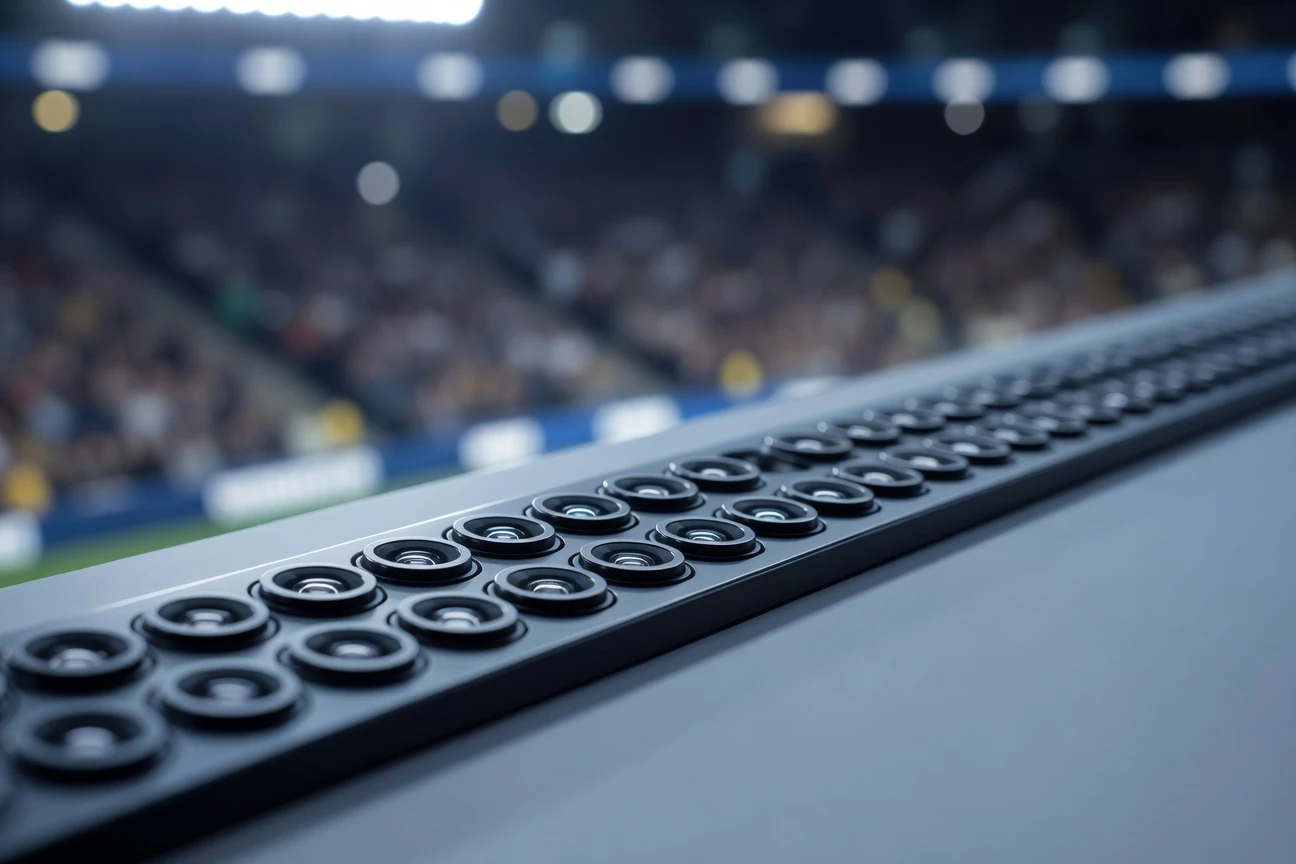
At the 2025 US Open, a sensor bar ran along the courtside advertising boards and captured every point. Coaches settled into their sideline positions on top of it without realizing it was a camera system. That bar, built by Oslo-based deep-tech startup Muybridge and connected to the company’s software-defined imaging platform, generated virtual broadcast perspectives in real time with no camera operators, cable trucks, or robotic arms anywhere in the building.
This week, Muybridge closed a $16 million Series A, an oversubscribed round led by Investinor, Norway’s state investment company, alongside Fairpoint Capital, Idekapital, RunwayFBU, and a cohort of Nordic technology founders and operators. The capital will fund expansion across Europe and the United States, scale the commercial organization, and continue development of the imaging platform.
How a Sensor Bar Replaced a Camera Truck
Håkon Espeland, co-founder and CEO of Muybridge, started his working life at 16 as an apprentice on Norwegian oil-and-gas rigs, then earned a master’s degree in cybernetics and robotics before joining a company building robotic camera systems for live television. The setup was enormous: motors, counterweights, proprietary controllers, fiber cabling, and a full technical crew. When consumer electronics began producing high-resolution image sensors at smartphone volumes and smartphone prices, he saw a different path.
With computational photography, we could get rid of 300 kilos of metal and robots. It was like removing gravity. We’re not covered by any physical limitation.
Espeland made that observation in a Fast Company interview published in January 2026. He and co-founder Anders Tomren, the company’s product lead, founded Muybridge in Oslo in 2020 and spent five years developing the platform before its first sustained commercial sports deployments.
The system works by mounting compact 4K sensors, each roughly the diameter of a large coin, inside two-meter bars that connect end-to-end along any stadium or arena surface. The bars clamp to advertising boards, net posts, or walls without requiring dedicated camera positions or operators. Behind the sensors, GPU-powered compute reconstructs a volumetric representation of the scene in real time, and production teams navigate virtual camera angles on demand through APIs and software development kits (SDKs) that integrate with existing broadcast workflows rather than replacing them wholesale.
Nowhere was the platform’s physical footprint smaller than at the 2025 US Open. The sensor arrays ran flush with the courtside advertising boards, and coaches settled into their sideline seats directly on top of them throughout matches without recognizing the bars as camera hardware.
The Broadcast Incumbents Muybridge Is Targeting
The Hardware Stack a Stadium Broadcast Requires
The professional broadcast camera market generated approximately $2.35 billion in global annual revenue in 2023, according to Cognitive Market Research’s professional broadcast camera analysis. Sony, Grass Valley (a subsidiary of Belden), and Panasonic hold the dominant equipment positions across major sports rights holders and broadcasters. A single professional camera body from any of those vendors costs tens of thousands of dollars before a proprietary lens, dedicated cabling, and a control unit enter the bill. Add a production vehicle and a technical crew, and a full live sports broadcast deployment runs six figures in hardware before editorial staff are counted.
| Dimension | Traditional Broadcast Camera Setup | Muybridge Software-Defined System |
|---|---|---|
| Core hardware | Proprietary camera body, lens, control unit, cabling | Commodity 4K sensor bars, GPU compute, SDKs |
| Deployment footprint | Fixed camera positions, operators, production vehicles | Sensor bars clamped to existing venue structures |
| Camera angle flexibility | Fixed lens positions, physical panning and tilting only | Any virtual angle, navigable in real time |
| Upgrade path | Hardware procurement, installation, certification cycle | Software and firmware update via API integration |
Where the Software Collapses That Stack
Rather than proprietary broadcast glass, the platform uses commodity consumer-electronics sensor components, a cost structure made possible by smartphone manufacturers driving high-resolution sensor production to massive scale. “There’s a reason why there are three cameras on an iPhone now,” Espeland noted in the same interview, explaining that mobile makers have taken sensor costs down to a floor the broadcast industry never reached on its own. The intellectual property in the system sits in the algorithms that process and fuse those sensor feeds into navigable virtual cameras, not in the sensors themselves.
The upgrade argument matters for procurement cycles. Adding a new camera type to an existing Sony or Grass Valley broadcast setup requires hardware delivery, physical installation, and technical certification. Adding this system to a production workflow runs through a software integration, which compresses both lead time and the upfront capital commitment that venue operators and broadcast partners have to make.
From Tennis Courts to the NHL in One Year
In the twelve months before the Series A closed, the company moved from limited trial deployments into operational use across a set of global sports properties. Its partnership with Hawk-Eye Innovations, a Sony Sports affiliate, anchored the tennis work. At the 2025 Mutua Madrid Open final between Casper Ruud and Jack Draper, the virtual court-level tracking angle generated by the system went viral within hours of broadcast, drawing fan commentary comparing the moment to the transformation onboard cameras brought to Formula 1 viewing.
- European football leagues
- US Open tennis
- ATP Tour events
- NBA
- NHL
- PGA Tour golf
- Rugby
- Premier Padel
Deployment across those eight sport categories confirms the sensor-bar architecture is not specific to any one playing surface. Tennis courts, basketball arenas, hockey rinks, golf courses, and football pitches each impose different sight-line and structural constraints, and the system handled all of them during the same twelve-month operational window that preceded the fundraise.
The $16 Million Round and Who Is Writing the Checks
- $16 million raised in the Series A, closed May 2026, oversubscribed
- $8.75 million (approximately EUR 8 million) raised in the October 2024 seed round, led by Fairpoint Capital
- 8 global sports properties where the platform operated in the twelve months before the Series A
- 5 years of development since founding in 2020 before first commercial deployments
Investinor, the round’s lead investor, is Norway’s state investment company, owned by the Ministry of Trade, Industry and Fisheries. It manages a portfolio spanning more than 120 companies on NOK 4.2 billion (approximately EUR 525 million) in assets, and co-invests on identical commercial terms to private investors, meaning its presence in a round functions as an active bet rather than a soft state subsidy. Norway’s technology capital has been concentrating into deep-tech companies at an accelerating pace, as seen in parallel investments like Nscale’s $790 million financing for Norway’s largest AI data-centre project.
Fairpoint Capital, the Stockholm-based VC that led the October 2024 raise, returned for the Series A alongside Idekapital and RunwayFBU. “Muybridge is one of those rare companies that has managed to combine enabling technologies in a way that opens a new paradigm,” said Filip Petersson, partner at Fairpoint Capital, in a statement released at the time of the seed round. A fresh cohort of Nordic technology founders and operators joined those institutional backers, and the oversubscription in a market where Nordic deep-tech rounds seldom generate excess demand signals that the technology is reading, to its investors, as past the experimental stage.
Berk Cinar, the company’s chief commercial officer, joined after seven years as a strategic consultant at McKinsey, advising technology companies and investors on strategy and go-to-market programs. His role is to operationalize the partner-channel strategy as the business transitions from event-by-event sports deployments into longer-term infrastructure relationships across Europe and the United States.
Beyond Sport: Security, Autonomy, and the CBS Test
In December 2025, CBS’s Morning Show ran a test of the platform on its New York studio set, a live daily broadcast environment with different structural demands from a sports venue and a viewership measured in millions of daily viewers rather than seasonal ticket holders. News broadcasting sits in a commercial tier where production contracts typically run for years rather than event cycles, and a sustained live studio deployment would represent the first proof point for the technology entirely outside athletics.
Security infrastructure and physical AI represent the longer-range target markets. Autonomous systems depend on dense, real-time spatial sensing of the environment around them, and the architecture, which turns any surface into a continuous volumetric sensor field rather than a discrete set of camera positions, produces exactly the spatial data those systems consume. The company has explicitly named physical AI as a target vertical alongside sport and live entertainment, and the same consumer-electronics sensor economics that made the broadcast application viable apply with equal force in industrial and security deployments, where the cost per sensor position has historically run far higher than the underlying use case justifies.
The Partner-Led Distribution Model
The company routes its commercial strategy through technology providers, managed service providers, and system integrators rather than selling directly to broadcasters or rights holders. That architecture keeps the business asset-light: it holds the core imaging platform and the proprietary algorithms, while partners bring those capabilities into the production services they already sell to sports properties and broadcast clients.
He has described the logic publicly as an “Intel inside” model, where the company supplies the invisible compute layer and partners build the visible products. The $16 million in Series A capital funds both sides of that model: international commercial expansion in Europe and the United States, and continued development of the imaging platform itself.
The partner-channel bet has a specific technical argument behind it. Consumer-electronics sensor pricing, combined with software-defined virtual camera generation, means the cost per camera angle drops toward marginal as more sensors are added to a deployment. Physical camera systems do not behave that way: each new angle requires a new body, a new lens, a new operator, and a new cable run. That cost asymmetry is what the incumbent hardware model has to answer.
If the partner channel produces permanent stadium installations across multiple leagues and disciplines, the physical broadcast camera shifts from a capital asset a broadcaster procures to a recurring service that infrastructure partners deliver. If the deployments stay in the category of viral highlight-reel moments at marquee events, Sony, Grass Valley, and Panasonic keep their install bases, and the disruption stays a compelling demo at sports production summits rather than a line item in a replacement cycle.


Beelzebub’s €3 Million Raise Rides a Wave of EU Cyber Deadlines

Multiverse Computing’s $570 Million Bet on Smaller AI

GTA 6 Japan Code Expiration Traces to a Six-Month Payment Law

Windows 11 Finally Reverses the Taskbar Cut It Made in 2021

Elon Musk’s X Money Bet Echoes the Fight That Fired Him

Claude Chats That Leaked to Google Still Live On GitHub

DFINITY Bets Its Crashed Crypto Project on Sovereign Cloud

Facebook Verified Brings Back the Facial Recognition Meta Deleted

A Chinese Open Model Just Saved Hugging Face From OpenAI

Samsung’s Galaxy Glasses Run on Meta’s Own Chip Too

CLARITY Act Final Text Expected This Weekend as 60-Vote Hurdle Looms

Kalshi Loses Major NY Prediction Markets Ruling to Judge Torres

Fed Minutes Cite AI Demand as Inflation Risk, Put a 2026 Hike Back on the Map

Marker AI Writing Startup Lands $13M Seed Led by Index Ventures

Dota 2 Esports World Cup 2026: Spirit Defends $2M Title In Paris

Meta’s Muse Spark 1.1 Beats Rivals on Price, Trails on Coding

ARC Intelligence Closes €4M Seed Round in Roughly a Week

CS2 Premier Season 5 Lands With Cache and a C4 Damage Rework

Trump Calls Iran ‘Islamic Republic of Japan’ as Ceasefire Ends

Finto Picks Munich Over Silicon Valley After YC, Raises $3.4M
-
 FINANCE2 months ago
Zcash Patched a Double-Spend Bug as ZEC Climbed 5%
-
 ENTERTAINMENT2 months ago
Steam Summer Sale 2026 Locks In June 25 to July 9 Dates
-
 NEWS3 months ago
Meta Adds AI Replies to Threads, But Users Can’t Block It
-
 FINANCE3 weeks ago
CLARITY Act Final Text Expected This Weekend as 60-Vote Hurdle Looms
-
 ENTERTAINMENT2 months ago
‘Widow’s Bay’ Review: Apple TV’s Sleeper Horror-Comedy Earns Its Fog
-
 NEWS7 months ago
FolderFresh Review: This Free Tool Automates Windows File Organizing
-
 NEWS4 months ago
U.S. Navy Deploys Solar-Powered Lightfish Drone to Patrol Oceans
-
 FINANCE3 weeks ago
Kalshi Loses Major NY Prediction Markets Ruling to Judge Torres