
BUSINESS
Wholesale Gas Prices Are Killing Small Station Margins

When gas prices jump at the pump, most drivers blame their local station. The truth is far more painful for the people behind the counter. Right now, across the United States, thousands of independent gas station owners are watching their thin margins vanish in real time, caught between surging wholesale costs they cannot control and customers who cannot absorb one more price hike.
A Crisis Rooted in Global Oil Disruption
The story starts far from American soil. The 2026 Iran war fuel crisis, triggered by the conflict between Iran and the U.S.-Israel coalition, led to the closure of the Strait of Hormuz, a vital waterway through which around 20% of the world’s oil trade passes, causing a massive disruption in global oil supplies. The impact on American drivers landed fast. The average U.S. price for regular grade gasoline hit $4.50 per gallon as of the week ending May 11, up $1.56, or 53%, from the average price of $2.94 just days before the conflict began. Experts say the frequent price fluctuations are largely outside the control of individual gas station owners, who are adjusting prices based on volatile wholesale fuel costs, taxes, and other expenses. While retailers may tweak prices to stay competitive, their profit margins are tight and they do not typically see large gains when prices rise.
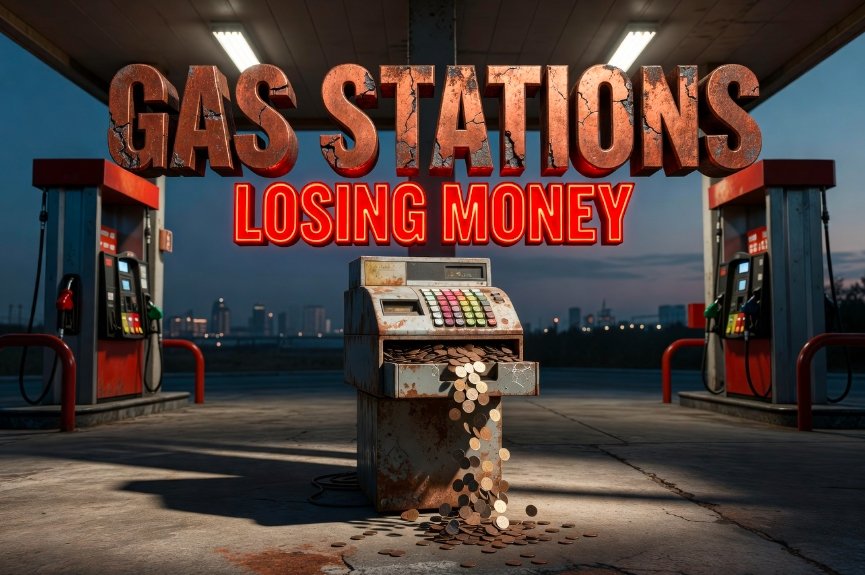
small gas station owner margin squeeze wholesale fuel costs 2026
The Real Numbers Behind the Pain at the Pump
Here is what almost no one talks about. The assumption that rising gas prices fatten station owners is flat-out wrong. The average gap between wholesale and retail prices is about 22 cents a gallon, according to Jeff Lenard, spokesperson for the National Association for Convenience Stores. Those stores sell about 80% of fuel nationwide. That might sound healthy, but that 22 cents has to cover all the other costs, so a station owner is only likely to break even. The average gross margin over the last five years was 38.3 cents a gallon. “There are likely many members losing money on fuel sales currently, and others making only a few cents a gallon,” Lenard said. The math gets worse when you look deeper. After accounting for the wholesale cost of fuel, transportation, and credit card processing fees, which can eat up 5 to 10 cents per gallon alone, a station owner might see a net profit of just 3 to 7 cents per gallon. Put plainly: a customer who buys 15 gallons of gas may generate less than a dollar in actual profit for the owner. And it is not just the wholesale price climbing. Wholesale gas prices are not the only rising cost putting the squeeze on station owners. Credit card fees and delivery charges for fuel are both higher than earlier this year. Labor costs are still up from the last gas spike in 2022.
| Cost Factor | Impact Per Gallon |
|---|---|
| Credit card processing fees | 5 to 10 cents |
| Fuel delivery charges | Rising vs. early 2026 |
| Net profit after all costs | Just 3 to 7 cents |
| Average 5-year gross margin | 38.3 cents |
| Current gap (wholesale to retail) | ~22 cents (barely break-even) |
Real Owners, Real Losses
These are not abstract figures. They represent people who built their lives around these businesses. Minneapolis station owner Lonnie McQuirter described days where his wholesale cost jumped over 20 cents per gallon, calling it “a little bit difficult in terms of how it impacts cash flows.” He said when there is a big jump in wholesale prices, he tries to balance his own costs with what he believes his customers can pay. “You understand that people are on a very thin thread, struggling to kind of maintain their lifestyle and afford to live,” he said. That tension between empathy and survival is something every station owner faces daily. Across the country, another gas station owner told reporters he is considering shutting down his fuel sales entirely. Harry Singh, who owns a station in Nutley, New Jersey, said he might have to stop selling fuel and only do car repairs if gas prices continue at this level. He has owned the station since 2009. “If prices stay like this another two or three months, I’m going to start losing money on fuel sales,” he said. While his station sells below the local market price, he said he is losing customers to a nearby Costco that sells gas even cheaper. Even his regular customers are not buying as much as before the Iran war began.
The Convenience Store: The Real Lifeline
If fuel barely pays the bills, how do most stations survive? The answer is inside the building. Convenience store sales account for only about 30% of a gas station’s revenue but often account for 70% of total profits. That single stat explains why every bottle of water, every cup of coffee, and every bag of chips matters more than the pump outside. Fountain drinks, coffee, and prepared hot foods typically have the highest margins, often exceeding 60%. Packaged goods like candy and snacks fall in the 30% to 40% range. Smart operators are leaning into this hard right now. Here is what the most resilient station owners are doing:
- Loyalty programs tied to in-store purchases, not just fuel discounts, to drive repeat visits and protect margins
- Made-to-order food and bean-to-cup coffee, which carry significantly higher margins than packaged goods
- Car wash bundles that add revenue without requiring extra customer trips
- Cash discount programs that pass credit card fees to card users, recovering 5 to 10 cents per gallon that would otherwise disappear
For operators, the risk extends beyond fuel margins. Rising prices threaten inside traffic, basket size, and the ability to convert fuel stops into profitable visits. Fuel occupies a unique place in consumer psychology. Prices are universally visible, instantly comparable, and highly emotional, influencing not just where drivers stop, but whether they engage beyond the pump. Data shows consumers are beginning to shift their behavior. It is not simply because gas prices are high, but rather because they have remained high over a long period of time. Sign prices have reached $4.50 per gallon nationally, which makes this trend especially concerning for retailers.
When Can Station Owners Expect Relief?
The honest answer is not soon. The EIA said in its May analysis that its most recent price projections assume the Strait of Hormuz “will remain effectively closed through late May, with flows slowly starting to resume in late May or early June,” and it expects it will take “until late 2026 or early 2027 for most pre-conflict production and trade patterns to resume.” Even when wholesale prices do start to ease, the relief does not reach retail overnight. Fuel prices, according to central bank economists, go up like “rockets” and down like “feathers,” and even if oil prices ease immediately, consumers typically see partial relief in retail fuel prices only after a month or two. Even once wholesale gas prices start to fall, it can take some time for retail prices to follow, because owners will need to lower prices slowly to recoup the profits lost during the runup. Station owners also paid more for the gas they already have on hand. While economists forecast that oil prices will dip later this year, they are likely to remain above pre-war levels throughout 2026, according to multiple forecasts. For independent station owners, that means navigating months of stress with no guaranteed floor beneath them. The pressure on small gas station owners right now is a quiet crisis hiding behind a price sign most drivers curse without a second thought. These are family businesses, neighborhood anchors, and small enterprises built on decades of hard work, now forced to count pennies on every gallon just to keep the lights on. As global oil markets slowly work toward stability, the operators who survive will be the ones who adapt fast, build loyal customers, and find ways to make the inside of their store do the heavy lifting that fuel no longer can. What do you think should be done to support small gas station owners during this crisis? Drop your thoughts in the comments below.


Capital Clusters and the Dual Tracks of European Tech Finance

Microsoft Shrinks Windows 11 Memory for 8GB PCs

XRP Ledger Brings Back Bugged Features Fixed for Institutions

The Shards Trailer Turns Ellis Nightmare Into Murphy Glamour

WhatsApp Folder Hides Business Messages After Hours

Mova LiDAX Ultra 3000 AWD Cracks the Robot Mower Moat

Urban Arrow FamilyNext Turns Costco Runs Into Bike Trips

Reddit Builds Spoken Video Layer to Reclaim Its Own Viral Stories

Nuggit £5m Fund Treats YouTube Channels as Real Businesses

Galaxy Z Fold 8 Makes Foldables Daily Drivers but Drops Flex Mode

CLARITY Act Final Text Expected This Weekend as 60-Vote Hurdle Looms

Kalshi Loses Major NY Prediction Markets Ruling to Judge Torres

Fed Minutes Cite AI Demand as Inflation Risk, Put a 2026 Hike Back on the Map

Marker AI Writing Startup Lands $13M Seed Led by Index Ventures

Dota 2 Esports World Cup 2026: Spirit Defends $2M Title In Paris

Meta’s Muse Spark 1.1 Beats Rivals on Price, Trails on Coding

Backrooms Returns to Theaters as the Everything Must Go Edition

CS2 Premier Season 5 Lands With Cache and a C4 Damage Rework

Finto Picks Munich Over Silicon Valley After YC, Raises $3.4M

ARC Intelligence Closes €4M Seed Round in Roughly a Week
-
 FINANCE2 months ago
Zcash Patched a Double-Spend Bug as ZEC Climbed 5%
-
 ENTERTAINMENT2 months ago
Steam Summer Sale 2026 Locks In June 25 to July 9 Dates
-
 FINANCE4 weeks ago
CLARITY Act Final Text Expected This Weekend as 60-Vote Hurdle Looms
-
 NEWS3 months ago
Meta Adds AI Replies to Threads, But Users Can’t Block It
-
 ENTERTAINMENT2 months ago
‘Widow’s Bay’ Review: Apple TV’s Sleeper Horror-Comedy Earns Its Fog
-
 NEWS5 months ago
U.S. Navy Deploys Solar-Powered Lightfish Drone to Patrol Oceans
-
 NEWS8 months ago
FolderFresh Review: This Free Tool Automates Windows File Organizing
-
 FINANCE4 weeks ago
Kalshi Loses Major NY Prediction Markets Ruling to Judge Torres