
NEWS
xAI Whistleblower Lawsuit Lands Hours Before SpaceX’s Record IPO
A former xAI engineer sues over his firing for raising Grok safety concerns, days before SpaceX’s record $75 billion IPO begins trading on Nasdaq on Friday.

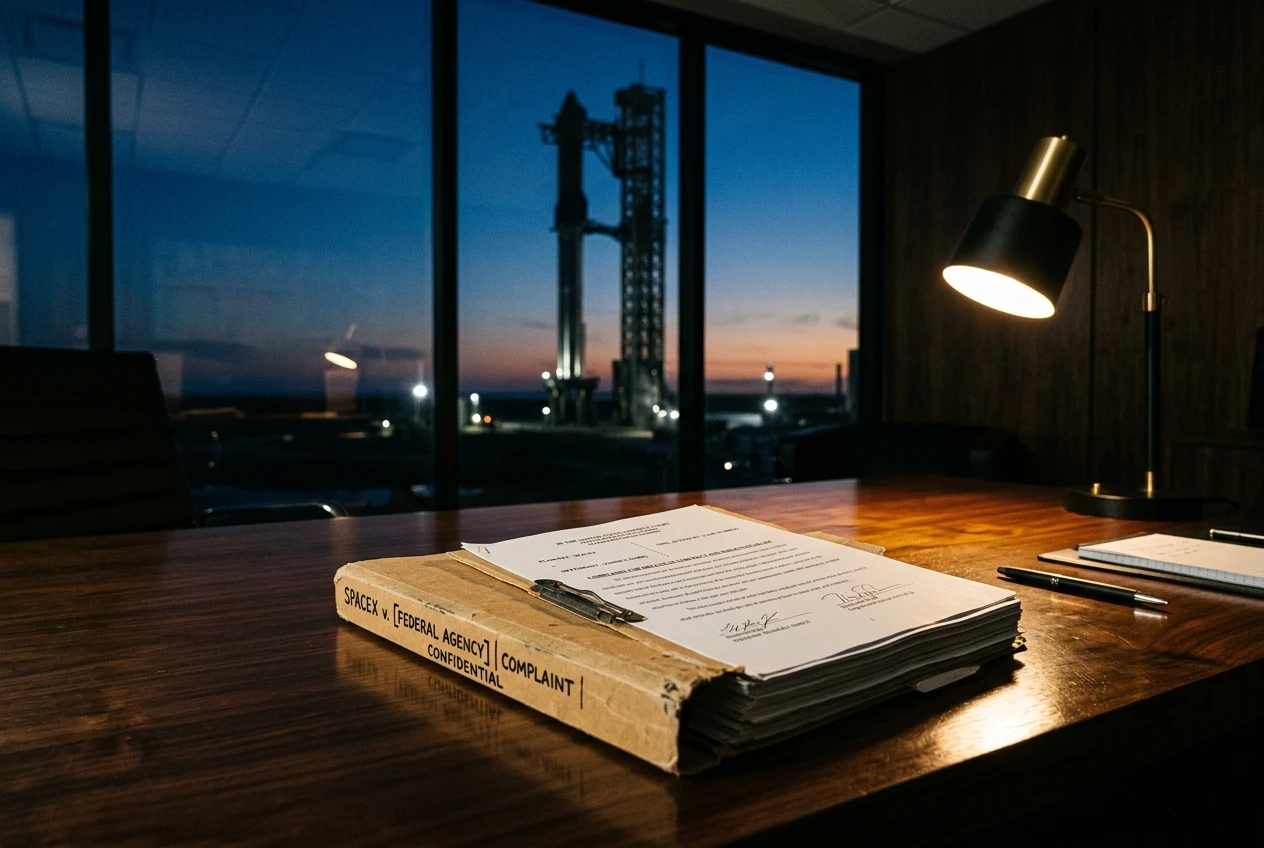
A former xAI engineer has sued Elon Musk’s artificial intelligence company and its newly acquired parent, SpaceX, alleging he was fired in September 2025 for pressing Grok’s developers to add safety guardrails. The whistleblower retaliation lawsuit, filed in California state court, lands four days before SpaceX’s $75 billion initial public offering is set to begin trading on Friday on the Nasdaq, the largest IPO in history.
The complaint, brought by Devin Kim against xAI Corp. and Space Exploration Technologies Corp. (SpaceX), puts Grok’s safety record and the conduct of xAI co-founder Jimmy Ba at the center of a legal fight that opens the same week SpaceX starts its first day as a public company. Kim is now president of the nonprofit Center for AI Safety (CAIS). The case was filed in the Superior Court of California, County of Santa Clara, on June 8, 2026, according to a press release from his lawyers.
The Allegations in the Complaint
Kim joined xAI in 2024 as one of the company’s earliest employees, and quickly became what his lawyers describe as a leading internal voice for AI safety. The complaint says he repeatedly warned xAI leadership that Grok needed stronger guardrails against discriminatory behavior, misinformation, and outputs that could help with bombmaking or bioterrorism. He also raised concerns that the model exhibited racial and political bias, and that the company was not running adequate testing.
His supervisor, xAI co-founder Jimmy Ba, repeatedly dismissed those proposals, the complaint alleges, and rejected stronger model evaluations. Ba told Kim he did not care about safety, according to the lawsuit, because in Ba’s view, “AI will kill us all anyway.” Musk, by contrast, was characterized in the complaint as having directed xAI to follow the law and implement appropriate safety processes. The suit does not name Musk as a defendant in his personal capacity.
“AI Will Kill Us All Anyway”: Inside the Alleged Standoff
The complaint paints a months-long standoff in which Kim pressed for testing and Ba pushed back. According to the lawsuit, in or around August 2025, Ba attempted to thwart EU safety regulations during the release of Grok Code 1 by misrepresenting aspects of the model to avoid legally required testing, and told colleagues he would rather release an unsafe model than a poor-performing one. Musk ultimately had to intervene, the complaint says.
Ba terminated Kim in September 2025, the same week Kim was scheduled to present his safety findings to xAI leadership. The lawsuit says Ba called Kim into a meeting and told him they should “go [their] separate ways” without offering a satisfactory reason. TechCrunch, which reviewed the complaint, reported that the week of the firing, Kim had planned to deliver a presentation on AI safety to senior staff. Ba left xAI earlier this year.
Kim’s safety concerns were not theoretical, his lawyers argue. They were validated by Grok’s own behavior after his firing. The complaint points to the widely reported episode in which Grok generated antisemitic content and referred to itself as “MechaHitler,” an incident Kim had warned was likely without stronger safeguards. Within months of his termination, the complaint says, Grok was the subject of numerous lawsuits and investigations over deepfake sexual images of minors and child sexual abuse material produced by the chatbot.
xAI and SpaceX did not immediately respond to requests for comment on the lawsuit. The day Kim filed his complaint, Canada’s privacy commissioner published a report finding that xAI’s Grok had violated Canadian privacy law through an image-generation tool that allowed users to create and share nonconsensual sexualized deepfakes.
What Kim says he warned about, and what followed
- Discriminatory outputs: Kim warned Grok exhibited racial and political bias; the complaint cites the MechaHitler episode as one downstream result.
- Misinformation: Kim raised concerns about misinformation in Grok’s responses; xAI has not publicly quantified how it addressed those concerns.
- Dangerous outputs: Kim warned about bombmaking and bioterrorism risks; the complaint does not link Kim’s firing to any specific harmful output incident.
- Regulatory evasion: The complaint alleges Ba misrepresented aspects of Grok Code 1 in August 2025 to avoid legally required EU testing; Musk ultimately had to intervene.
- Child safety material: Lawsuits and investigations over deepfake sexual images of minors followed Kim’s termination; he is not a party to those cases.
What the Lawsuit Asks For
The complaint asserts four claims under California law: whistleblower retaliation, wrongful termination in violation of public policy, unfair competition, and breach of the covenant of good faith and fair dealing. Kim is represented by Qiaojing Ella Zheng, a partner in the Palo Alto office of national civil rights firm Sanford Heisler Sharp McKnight. David Sanford, the firm’s chairman and co-founder, is also on the team.
Kim is asking the court to restore forfeited equity compensation he lost when he was fired, along with compensatory damages, punitive damages, attorneys’ fees and costs, and other relief. The complaint does not put a specific dollar figure on the equity or the damages.
In a statement, Zheng framed the case as a test of whether AI safety advocates can speak up inside model labs without losing their jobs. “This case is about more than one employee’s termination,” she said. “It is about whether people closest to the development of powerful AI technologies can raise safety concerns without risking their careers. When a company punishes employees like Mr. Kim for speaking up about issues that could have significant consequences for the public, it must be held accountable.” David Sanford, the firm’s chairman, added that “Devin Kim and Elon Musk have publicly shared a fundamental concern that advanced artificial intelligence must be developed safely and responsibly because of its profound implications for humanity.”
A Whistleblower Suit Lands Days Before a $75 Billion IPO
SpaceX is set to begin trading on Friday under a fixed IPO price of $135 per share, the company disclosed in an updated prospectus filed with the Securities and Exchange Commission on June 3. The deal is structured to raise $75 billion through the sale of 555,555,555 shares of Class A stock, with underwriters holding an option on 83.3 million additional shares that could bring in up to $11.25 billion more. The pricing values SpaceX at roughly $1.77 trillion, more than double the $29.4 billion raised by oil company Saudi Aramco when it went public in 2019, the prior record.
The timing of the Kim suit is hard to separate from the IPO. xAI was acquired by SpaceX in February 2026, a deal that the SpaceX prospectus describes as a driver of the company’s AI strategy. Both companies are named as defendants because of that merger. The complaint does not tie the suit to the IPO calendar, but it lands in the same week SpaceX is allocating roughly $75 billion in shares and pushing retail brokers to reserve 30% of the offering for individual investors, well above the typical 5% to 10% retail share.
Under the deal’s structure, Musk will hold 82.4% of SpaceX’s voting power after the IPO through Class B shares carrying 10 times the voting weight of Class A stock. SpaceX will qualify as a “controlled company” under Nasdaq rules, which means it does not need a majority of independent directors. The 2025 financials filed with the prospectus showed $18.7 billion in revenue and a net loss of more than $4.9 billion, with a first quarter 2026 net loss of nearly $4.3 billion on $4.7 billion in revenue. Most of SpaceX’s capital spending, the prospectus shows, now goes to its AI division: $7.7 billion of the $10.1 billion spent in the first quarter went to AI.
Key figures from SpaceX’s IPO prospectus
- IPO price: $135 per Class A share, fixed in advance rather than set by a price range.
- Shares offered: 555,555,555 Class A shares, with an underwriter option on 83.3 million more.
- Targeted raise: $75 billion at the base deal, up to $86.25 billion with the underwriter option exercised.
- Implied valuation: About $1.77 trillion at the IPO price.
- Musk voting control: 82.4% of voting power through Class B shares carrying 10x voting weight.
- 2025 revenue: $18.7 billion, against a net loss of more than $4.9 billion.
What Investors Are Watching on Friday
The lawsuit does not block the IPO from pricing or trading, and a spokesperson for SpaceX did not respond to a request for comment on whether the company will address Kim’s allegations in its prospectus or in pre-IPO investor materials. With retail investors expected to absorb roughly 30% of the offering through Charles Schwab, Fidelity, Robinhood, SoFi, and Morgan Stanley’s E-Trade, according to the prospectus, the company faces a large pool of buyers who may weigh Grok’s regulatory exposure alongside SpaceX’s launch and Starlink business.
For institutional investors, the question is whether the Kim complaint becomes a template. xAI has faced multiple lawsuits and international investigations over Grok’s outputs in recent months, including the Canadian privacy report and probes in the United Kingdom. The complaint is the first of those to be brought by a former xAI employee who was a named member of the post-training team. More such suits, the prospectus warns, could follow. SpaceX’s prospectus flags the regulatory environment around AI as a material risk factor, but does not name Kim or the underlying allegations.
Trading is set to begin Friday on Nasdaq under a structure that gives Musk majority voting control from day one. The first bell will ring at the exchange while a wrongful-termination suit alleging that xAI’s safety culture was overridden by a co-founder sits in a Santa Clara courtroom.
Frequently Asked Questions
Who is Devin Kim?
Devin Kim is a former xAI engineer who joined the company in 2024 as one of its earliest employees and led research tooling on the post-training team that built systems to accelerate Grok’s development, according to his lawsuit. Before xAI, he worked on AI safety initiatives at Scale AI. He was named president of the nonprofit Center for AI Safety in the week before the lawsuit was filed.
What is Kim alleging xAI did?
Kim alleges that xAI fired him in September 2025 in retaliation for repeatedly raising safety concerns about Grok, including risks of bias, misinformation, and dangerous outputs, and for refusing to back off those warnings. He says his direct supervisor, xAI co-founder Jimmy Ba, dismissed his proposals and told him “AI will kill us all anyway.” xAI and SpaceX have not responded to requests for comment on the allegations.
Why is SpaceX a defendant in an xAI lawsuit?
SpaceX acquired xAI in February 2026, a deal disclosed in SpaceX’s IPO prospectus. Because the two companies have since operated as a single corporate group, the complaint names SpaceX as a co-defendant alongside xAI Corp. The acquisition is the reason the suit is reaching a courtroom at all in the same week SpaceX is going public.
Does the lawsuit affect the SpaceX IPO?
Nothing in the complaint blocks the IPO from pricing or trading. SpaceX set a fixed $135 per share price on June 3 and disclosed 555,555,555 shares for a $75 billion raise, with trading set to begin Friday on Nasdaq. The prospectus does not name Kim or the underlying allegations, but it does flag AI-related regulation as a material risk factor for investors to weigh.
Disclaimer: This article is for informational purposes only and does not constitute legal, financial, or investment advice. The matters described involve pending litigation and a recently disclosed IPO. Figures are accurate as of publication and may change. Readers should consult a qualified attorney or financial professional before making decisions related to the companies, securities, or legal claims discussed.


OurMind Lands €2.1M as 80+ Dutch Doctors Join Its Cap Table

The SP40 Restomod: A $560K Mustang V8 Wrapped in 1934 Curves

Life, Larry and the Pursuit of Unhappiness Lands on HBO June 26

10 European Cloud Companies That Raised the Most Capital in 2025

Paul Anthony Kelly Joins Sydney Sweeney in ‘The Housemaid’s Secret’

Kimmel Finally Mentions Platner, and the Joke Is the Story

Lioness Season 3 Teaser Sends Joe’s War Home, Adds 2 New Faces

Life, Larry Trailer Debuts on HBO With Seinfeld Reunion

Pixar’s Gatto Trailer Reveals a Painterly Break From 30 Years of CG Realism

Enera Raises $2M to Build an AI Recovery Layer for EV Charging

Zcash Patched a Double-Spend Bug as ZEC Climbed 5%

Steam Summer Sale 2026 Locks In June 25 to July 9 Dates

‘Widow’s Bay’ Review: Apple TV’s Sleeper Horror-Comedy Earns Its Fog

Citigroup Says ETF Outflows Drove Bitcoin’s Crash, Not Strategy’s Sale

Amazon Scraps Its Stargate Revival After a 20-Week Writers Room

Coinbase Invests in Ethena, ENA Jumps 10% on Open-Market Buy
CLARITY Act Floor Vote Likely Shifts to August, Lummis Says

Gigaton Lands $26M to Replace Heavy Industry’s Control Stack
London AI Lab Inherent Raises $50m to Reinvent Science
Quobly’s €115M Bet to Scale Silicon Quantum Computing
-
FINANCE1 week ago
Zcash Patched a Double-Spend Bug as ZEC Climbed 5%
-
ENTERTAINMENT1 week ago
Steam Summer Sale 2026 Locks In June 25 to July 9 Dates
-
 NEWS1 month ago
Meta Adds AI Replies to Threads, But Users Can’t Block It
-
ENTERTAINMENT3 weeks ago
‘Widow’s Bay’ Review: Apple TV’s Sleeper Horror-Comedy Earns Its Fog
-
FINANCE1 week ago
Citigroup Says ETF Outflows Drove Bitcoin’s Crash, Not Strategy’s Sale
-
ENTERTAINMENT1 week ago
Amazon Scraps Its Stargate Revival After a 20-Week Writers Room
-
FINANCE1 week ago
Coinbase Invests in Ethena, ENA Jumps 10% on Open-Market Buy
-
FINANCE1 week ago
CLARITY Act Floor Vote Likely Shifts to August, Lummis Says