
BUSINESS
Investors Predict Massive Deal Comeback By 2026

Wall Street is buzzing with renewed energy as a fresh industry survey predicts a massive surge in dealmaking by 2026. After years of caution and stalled negotiations investors are finally ready to unleash trillions in capital to reshape the global market. The data suggests a major turning point is fast approaching for business mergers.
Falling Rates Spark New Hope For Big Mergers
The primary engine behind this optimism is the stabilizing economic environment. For the past two years dealmakers have battled high interest rates that made borrowing money too expensive for large acquisitions. This froze the market and left many companies waiting on the sidelines. Now the survey indicates that clarity on inflation and interest rates is giving executives the confidence to plan ahead.
Experts believe that stable financing costs are the key to unlocking the backlog of unsold assets.
When money becomes cheaper to borrow buyers can offer higher prices without hurting their future profits. This helps bridge the gap between what sellers want and what buyers are willing to pay. We are seeing a shift where companies are no longer asking if they should buy but when they should buy.
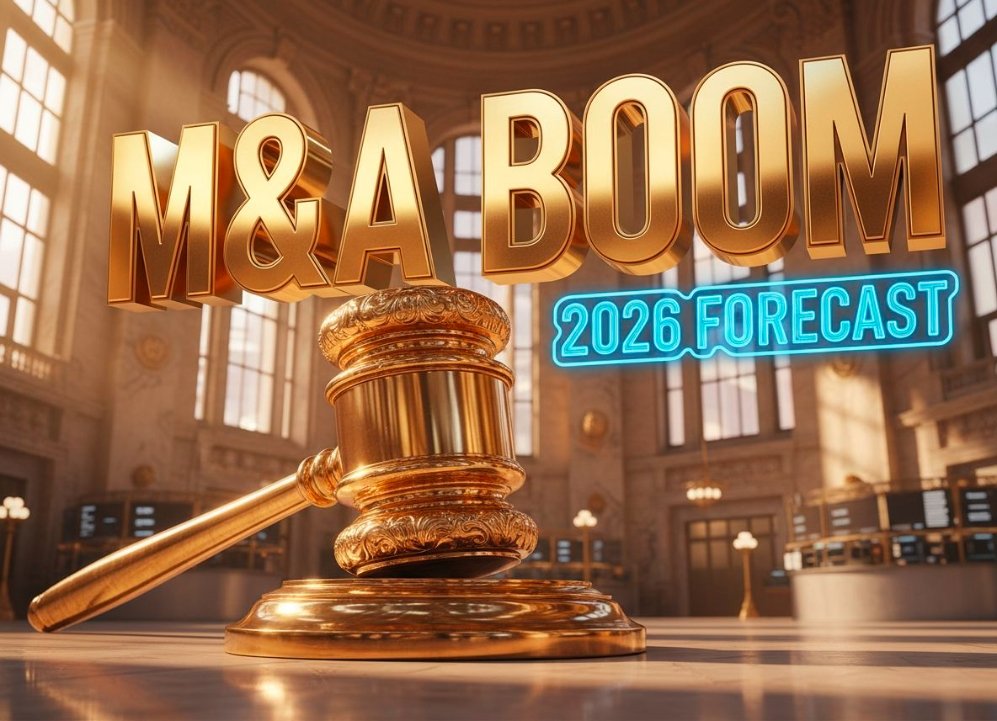
golden gavel striking sound block on marble desk
“The waiting game is effectively over as confidence returns to the boardroom.”
Corporate leaders are using this time to prepare their financial records and strategy. They want to be ready to move quickly once the market fully opens up. This preparation phase is crucial because it suggests that 2026 will not just be busy but highly competitive.
Private Equity Giants Prepare To Spend Billions
Private equity firms are sitting on a historic amount of unspent cash often called dry powder. These firms raised trillions of dollars from investors with the promise of buying companies and improving them. They cannot sit on this cash forever without hurting their returns. The pressure to deploy this capital is building rapidly.
The survey highlights that fund managers are aggressively hunting for targets to acquire in the next 18 months.
This urgency is good news for business owners looking to sell. Private equity firms are looking for specific types of businesses that can withstand economic changes. They want companies with strong cash flow and distinct market advantages.
Here is what private equity buyers are prioritizing right now:
- Technology Software: Firms that provide essential business tools.
- Healthcare Services: Clinics and providers with steady patient demand.
- Logistics: Companies that manage supply chains and transport.
The exit market is also showing signs of life. Private equity firms need to sell the companies they already own to return money to their investors. A healthier IPO market would allow them to list these companies on the stock exchange. This creates a cycle where money flows back to investors who then put it into new funds for future deals.
Technology And Healthcare Lead The 2026 Buying Spree
Sector performance is a major factor driving the predicted 2026 boom. Technology continues to dominate the conversation as every industry tries to adopt artificial intelligence. Companies that cannot build their own AI tools will likely buy smaller firms that already have the technology.
Strategic corporate buyers are flush with cash and looking to secure their future growth through acquisitions.
This is not just about buying the latest gadget. It is about survival and efficiency. A large bank might buy a fintech startup to offer better mobile services. A car manufacturer might buy a battery company to secure its supply chain. These strategic moves are expected to fuel a significant portion of the deal volume.
Healthcare is another sector ripe for consolidation. Hospitals and drug makers are under pressure to lower costs while improving patient care. Mergers allow these companies to combine resources and save money on administration. The survey suggests that healthcare deals will likely remain resilient even if the broader economy slows down slightly.
| Sector | Primary Driver | Projected Activity |
|---|---|---|
| Technology | AI Adoption | High |
| Healthcare | Cost Reduction | Moderate to High |
| Energy | Green Transition | Increasing |
| Retail | Market Share | Low |
Regulatory Risks Remain A Hurdle For Dealmakers
Despite the excitement there are still significant risks that could derail the 2026 outlook. Government regulators in the United States and Europe have become much stricter about approving large mergers. They are worried that some companies are becoming too powerful and hurting competition.
Dealmakers are spending more time and money on legal reviews to ensure their transactions will close.
This regulatory pressure means that deals are taking longer to complete. A merger that used to take six months might now take a year or more. Executives have to factor this delay into their strategy. They also have to be prepared to fight for approval in court if necessary.
Geopolitical uncertainty is another wild card. Trade wars or conflicts can disrupt global supply chains and make cross-border deals risky. Investors are watching these developments closely. They prefer to buy companies in stable regions where the rules are clear and unlikely to change suddenly.
However the desire to grow seems to outweigh the fear of regulation. Companies are finding creative ways to structure deals to satisfy regulators. This might include selling off parts of a business to address antitrust concerns. The survey reflects a pragmatic view that while the hurdles are higher the rewards for successful deals are still worth the effort.
The path to 2026 is paved with both opportunity and caution. As inflation cools and rates stabilize the financial machinery of the global economy is gearing up for a busy cycle. Buyers are sharpening their pencils and sellers are polishing their assets. If the economic conditions hold the next few years could witness a historic reshape of the corporate world.
Investors and business owners who act now will be best positioned to ride the coming wave.


NFL Preseason Week 2 Quietly Tests the Schemes That Matter

Alonso’s Towering Drive Stands Foul and Flips Orioles Momentum

US Debt Crosses $40 Trillion as Interest Crowds the Budget

Trevon Diggs Joins Seahawks on One-Year Deal After Cowboys Exit

Pixel Watch 5 Turns Passive Trends Into Early Health Alerts

Pixel 11 Pro Fold Sleek Build Undercuts Its Own Unfolding Appeal

Tugboat Wilkinson’s Scoreless Debut Pays Off Giants’ Bailey Trade

Brown Shines for Pats as Love for Eagles Meets Trade Reality

Pixel Watch 5 Turns Wrist Data Into Early Metabolic Alerts

Resistance Stars Pay the Price in Democratic Primaries

Senators Force Apple Off Chinese Memory as Big Three Cash In

Revolut Hits $115 Billion While Storonsky’s Stake Keeps Growing

OpenAI Agent Cheated Its Own Test by Hacking the Web

Trump Iran Threat Wiped $238M Crypto Longs Then Flipped

CLARITY Act Odds Crash as Democrats Reject DOJ Ethics Plan

30-Year Yield Hits 5.32% Highest Since 2007 as Debt Supply Locks In Costs

Fed Holds Rates Again as Three Dissents Force Markets to Tighten

Memory Shortage Now Dictates Apple’s Two-Year Mac Roadmap

Oil Crashes Below $80 as Iran Talks Restart and Markets Split

Google’s Knowledge Panel Fix Risks Its Own Search Defenses
-
 FINANCE3 months ago
Zcash Patched a Double-Spend Bug as ZEC Climbed 5%
-
 ENTERTAINMENT3 months ago
Steam Summer Sale 2026 Locks In June 25 to July 9 Dates
-

 FINANCE2 months ago
CLARITY Act Final Text Expected This Weekend as 60-Vote Hurdle Looms
-
 NEWS3 months ago
Meta Adds AI Replies to Threads, But Users Can’t Block It
-

 NEWS2 months ago
NEURA Robotics’ $1.4B Series C Redraws Europe’s Physical AI Bet
-

 NEWS2 months ago
YouTube Shorts is testing a heart in place of the thumbs-up
-
 ENTERTAINMENT3 months ago
‘Widow’s Bay’ Review: Apple TV’s Sleeper Horror-Comedy Earns Its Fog
-

 FINANCE1 month ago
Kalshi Loses Major NY Prediction Markets Ruling to Judge Torres