
NEWS
TSMC Pours $20 Billion Into Arizona Fab Despite Big Hurdles

Taiwan Semiconductor Manufacturing Company just doubled down on America. On May 12, 2026, its board cleared a fresh $20 billion injection for its Phoenix plant, even as water shortages, sky-high visa fees, and supplier headaches threaten to slow the build. The catch? This cash alone may not be enough to silence the doubts.
TSMC Board Greenlights $20 Billion for Fab 21 Expansion
The world’s largest chipmaker is betting bigger on Arizona than ever before. TSMC reported that its U.S. subsidiary, TSMC Arizona Corporation, adopted a Board resolution on May 12, 2026 authorizing a capital increase of not more than US$20 billion from the parent, subject to approval of the competent authorities.
The money lands in North Phoenix, where Fab 21 keeps rising out of the desert. The approval of a capital injection is a formal procedure that grants TSMC management the right to use the money for the expansion of Fab 21, and while it is an important milestone, it is a formality, as this is a part of the $165 billion expansion plan that the company introduced last year.
The funding piece sits inside an even bigger spending wave. The Board approved about US$31,284.30 million in capital appropriations for advanced technology capacity and new fabs, and a further capital injection of up to US$20 billion into TSMC Arizona.
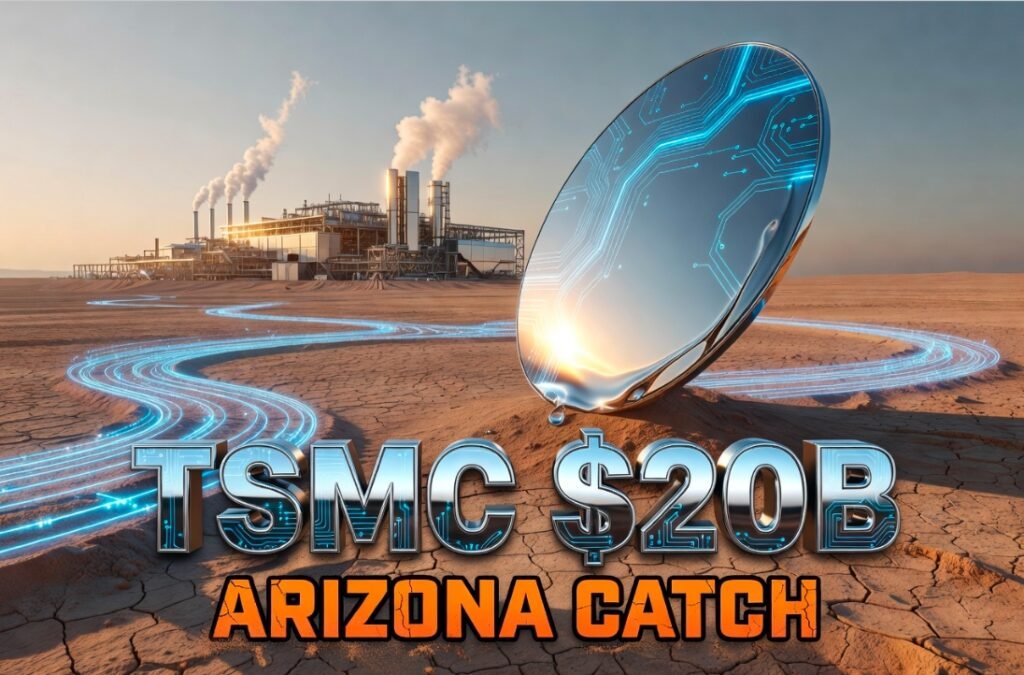
TSMC Arizona Fab 21 chip plant expansion North Phoenix
Inside the $165 Billion US Chipmaking Bet
Arizona is no longer just a side project. It is now central to TSMC’s global game plan, with three fabs already in motion and more coming.
- The first fab began commercial operations in the final quarter of 2024.
- Construction of a second fab reached completion, with mass production scheduled to commence in the second half of 2027. Furthermore, work on a third fab began earlier this year as part of the company’s long-term commitment to the region.
- The three fabs were the centerpieces of TSMC’s US$65 billion initial investment project in Arizona. The chipmaker also announced an additional US$100 billion investment plan to build three more fabs, two chip packaging facilities and one research and development center in the US state.
And the spending may not stop there. While TSMC’s current total U.S. investment stands at US$165 billion, the report adds it could rise to as much as US$250 billion, as the company is expected to replicate its Hsinchu Science Park cluster model in Phoenix.
The land is already in hand. Yeh, as per Central News Agency, said the new land is extremely close to the current fabs, essentially just across a highway and adjacent to Phase 1 facilities.
Arizona Fab Surprises With Early Profit
For all the noise around delays and cost overruns, Fab 21 is paying off faster than insiders expected.
The Arizona production site generated a profit of NT$16.14 billion, or approximately USD 514 million, in 2025 during its first full year of mass production. Making a profit in a new fab in the first year of full-scale operation is quite a big deal for foundries.
That number looks even better stacked against years of red ink. Since 2021, TSMC Arizona accumulated operating losses of about US$1.25 billion over four years.
“TSMC told me it was surprised by the smooth trial run of the first fab, which has left the company optimistic about the project’s outlook,” said Yeh Chun-hsien, head of Taiwan’s National Development Council.
Water, Visas and Power: The Real Catches
Money is the easy part. The hard part is everything else.
Central News Agency, citing Yeh Chun-hsien, head of the National Development Council, reports that TSMC has identified utilities constraints, particularly water supply in Arizona’s desert environment, regulatory complexity, visa processing delays, and labor shortages as primary hurdles.
Water tops the worry list. Yeh said Arizona’s dry climate has made securing sufficient water resources a major concern for TSMC, which hopes to receive support from the Arizona state government. The company has tried to get ahead of the issue. The company has previously attempted to ease concerns regarding water usage and long-term water supply at Fab 21 by incorporating extensive water recycling and treatment infrastructure capable of supporting advanced fab requirements, though it is unclear whether this has already been done.
Then there is the people problem. To make matters worse, the company faced difficulties obtaining visas for overseas personnel needed to support operations in Arizona due to the Trump administration’s $100,000 fees on the entry of new H-1B visa holders.
The clock is also ticking on the engineers already on site. Common Wealth Magazine had highlighted the issue of labor shortage for TSMC, noting that more than 1,000 Taiwanese engineers who were sent to support the Arizona operations on three-year assignments are now approaching the end of their contracts.
| Challenge | Why It Matters |
|---|---|
| Water supply | Advanced fabs need huge volumes of ultra-pure water in a drought zone |
| H-1B visa fees | $100,000 entry fees raise the cost of bringing in specialists |
| Power supply | Stable electricity is essential for 24/7 wafer production |
| Supplier migration | Taiwan’s investment laws may need changes before vendors can relocate |
What Happens Next for US Chip Supply
TSMC is also leaning on its home-country partners to follow it across the Pacific. Yeh said TSMC is hoping Taiwanese upstream suppliers of semiconductor chemicals and equipment will follow it to the United States, though such investments would require regulatory revisions.
The signal to investors and Washington is clear: TSMC is here to stay. Cliff Hou, TSMC Senior Vice President and Deputy Co-COO, said at the 2026 SelectUSA Investment Summit that the company “is prepared for growth from any new business opportunities.”
For the average shopper, the stakes are personal. The chips coming out of Phoenix will end up inside iPhones, AI servers, and electric cars. If water, power, or staffing runs short, the timeline for cheaper, faster gadgets stretches further out. TSMC’s revenue stems primarily from high-performance computing (50%+), smartphones (30%), and other segments, with US clients accounting for about 70% of sales, making it pivotal for American tech giants’ supply chains.
Arizona has gone from a long-shot chip experiment to a working, profitable piece of America’s tech future, and TSMC is willing to keep writing the checks. Still, this story is as much about the desert, the visas, and the workers as it is about the billions. The cash is flowing, but the catch is real, and the next 18 months will show whether Phoenix can carry the weight the world is putting on it. What do you think, is TSMC’s Arizona gamble a smart move for the US, or are the hurdles too steep? Drop your thoughts in the comments and share this story with anyone tracking the future of chips.


Orbio Closes $21M From Dawn Capital to Scale AI Frontline Agents

Honda’s Electric Trial Bike Lands in the Top Five at TrialGP Japan

GTA 6’s November Launch Is Reshaping the 2026 Game Calendar

Qorelo Lands $3.5M Seed to Tackle SAP’s 2027 Migration Crunch

Italian Edtech Sirius Game Raises €1.3M to Scale Primary School Play

Bestie Bite Raises €1.5M to Take AI Video Reviews to the US

European Tech’s €2.8B Week Came With a US Acquirer Twist
Rainn Wilson Calls Out Media’s Double Standard on Platner

OnePlus N6 Confirmed for June 30 India Launch as First N-Series Phone

Munich Court: Google Liable for False Answers in AI Overviews

Zcash Patched a Double-Spend Bug as ZEC Climbed 5%

Steam Summer Sale 2026 Locks In June 25 to July 9 Dates

Amazon Scraps Its Stargate Revival After a 20-Week Writers Room

Citigroup Says ETF Outflows Drove Bitcoin’s Crash, Not Strategy’s Sale
Coinbase Invests in Ethena, ENA Jumps 10% on Open-Market Buy

CLARITY Act Floor Vote Likely Shifts to August, Lummis Says

Gigaton Lands $26M to Replace Heavy Industry’s Control Stack
London AI Lab Inherent Raises $50m to Reinvent Science
Quobly’s €115M Bet to Scale Silicon Quantum Computing
SpaceX Frees 5% of IPO Shares While Locking Musk for a Year
-
FINANCE3 weeks ago
Zcash Patched a Double-Spend Bug as ZEC Climbed 5%
-
ENTERTAINMENT3 weeks ago
Steam Summer Sale 2026 Locks In June 25 to July 9 Dates
-
 NEWS1 month ago
Meta Adds AI Replies to Threads, But Users Can’t Block It
-
 ENTERTAINMENT1 month ago
‘Widow’s Bay’ Review: Apple TV’s Sleeper Horror-Comedy Earns Its Fog
-
ENTERTAINMENT3 weeks ago
Amazon Scraps Its Stargate Revival After a 20-Week Writers Room
-
FINANCE3 weeks ago
Citigroup Says ETF Outflows Drove Bitcoin’s Crash, Not Strategy’s Sale
-
FINANCE3 weeks ago
CLARITY Act Floor Vote Likely Shifts to August, Lummis Says
-
FINANCE3 weeks ago
Coinbase Invests in Ethena, ENA Jumps 10% on Open-Market Buy