
ENTERTAINMENT
Cate Blanchett Says MeToo “Got Killed Very Quickly” at Cannes

Cate Blanchett dropped a bombshell on the Croisette this weekend, telling a packed Cannes audience that the MeToo movement was crushed almost as fast as it rose. The two-time Oscar winner left the room buzzing, the industry squirming, and fans asking one big question: who actually pulled the plug on the reckoning Hollywood once promised?
Blanchett’s Blunt Words at the 2026 Cannes Film Festival
Speaking Sunday during a Rendez-vous conversation moderated by Didier Allouch, Blanchett said the #MeToo movement “got killed very quickly” in Hollywood, where she has long been outspoken about gender equality.
“It got killed very quickly, which I think is interesting,” she told the crowd.
The actress pushed further, questioning why women without fame, money, or PR teams are still being silenced. “There are a lot of people with platforms who are able to speak up with relative safety and say this has happened to me, and the so-called average woman on the street is saying #MeToo. Why does that get shut down?” Blanchett asked. “What [the movement] revealed is a systemic layer of abuse, not only in this industry but in all industries, and if you don’t identify a problem, you can’t solve the problem.”
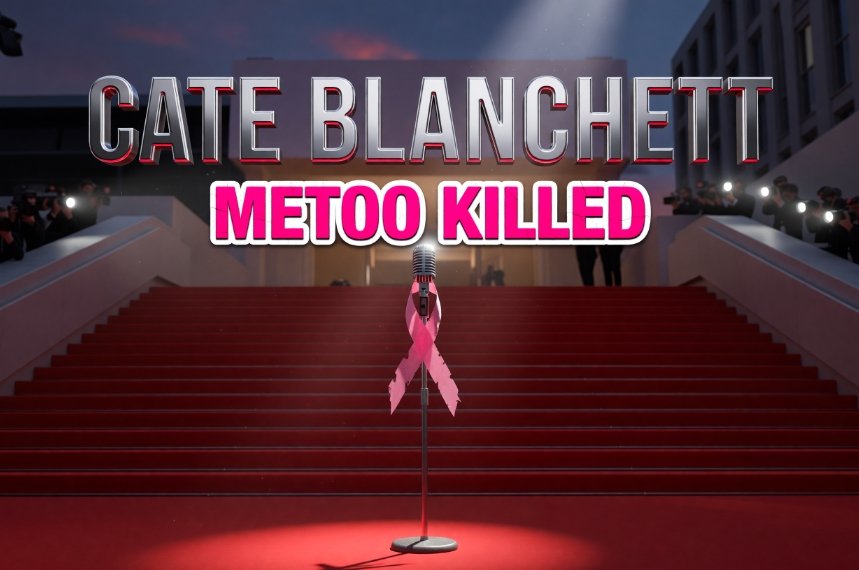
Cate Blanchett Cannes 2026 MeToo movement speech
Headcounts, Boring Jokes, and a Lopsided Set
Blanchett did not stop at theory. She brought receipts from her own daily work life, painting a picture of film sets that look nothing like 2026 should.
“I’m still on film sets and I do the headcount every day, and it is still there’s 10 women and there’s 75 men, every morning. And I love men, but what happens is the jokes become the same. And what happens is you just have to brace yourself slightly. And I’m used to that, but it just gets boring. It gets boring for everybody when you walk into a homogeneous workplace.”
That word, “boring,” landed harder than expected. It was not anger. It was fatigue. The kind of fatigue that comes from telling the same story for nine straight years and watching nothing meaningfully change.
| Blanchett’s Cannes Snapshot | The Number She Shared |
|---|---|
| Women on set each morning | About 10 |
| Men on set each morning | About 75 |
| Female directors in Cannes competition (1946 to 2018) | 82 |
| Male directors in Cannes competition (same window) | 1,866 |
From the 2018 Red-Carpet March to a Quiet 2026
The contrast with eight years ago is hard to miss. Blanchett notably served as Cannes jury president in 2018 at the height of #MeToo and led a women’s march where she held hands with Kristen Stewart, Léa Seydoux, Ava DuVernay, Agnès Varda and more as they walked up the steps of the Palais des Festivals.
She and 81 other women appeared on the steps of the Palais des Festivals, symbolically representing the number of female directors who were selected for Cannes’ competition lineup. Over the same period, 1,866 male directors had been selected.
Back then, the energy was loud, organized, and global. Today, the silence inside Hollywood is louder than any speech. The Time’s Up legal defense fund has collapsed. The press conferences are quieter. The hashtags trend less. And, as Blanchett pointed out, women without a red carpet still struggle to be heard.
“Women are not a minority in the world, yet the current state of the industry says otherwise.” Cate Blanchett, on the steps of the Palais.
Why Critics Say Hollywood Helped Bury the Movement
Blanchett blamed a “systemic” force for the slowdown. Critics, though, are pointing fingers much closer to home. They argue the entertainment industry that lit the MeToo match also helped smother it once the flames came near its own friends.
The pattern, they say, looked something like this:
- Selective outrage: Big stars raged on social media over some political figures while staying quiet about industry allies.
- The Time’s Up collapse: The legal fund tied to MeToo lost public trust after reports linked its leaders to advising powerful men accused of misconduct.
- The “average woman” gap: Workers without publicists, agents, or a verified account on X say their complaints still vanish into HR voicemail.
- Backlash culture: Defamation suits, NDAs, and viral pile-ons have pushed many accusers back into silence.
Blanchett did not name names. She did not have to. The room understood the subtext.
What Comes Next for Blanchett and the Cause
Even as she mourned the movement’s slow death, Blanchett kept building. She co-leads production company Dirty Films with Andrew Upton and Coco Francini, and has founded the Proof of Concept program supporting women, trans and non-binary voices, as well as the Displacement Film Fund for refugee filmmakers and those telling stories of displacement.
She also confirmed fresh work on the horizon. Blanchett said she is “about to work with Brady Corbet on a film.” Add that to her upcoming turn playing Martha Stewart in a biopic, and her calendar looks anything but quiet.
Still, the headline she made Sunday was not about her next role. It was about the role Hollywood refused to play when the cameras stopped rolling.
Blanchett’s Cannes moment cut deeper than another red-carpet soundbite because it admitted something the industry has spent years dodging. A movement that promised to protect every waitress, every assistant, and every quiet woman in an office somewhere ended up shielding mostly the famous, and even then, only sometimes. Her grief felt real, her frustration felt earned, and her question still hangs in the Cannes air like cigarette smoke. Do you think MeToo can be revived, or did Hollywood let it die for good? Share your take in the comments and join the conversation using #MeToo and #Cannes2026.


Howard the Duck at 40 Still Owns Marvel’s First Flop

Valve Skin Ban Hits BLAST and Forces CS2 Teams Toward Betting Cash

Oil Crashes Below $80 as Iran Talks Restart and Markets Split

Netflix Screening Erases Fortitude Exclusivity in $105M Cage Suit

Bitget BGBTC Upgrade Turns Idle Bitcoin Into Daily Yield

FFXIV Switch 2 Port Brings Portability With a Second Bill

MacBook Air Delays Reveal AI Memory Crunch Repricing Laptops

Bitcoin BIP-110 Soft Fork Dies on Tiny Miner Support

CXMT LPDDR6 Push Locks In Mobile DRAM Split

Snapchat Hands Spotlight Priority to Human Creators Over AI Farms

Kalshi Loses Major NY Prediction Markets Ruling to Judge Torres

Fed Minutes Cite AI Demand as Inflation Risk, Put a 2026 Hike Back on the Map

Marker AI Writing Startup Lands $13M Seed Led by Index Ventures

Dota 2 Esports World Cup 2026: Spirit Defends $2M Title In Paris

Meta’s Muse Spark 1.1 Beats Rivals on Price, Trails on Coding

Finto Picks Munich Over Silicon Valley After YC, Raises $3.4M

ARC Intelligence Closes €4M Seed Round in Roughly a Week

CS2 Premier Season 5 Lands With Cache and a C4 Damage Rework

Backrooms Returns to Theaters as the Everything Must Go Edition

Magnificent Seven Shed $2 Trillion in June as the Rally Broadens
-
 FINANCE2 months ago
Zcash Patched a Double-Spend Bug as ZEC Climbed 5%
-
 ENTERTAINMENT2 months ago
Steam Summer Sale 2026 Locks In June 25 to July 9 Dates
-

 FINANCE1 month ago
CLARITY Act Final Text Expected This Weekend as 60-Vote Hurdle Looms
-
 NEWS3 months ago
Meta Adds AI Replies to Threads, But Users Can’t Block It
-
 ENTERTAINMENT3 months ago
‘Widow’s Bay’ Review: Apple TV’s Sleeper Horror-Comedy Earns Its Fog
-
 NEWS5 months ago
U.S. Navy Deploys Solar-Powered Lightfish Drone to Patrol Oceans
-
 FINANCE4 weeks ago
Kalshi Loses Major NY Prediction Markets Ruling to Judge Torres
-
 NEWS8 months ago
FolderFresh Review: This Free Tool Automates Windows File Organizing