
NEWS
Apple DOJ Discovery Fight Turns On Government iPhones

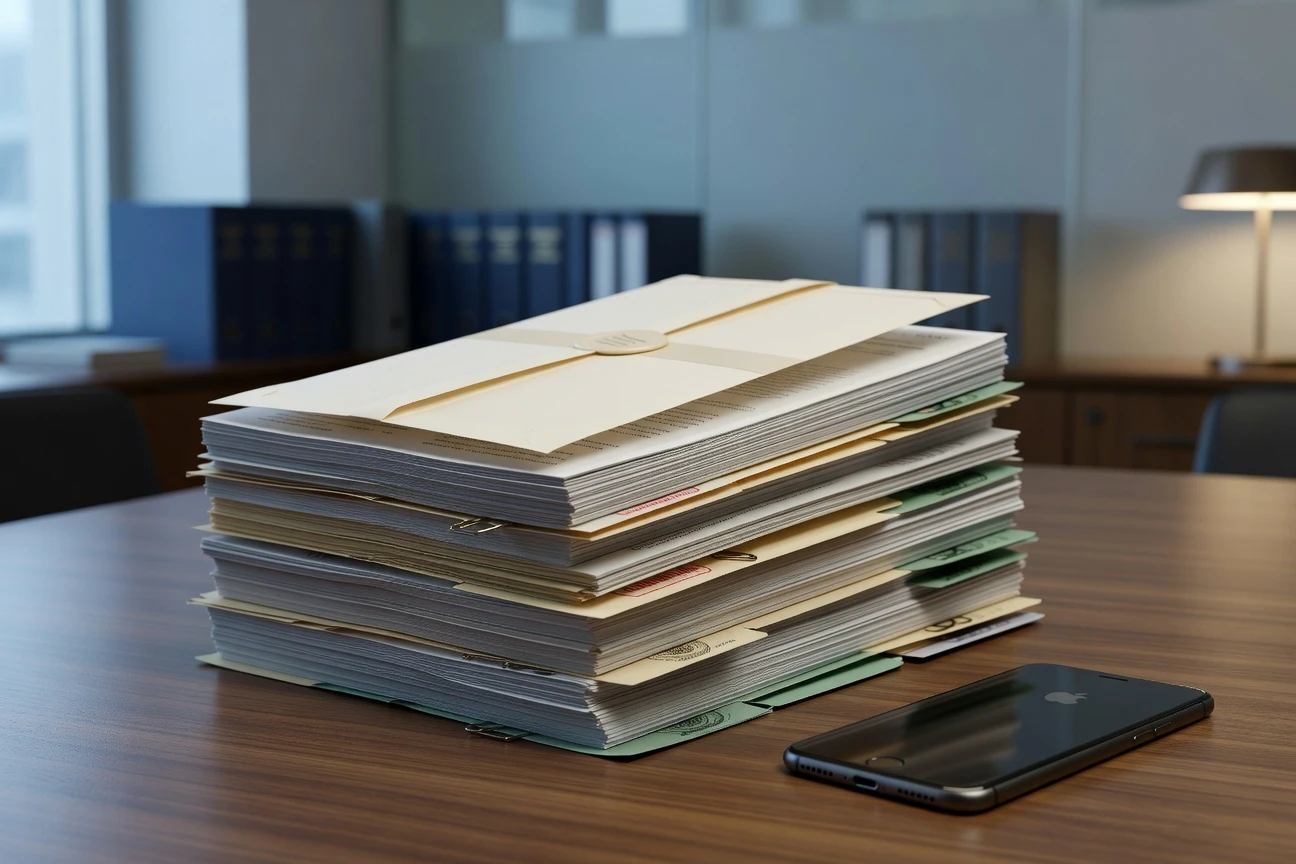
Apple DOJ discovery fight now turns on a narrow but potent question: can the iPhone maker force the U.S. government to search 14 agencies for records about how federal buyers evaluate smartphones, wearables, apps and security? Apple says those records could support its defense. The government says the request drags national security agencies into a consumer antitrust case.
The fight matters because discovery can change settlement pressure long before trial. If Magistrate Judge Leda D. Wettre, the U.S. magistrate judge handling discovery in New Jersey, orders even a trimmed production, Apple could test the Justice Department’s monopoly story against the government’s own device buying habits.
The Fight Starts With the Word United States
Apple Inc., the Cupertino-based iPhone maker, is not asking only the U.S. Department of Justice Antitrust Division, the federal competition enforcer, for files. In an April joint discovery dispute letter filed in New Jersey federal court, Apple said the plaintiff is the United States, not just the Antitrust Division, so other federal agencies should not be treated as strangers to the lawsuit.
The government takes the opposite view. Its lawyers say the agencies Apple subpoenaed did not regulate smartphones, did not take part in the investigation and do not buy phones like ordinary consumers. That difference sounds procedural. It is also strategic. Apple wants documents that could show federal agencies chose iPhones for privacy, security or performance reasons. The DOJ wants the court to keep the case focused on consumer switching, app limits and market power.
| Issue | Apple’s Position | U.S. Position | Why It Matters |
|---|---|---|---|
| Discovery rule | Rule 34 should reach documents held by the plaintiff’s agencies, or Rule 45 subpoenas should work. | Rule 45 should apply, with stronger protection for non-party agencies. | The rule affects burden, leverage and how much the court defers to agency objections. |
| Relevance | Agency buying and security reviews may prove Apple has procompetitive reasons for its design choices. | Government workplace device use says little about ordinary consumer smartphone markets. | The judge must decide whether security evidence helps answer an antitrust question. |
| Burden | The request is narrowed to 14 agencies and targeted topics. | Searches could hit classified systems, privilege reviews and scattered procurement files. | Burden is the government’s strongest practical argument. |
| Case effect | Agency documents could undercut claims that Apple uses security as a pretext. | The request could distract from the five conduct areas in the complaint. | The discovery ruling may shape what evidence reaches later motions. |
Apple’s argument carries a courtroom instinct: a plaintiff should not be able to sue as the sovereign and then wall off the sovereign’s own files. The U.S. answer carries its own instinct: a law enforcement case should not open the Central Intelligence Agency, National Security Agency and other sensitive offices to a corporate discovery campaign.
The 14-Agency Request Is Built Around Security
Apple says it selected 14 agencies from a much larger federal universe. The filing lists the Office of Personnel Management, Office of Management and Budget, General Services Administration, NASA, State Department, Defense Department, Department of Homeland Security, Federal Bureau of Investigation, Central Intelligence Agency, National Security Agency, Office of the Director of National Intelligence, Federal Trade Commission, Commerce Department and Labor Department.
The requests fall into four broad buckets:
- Procurement records about which smartphones and wearables agencies bought, in what quantities, at what prices and under which evaluations.
- Security and app guidance about messaging apps, app stores, operating systems, browsers, wallets, super apps and cloud storage.
- Pricing and market data held by the Bureau of Labor Statistics, including non-public inputs Apple says relate to smartphone prices and market share.
- Developer program files from agencies that used Apple’s enterprise tools to build internal apps.
The strongest piece for Apple is the security bucket. The government complaint attacks choices that limit third-party access to parts of iPhone software. Apple wants to answer that those limits are product design, not monopoly maintenance. Agency documents praising iPhone security would not decide that point, but they could give Apple third-party evidence that its privacy and safety claims are more than courtroom spin.
There is public material in that direction. The Cybersecurity and Infrastructure Security Agency, a DHS agency, published mobile communications best practice guidance after identifying Chinese government-linked cyber activity against telecom infrastructure. Apple cited that kind of public guidance as a sign that internal files may exist. The DOJ responds that public guidance is not a license to pry into national security deliberations.
The Government’s Burden Defense Has Numbers
The U.S. brief does not rest only on privilege labels. It says the Antitrust Division has already produced 115,240 documents totaling 648,610 pages. It also says Apple’s agency subpoenas would require searches through large, decentralized offices, some classified systems and files that would need line-by-line review by classification experts.
Discovery is not a one-way street.
That line comes from Apple’s section of the joint letter, where the company argued that the government chose to sue and cannot refuse relevant evidence from its own agencies. The phrase is effective because it sounds like ordinary fairness. The hard part is whether ordinary fairness maps cleanly onto the federal government, where the Antitrust Division can sue while the NSA runs separate classified networks for a very different mission.
- 14 agencies received subpoenas or production demands tied to the dispute.
- More than 100 requests is how the government characterizes Apple’s final compromise across those agencies.
- 648,610 pages have already been produced by the Antitrust Division, according to the U.S. filing.
- 6 to 9 requests per agency is how Apple describes the narrowed version of its demand.
The Bureau of Labor Statistics piece shows why this is tricky. BLS says its consumer price index category for telephone hardware includes cellphones, phone accessories and smartwatches, and that smartphones are quality adjusted because of fast technical improvement. Its telephone hardware CPI factsheet says quality adjustments have applied to smartphones starting with January 2018 data. Apple sees that as relevant to price and consumer harm. The government says Apple and market researchers already have better commercial data than BLS could provide.
The Monopoly Case Survived Its First Major Test
The discovery fight sits on top of a case that is already past the pleading stage. The DOJ and state plaintiffs filed a first amended complaint accusing Apple of maintaining monopoly power in U.S. smartphone markets by limiting technologies that could make switching away from iPhone easier. The Justice Department’s Apple case page lists the case as opened on March 21, 2024, and links the complaint and motion practice.
In the first amended complaint against Apple, the plaintiffs focus on five areas: super apps, cloud-streamed gaming, messaging, third-party smartwatches and digital wallets. The pleading alleges that Apple’s conduct raises switching costs and protects iPhone dominance. It also alleges Apple has more than 65 percent revenue share in U.S. smartphones and more than 70 percent in performance smartphones.
U.S. District Judge Julien X. Neals denied Apple’s motion to dismiss on June 30, 2025. In the New Jersey court opinion denying dismissal, the judge held that the plaintiffs had adequately alleged dominant shares in both asserted markets at that early stage. That ruling did not prove the government’s case. It meant the complaint could move into discovery.
Apple’s answer has been consistent: the DOJ is trying to punish design choices that users value. Its latest agency fight fits that defense. If the company can show the federal government itself buys, approves or recommends iPhones because of the same closed design choices the complaint criticizes, it can complicate the government’s story.
Federal Buyers Are Helpful and Awkward Witnesses
Government buyers are not the same as teenagers buying a phone in a carrier store. They often purchase through contracts, device management policies and security rules. Agencies can block apps, restrict app stores and disable features that ordinary consumers use every day. That is why the DOJ says the agencies’ device choices do not show much about consumer lock-in.
Still, federal buyers are not useless witnesses. They are sophisticated technology buyers. If an agency compared iPhone and Android devices, weighed app marketplace risks, reviewed browser policies or studied mobile wallet exposure, those files could say something about the tradeoff between openness and security. Antitrust law often cares about tradeoffs. The fight is over whether this tradeoff is close enough to the alleged harm.
Apple’s strongest path is not to prove that federal agencies behave like ordinary users. They do not. Its better path is to use agency records to attack pretext. The DOJ says Apple’s security explanations are tied to conduct that limits competitors. Apple wants government documents showing serious buyers reached similar security conclusions without any incentive to protect Apple’s App Store fees.
The government’s strongest answer is proportionality. A judge does not need to say the records have zero relevance to deny or narrow discovery. The court can decide the likely benefit is too small compared with the cost of searches across intelligence, law enforcement and procurement systems. That is especially likely for requests aimed at the CIA, NSA and ODNI, where even unclassified records may sit inside systems that require classified handling.
A Discovery Ruling Could Reprice Both Sides’ Risk
This dispute will not decide whether Apple is a monopolist. It can still change the case. A broad order for Apple would give the company a new evidence lane and could slow the timetable. A narrow order could still force production from less sensitive agencies such as the General Services Administration, Labor Department or FTC. A denial would keep Apple’s defense focused on its own documents, outside experts and third-party companies.
The politics are also uncomfortable for both sides. Apple risks looking as if it wants national security agencies to spend public resources helping defend a private platform. The government risks looking as if it wants to cite the full force of the United States in a complaint while treating most of that same government as off limits when the defendant asks for files.
That is the second-order stake. The public headline says Apple accuses the DOJ of withholding documents. The courtroom question is narrower and more durable: when Washington brings an antitrust case as the United States, how much of Washington becomes discoverable?
If the court orders a meaningful production, Apple gains a government-written record to test the DOJ’s theory. If the subpoenas are quashed, the monopoly case moves forward with one less detour and a cleaner fight over the iPhone itself.
Disclaimer: This article is for informational purposes only and is not legal advice. Antitrust litigation and discovery disputes involve case-specific rules and risks. Readers should consult a qualified legal professional for advice on any legal matter. Figures and procedural details are accurate as of publication.


Space Cargo Buys Into France’s Zero-G Flight Company

The $399 Omni Walks Away, Then Asks for a Dock

TECNO’s 0mm Bezelless Phone Still Needs a Rim

The Ryobi Tools That Unblocked a Garage Workbench

Ripple’s 700 Million XRP Re-Lock Repeats a Yearlong Pattern

The 2026 Kawasaki Ninja ZX-10R Matches Honda’s Price

Chainlink Puts Official US Inflation and GDP Onchain

Google Pushes Gemini Daily Brief off the Chat Screen

The Crosshair A16 HX Outruns Its Own Power Brick

Cloover Turns a $350 Million Installer Book Into a Utility

30-Year Yield Hits 5.32% Highest Since 2007 as Debt Supply Locks In Costs

Oil Crashes Below $80 as Iran Talks Restart and Markets Split

Walter’s TWG Insists No Fraud as Insurer Probes Force Cleanup

Astute’s $1.2M bet makes B2B creator deals feed AI discovery

Strategy Parks $1.59B Cash While Bitcoin Stack Stays Flat

BlackRock Turns Cash Empire Into Stablecoin Reserve Rails

The 20% Savings Ideal Meets a 2.7% Reality Check

SpaceX Stock Rebound Tests Real Demand Before Huge Unlock

Monzo chair Gary Hoffman exits after board revolt fallout

Amber’s €7M locks Mittelstand knowledge inside Europe
-
 FINANCE3 months ago
Zcash Patched a Double-Spend Bug as ZEC Climbed 5%
-
 ENTERTAINMENT3 months ago
Steam Summer Sale 2026 Locks In June 25 to July 9 Dates
-

 FINANCE2 months ago
CLARITY Act Final Text Expected This Weekend as 60-Vote Hurdle Looms
-
 NEWS4 months ago
Meta Adds AI Replies to Threads, But Users Can’t Block It
-

 NEWS3 months ago
YouTube Shorts is testing a heart in place of the thumbs-up
-

 NEWS1 month ago
Senators Force Apple Off Chinese Memory as Big Three Cash In
-

 NEWS3 months ago
NEURA Robotics’ $1.4B Series C Redraws Europe’s Physical AI Bet
-
 ENTERTAINMENT5 months ago
Extraction 3 Is Officially Coming to Netflix in 2027