Entertainment
Game of Thrones: Dragonfire Makes Season 3 Viewing Pay Off
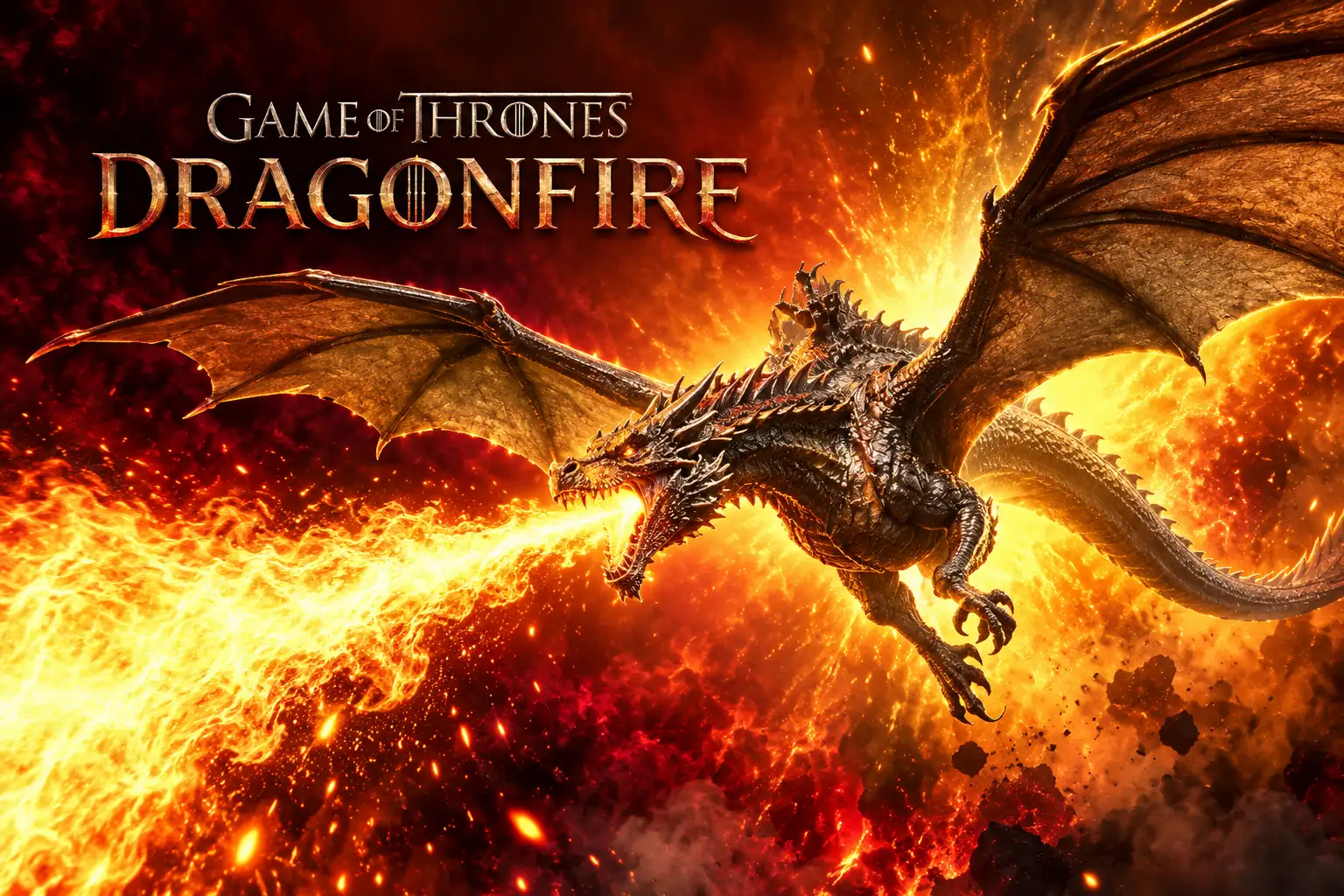
Game of Thrones: Dragonfire launched June 2 free to play, tying each House of the Dragon Season 3 episode you watch on HBO Max to a bespoke in-game reward.
Game of Thrones: Dragonfire went live on iOS and Android on June 2, nineteen days before House of the Dragon Season 3 premieres on HBO. Developed by Warner Bros. Games Boston and published alongside HBO as a global free-to-play title, the game casts players as Valyrian descendants building a dragonriding empire across a tile-based Westeros map during the Targaryen civil war, set 172 years before the events of the original Game of Thrones series. The launch roster includes 28 dragons, with more planned through live service updates.
Players who link their HBO Max and WB Games accounts earn a distinct in-game reward for each of the eight Season 3 episodes they watch, plus a premium reward for completing the full run. Warner Bros. Discovery calls the mechanism a “first-of-its-kind technology collaboration” between HBO Max and WB Games.
The Dance of Dragons, Tile by Tile
Building Power Across Westeros
The core loop is a 4X base-building strategy: expand your stronghold, train troops, grow dragons, and capture territory from rivals. Each tile provides distinct benefits, from resources used to upgrade strongholds, train troops and grow dragons, to geographical advantages that allow multiple allies to garrison and provide faster reinforcements to armies. Players can field up to five dragon-led armies simultaneously, allowing for coordinated marches, strategic assaults and defensive maneuvers across a tiled map.
Competitive players can join an Alliance, coordinate multi-army attacks across the tiled map, and contribute to broader Faction-level objectives. Alliance warfare pits groups against each other for control of key territories, with Faction-wide story outcomes tied to collective performance. Solo players can also make meaningful contributions to broader Faction goals without joining an Alliance, ensuring multiple paths to progression. A separate PvE campaign track lets players follow the Targaryen civil war narrative without the coordination demands of multiplayer warfare.
Dragon Breeds and Seasonal Reigns
Warner Bros. Games Boston worked with the House of the Dragon brand team to define four dragon breeds, each built for a different tactical role. The April 7 WB Games announcement introduced the categories alongside the first gameplay footage:
- Champion Breed – high offensive output, built for front-line assault
- Hunter Breed – speed-optimized, suited to rapid territorial expansion
- Sentinel Breed – defensive-focused, designed to hold contested terrain under coordinated attack
- Warrior Breed – versatile, built for flexible Alliance operations across multiple fronts
Each new dragon was created in close collaboration with the House of the Dragon brand partners, with the show’s iconic dragon breeds informing the various dragon breeds featured within the game. Each dragon features distinct Command skills, passive Habit abilities, troop affinities and powerful synergies that support a variety of strategies and playstyles. The roster includes Syrax, Caraxes, Seasmoke, and more, alongside original designs created specifically for the game. Beyond the battlefield, fans can further engage with their dragons through a Dragon Strike minigame, where players fly their dragons to evade obstacles and unleash fire on incoming enemies.
Game of Thrones: Dragonfire will have eight-week seasons, called Reigns, with special events and quests, making every season completely different than the last. Each Reign resets the territorial map and introduces new storylines, keeping competition accessible for players who join mid-cycle. Permanent progress like dragon growth will remain, allowing for long-term progression. From fighting to secure Rhaenyra Targaryen’s claim to the Iron Throne to infiltrating the Greens and shaping events from within, each Campaign offers a player-driven path into the world fans know and love.
When Watching Earns Progress
The mechanism works through a linked-account system. Connect a WB Games profile to an active HBO Max subscription and each Season 3 episode you watch on the platform unlocks a per-episode reward specific to that episode rather than a generic currency drop. Players who link their accounts can earn escalating Game of Thrones: Dragonfire rewards by watching House of the Dragon Season 3, with each episode unlocking a bespoke in-game reward, plus a premium reward for completing the full season.
The integration goes further than what WB Games Boston previously offered through Game of Thrones: Conquest’s HBO Max account link, which provided one-time general rewards for connecting accounts and, per the game’s own support documentation, was limited to US players. Dragonfire’s system is structured around Season 3’s eight-week broadcast schedule, with rewards escalating across the run rather than a single sign-in bonus.
Three weeks separate the June 2 launch from Season 3’s premiere, giving players time to install, build an initial base, and configure the account link before the first episode triggers on June 21. JB Perrette, CEO and President of Global Streaming and Games at Warner Bros. Discovery, said in the official June 2 launch press release that the goal was an experience “very authentic to ‘House of the Dragon.'” Matt Read, Vice President and Studio Head at Warner Bros. Games Boston, said the studio focused on creating a game “that feels true to the universe fans love while giving them room to play their own way.”
Steve Toussaint, who plays Lord Corlys Velaryon on the show, appears in a launch-day Let’s Play video released alongside the announcement. Cast involvement at this level is unusual for a mobile free-to-play launch. Toussaint is also among the House of the Dragon stars attending the Season 3 world premiere at Italy’s Taormina Film Festival, where the first episode will have an exclusive early premiere at the festival, which runs from June 10 to June 14. That puts him on promotional duty for both the game and the show in the same two-week window.
A Studio That Already Ran This Playbook
Game of Thrones: Dragonfire is made by WB Games Boston, who also developed Game of Thrones Conquest and The Lord of the Rings Online. The studio launched Conquest in October 2017 while the original HBO series was still in production; Conquest remains active today. While there’s already an ongoing mobile Game of Thrones offering in Conquest, Dragonfire promises to work alongside Conquest and isn’t replacing it. WBD’s choice to operate both titles simultaneously positions Conquest for the original series audience while Dragonfire serves the House of the Dragon viewer cohort, timed specifically around Season 3.
Per Sensor Tower’s first-year revenue estimates for Conquest, the game grossed more than $125 million globally in its first year after the October 2017 launch, with a compound monthly growth rate of 14.8 percent. Sensor Tower’s figures are estimates from Store Intelligence data; WBD’s actual internal numbers have not been disclosed publicly. Conquest launched three months after Game of Thrones Season 7 ended, then built steadily through the 18-month gap to Season 8’s April 2019 premiere. Players spent an unprecedented $19 million worldwide in April 2019 across the App Store and Google Play, an increase of 90 percent from the same month in 2018. Last month’s total brought overall spending to date in Game of Thrones: Conquest to more than $214 million worldwide. Conquest has now been live for nine years, the longest active track record of any Game of Thrones mobile title.
| Game of Thrones: Conquest | Game of Thrones: Dragonfire | |
|---|---|---|
| Year launched | October 2017 | June 2, 2026 |
| Show tie-in | Game of Thrones (Seasons 1-8) | House of the Dragon |
| Core gameplay | 4X castle-building strategy | 4X tile-based dragon strategy |
| Streaming integration | Account link (one-time rewards, US only) | Per-episode rewards across 8 Season 3 episodes |
| Status (June 2026) | Active since 2017 | Global launch |
Can the Free-to-Play Model Hold?
Fans of the franchise have been waiting for a proper mobile Game of Thrones strategy game, with past releases such as Game of Thrones: Conquest (2017) and Game of Thrones: Winter Is Coming (2019) feeling a bit too over-reliant on mobile-game monetization features. Both games drew criticism for paid speed-up mechanics that gave spending players measurable advantages in troop and resource development, the standard competitive pressure point for the 4X mobile format. Dragonfire has confirmed in-app purchases; what those specifically cover was not disclosed in the launch materials.
Those who preregistered will receive bonus in-game currency and cosmetics, but there are also rewards for new players. The April 7 pre-registration page offered players exclusive rewards at launch, including in-game currency and a rare dragon. That structure points toward premium dragon rarity as a layer where the spending model will concentrate, consistent with how Conquest operated across its run.
Two structural decisions in Dragonfire push against the most common version of that criticism. The game features a living world where limited-time seasonal Reigns will reset the competition and race for territory control, introducing new storylines while keeping competition balanced for new and returning players. Dragon progress persists through each reset, so development investment carries into the next Reign’s map rather than being zeroed out, giving paid roster development lasting value without locking other players out permanently.
Per Sensor Tower’s spending analysis of Conquest through early 2019, the game averaged nearly $18 in player spending per download over its first two years. Whether Dragonfire’s Reign structure produces a different spending profile from Conquest is a question its first few active cycles will answer.
A Franchise in Every Direction
The third season of House of the Dragon is due to premiere on HBO on June 21, 2026, in the United States, and will consist of eight episodes. The eight-episode season will air new episodes weekly until the season finale on August 9. Showrunner Ryan Condal has described the opening episode, built around the Battle of the Gullet, as “arguably the craziest episode of television ever made.” It’s been confirmed that House of the Dragon Season 4 will end the series in 2028.
Dragonfire launched into a Westeros calendar running several concurrent projects:
- House of the Dragon Season 3 (HBO and HBO Max, June 21 through August 9): Eight episodes covering the full-scale Dance of the Dragons war, with Season 4 in 2028 as the confirmed finale
- A Knight of the Seven Kingdoms (HBO Max): the premium cabler is currently prepping Season 2 of the prequel which debuted its critically acclaimed first season earlier this year
- Beau Willimon (Andor) writing the Aegon’s Conquest theatrical film alongside Mattson Tomlin, covering Aegon Targaryen’s founding conquest of the Seven Kingdoms; Willimon is best known for developing House of Cards
- Game of Thrones: War for Westeros (mobile): a separate title also in development, still waiting on a release date
On the Google Play Store, Dragonfire has been downloaded over one million times as of this writing. The episode reward triggers go live when House of the Dragon Season 3 premieres on June 21.
Entertainment
Anya Taylor-Joy Runs for Her Life in Apple TV’s Lucky Trailer
Anya Taylor-Joy returns to limited series TV in Apple’s Lucky, premiering July 15. How Hello Sunshine’s adaptation pipeline and a stellar cast built the show.
Apple TV dropped the trailer for Lucky on Wednesday, and the show has a compact premise: con artist Lucky Armstrong survives a multimillion-dollar heist gone wrong while running from both the FBI and a crime boss across seven episodes premiering globally on July 15. Anya Taylor-Joy stars and executive produces, returning to a lead role in a limited series for the first time since The Queen’s Gambit, alongside Annette Bening, Timothy Olyphant, Aunjanue Ellis-Taylor, Drew Starkey, Clifton Collins Jr., and William Fichtner.
The series arrives through Apple Studios and Hello Sunshine, Reese Witherspoon’s production company, which has spent seven years converting Book Club picks into Apple TV+ originals and now has four such shows already in the platform’s catalog before Lucky arrives.
Two Threats Close In on Lucky Armstrong
The trailer establishes Lucky Armstrong as a woman raised in crime by her father, John, played by Olyphant, who executes a heist then watches the plan collapse when her partner disappears. Federal agents close in from one direction. A ruthless crime boss approaches from the other. The FBI pursuit appears to be led by Bening, whose character Apple’s materials describe as Lucky’s mother-in-law. Her father taught her the criminal trade. The woman trying to lock her up is her mother-in-law.
What the trailer holds back is the novel’s harder complication. Lucky buys a lottery ticket and wins millions. She cannot cash it without triggering arrest. The Apple TV press release describes her as forced to “fight for her life and a way out,” which is accurate but strips the lottery subplot’s specific cruelty: she holds a fortune she cannot touch, with two organizations racing to close her options.
The first two episodes drop on July 15; new episodes follow each Wednesday through August 19. Aunjanue Ellis-Taylor, Drew Starkey, Clifton Collins Jr., William Fichtner, and Mo McRae round out the ensemble in roles Apple has not yet detailed beyond the central character dynamics.
Taylor-Joy’s Return to Series Television
The last time Taylor-Joy led a limited series, Netflix counted 62 million households watching The Queen’s Gambit in its first 28 days, a then-record for scripted limited series on the platform. The role of Beth Harmon won her the Golden Globe Award for Best Actress in a Miniseries, the SAG Award for Outstanding Actress in a Television Movie or Miniseries, and an Emmy nomination, all in the same awards cycle. She received a further Golden Globe nomination for her performance in The Menu in 2023, adding a film nomination to the television hardware she had already collected.
The years between The Queen’s Gambit and Lucky went largely to film. She played a 1960s London fashion designer targeted by a killer in Edgar Wright’s Last Night in Soho, took the lead in Robert Eggers’ Viking saga The Northman, starred opposite Ralph Fiennes in The Menu, appeared in a deliberately concealed cameo as Alia Atreides in Dune: Part Two, and played the title role in George Miller’s Furiosa: A Mad Max Saga. None of those projects carried a producing credit.
For Lucky, Taylor-Joy executive produces through her banner LadyKiller alongside her lead performance, a role that extends into casting, visual language, and the series’ creative direction. Lucky Armstrong and Beth Harmon share some structural DNA: both are characters built around extraordinary competence in environments designed to trap them. Where Beth calculated her way through chess, Lucky navigates a criminal life her father designed for her without her consent, and seven episodes gives that tension more room to develop than any single film.
Stapley’s Novel and the Lottery Ticket
Marissa Stapley, a Toronto-based journalist who has taught creative writing at the University of Toronto and Centennial College, published the source novel through Simon & Schuster in February 2022, after Reese’s Book Club had already selected it as a December 2021 pick. It became a New York Times bestseller in print paperbacks. At the center of both the novel’s timelines is a winning lottery ticket she cannot cash without being arrested for her existing crimes.
- The present-day track follows Lucky in the immediate aftermath of the heist: her partner Cary is gone, she is alone, and the lottery win is worthless until she can clear a criminal record that prevents her from claiming it
- The flashback track traces her childhood with her con-man father, establishing the education behind her skill set and the reasons why leaving the criminal life behind proved harder than simply deciding to
- The two tracks converge on three unresolved relationships: Lucky must find the mother who abandoned her, reconcile with her father, and separate herself from Cary, whose own past is colliding with hers as the pursuit closes in
A wild and deeply satisfying rollercoaster ride through the world of a con artist with a heart of gold. Propulsive and affecting, Lucky is the most fun I’ve had reading a book in quite a while.
That endorsement came from Taylor Jenkins Reid, whose Daisy Jones & the Six became an Amazon Prime series in 2023. The review appears on Stapley’s official author page. Reid’s own experience watching a character-driven novel cross to a streaming production gives her read on Lucky’s adaptability a grounding in firsthand knowledge of the process, not just a genre reader’s enthusiasm.
Hello Sunshine’s Apple TV Footprint
Witherspoon founded Hello Sunshine in 2017, the same year she launched Reese’s Book Club. About 70 percent of her book club picks are made before a title’s official publication date, giving Hello Sunshine first access to adaptation rights before a book’s commercial heat becomes visible to competitors. The company evaluates more than 1,000 books, scripts, pitches, and life-rights documents annually, per figures Hello Sunshine executives provided to TIME in 2021. The club’s more than 3 million followers function as a market test: when a title catches fire with readers, a production deal is already in place.
Before the Apple relationship solidified, Hello Sunshine built its track record on other platforms: Little Fires Everywhere (Hulu, 2020, co-starring Witherspoon and Kerry Washington), Daisy Jones & the Six (Amazon Prime, 2023), and the theatrical film Where the Crawdads Sing, which grossed $144.3 million globally in 2022. In 2021, Witherspoon sold the company to Candle Media, a firm backed by Blackstone, for $900 million, retaining an equity stake and a board seat. The Apple TV+ production slate was a core piece of that valuation.
Lucky would be the fifth Hello Sunshine original on Apple TV+:
| Series | Lead | Apple TV+ Status |
|---|---|---|
| Truth Be Told | Octavia Spencer | Concluded 2023 |
| The Morning Show | Witherspoon, Jennifer Aniston | Ongoing |
| Surface | Gugu Mbatha-Raw | Limited series 2022 |
| The Last Thing He Told Me | Jennifer Garner | Two seasons |
| Lucky | Anya Taylor-Joy | Premieres July 15 |
Lauren Neustadter produces alongside Witherspoon for Hello Sunshine. The Morning Show, the most-decorated of the Apple originals, won Emmy, SAG, and Critics Choice Awards across its run. The Last Thing He Told Me, which starred Jennifer Garner as a woman investigating her husband’s disappearance after he vanishes from a ferry, was renewed for a second season, a relatively uncommon outcome for a limited-series Book Club adaptation.
Tropper and the Creative Team
Jonathan Tropper has held an exclusive Apple deal since 2019, when he joined the platform as executive producer and showrunner on See, one of Apple TV+’s first originals. Before television, he wrote six novels, including This Is Where I Leave You, which became a 2014 film with Jason Bateman, Tina Fey, Adam Driver, and Jane Fonda. Lucky is his third consecutive overall deal with the streamer. His previous Apple series, Your Friends & Neighbors, which stars Jon Hamm as a fired hedge fund manager turned suburban thief, became Apple’s most-watched new drama per Nielsen sampling data over its first 38 days. Apple ordered a second season before the first had finished airing, and a third season has since been announced.
When his deal was extended in May 2025, Tropper said that working with Apple “continues to be the single most creatively fulfilling collaboration of my career” and named Lucky as a coming priority. He co-showruns the series with Cassie Pappas, who also executive produces. Jonathan van Tulleken directed the pilot and serves as an executive producer; Greg Yaitanes and Jet Wilkinson direct additional episodes.
Tropper’s production background runs through action-heavy television: he co-created the Cinemax crime series Banshee and created the martial arts drama Warrior before shifting to the domestic mode of Your Friends & Neighbors. Hello Sunshine’s four Apple originals before Lucky have all centered women as leads, a track record that complements Tropper’s novelistic instincts while pointing in a different direction from his action-television credits.
The Supporting Cast Around Taylor-Joy
Each of the six principal supporting players Apple named could anchor a smaller production. Olyphant spent six seasons as Deputy U.S. Marshal Raylan Givens in Justified and played Wild Bill Hickok in Deadwood; casting him as Lucky’s father, the man who trained her to steal, borrows that specific screen authority and points it toward a character operating on the criminal side of the line he spent years enforcing on television. Bening holds four Academy Award nominations and a Tony nomination across more than three decades of film and stage; her character as Lucky’s mother-in-law places the personal stakes of the FBI pursuit directly inside the family structure. Aunjanue Ellis-Taylor earned an Oscar nomination for King Richard and worked across multiple seasons of Amazon’s The Underground Railroad. Drew Starkey came off projects connected to Normal People creator Sally Rooney and the World War II drama All the Light We Cannot See. Clifton Collins Jr., known for his work in Narcos: Mexico and Pacific Rim, and William Fichtner, whose credits include The Dark Knight and Prison Break, bring combined decades of character work across film and television.
Mo McRae, confirmed in the cast by Apple’s production materials, rounds out the core company. Apple has not yet disclosed his character details.
The first two episodes of Lucky premiere globally on Apple TV on July 15.
Entertainment
Remedy Self-Publishes Control Resonant at $59.99 for September 24
Remedy’s Control Resonant launches September 24 at $59.99, making it the studio’s biggest self-publishing bet nine months after FBC: Firebreak failed.
Remedy Entertainment priced Control Resonant at $59.99 on Wednesday, a full $10 below what most AAA releases currently charge, and confirmed the sequel to its award-winning 2019 action game Control launches worldwide on September 24, 2026, on PS5, Xbox Series X|S, and PC via Steam and the Epic Games Store. Three editions are open for pre-order, with a Digital Deluxe tier at $69.99 carrying PS5-exclusive 48-hour early access.
The Finnish studio is self-publishing the title without a major publishing partner, its first flagship single-player game handled fully in-house. The decision follows eleven months after FBC: Firebreak (Remedy’s Control spinoff and first self-published title) underperformed commercially, triggering a €14.9 million write-down, the cessation of major content updates, and a permanent base price cut to $19.99.
September 24, Three Editions, a $10 Discount
The announcement landed at Sony’s PlayStation State of Play showcase on June 3, where Remedy debuted a story trailer alongside the release date and the complete edition breakdown. Pre-orders opened simultaneously on all platforms.
| Edition | Price (US / UK) | Included | Early Access |
|---|---|---|---|
| Standard | $59.99 / £49.99 | Base game, pre-order bonuses | No |
| Digital Deluxe | $69.99 / £59.99 | Base game, cosmetics, digital artbook, soundtrack | 48 hrs on PS5 (from Sept. 22) |
| Physical Steelbook | $69.99 | Base game, Steelbook case, art poster, fine art prints | No |
Every pre-order, on any platform, includes the Hiss Corruption Outfit and the Pickpocket’s Tool Artifact for Dylan Faden. PS5 buyers also receive the exclusive Occult Outfit. The Digital Deluxe PS5 edition’s 48-hour window means PlayStation players can start on September 22, two days ahead of the general launch.
The game ships as Remedy’s most localized title to date: full voice-over in eight languages, including English, Brazilian Portuguese, French, German, Italian, Japanese, Simplified Chinese, and Spanish, with subtitle and interface support extending to Korean, Polish, Russian, and Turkish. NVIDIA DLSS 4.5 and full path tracing are confirmed for PC at launch. A Mac version via Steam and the App Store follows later in 2026, and GeForce NOW support is confirmed on day one, per Remedy’s official September 24 launch announcement.
The September Slot Remedy Picked
The game arrives in the same month as Marvel’s Wolverine, Insomniac Games’ superhero brawler confirmed at the same State of Play for September 15, nine days before the Control Resonant launch date. The June 3 showcase also revealed God of War Laufey and featured Wolverine’s full gameplay presentation, making it one of Sony’s more loaded event broadcasts in recent memory.
Johannes Paloheimo, Remedy’s Chief Commercial Officer, described a marketing campaign built around Summer Game Fest, with further reveals and events through the summer ahead of the September date. A gameplay showcase at a February 2026 State of Play had already given press the first real look at combat. Additional public appearances are confirmed before launch, including a fireside chat on the game at gamescom Latam.
Grand Theft Auto VI is confirmed for November 2026. Late September gives Remedy’s sequel roughly seven weeks before that title arrives. As a self-publisher for the first time on a major release, the studio chose its own window without negotiating with a third-party publishing partner. The game was first revealed in December 2025, putting Remedy nine months into its marketing cycle before launch.
What Firebreak Cost
The Numbers That Settled It
FBC: Firebreak launched June 17, 2025, as Remedy’s first self-published game: a three-player cooperative shooter set in the Control universe. Within 10 days, it reached one million players, driven primarily by Xbox Game Pass and PlayStation Plus subscription services. Direct purchases on Steam peaked at 1,992 concurrent users and fell to double digits within weeks.
- 1 million players in 10 days (primarily via subscription services)
- 1,992 peak concurrent users on Steam
- €14.9 million non-cash write-down (October 2025)
- $19.99 base game price after major content updates ended (March 2026)
In October 2025, Remedy issued a profit warning tied to FBC: Firebreak’s sustained commercial underperformance, writing down the majority of the game’s capitalized development costs. Consumer purchases on Steam had stayed below internal targets from launch through a major September 2025 overhaul called Breakpoint and several follow-up updates.
A New CEO and a Commercial Mission
Former chief executive Tero Virtala stepped down by mutual agreement in October 2025, shortly after the write-down was recorded. Remedy shifted resources toward its other in-production titles while committing to keep the game’s servers running for the remaining player base.
In March 2026, the studio released the final major content update, permanently cut the base game to $19.99, and wound down new content development entirely. Jean-Charles Gaudechon, who joined Remedy as chief executive in 2026, built his earlier career at EA, with credits including FIFA, Battlefield Heroes, and Eve Online. The appointment drew concern from fans who associate the studio with authored, narrative single-player games; a live-service background seemed a pointed contrast to Remedy’s identity.
Gaudechon’s stated aim is commercial growth without changing what Remedy builds. He has said publicly that the Control and Alan Wake franchises need to reach audiences far beyond the base they currently hold.
How Remedy Assembled the Backing
In February 2024, Remedy paid 505 Games (the Italian publisher that had co-funded and co-published the original Control) €17 million to buy back the franchise rights outright. The deal ended the third-party publishing arrangement on the Control IP that had been in place since the original game’s 2019 launch.
Six months later, Remedy announced Annapurna Pictures as a 50% co-financier of the sequel’s development budget, with the film production company securing rights to develop Control and Alan Wake adaptations for film and television in exchange. Annapurna Interactive, Annapurna’s separate videogame publishing arm, collapsed around the same time when its entire staff departed; the production financing deal with Annapurna Pictures was unaffected.
In September 2024, Remedy also entered a €15 million convertible loan agreement with Tencent. Per Remedy’s 2024 annual financial statements, the studio posted revenue of €50.7 million for the year, up 49.3 percent year-on-year, while still recording an operating loss of €4.3 million. The studio’s targets for 2027 include doubling 2024 revenue and reaching a 30 percent EBITDA (earnings before interest, taxes, depreciation, and amortization) margin.
Gaudechon connected self-publishing directly to why he accepted the chief executive role in a recent interview with The Game Business.
And self-publishing is opening the door for us to do that. It was a big part of me also accepting the job, because this is something that will push Remedy into a new era.
Jean-Charles Gaudechon, Remedy’s chief executive, speaking in that interview, also described the Control and Alan Wake franchises as needing to reach audiences “much, much further than the current audience.” By late 2025, the original Control had crossed 5 million copies sold. Alan Wake 2, published through Epic Games Publishing, took over a year and 2 million copies before it began generating royalties after its October 2023 launch.
Dylan Faden’s Warped Manhattan
A New Protagonist Out of the Oldest House
Control’s 2019 story centered on Jesse Faden, a young woman who arrived at the Federal Bureau of Control (FBC) headquarters seeking answers about her past and ended up running it as Director. The sequel takes her brother Dylan, voiced by Sean Durrie, and puts Jesse’s disappearance at the center of its plot.
Dylan had been held as an FBC prisoner after the events of the original game. He’s now dispatched into a Manhattan reshaped by a new form of resonance, where the Hiss and the Mold (paranormal forces familiar from the first title) have been joined by something larger. Buildings hang inverted. Streets fold at impossible angles. The Oldest House, Control’s contained brutalist government building, has given way to the full span of warped New York.
Remedy describes the game as its most expansive title to date. The Physical Steelbook Edition’s fine art prints include a childhood photograph of Jesse and Dylan together, a choice that signals how far back into their shared history the story reaches.
The Aberrant and a Returning Face
Dylan’s primary weapon is the Aberrant, a shapeshifting melee tool specific to this game. Remedy describes the combat as melee-driven, built around the Aberrant’s transformation states, with a set of telepathic abilities that also open traversal options across the warped city.
Dr. Casper Darling returns. His deadpan pre-recorded video briefings were among the original game’s most recognizable elements, delivering world-building and exposition in a register few games attempt. Remedy is using that format again in the sequel.
Control Resonant sits inside Remedy’s Connected Universe alongside Alan Wake 2 and the original Control. The game is designed as both a direct narrative continuation for returning players and a new entry point for anyone coming to the franchise for the first time.
Grand Theft Auto VI is confirmed for November 2026. By the time it arrives, the game’s opening-week numbers will have been on the books for roughly seven weeks.
Entertainment
Amazon Scraps Its Stargate Revival After a 20-Week Writers Room
Amazon cancelled Martin Gero’s Stargate series at Prime Video after a completed 20-week writers room, as management reshuffles at Amazon MGM left the project without advocates.
Amazon has cancelled Martin Gero’s Stargate series at Prime Video, ending a production that had completed a 20-week writers room and entered pre-production in the UK roughly seven months after the studio gave it a series order in November 2025. Variety, which first reported the cancellation, said executives were concerned the show wouldn’t attract mainstream audiences beyond the franchise’s established fanbase.
Two rounds of restructuring at Amazon MGM Studios had already removed the executives who championed the project before a single frame was shot.
From Greenlight to Graveyard in Seven Months
Amazon MGM Studios announced the greenlight in November 2025 with a video addressed directly to franchise fans, featuring Gero alongside consulting producers Brad Wright, who co-created the three previous Stargate TV series, and Joseph Mallozzi, an executive producer and writer across all three shows. Within days, Gero was on the Dial the Gate fan podcast setting out his creative approach and managing expectations about the pace of production.
The writers room assembled in London in January 2026. By March, Gero appeared on a joint livestream with fan sites GateWorld and Dial the Gate to name two department heads already signed: production designer Nathan Crowley and visual effects supervisor Mohen Leo. Filming was planned for fall 2026.
- March 2022 – Amazon closes its $8.5 billion acquisition of MGM, gaining Stargate alongside James Bond, Rocky, and several thousand other IP properties
- November 2025 – Series order announced; Gero and two franchise veterans address fans directly in a studio video
- January 2026 – Writers room assembles in London; Amazon MGM restructures into genre-based divisions, Nick Pepper departs
- February 2026 – Blair Fetter, a former Netflix executive, joins Amazon MGM as head of worldbuilding and genre series
- March 2026 – Gero announces production designer Nathan Crowley and VFX supervisor Mohen Leo in a fan livestream
- June 2026 – Series cancelled; writers room complete, UK pre-production halted
The reaction to the announcement had been substantial. Stargate’s online communities had been waiting 15 years for a proper television return, and the direct-to-fan video from Gero and two franchise veterans was read as confirmation the revival was real. Mallozzi, who had been signaling the project’s progress to fans for months before the official announcement, had promised the community they would become “one of the most dialed-in fandoms in sci-fi history.”
Per Deadline, which confirmed further details alongside Variety’s initial report, the differences between Gero’s creative direction and where incoming studio leadership wanted the franchise to go were significant enough that retooling wasn’t considered. A completed writers room and a hired production team had no show to go with them.
The Management Carousel That Killed the Show
Peter Friedlander, head of global television at Amazon MGM Studios, arrived at the company in the fall of 2025 and made the Stargate series one of his first major pickup decisions. Nick Pepper, then head of US SVOD (subscription video-on-demand) TV development, and Matt King, head of tentpole, genre, and universe development, had spent months building the project with Gero and were its internal advocates.
Both are gone. In January 2026, Friedlander reorganized the studio’s TV structure away from a wholly-owned and co-production split into genre-based divisions: drama and comedy, worldbuilding, animation, and unscripted. Pepper departed in that first wave. Variety’s January report on the Amazon MGM TV reorganization detailed Blair Fetter, a Netflix veteran whose credits there included Stranger Things, Ozark, The Queen’s Gambit, and 3 Body Problem, joining in February as head of worldbuilding and genre series. Two months into the new structure, King departed too.
Friedlander himself approved the Stargate greenlight, then built the management structure that would reassess it. When Fetter arrived in February, the two executives who had developed the show with Gero were already gone. The project in the worldbuilding portfolio had been assembled by a team that was no longer there to speak for it.
The incoming leadership’s frame of reference came from Netflix’s spectacle series operation, where Stranger Things and 3 Body Problem had demonstrated what tentpole investment looks like when a property has genuine global footprint. Stargate, beloved within its audience, isn’t that. Its fandom is loyal and substantial by genre sci-fi standards; by the scale Amazon applies to a major franchise greenlight, it is not a universally recognized name.
What Amazon Bought When It Acquired MGM
Amazon’s $8.5 billion MGM deal closed in March 2022, adding more than 4,000 films and 17,000 television episodes to Prime Video’s catalog. The headline franchises were James Bond, Rocky, Legally Blonde, and Tomb Raider. Stargate came with the same package, a franchise that had produced more than 350 hours of television before going quiet after Stargate Universe’s cancellation in 2011. When the Gero project was announced, the studio described Stargate as “an enduring, iconic franchise that has captivated audiences for decades with its bold exploration of humanity’s place in the cosmos.”
Roland Emmerich’s 1994 original film, co-written with Dean Devlin and starring James Spader as archaeologist Daniel Jackson and Kurt Russell as Colonel Jack O’Neill, established a premise with staying power: ancient alien ring devices scattered across the galaxy, forming near-instantaneous wormholes between planets. The TV series that followed ran it for nearly two decades.
| Series | Seasons | Episodes | Run |
|---|---|---|---|
| Stargate SG-1 | 10 | 214 | 1997-2007 |
| Stargate Atlantis | 5 | 99 | 2004-2008 |
| Stargate Universe | 2 | 40 | 2009-2011 |
| Stargate Origins | 1 | 10 | 2018 (web only) |
SG-1 ran for five seasons on Showtime before the Sci Fi Channel picked it up for five more, ending in 2007 with 214 episodes and two follow-on series already in production. Atlantis and Universe brought the combined franchise total to 17 seasons. After Universe’s 2011 cancellation, Stargate Origins arrived as a short-form web series in 2018, reaching only the committed core audience. Amazon was reportedly exploring new Stargate projects as early as 2022 after the MGM deal closed; three years passed before the November 2025 greenlight made it official. The 15-year gap between Universe and that greenlight encompassed the full rise of streaming and Amazon’s $8.5 billion wager on MGM’s legacy catalog as raw material for a new era of IP-driven originals.
The Show Gero Built in Two Years
Gero’s Mandate
Gero’s connection to the Stargate universe was hard to question. He started his television career as a story editor on Stargate Atlantis, spent five years working across all three of the franchise’s original TV shows, and later created Blindspot for NBC and served as showrunner for the 2022 Quantum Leap reboot on the same network. In his November 2025 announcement, he said “Stargate taught me everything about making television” and called it “written into my DNA.”
His stated approach was specific about avoiding the full-reset model that has burned fan goodwill on too many legacy revivals. Speaking to Dial the Gate in November 2025, Gero was explicit: the new series would be not a reboot. It would function as a new chapter accessible to viewers who had never seen the previous 350-plus episodes, while honoring what came before. Mallozzi later confirmed the show would have reintroduced legacy characters from SG-1, Atlantis, and Universe. Executive producers included Joby Harold and Tory Tunnell of Safehouse Pictures, the production company behind Obi-Wan Kenobi and Monarch: Legacy of Monsters, alongside Devlin and Emmerich from the 1994 film.
Mallozzi’s Rebuttal
The explanation Amazon offered Variety for the cancellation, that Gero’s approach was too narrowly focused on existing fans to attract mainstream viewers, didn’t survive contact with the people who built it. Mallozzi went directly onto X on June 3, 2026:
Gonna have to push back on this. We were ever mindful of creating a show that would have broad appeal.
Joseph Mallozzi, consulting producer on the cancelled series, posted that on his X account (@BaronDestructo) the day the news broke. In a longer statement, he described Gero’s two years of work as producing a fresh jumping-on point for new viewers while deeply respecting existing canon. Michael Shanks, who played Dr. Daniel Jackson across SG-1’s full 10-season run, added on X: “Yep. They did that.”
Mallozzi’s account disputes Amazon’s stated reason directly; the studio has offered no further public detail on its decision. Both sides confirm the same production facts: Gero spent two years on the project, the writers room ran for 20 weeks, department heads were hired, and the show was cancelled before a single day of principal photography.
Amazon’s Search for Stargate Starts Over
Amazon has confirmed it isn’t done with the franchise. Gero’s overall deal at Amazon MGM Studios remains in place, leaving him a possible contributor to whatever comes next, though no project is currently active. The option the studio has floated publicly, per Deadline’s reporting, is bringing in a showrunner without existing franchise ties, someone who could come to Stargate without the accumulated perspective of 20 years inside the universe.
That approach carries real complications. The audience that responded to the November 2025 greenlight did so partly because Gero, Wright, and Mallozzi, three people whose combined Stargate credits span the full run of the original shows, were behind it. A new creative team starts with a blank page; it also inherits the work of re-earning trust with a fanbase that watched a completed writers room get shelved. The continuing Amazon MGM worldbuilding restructuring means the executive team overseeing any future Stargate project may not look much like the one that exists today.
The challenge Stargate presents differs from Bond or Tomb Raider. Bond’s global recognition functions independently of franchise knowledge; broad audiences understand the basic offer without having seen a single film. Stargate’s appeal is bound up in its specific mythology, the Goa’uld, the Tok’ra, the gate addresses, the interplanetary exploration structure. Gero spent two years building an approach designed to carry new viewers into that mythology while giving the existing audience something genuinely new to come back for.
Amazon’s other inherited MGM franchises have moved at similar speed. James Bond has been in development conversations since the 2022 acquisition without a confirmed production order. Robocop and Tomb Raider have progressed at comparable pace. What Stargate shares with each is a specific mythology that resists a casual creative approach and a devoted audience that has been tracking the franchise’s cancellations and revivals for more than two decades.
As of June 2026, Amazon MGM Studios has no active Stargate production in development.
-
Finance11 hours agoCitigroup Says ETF Outflows Drove Bitcoin’s Crash, Not Strategy’s Sale
-
Entertainment3 months agoMarvel Reveals Rogue One Prequel Comics After Andor Success
-
News1 day agoGitHub Copilot’s New Meter Is Sending Developers to the Exits
-
Business4 months agoJPMorgan Reveals Real Reason Bitcoin Stalls As Dollar Drops
-
Finance11 hours agoCLARITY Act Floor Vote Likely Shifts to August, Lummis Says
-
News11 hours agoYouTube Music Puts Search Where Your Thumb Already Lives