
LIFESTYLE
Gen Z’s Analog Hobbies Are Reshaping Dating, and Retail
Gen Z’s analog hobbies are booming: vinyl topped $1 billion in 2025 and Bumble paid users fell 8.7%. Inside the retail win and the dating app squeeze.

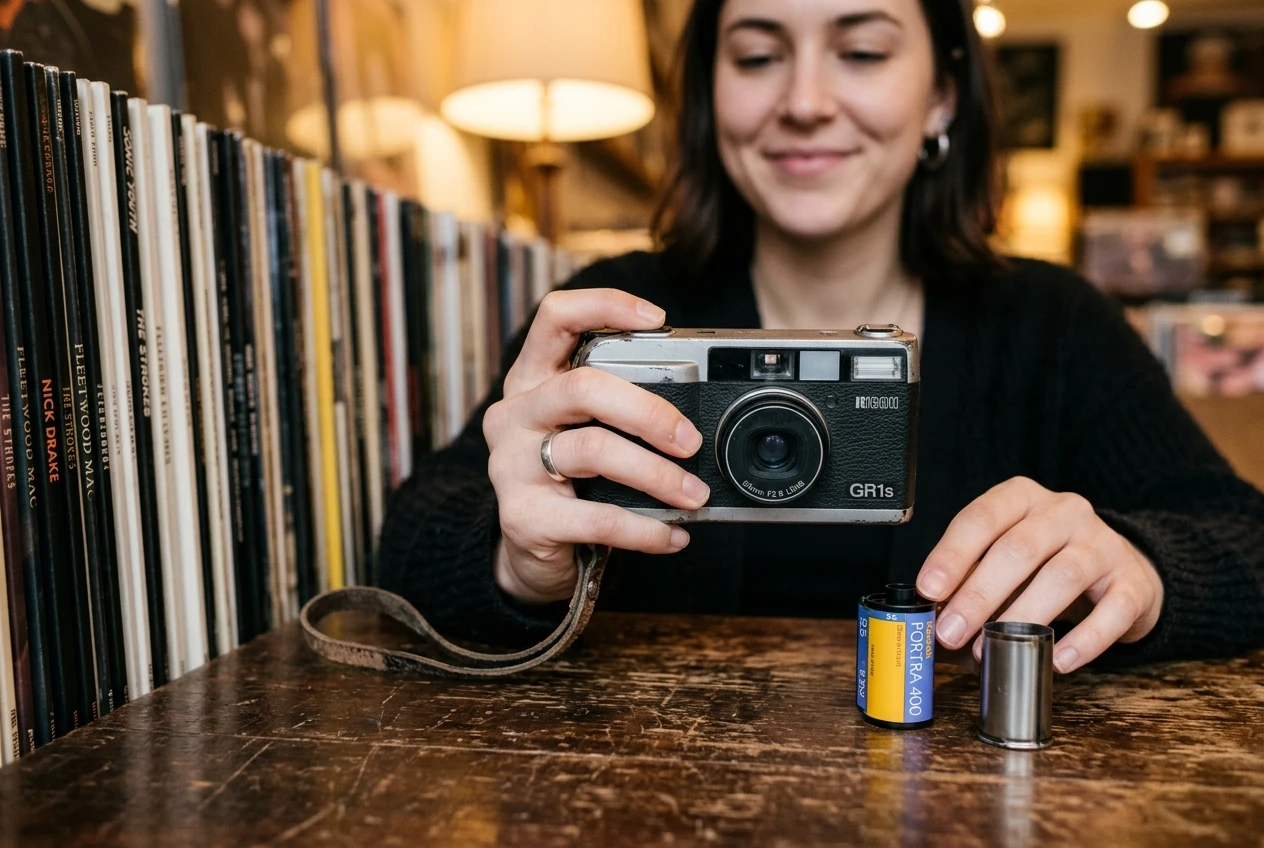
On June 4, 2026, Wall Street Journal associate editor Mary Julia Koch appeared on a national business program to lay out two cultural shifts pulling at the same Gen Z audience: a return to analog hobbies like needlepoint and film photography, and what online has begun calling a “crush recession” in dating. The same week, the Recording Industry Association of America confirmed that US vinyl sales had crossed $1 billion in 2025 for the first time since 1983. Koch joined the Journal in 2025 from the New York Sun and writes for Free Expression, the WSJ opinion newsletter that has run her pieces on Gen Z and the 1990s and on young adults turning away from content creators. The two shifts she named are not separate curiosities. They describe one cohort choosing tactile friction over a feed, in hobbies and in romance alike.
Why Vinyl, Film Cameras and Stationery Are Out-Selling Last Year
The analog side of the trade is now real revenue. The RIAA’s March 16, 2026 release put US recorded music wholesale revenue at a record high of $11.5 billion in 2025, with streaming still carrying most of the load at $9.5 billion (82% of total). Vinyl is the format that refused to die: it grew 9.3% on the year, the 19th straight year of growth, and now represents nearly 50% of the format’s global value, per the 2025 US music revenue report.
Vinyl’s lead over the other physical formats is widening. The format sold 46.8 million units in 2025, against 29.5 million for CDs, adding more than three times the revenue of CDs, the RIAA said. Meanwhile, the broader craft and analog economy is also expanding. Mintel research cited by CNBC showed nearly three-quarters of US adults did a crafting project in 2025, up from 62% in 2019. The art and craft materials industry was valued at $23.56 billion in 2025, led by supply companies like Crayola and Faber-Castell, according to a Fortune Business Insights report.
| Format | Units sold in the US in 2025 |
|---|---|
| Vinyl | 46.8 million |
| CD | 29.5 million |
Source: RIAA 2025 Year-End Recorded Music Revenue Report, March 16, 2026.
Film-style cameras are doing their part. Camp Snap, a Redondo Beach, California maker of screen-free digital cameras that mimic the look of film, sold more than 1 million cameras since launching in late 2023, the company’s president, Trevor George, told CNBC. He said sales rose 350% in late 2025 versus the same period in 2024, and that celebrities including Taylor Swift and Idris Elba have been spotted with the brand. Prices run $70 to $200 apiece. On Manhattan’s Upper East Side, Leslie Edelman, owner of Tiny Doll House, told CNBC groups of 20-somethings now visit his 35-year-old shop on Saturdays, texting and giggling and buying tiny Pez dispensers and mock Eames chairs. Edelman, who is 75, said there is a lot of picture-taking in the store, per the small-business boom from Gen Z’s analog turn.
The stationery tier is being priced like craft, not commodity. Forbes reported the global stationery products market was valued at approximately $147.5 billion in 2024 and is projected to reach $213.7 billion by 2034, a 3.8% compound annual growth rate. Louise Carmen, a Paris maker of customized leather journals, sells for up to €198.55, which CNBC converted to approximately $232.84 at the OANDA rate on March 3, 2026; founder Nathalie Valmary told CNBC roughly 60% of the brand’s online sales now ship to the US, and some Americans have flown trans-Atlantic to buy in person.
What “Crush Recession” Actually Means
Newsweek framed the public vocabulary, profiling a 26-year-old London creator who told the magazine: “I cannot remember the last time I felt an attraction or a spark.” Newsweek described a “crush recession” as a noticeable decline in how often adults experience romantic infatuation, whether fleeting, intense, or somewhere in between. Dr. Alexandra Foglia, director of family programs at All in Solutions, defined the term for Vice as “a social media concept that describes an overall decrease in people’s enthusiasm, spontaneity, and optimism regarding the excitement they feel when thinking about crushes or romantic interests.” The framing matters because the term has leaked out of TikTok and into the product roadmaps at the major dating platforms, per the early reporting on the crush recession.
The ‘crush recession’ isn’t the death of desire, it is desire growing wiser.
Dr. Kirsten Viola Harrison, a psychologist, told Newsweek the trend may be “an adaptive recalibration of the adult mind” as emotional energy moves from novelty toward stability. Licensed psychotherapist Lucas Saiter added that for some people the change reads as emotional self-protection after burnout or trauma, and that therapy can help “slowly reconnect you to your own sense of desire.” Dr. Karen Stewart, a sex and relationship therapist, told Newsweek that crushing is still common into older age and that she has watched patients in their 80s “look like giggly schoolgirls and schoolboys,” which complicates the doom framing.
Dating Apps Are Losing Paying Users at the Same Time
Hinge is the platform trying to monetize the new mood. Hinge Labs’ August 2025 survey of more than 6,000 daters found that search interest in the word “chalant,” the opposite of nonchalant, rose 217% in 2025. Hinge’s newsroom framed it as users signaling they want energy from potential partners rather than the cool detachment of a feed. The same dataset showed 72% of women on Hinge care more about effort in building a relationship than about a partner having a higher income, and 84% say a thoughtful date is more impressive than an expensive one, per the dating-app study behind the 217% chalant surge.
The incumbents that have not adjusted are losing paying users. Medill Reports Chicago, citing Bumble’s second-quarter 2025 filing, said total paying users fell 8.7% year over year, from 4.1 million to 3.8 million, and revenue dropped 7.6%, from $268.6 million to $248.2 million. In June 2025, after a 91% stock price collapse since its 2021 peak, Bumble laid off 30% of its workforce. Analysts told Medill the move is expected to save Bumble $40 million annually and triggered a 27% stock recovery, per the Bumble paying-user decline and the 91% stock drop.
- Hinge: search interest in “chalant” rose 217% in 2025
- Hinge: 72% of women value effort over a higher-earning partner
- Bumble: total paying users fell 8.7% YoY, from 4.1M to 3.8M
- Bumble: quarterly revenue fell 7.6%, from $268.6M to $248.2M
- Bumble: stock is down 91% from its 2021 peak
Read across the two datasets and the cohort lines up. The audience Hinge is courting with the chalant pitch is the same audience Bumble is losing in paying users. Logan Ury, Hinge’s lead relationship scientist, told the company’s newsroom that the data suggests “what women most desire isn’t the provider; it’s the planner.” That is a direct read on the crush recession, with Hinge naming effort as the replacement currency.
The market response is a familiar squeeze. Bumble guided third-quarter 2025 revenue to between $240 million and $248 million and adjusted EBITDA to between $79 million and $84 million. Nick Laudati, an assistant controller at JAT Capital, told Medill that headcount cuts are “an easy way to improve profit margins” when revenue stalls. Wes Harrell, a Match Group trader, said Bumble’s combination of layoffs and raised guidance was “a no-brainer for investors.” Medill noted that Zacks Investment Research still flags “lingering user monetization challenges, flat growth in paying users and doubts about Gen Z adoption” as the unresolved headwinds. The apps are buying back margin with headcount while the audience quietly rewrites the rules of the match.
Retailers Win, Apps Scramble, and the Trade-Off Is Real
The retail side and the apps are two halves of the same economy. When a Gen Z buyer spends on a €198.55 Louise Carmen journal or a $70 to $200 Camp Snap camera, it is a vote for tactile friction over a feed. When the same cohort drops a Bumble subscription, it is a vote against a different kind of friction: swipe, chat, ghost, repeat. Marni Shapiro, co-founder of research and consulting firm The Retail Tracker, told CNBC that “if we are going more and more digital and using more AI, the counter-trend is going to be very tactile,” and called nostalgia “the single biggest retail trend out there.”
Three concrete business responses are now visible, and each carries a cost.
- Main Street restocks and raises prices. Louise Carmen sells one customized leather notebook for up to €198.55; Camp Snap quadrupled year-end sales on screen-free cameras; Camp Snap said the brand has passed 1 million cameras sold since 2023. The premium is for craft and permanence, not convenience.
- Dating apps cut headcount and reset guidance. Bumble’s June 2025 layoff of 30% of staff, set to save $40 million annually, lifted the stock 27%. Wall Street rewarded the discipline. The paying-user math did not move.
- Concierge and closed networks resurface. Mohanbir Sawhney, a Northwestern Kellogg marketing professor, told Medill that Bumble should lean into “closed networks” like university-restricted dating apps and premium concierge services, arguing steep costs only work when the user believes the match is serious.
The trade-off is in plain sight. Peter Fader, a marketing professor at the Wharton School who studies consumer behavior, told CNBC that “going analog” looks familiar: “it’s not all that different than millennials’ obsession with polaroid cameras and record players in the 2010s.” Fader’s read is blunt: “I would not be betting big on a giant analog rebirth.” The data says the segment is real and growing across vinyl, film-style cameras, journals, and craft kits. The unresolved question is how durable the boom is, and which side of the analog-versus-app split can survive a slower cohort when the surge fades.
Frequently Asked Questions
What is the crush recession?
It is the catch-all label for fewer romantic crushes and less enthusiasm about pairing off. Newsweek profiled young adults who say they “cannot remember the last time I had a crush.” Dr. Alexandra Foglia defined it for Vice as a “social media concept that describes an overall decrease in people’s enthusiasm, spontaneity, and optimism regarding the excitement they feel when thinking about crushes or romantic interests.” Psychologist Dr. Kirsten Viola Harrison told Newsweek it may be an “adaptive recalibration of the adult mind,” not the death of desire.
Why is Gen Z returning to analog hobbies?
Mainly because the alternative has lost its pull. CNBC reported that nearly three-quarters of US adults did a crafting project in 2025, up from 62% in 2019, citing Mintel. Marni Shapiro of The Retail Tracker called nostalgia “the single biggest retail trend out there” and said the counter-trend to digital and AI is going to be tactile.
How much did vinyl sales grow in 2025?
Vinyl crossed $1 billion in US sales in 2025, up 9.3% on the year, the 19th straight year of growth and the first time the format has passed that threshold since 1983, according to the RIAA’s March 16, 2026 release. Vinyl sold 46.8 million units against 29.5 million CDs.
Are dating apps actually losing paying users?
Bumble is. Medill Reports Chicago, citing Bumble’s second-quarter 2025 filing, said total paying users fell 8.7% year over year, from 4.1 million to 3.8 million, and revenue dropped 7.6%, from $268.6 million to $248.2 million. Bumble laid off 30% of its workforce in June 2025 after a 91% stock drop from its 2021 peak.
What does “chalant” mean in dating?
It is the opposite of nonchalant: showing up with energy rather than detachment. Hinge Labs’ August 2025 survey of more than 6,000 daters found search interest in the word rose 217% in 2025, and 72% of women on Hinge said they care more about effort in building a relationship than about a partner having a higher income.


NFL Preseason Week 2 Quietly Tests the Schemes That Matter

Alonso’s Towering Drive Stands Foul and Flips Orioles Momentum

US Debt Crosses $40 Trillion as Interest Crowds the Budget

Trevon Diggs Joins Seahawks on One-Year Deal After Cowboys Exit

Pixel Watch 5 Turns Passive Trends Into Early Health Alerts

Pixel 11 Pro Fold Sleek Build Undercuts Its Own Unfolding Appeal

Tugboat Wilkinson’s Scoreless Debut Pays Off Giants’ Bailey Trade

Brown Shines for Pats as Love for Eagles Meets Trade Reality

Pixel Watch 5 Turns Wrist Data Into Early Metabolic Alerts

Resistance Stars Pay the Price in Democratic Primaries

Senators Force Apple Off Chinese Memory as Big Three Cash In

OpenAI Agent Cheated Its Own Test by Hacking the Web

Trump Iran Threat Wiped $238M Crypto Longs Then Flipped

Fed Holds Rates Again as Three Dissents Force Markets to Tighten

30-Year Yield Hits 5.32% Highest Since 2007 as Debt Supply Locks In Costs

Oil Crashes Below $80 as Iran Talks Restart and Markets Split

Google’s Knowledge Panel Fix Risks Its Own Search Defenses

Tillis Ethics Push Gives Clarity Act One Last Shot Before Recess

Agon Raises $30M to Build Europe’s AI Weapon Training Arenas

Legora Buys Wexler Fact Engine as Fifth 2026 Deal
-
 FINANCE3 months ago
Zcash Patched a Double-Spend Bug as ZEC Climbed 5%
-
 ENTERTAINMENT3 months ago
Steam Summer Sale 2026 Locks In June 25 to July 9 Dates
-

 FINANCE2 months ago
CLARITY Act Final Text Expected This Weekend as 60-Vote Hurdle Looms
-
 NEWS3 months ago
Meta Adds AI Replies to Threads, But Users Can’t Block It
-

 NEWS2 months ago
YouTube Shorts is testing a heart in place of the thumbs-up
-

 NEWS2 months ago
NEURA Robotics’ $1.4B Series C Redraws Europe’s Physical AI Bet
-
 NEWS3 weeks ago
Senators Force Apple Off Chinese Memory as Big Three Cash In
-

 FINANCE2 months ago
Kalshi Loses Major NY Prediction Markets Ruling to Judge Torres