
NEWS
ORiS Raises €5 Million for Space Lasers, but NATO Proves Them First
ORiS’s €5 million pre-seed funds laser power for satellites, but its most tested proof of concept runs through a NATO defense accelerator, not space investors.

ORiS has raised €5 million ($5.7 million) to build a laser-based wireless power grid for satellites orbiting Earth. The Turin startup’s most convincing proof of concept so far is a hovering drone, charged wirelessly on a NATO test range, years before any satellite tries the same trick in orbit.
Four Politecnico di Torino engineering graduates want orbital electricity to become as routine as a wall socket. Reaching that goal now runs, in part, through the same NATO accelerator system built to find dual-use defense technology faster.
Why Are Satellites Suddenly Running Low on Power?
Modern satellites carry more sensors, more radios and more onboard computing than the spacecraft they replace, and all of it draws on the same fixed solar arrays sized at launch. ORiS wants to sell orbiting spacecraft extra electricity on demand, delivered by laser rather than generated by panels bolted on before launch.
Satellite capability keeps climbing while onboard power budgets barely move once a spacecraft reaches orbit. On-demand power could raise payload availability for satellites already flying, keep instruments running through eclipse periods when Earth blocks the sun, and stretch mission lifetimes as solar panels degrade year after year. For satellites still on the drawing board, it could reshape how engineers size electrical systems, schedule payloads and plan entire missions from day one.
We want to optimize satellites for high performance and profitability. Our first step is to make energy in orbit a commodity, available at any time, just as we are used to here on Earth.
Andrea Villa, ORiS’s chief executive and co-founder, described the company’s goal in those terms alongside the funding announcement.
Four Turin Engineers Built the Fix
ORiS was founded in 2024 at Politecnico di Torino by Villa, Anna Mauro (chief technology officer), Domenico Edoardo Sfasciamuro (chief commercial officer) and Francesco Lopez (chief operating officer), all while finishing master’s degrees in aerospace engineering under the guidance of Professor Stefano Mauro. The company grew out of the I3P incubator at Politecnico di Torino and the ESA BIC Turin program, a European Space Agency business incubation effort run with Italy’s space agency and the Links Foundation.
The €5 million now secured breaks into a €4.5 million pre-seed round led by Earlybird and co-led by Pitchdrive, joined by Galaxia, a fund inside Italy’s state-backed CDP Venture Capital ecosystem, plus Vento and Piemonte Next Fund. A separate €500,000 grant came through the Piedmont Region’s Consolidamento patrimoniale e crescita delle start up innovative programme for growing innovative startups. Politecnico di Torino called it one of the most significant pre-seed rounds in the space economy raised internationally this year.
“ORiS is building critical energy infrastructure for orbit, and we believe this has the potential to become a foundational capability for the future space economy,” said Frédéric du Bois-Reymond, venture partner at Earlybird.
The Clearest Proof of Concept Wears a NATO Badge
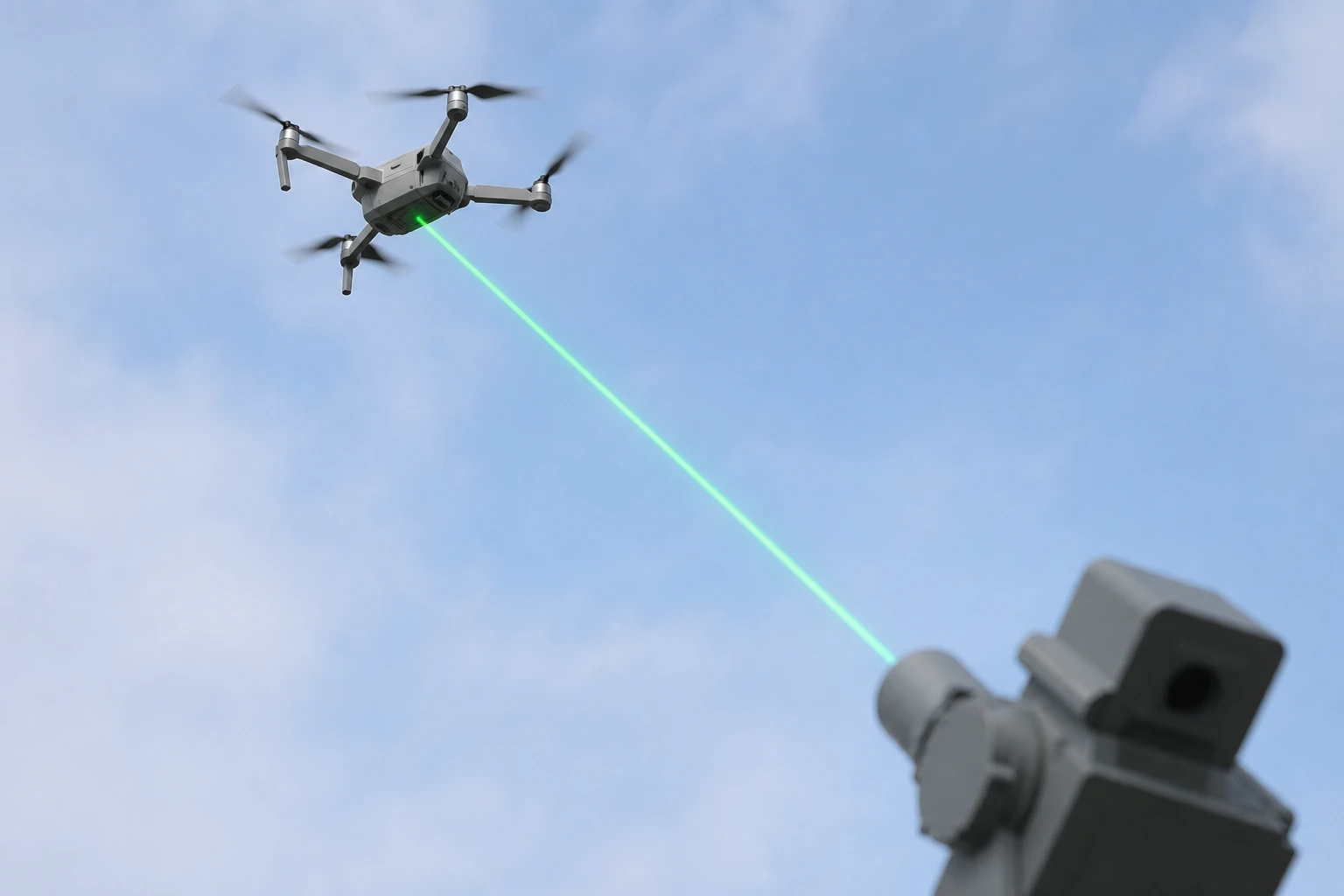
ORiS’s mid-term goal is beaming power between satellites in orbit. Its clearest working demonstration today is LOONA, a wireless drone-charging platform built inside the accelerator run by NATO’s Defense Innovation Accelerator for the North Atlantic, known as DIANA. LOONA has already transmitted power to a hovering drone across more than 100 metres, with ORiS’s own materials citing a 102-metre field test as its furthest result yet.
DIANA exists to speed up early-stage technology that serves both civilian and military users at once, connecting startups to defense budgets and test infrastructure across the alliance faster than a normal government contract would allow. ORiS was selected as a DIANA innovator, and that accelerator relationship, not a space agency contract, produced the company’s most tested hardware to date.
“ORiS’ dual-use roadmap combines near-term validation with an ambitious vision for the future,” said Koen Christiaens, managing partner at Pitchdrive. “LOONA gives the company a faster path to validating its core wireless power technology and building commercial momentum, while supporting its broader vision of making energy more accessible in space.”
NATO’s Own Fund Reads Like a Defense Wish List
DIANA sits next to a much larger pool of capital built for the same graduates once they outgrow an accelerator: the NATO Innovation Fund. It is a €1 billion multi-sovereign venture fund backed by 24 NATO allied nations, and it leads initial checks of up to €15 million with reserves held back for follow-on rounds. Its stated mission is strengthening the alliance’s defense, security and resilience through dual-use technology, the exact category ORiS’s founders describe their own laser system as belonging to.
The company DIANA keeps company with makes the point plainly. Its 2026 innovator cohort includes projects built around “stealth in drone flight,” unjammable laser communications, autonomous power systems built for military deployments, fleets of high-speed drones paired with robotic hangars for surveillance coverage, and a submersible micro reactor for naval and seabed operations. ORiS’s drone charger sits inside that same pipeline.
- €1 billion is the total size of the NATO Innovation Fund, backed by 24 allied nations.
- €15 million is the largest initial check the fund says it typically writes, before reserves for later rounds.
- 100+ metres is the distance ORiS has already beamed laser power to a hovering drone on the ground.
- 10 metres is the far shorter distance ORiS plans to prove the same technology across in orbit, in 2027.
None of this makes ORiS a defense contractor by itself. But the accelerator paying for its most advanced field test, and the fund waiting downstream to scale dual-use graduates, both answer to a NATO board built around allied defense priorities rather than commercial space investors.
Three Rivals Are Already Ahead on Cash
ORiS is not alone in chasing an orbital power grid, and it is not the best funded. In May 2026, Florida-based Star Catcher Industries closed an oversubscribed $65 million Series A, led by B Capital with Shield Capital and Cerberus Ventures, bringing its total raised to $88 million, more than ten times ORiS’s pre-seed haul.
| Company | Base | Funding Raised | Notable Detail |
|---|---|---|---|
| ORiS | Turin, Italy | €5 million (pre-seed plus grant) | Drone charging tested past 100 metres inside NATO’s DIANA accelerator |
| Star Catcher Industries | Jacksonville, Florida | $88 million total ($65 million Series A) | Seven signed power purchase agreements and a $3 billion sales pipeline |
| Aetherflux | United States | Pentagon funded, amount undisclosed | Founded by Robinhood co-founder Baiju Bhatt; targets remote military sites |
| Mantis Space | New Mexico, United States | $10 million | Focused on powering satellites through Earth-shadow eclipse periods |
The two leaders’ engineering also differs. ORiS generates a laser beam from a transmitting satellite’s own onboard power and fires it at a receiver. Star Catcher instead plans to capture ambient sunlight on a relay satellite and redirect it, concentrated, onto a client satellite’s existing solar panels, avoiding a generated beam entirely. Tech Funding News additionally reported that Aetherflux, started by Robinhood co-founder Baiju Bhatt, carries Pentagon funding to beam laser power from orbit down to remote military sites, and flagged Mantis Space’s $10 million raise for powering satellites that pass through Earth’s shadow.
The Next Milestone Shrinks From 100 Meters to Ten
ORiS says the new capital covers a specific list of near-term work:
- Expand the engineering team with new technical hires
- Accelerate research and development on critical subsystems, including the laser transmitter and receiver optics
- Move into new laboratory and clean-room facilities
- Build a flight model for a satellite-to-satellite wireless power demonstration due by the end of July
- Push LOONA from a prototype into a commercial dual-use product
That flight model feeds a 2027 in-orbit demonstration with mission partner DCUBED, and ORiS expects to deliver a flight model for its 2027 DCUBED mission by the end of July, ahead of a demonstration planned to beam power across just 10 metres, far short of the 100-plus metres LOONA has already cleared on the ground.
ORiS is also looking past Earth orbit. The company has completed a feasibility study for Thales Alenia Space, the Franco-Italian satellite maker, on using its laser system to power lunar surface equipment such as rovers, a possible answer to the 14-day lunar night when solar panels go dark. Villa called the lunar work “something very long term in the future, but it’s quite in synergy with what we are building.” ORiS has also signed a memorandum of understanding with Telespazio Germany on in-orbit services, adding to a partner list that already includes Thales Alenia Space.
For now, the flight model due at the end of July is the nearer test. If it flies as planned in 2027, ORiS will learn whether a system proven on a hovering drone above a NATO test range can survive its first trip to orbit.
Frequently Asked Questions
How does laser-based wireless power transmission actually work?
A transmitter converts electrical power into a focused beam of coherent light, and a receiver, typically a photovoltaic panel tuned to that wavelength, converts the light back into electricity. It is the same basic principle as a solar panel, aimed at a manufactured beam instead of the sun.
How is ORiS’s approach different from Star Catcher’s?
ORiS draws on a transmitting satellite’s own stored power to fire a laser beam at a receiver on the client spacecraft. Star Catcher’s system instead captures ambient sunlight on a relay satellite and redirects it, concentrated, onto a client satellite’s existing solar arrays, without generating a beam from stored electricity at all.
Is dual-use laser charging technology the same as a laser weapon?
No. Charging systems like LOONA deliver continuous, comparatively low-intensity light tuned for energy transfer and receiver electronics. Directed-energy weapons require far higher concentrated intensity to damage a target. NATO’s DIANA program funds dual-use technology, meaning tools useful for both civilian and military purposes, rather than weapons specifically, though the underlying optics research can inform both fields.
Why does a satellite’s time in Earth’s shadow matter?
Satellites lose direct sunlight for stretches of every orbit when Earth blocks the sun, called eclipse periods, and must run on batteries alone during that time. Longer or more frequent eclipses can force operators to power down instruments, which is why ORiS, Star Catcher and Mantis Space are all targeting orbital power delivery as a fix.


Replit Opens Its London Office Inside an AI Crowd

Straight Circle Trailer Lands Without a U.S. Date

Anemo Labs Bets £700,000 on an AI Sense of Smell

Nintendo Prices the Zelda 40th Switch 2 at $519

Copilot Capital Buys the Autopilot Already Running 90 GW

Ground A Raises €9.1 Million for a Pallet Laser

Gibney’s Musk Film Opens in Venice Without Its Subject

Torvalds Blames AI for a Full-Fat Linux 7.3-rc2

Dexter Returns Sharper, Older, and Stuck Between Killers

Meta’s Muse Agent Can Spend Before the Privacy Lock

Walter’s TWG Insists No Fraud as Insurer Probes Force Cleanup

30-Year Yield Hits 5.32% Highest Since 2007 as Debt Supply Locks In Costs

PCE Stays at 3.7% as Gas and Tariffs Outrun Coming Revisions

Evernorth S-4 Clears Path for Active XRP Treasury on Nasdaq

Astute’s $1.2M bet makes B2B creator deals feed AI discovery

Strategy Parks $1.59B Cash While Bitcoin Stack Stays Flat

Instinct Hits $2.5 Billion as AI Agent Access Sparks Trust Fights

Oracle’s 2.8 GW Bloom Deal Exposes the AI Power Bypass

CLARITY Act Cloture Opens a Door Ethics Still Blocks

Space Mirror Demo Revives 1993 Russian Night-Light Test
-
 FINANCE3 months ago
Zcash Patched a Double-Spend Bug as ZEC Climbed 5%
-
 ENTERTAINMENT3 months ago
Steam Summer Sale 2026 Locks In June 25 to July 9 Dates
-

 FINANCE2 months ago
CLARITY Act Final Text Expected This Weekend as 60-Vote Hurdle Looms
-
 NEWS4 months ago
Meta Adds AI Replies to Threads, But Users Can’t Block It
-
 ENTERTAINMENT5 months ago
Extraction 3 Is Officially Coming to Netflix in 2027
-

 NEWS3 months ago
YouTube Shorts is testing a heart in place of the thumbs-up
-

 NEWS1 month ago
Senators Force Apple Off Chinese Memory as Big Three Cash In
-

 NEWS3 months ago
NEURA Robotics’ $1.4B Series C Redraws Europe’s Physical AI Bet