
NEWS
UK Hands AI a Cabinet Seat by Scrapping the Department That Ran It
Andy Burnham dissolved DSIT into a new business department in his first reshuffle, even as Kanishka Narayan became Britain’s first cabinet-level AI minister.

Kanishka Narayan became the first AI minister to sit in Britain’s cabinet this week. The department that used to employ him stopped existing on the same day.
New prime minister Andy Burnham handed Narayan the seat during his first full reshuffle, then dissolved the Department for Science, Innovation and Technology (DSIT) and folded most of it into a new business ministry. It is the third time in a decade that Whitehall has rebuilt this exact corner of government, and each version has lasted less time than the one it replaced.
Whitehall Redraws the Chart Overnight
Burnham scrapped DSIT as a standalone department on Monday, the day he took office. He rebuilt its work inside a new Department for Business, Innovation, Science and Trade (DBIST). Jonathan Reynolds returns to run the combined ministry as secretary of state. The MP for Stalybridge and Hyde led the Department for Business and Trade (DBT) in 2024 before moving to a different role a year later.
Narayan keeps the AI brief but not the old address. He is now Minister of State for Artificial Intelligence, appointed jointly across the Cabinet Office and DBIST, holding a cabinet seat DSIT itself never had. He was appointed a junior Minister for AI and Online Safety back in September 2025 under Keir Starmer, Burnham’s predecessor. This week’s promotion changes his rank, not his brief.
The functions DSIT used to run did not disappear. They moved.
- Business, science and trade policy shifts into DBIST under Jonathan Reynolds, who now oversees a far larger department than the one he left in 2025.
- AI policy and public sector AI adoption move into the Cabinet Office, run jointly with Narayan’s DBIST brief.
- Digital and online safety duties transfer to the Department for Culture, Media and Sport, being renamed the Department for Digital, Culture, Media and Sport under Lisa Nandy.
Peter Kyle, who had led DBT before Reynolds returned to it, left government entirely in the same reshuffle.
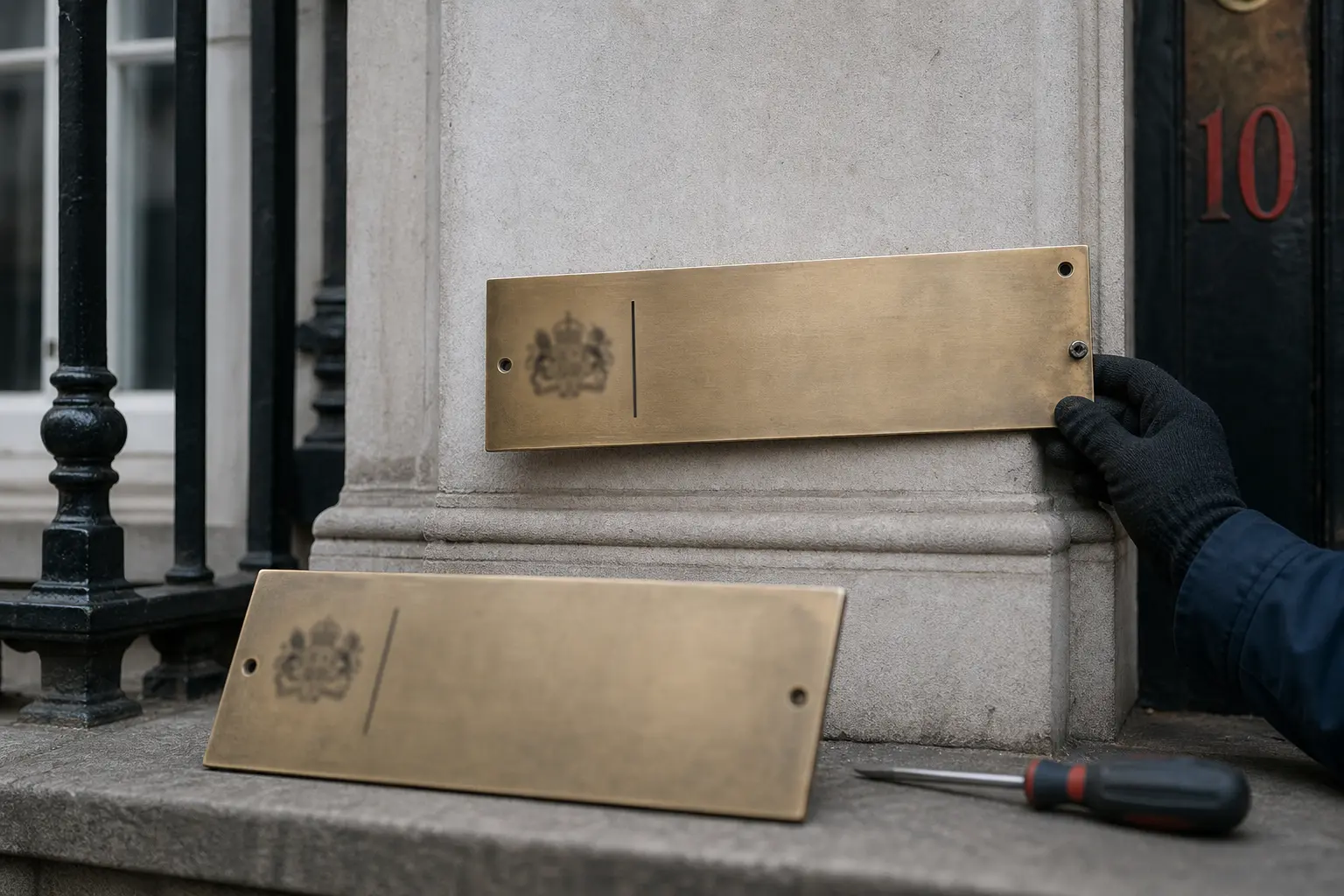
A Department Built to Win a Cabinet Seat
DSIT existed for three and a half years. Rishi Sunak created it on 7 February 2023 by splitting up the Department for Business, Energy and Industrial Strategy (BEIS), moving its science and research arm into a standalone ministry alongside digital policy pulled from the old Department for Culture, Media and Sport.
The government’s own announcement at the time did not undersell it. Then secretary of state Michelle Donelan said innovation had been given a dedicated seat at the Cabinet table, and Downing Street promised the new department would drive better jobs and grow the economy.
Industry welcomed it just as warmly. techUK said at the time that the new department would give the tech sector a clearer and stronger voice in government, almost the exact language it used this month arguing against tearing DSIT down.
Narayan described his own promotion this week in nearly identical terms, calling it a sign of the prime minister’s “deep commitment to AI’s importance.” This time, though, the seat sits with one minister spanning two departments, an arrangement DSIT itself never had.
Three Secretaries of State in Three and a Half Years
DSIT never had time to bed in. It cycled through three secretaries of state before Burnham dissolved it, and each one served a shorter stretch than the last.
| Secretary of State | Tenure | Length |
|---|---|---|
| Michelle Donelan | February 2023 to July 2024 | 17 months |
| Peter Kyle | July 2024 to September 2025 | 14 months |
| Liz Kendall | September 2025 to July 2026 | 10 months |
Kendall lasted the shortest of the three. She stood down as Burnham finalized his cabinet, and her resignation statement read like a warning aimed at whoever inherited her brief.
The latest ONS figures show that science and technology are the key drivers of economic growth in this country. It is essential that we maintain this momentum in order to create the jobs and businesses of the future and allow all parts of the country to thrive.
Kendall added that building a modern Britain meant supporting and nurturing its world-leading tech sector. Lord Patrick Vallance, the government’s science minister and a former chief scientific adviser, had already quit days earlier. “After nearly a decade in Government I am stepping down as a minister, for personal reasons,” he said, adding it had been a privilege to serve as chief scientific adviser and, more recently, science minister and minister for nuclear.
The Ten-Year Loop Whitehall Keeps Running
DSIT’s three and a half years look brief on their own, but they fit a longer pattern. This is at least the third time in a decade that Whitehall has merged or split the same corner of government.
- 14 July 2016: The Department for Business, Innovation and Skills and the Department of Energy and Climate Change merge into the Department for Business, Energy and Industrial Strategy (BEIS).
- 7 February 2023: Rishi Sunak splits BEIS into several departments, including DSIT and DBT, both born the same day.
- February 2023 to July 2026: DSIT runs through three secretaries of state in three and a half years.
- 20 July 2026: Andy Burnham becomes prime minister and renames DBT into DBIST, absorbing DSIT back into the business department it was split from.
BEIS survived six and a half years before Sunak broke it apart. DSIT survived barely half that. Reynolds now runs a department that reassembles most of what existed before 2023, under its fourth name in a decade.
Why Did Tech Leaders Call This a Big Mistake?
Tech leaders spent the days before the reshuffle warning that folding DSIT into a larger department would slow AI and science policy at a critical moment, arguing that a single ministry gave the sector one clear point of contact in government. Burnham pressed ahead regardless.
Matt Clifford, a former AI adviser to both Keir Starmer and Rishi Sunak, wrote that scrapping DSIT “would be a big mistake” and that tying up senior officials in a reorganization “wastes time and energy that’s desperately needed for the actual substance.”
Ian Hogarth, chair of the UK’s AI Security Institute and a partner at venture firm Plural, said reorganizations like this typically distract departments for a year. “The best civil servants I’ve worked with are there to have impact,” he said. “If you chew their days up with these kind of random re-orgs, the best people move on.”
techUK and the Startup Coalition wrote jointly to Burnham calling the plan “the wrong change at the wrong time.” Vinous Ali, the Startup Coalition’s deputy executive director, wrote on X that DSIT was finally established after three years and that changes would undermine that work. Cleo founder Barney Hussey-Yeo made a similar point, arguing that Britain’s scientific capacity was a major competitive advantage and that turning it into economic power had been DSIT’s entire job.
Some in the industry read the reshuffle differently. Mark Boost, chief executive of UK cloud computing firm Civo, called Narayan’s elevation “a reassuring signal for UK businesses,” saying direct cabinet access for an AI minister “demonstrates that the government recognizes AI’s existential importance to our future economy.”
Jonathan Reynolds pushed back on the idea that science had been sidelined. “In no way will science be a secondary issue,” he said, adding that it would sit at the forefront of his new department. “Bringing those things together in a more powerful department is, in government terms, a big win for science,” he said.
Where the Sovereign AI Fund Lands Next
DSIT carried more than a title. Its own mission statement pledged to drive stronger growth, better jobs and bold discoveries. It also ran the AI Opportunities Action Plan, the AI Security Institute, UK Research and Innovation (UKRI) and a £500 million Sovereign AI Fund, and it acted as the tech sector’s single point of contact inside government. All of that now splits between the Cabinet Office, DBIST and the renamed culture department.
State support for AI infrastructure keeps moving regardless of which department signs off on it. Britain has already committed to £400 million to keep chip startups from moving abroad, and private capital is following the same logic.
CoreWeave has been leasing UK data centre capacity to speed up AI deployment, a bet that does not depend on which building Narayan works from. It does depend on someone in government tracking every commitment without a gap forming.
Narayan has his seat at the table now. The department that used to send him to work each morning is gone, and its replacement inherits the same clock that ran out on DSIT and BEIS before it.
Frequently Asked Questions
What Did DSIT Actually Stand For?
DSIT stood for the Department for Science, Innovation and Technology. Rishi Sunak built its scope around what his government called the five technologies of tomorrow: quantum, AI, engineering biology, semiconductors and future telecoms, alongside life sciences and green technology.
Is Kanishka Narayan a Full Cabinet Minister?
Not in the traditional sense. Narayan holds the title of Minister of State, a rank below secretary of state, but Burnham has given him the right to attend cabinet as minister for AI, a status previously reserved for department heads like the DSIT secretary of state.
What Was Liz Kendall’s Role Before DSIT?
Kendall became Secretary of State for Science, Innovation and Technology in September 2025. Before that, she served as Secretary of State for Work and Pensions, meaning she led two different departments in less than a year before standing down entirely.
Does the UK Still Have a Dedicated Science Minister?
Not as its own secretary of state. Lord Patrick Vallance held the science and nuclear brief until he quit shortly before the reshuffle, and Whitehall has not named a standalone replacement. Science policy now falls inside Jonathan Reynolds’s wider DBIST portfolio.
What Is DESNZ and Is It Affected Too?
DESNZ is the Department for Energy Security and Net Zero, the third department created alongside DSIT and DBT when BEIS split apart in 2023. It has not been named in Burnham’s reshuffle and appears to continue as a standalone department, unlike its two 2023 siblings.


Replit Opens Its London Office Inside an AI Crowd

Straight Circle Trailer Lands Without a U.S. Date

Anemo Labs Bets £700,000 on an AI Sense of Smell

Nintendo Prices the Zelda 40th Switch 2 at $519

Copilot Capital Buys the Autopilot Already Running 90 GW

Ground A Raises €9.1 Million for a Pallet Laser

Gibney’s Musk Film Opens in Venice Without Its Subject

Torvalds Blames AI for a Full-Fat Linux 7.3-rc2

Dexter Returns Sharper, Older, and Stuck Between Killers

Meta’s Muse Agent Can Spend Before the Privacy Lock

Walter’s TWG Insists No Fraud as Insurer Probes Force Cleanup

30-Year Yield Hits 5.32% Highest Since 2007 as Debt Supply Locks In Costs

PCE Stays at 3.7% as Gas and Tariffs Outrun Coming Revisions

Evernorth S-4 Clears Path for Active XRP Treasury on Nasdaq

Astute’s $1.2M bet makes B2B creator deals feed AI discovery

Strategy Parks $1.59B Cash While Bitcoin Stack Stays Flat

Instinct Hits $2.5 Billion as AI Agent Access Sparks Trust Fights

Oracle’s 2.8 GW Bloom Deal Exposes the AI Power Bypass

CLARITY Act Cloture Opens a Door Ethics Still Blocks

Space Mirror Demo Revives 1993 Russian Night-Light Test
-
 FINANCE3 months ago
Zcash Patched a Double-Spend Bug as ZEC Climbed 5%
-
 ENTERTAINMENT3 months ago
Steam Summer Sale 2026 Locks In June 25 to July 9 Dates
-

 FINANCE2 months ago
CLARITY Act Final Text Expected This Weekend as 60-Vote Hurdle Looms
-
 NEWS4 months ago
Meta Adds AI Replies to Threads, But Users Can’t Block It
-
 ENTERTAINMENT5 months ago
Extraction 3 Is Officially Coming to Netflix in 2027
-

 NEWS3 months ago
YouTube Shorts is testing a heart in place of the thumbs-up
-

 NEWS1 month ago
Senators Force Apple Off Chinese Memory as Big Three Cash In
-

 NEWS3 months ago
NEURA Robotics’ $1.4B Series C Redraws Europe’s Physical AI Bet