
ENTERTAINMENT
Netflix Screening Erases Fortitude Exclusivity in $105M Cage Suit
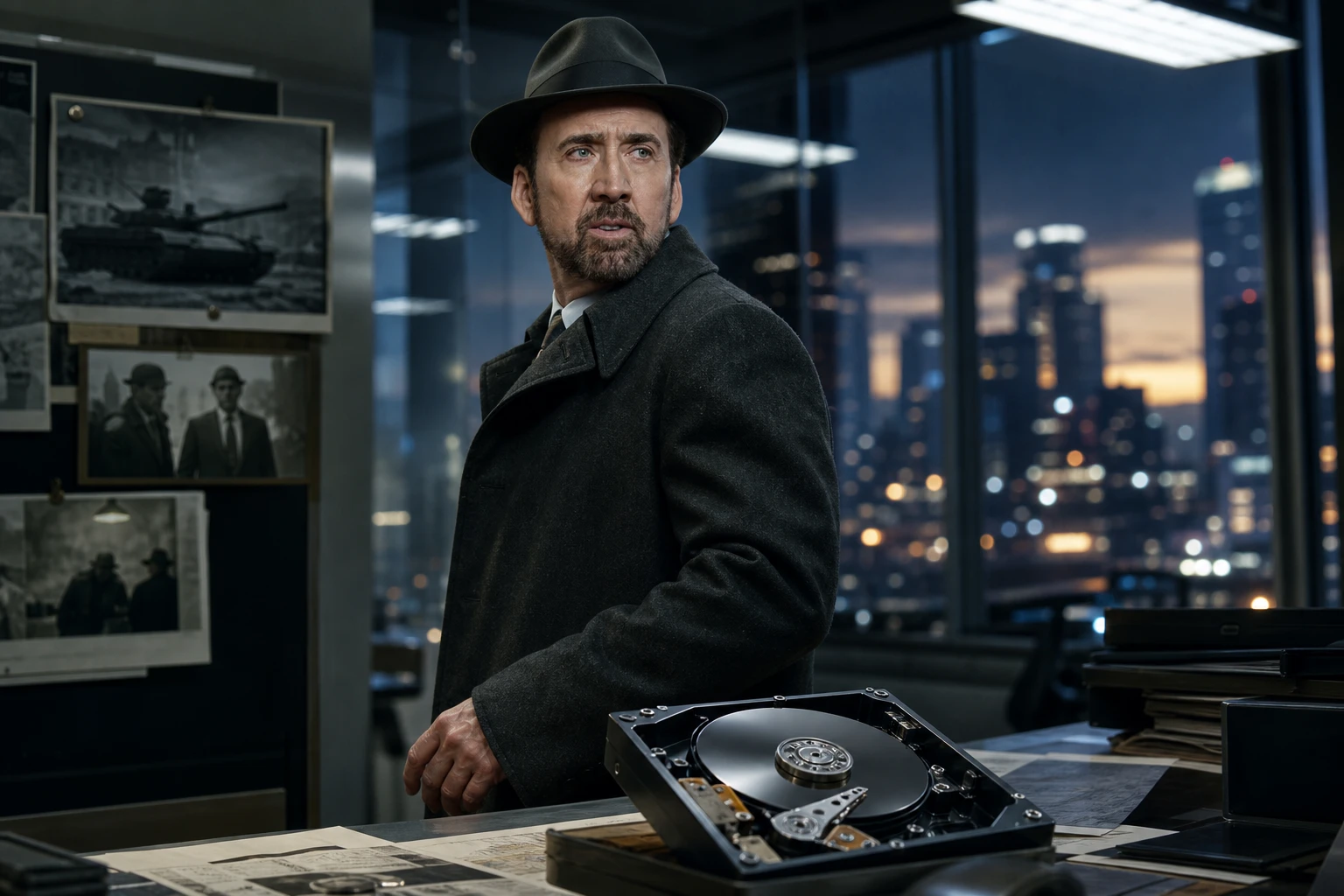
An unencrypted master of the unreleased Nicolas Cage WWII film Fortitude vanished from Netflix desks.

Producers of the unreleased Nicolas Cage World War II thriller Fortitude filed a $105 million lawsuit against Netflix on July 29 after an unencrypted master drive vanished from the streamer’s Los Angeles offices. Op-Fortitude Ltd. and Swiss businessman Simon Afram say the loss destroyed the film’s exclusivity and marketability just as sales talks and an awards push were ramping up.
Netflix calls the claim baseless, arguing the drive arrived without industry-standard protections. The case turns on a simple handoff that both sides now frame as the other party’s failure.
The Desk Drive That Went Missing
Netflix first saw promotional materials for Fortitude in December 2025. By June 2026 the company wanted a working cut for internal review tied to a possible rights purchase. Associate producer Daniel Haido hand-delivered a Digital Cinema Package to Sunset Bronson Studios on June 15. Screening happened the next day.
Haido told staff the drive was unencrypted and, both verbally and by email at 10:03 a.m., instructed Netflix to delete the files after projection and notify him for pickup. Netflix emails had said that if the DCP were encrypted the keys should stay open through the end of June 16 so the screening team could test it.
- June 15, 2026: Haido delivers the unencrypted DCP; Netflix accepts it.
- June 16: Executives screen the film.
- June 17-24: Repeated pickup requests go unanswered or get postponed; one Juneteenth delay is cited.
- June 25, 3:04 p.m.: Sean Berney, Netflix director of original film, emails with subject “Stolen DCP.”
Berney wrote: “This is a first for us. Unfortunately, someone stole a good amount of drives from our office desks this past week. We’ve been working through this with our security teams to no luck.” He offered to make a new DCP or reimburse for the drive and said piracy teams were on alert. A source familiar with the probe later said only the Fortitude drive held files; the rest were empty.
Producers filed their own police report. Netflix has not confirmed whether it filed one and refused a request to bring in the Los Angeles Police Department.
How $45 Million Becomes a $105 Million Claim
Afram spent more than seven years and over $45 million of his own money writing, financing and producing the picture through Op-Fortitude. The full 16-page federal complaint values the film’s break-even at roughly 2.5 times budget, or $112.5 million, based on genre, cast, early distributor interest and test results.
| Claim element | Figure or detail |
|---|---|
| Production investment | More than $45 million over 7 years |
| Break-even target | $112.5 million (2.5× budget) |
| Audience test score | 82% top-two-box (Screen Engine/ASI) |
| Damages sought | At least $105 million plus punitive amounts |
| Pre-suit demand | $165 million (Netflix called it extortionate) |
The complaint argues that an unreleased film’s worth rests on exclusivity. “By losing control of the Film, Netflix destroyed that exclusivity and materially, if not completely, impaired the Film’s marketability,” it states. Any future buyer must be told an unencrypted master went missing, which can kill insurance, representations and warranties, and the appetite to spend tens of millions more on marketing.
Sales talks, international discussions and the planned awards campaign are paused even though multiple distributors had shown interest.
Who Carries the Risk on an Unencrypted DCP
Netflix’s public line is blunt. “Netflix disputes any claim that it bears the risk of loss for a film delivered without the proper industry-standard safeguards,” a spokesperson said. The company does not own the rights, has opened an investigation, and offered to monitor piracy sites. It declined to share investigation details with Afram’s lawyers after the $165 million demand.
Industry practice for unreleased titles usually runs through password-protected links or encrypted DCPs that need a separate Key Delivery Message. Encryption is optional but common; without a KDM the content stays locked to authorized servers. Netflix’s own delivery note asked for open keys if encryption was present. Haido delivered an unlocked package and flagged that fact in writing.
That clash sits at the center of the irony. The screening was meant to let Netflix decide whether to buy a pristine first-to-market title. Leaving the only unprotected high-quality copy on office desks for days after the screening, then discovering a multi-drive theft, erased the exclusivity the purchase would have paid for. Both sides now treat the other’s choices as the decisive failure.
This is a first for us. Unfortunately, someone stole a good amount of drives from our office desks this past week.
Sean Berney’s June 25 email, quoted in the complaint and coverage, also floated the idea the thieves might sell the hardware for scrap because a KDM would normally be required. The drive was not encrypted.
Cage, Popov and the 35mm Bet
Director Simon West, who worked with Cage on Con Air, shot Fortitude on 35mm celluloid for period texture. Cage plays Duško Popov, the real Yugoslav double agent who fed false information to the Germans and helped shape Operation Fortitude, the Allied deception that pointed Hitler toward Calais instead of Normandy. Popov’s playboy habits and casino nights also fed Ian Fleming’s early Bond sketches.
- Nicolas Cage as Duško Popov
- Ben Kingsley
- Ron Perlman
- Matthew Goode
- Michael Sheen
- Alice Eve, Ed Skrein, Jordi Mollà and others
The tone aims at Ocean’s Eleven energy mixed with Inglourious Basterds stakes. Test scores of 82 percent top-two-box put it in the same appeal band as Argo and The Imitation Game according to the complaint. That package, still fully unsold, is what sat unprotected on a Netflix desk.
Earlier Legal Detours for the Same Film
Fortitude already carried baggage. In 2023 Afram sued Martin Scorsese, claiming the director took $500,000 to executive-produce and then did nothing. Scorsese’s side called Afram an industry newcomer with unrealistic expectations. The parties settled out of court in 2024.
The new suit is for conversion, breach of bailment and breach of implied contract. Conversion is strict liability under California law; good faith is not a defense. Plaintiffs want the value of the asset at the time of loss plus consequential damages and punitive awards if malice is shown.
No ruling exists yet. Netflix has not filed a formal answer. It remains unconfirmed whether any copy of Fortitude has surfaced online.
What the Lapse Means Beyond One Title
Streamers routinely handle unreleased cuts. A theft from open desks, delayed notice to the owners, and refusal to coordinate with police create a credibility hit that outlasts any single film. For independent producers who already stretch personal capital across years, the episode raises the cost of every future screening. For Netflix it supplies fresh ammunition to critics who already question how the company handles content pipelines and shorter theatrical windows under Netflix deals.
Directors who still champion big-screen windows have made similar points. Michael Mann on theatrical cinema pressure has argued that the theatrical experience itself is under siege; a security failure that tanks an unreleased title’s value only sharpens that argument.
Public reaction so far treats the episode as peak corporate chaos: an unencrypted master of a Cage war movie walking out of a major streamer’s offices while executives debate scrap value. The delay in disclosure and the finger-pointing over encryption feed the sense that neither side looks careful. Yet the deeper cut is structural. Once exclusivity is gone, the film’s commercial life changes permanently even if the file never leaks.
The court will decide liability. Until then Fortitude sits in limbo, its awards path frozen and every potential buyer forced to price in a missing unencrypted master. The screening that was supposed to create a buyer instead created a lawsuit.
For technical background on the format at issue, see how KDM keys lock a DCP.


Howard the Duck at 40 Still Owns Marvel’s First Flop

Valve Skin Ban Hits BLAST and Forces CS2 Teams Toward Betting Cash

Oil Crashes Below $80 as Iran Talks Restart and Markets Split

Netflix Screening Erases Fortitude Exclusivity in $105M Cage Suit

Bitget BGBTC Upgrade Turns Idle Bitcoin Into Daily Yield

FFXIV Switch 2 Port Brings Portability With a Second Bill

MacBook Air Delays Reveal AI Memory Crunch Repricing Laptops

Bitcoin BIP-110 Soft Fork Dies on Tiny Miner Support

CXMT LPDDR6 Push Locks In Mobile DRAM Split

Snapchat Hands Spotlight Priority to Human Creators Over AI Farms

Kalshi Loses Major NY Prediction Markets Ruling to Judge Torres

Fed Minutes Cite AI Demand as Inflation Risk, Put a 2026 Hike Back on the Map

Marker AI Writing Startup Lands $13M Seed Led by Index Ventures

Dota 2 Esports World Cup 2026: Spirit Defends $2M Title In Paris

Meta’s Muse Spark 1.1 Beats Rivals on Price, Trails on Coding

ARC Intelligence Closes €4M Seed Round in Roughly a Week

CS2 Premier Season 5 Lands With Cache and a C4 Damage Rework

Finto Picks Munich Over Silicon Valley After YC, Raises $3.4M

Backrooms Returns to Theaters as the Everything Must Go Edition

Trump Calls Iran ‘Islamic Republic of Japan’ as Ceasefire Ends
-
 FINANCE2 months ago
Zcash Patched a Double-Spend Bug as ZEC Climbed 5%
-
 ENTERTAINMENT2 months ago
Steam Summer Sale 2026 Locks In June 25 to July 9 Dates
-

 FINANCE1 month ago
CLARITY Act Final Text Expected This Weekend as 60-Vote Hurdle Looms
-
 NEWS3 months ago
Meta Adds AI Replies to Threads, But Users Can’t Block It
-
 ENTERTAINMENT3 months ago
‘Widow’s Bay’ Review: Apple TV’s Sleeper Horror-Comedy Earns Its Fog
-
 NEWS5 months ago
U.S. Navy Deploys Solar-Powered Lightfish Drone to Patrol Oceans
-
 NEWS8 months ago
FolderFresh Review: This Free Tool Automates Windows File Organizing
-
 FINANCE4 weeks ago
Kalshi Loses Major NY Prediction Markets Ruling to Judge Torres